
Beyond the monuments, Marrakech has a full range of experiences, food destinations, and day trips worth planning.
Best Attractions in Marrakech: 15 Must-See Places
Marrakech is an unusually dense city for landmarks. Within an hour’s walk of Jemaa el-Fna you can move through a 12th-century mosque, two 16th-century palaces (one intact, one in atmospheric ruin), the finest Islamic college in North Africa, a hidden garden that was sealed for two centuries, and a souk system that has operated continuously since the medieval period.
This guide covers the 15 most significant attractions in Marrakech — what each one is, what makes it worth visiting, and the practical information that changes whether you have a good experience or a great one. For things to do beyond the landmarks — hammams, cooking classes, desert excursions — the Top 20 Things to Do in Marrakech is the right place to start.
- Medina
- UNESCO-listed since 1985 — 6 km², 200,000 residents
- Jemaa el-Fna
- UNESCO Intangible Cultural Heritage since 2001
- Saadian Tombs
- sealed for 200 years, rediscovered by aerial photo in 1917
- Carry cash
- most site entrances are cash only, in dirhams
Map of the Best Attractions in Marrakech
Most of these sites are within the historic Medina, making it easy to combine several in a single day. Majorelle Garden and the Musée Yves Saint Laurent are just outside the old city — a short taxi ride from the Medina. Use this list to jump to the sites that interest you most.
- 1. Jemaa el-Fnaa
- 2. Koutoubia Mosque
- 3. Bahia Palace
- 4. El Badi Palace
- 5. Saadian Tombs
- 6. Majorelle Garden
- 7. Yves Saint Laurent Museum
- 8. Ben Youssef Madrasa
- 9. Le Jardin Secret
- 10. Marrakech Medina
- 11. Dar Si Said Museum
- 12. Menara Gardens
- 13. Koutoubia Gardens
- 14. Rahba Kedima Square
- 15. Mellah Market
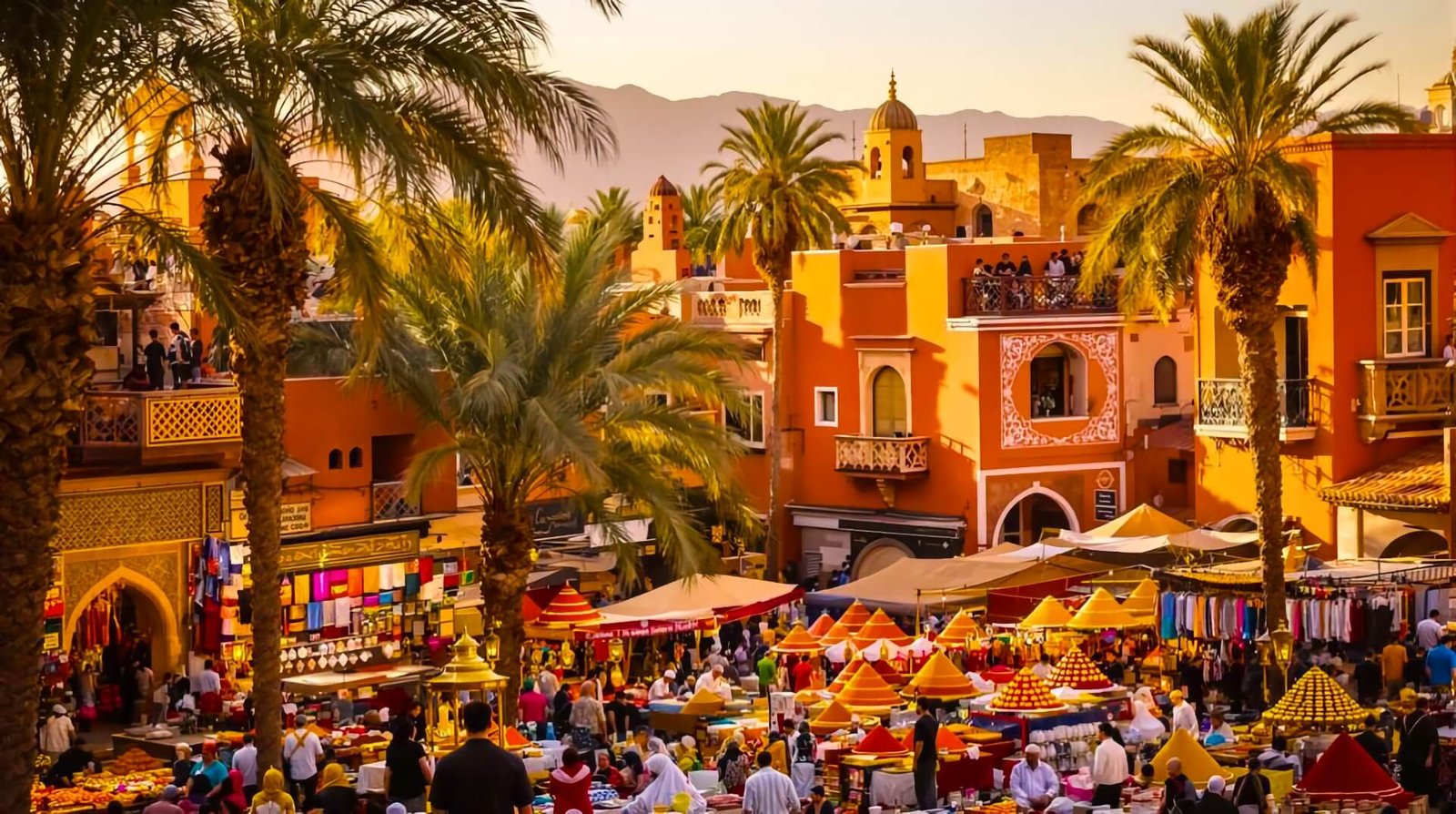
Marrakech's Medina — 15 landmarks within an hour's walk: two palaces, a hidden garden, a medieval college, and a square that hasn't stopped performing since the 10th century
Top Attractions in Marrakech
The 15 attractions below range from the unmissable (Jemaa el-Fna, Bahia Palace, Majorelle Garden) to the genuinely undervisited (Le Jardin Secret, Dar Si Said, the Mellah). The majority are inside the historic Medina, a UNESCO World Heritage Site where everyday life and centuries of history operate in the same narrow streets. A few are just outside it. All are listed with honest advice on when to go and what to expect.
1. Jemaa el-Fnaa
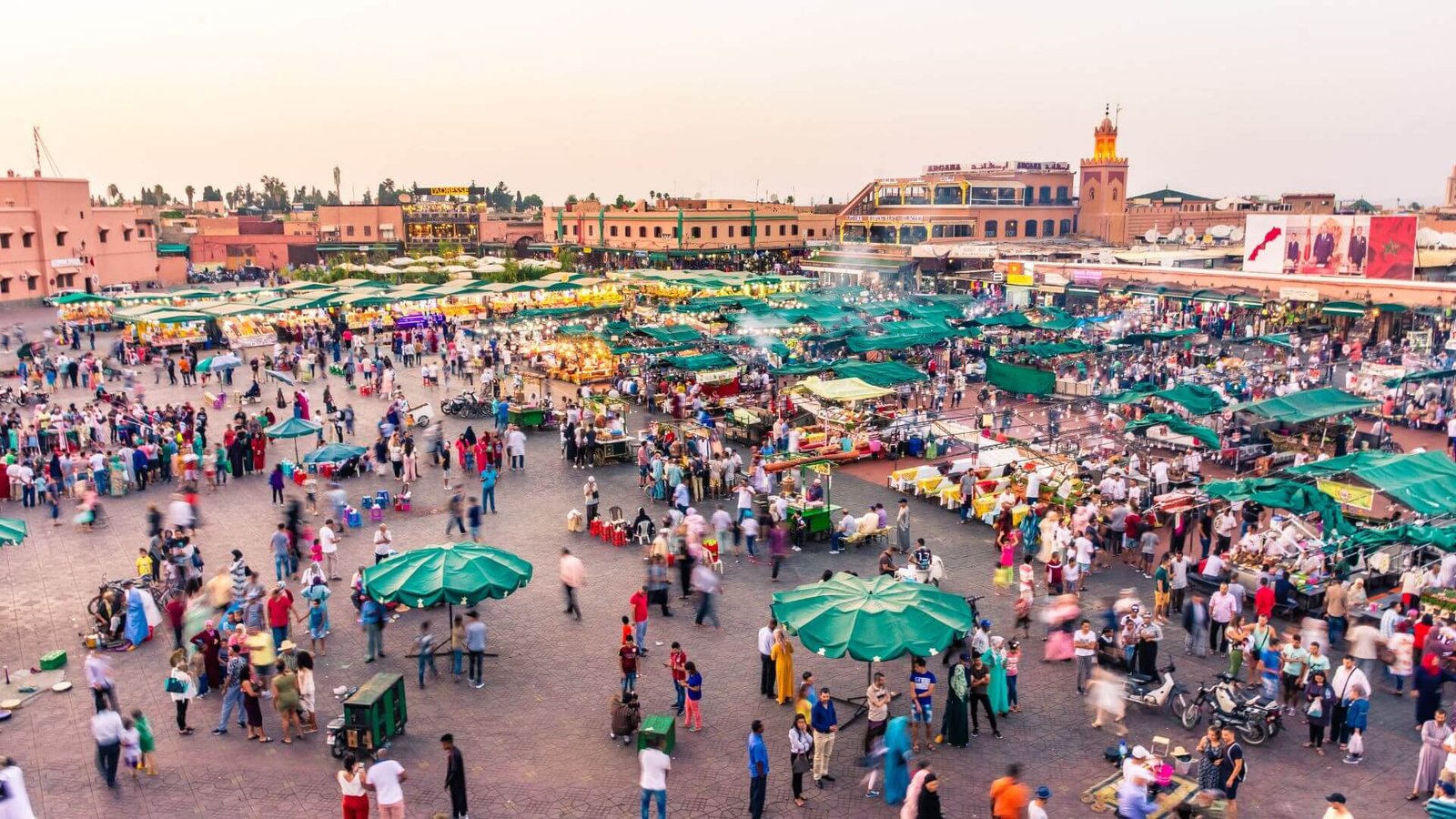
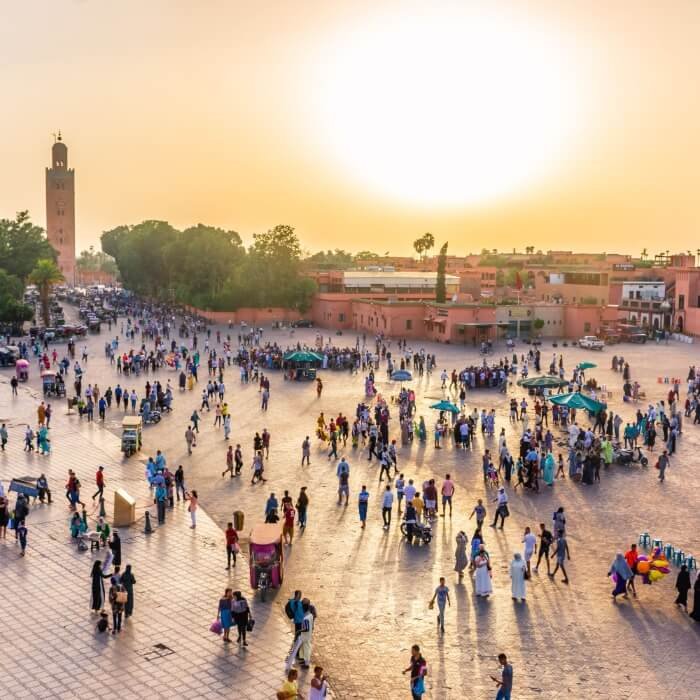
The heart of Marrakech and one of the great public squares of the world. Jemaa el-Fna has operated as the city’s social center since the 10th century — and it shows. By day, orange juice vendors, henna artists, snake charmers, and musicians share the space with locals crossing the square on their way somewhere else. By sunset, the character changes entirely: food stalls appear at speed, the smoke from dozens of grills fills the air, and the square becomes one of the most atmospheric places in North Africa.
UNESCO recognized the square’s intangible cultural heritage in 2001 — not for any particular building or monument, but for the living practice of storytelling, music, and performance that has continued here uninterrupted. The square is not a recreation of something historical; it is the thing itself.
From the cafés and restaurant rooftops that ring the square, the view at dusk — the Koutoubia minaret to the west, the whole Medina coming alive below — is one of the best free experiences Marrakech offers.
Travel tip: Visit twice. The morning is the most local and easiest to navigate. The evening is the most spectacular. If you’re choosing one, choose sunset.
2. Koutoubia Mosque
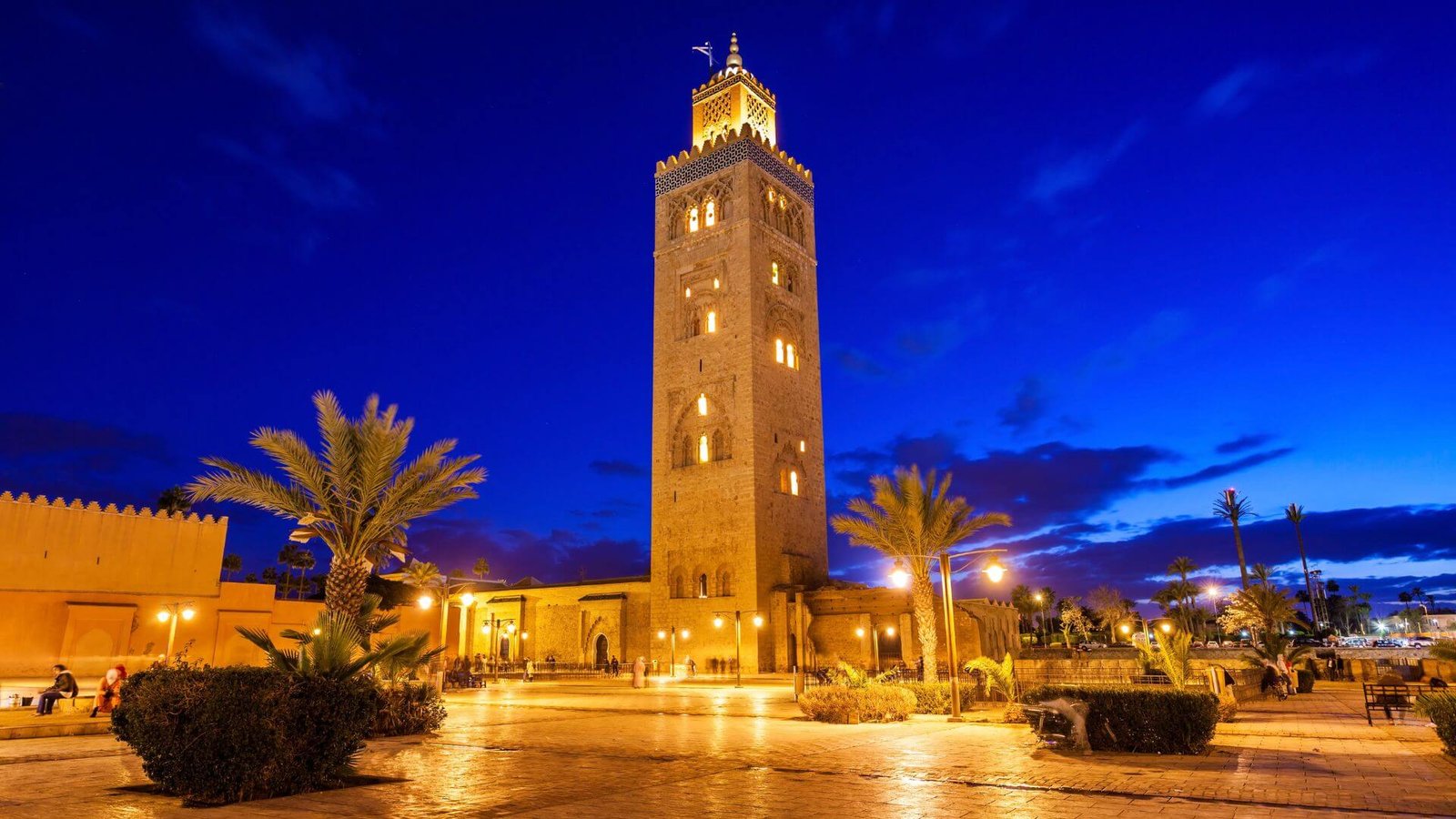
The most recognizable structure in Marrakech and the model for two of the most famous minarets in the Islamic world: the Giralda in Seville and the Hassan Tower in Rabat. Built in the 12th century under the Almohad dynasty, the Koutoubia minaret stands around 70 meters tall and is visible from much of the city — the navigational landmark that tells you which way Jemaa el-Fna is when the souks have turned you around.
The mosque takes its name from the Arabic for booksellers (kutubiyyin) — the area around it was once a market for manuscripts. Non-Muslims cannot enter, but the surrounding gardens are pleasant and the view of the minaret from different angles rewards time spent walking around the perimeter. The late afternoon light on the golden sandstone is genuinely beautiful.
The Koutoubia is a short walk from Jemaa el-Fna — natural to combine in the same visit, ideally in the late afternoon before the square comes alive.
Travel tip: The gardens on the northern side of the mosque are the least visited and often the most peaceful. Good light for photography from around 4pm onward.
3. Bahia Palace
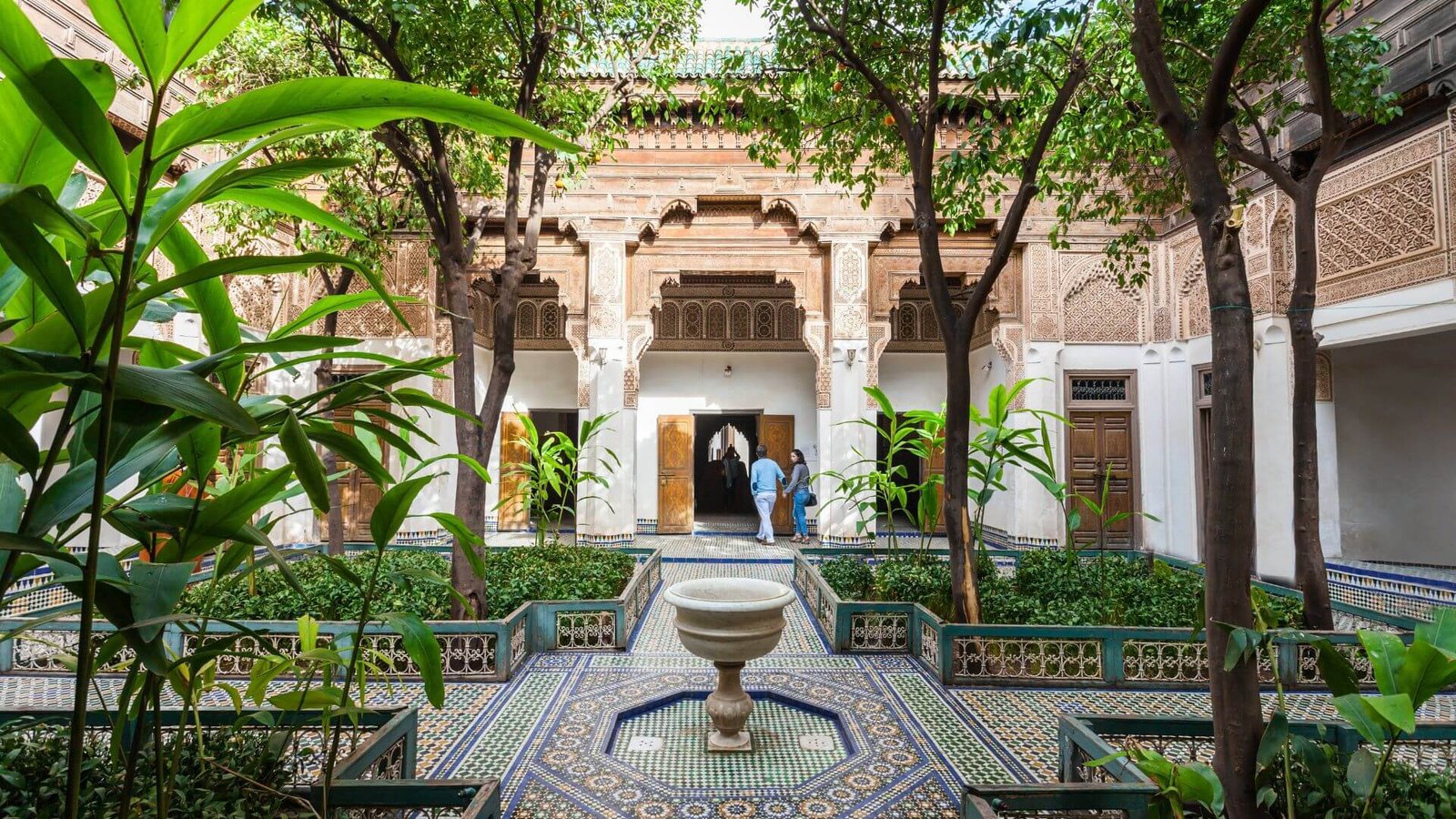
The finest example of late 19th-century Moroccan palace architecture in Marrakech. Bahia was built by Si Moussa, grand vizier to the sultan, and later expanded by his son Bou Ahmed. The name means “brilliance,” and the ambition of the construction — eight hectares, 160 rooms, multiple courtyards, gardens of orange trees and jasmine — reflects how seriously that name was taken.
The palace unfolds as a series of interconnected spaces rather than one grand hall: private apartments, reception rooms, harem quarters, and public courtyards, each decorated with carved cedar ceilings, zellige mosaics, and painted stucco. The quality of craftsmanship varies room by room — some spaces are extraordinary, others more routine — which makes a slow, unhurried visit considerably more rewarding than a fast one.
The smaller courtyards and side rooms are where the most intricate work lives. Most visitors move through the main courtyard and leave; the quieter rooms further in are often completely empty.
Travel tip: Arrive within the first half hour of opening. The combination of emptier rooms and better morning light makes a significant difference.
Powered by GetYourGuide
4. El Badi Palace
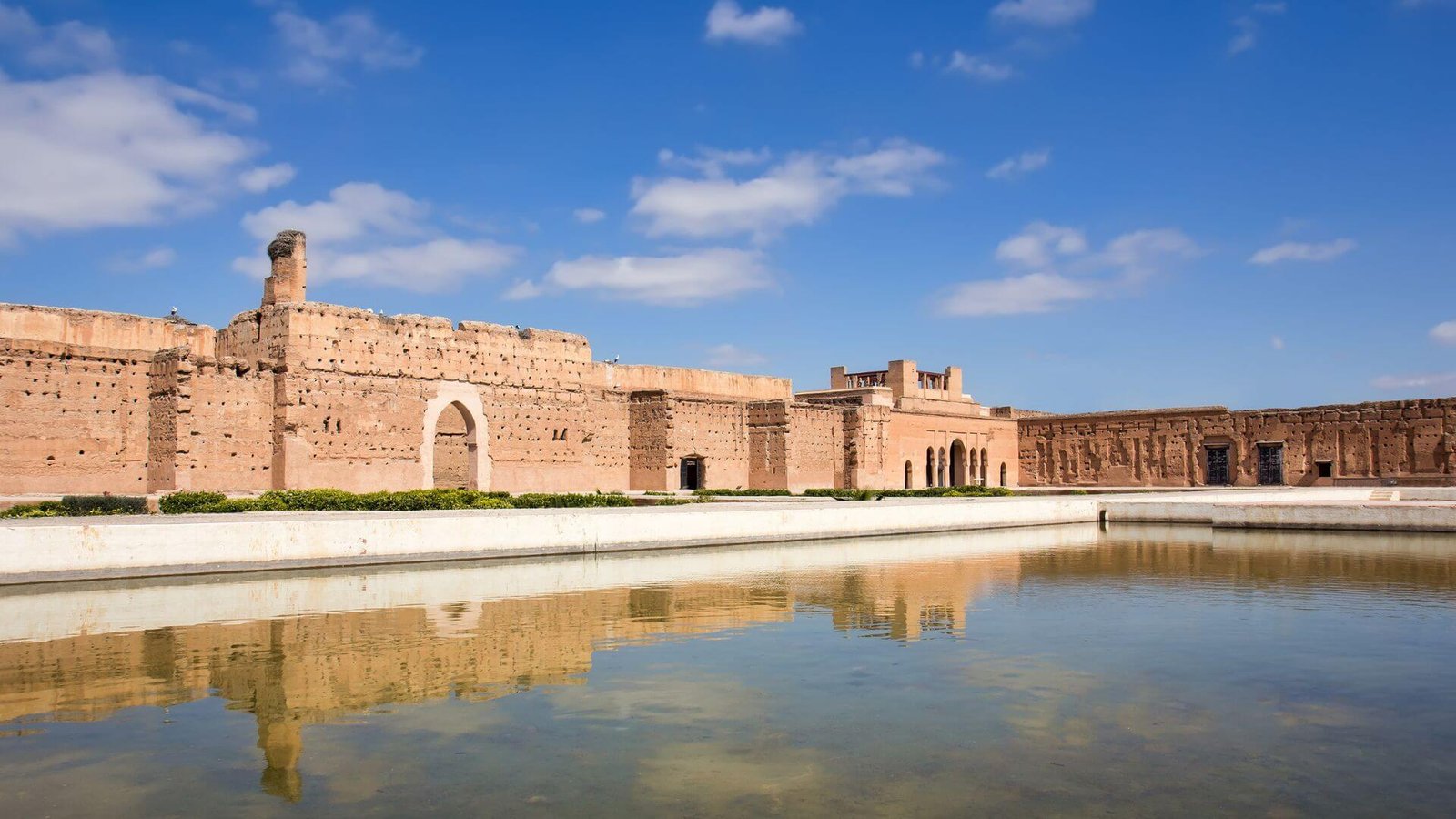
The most haunting site in Marrakech. El Badi — “The Incomparable” — was built by Sultan Ahmed al-Mansour after his victory at the Battle of the Three Kings in 1578, and in its time it was considered one of the most magnificent palaces in the Islamic world: Italian marble columns, onyx walls, gold-covered ceilings, vast gardens with fountains. A century later, Sultan Moulay Ismail stripped it to build his palace at Meknès. What remains is the enormous skeleton — towering ochre walls, sunken gardens, a vast central courtyard — and the imagination of what filled it.
The scale is the thing. Standing in the central courtyard, looking up at walls that once supported gilded rooms and down at sunken gardens that held fountains and water channels, the sheer size of the ambition becomes clear. The storks that have nested in the ancient walls for generations add something genuinely atmospheric to the site.
From the ramparts, the views are among the best in the city: the Medina rooftops, the Kasbah mosque, the Atlas Mountains on clear days.
Travel tip: Late afternoon is the right time — cooler, better light, and the storks are more active in the evening hours.
5. Saadian Tombs
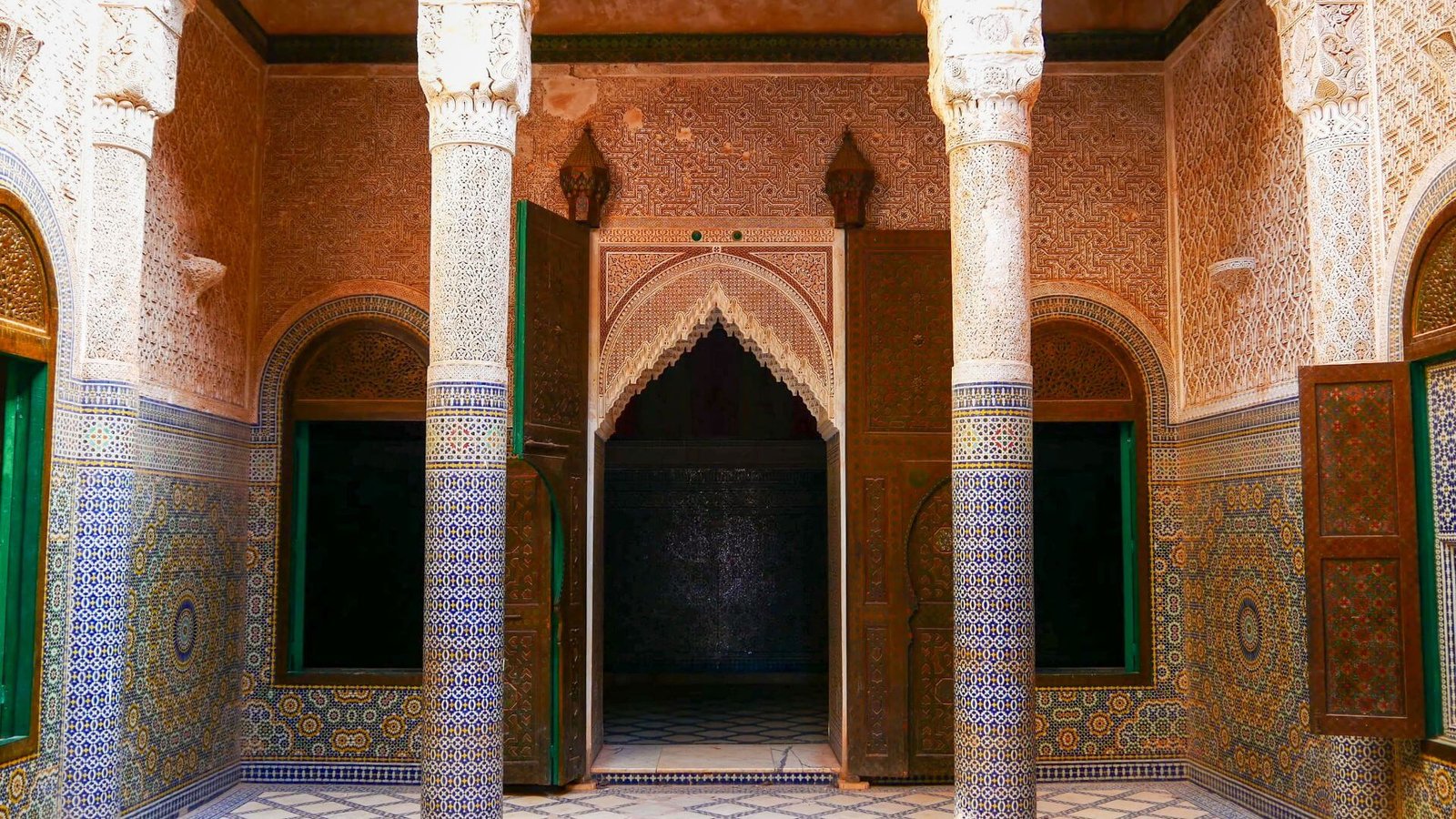
The Saadian royal necropolis, built in the late 16th century under Ahmed al-Mansour, was sealed by the Alaouite dynasty in the 17th century and remained hidden behind high walls for over 200 years. It was rediscovered in 1917 through aerial photography — which is why the craftsmanship inside is so remarkably intact. Nothing was removed or repurposed; it was simply forgotten.
The Chamber of the Twelve Columns is the highlight: Italian marble columns supporting a carved cedar ceiling above a floor of intricate zellige, with the tombs of the sultan and his family arranged below. The level of decoration — gold, stucco, marble, carved wood — is genuinely extraordinary and among the finest surviving examples of Saadian artistry anywhere.
The surrounding garden, with its orange trees and tiled graves, is much calmer than the main chamber and worth spending time in once you’ve visited the interior rooms.
Travel tip: The entrance corridor is narrow and one-directional. If you arrive when tour groups are present, the flow through the main chamber can feel rushed. Get there at opening or late afternoon.
6. Majorelle Garden
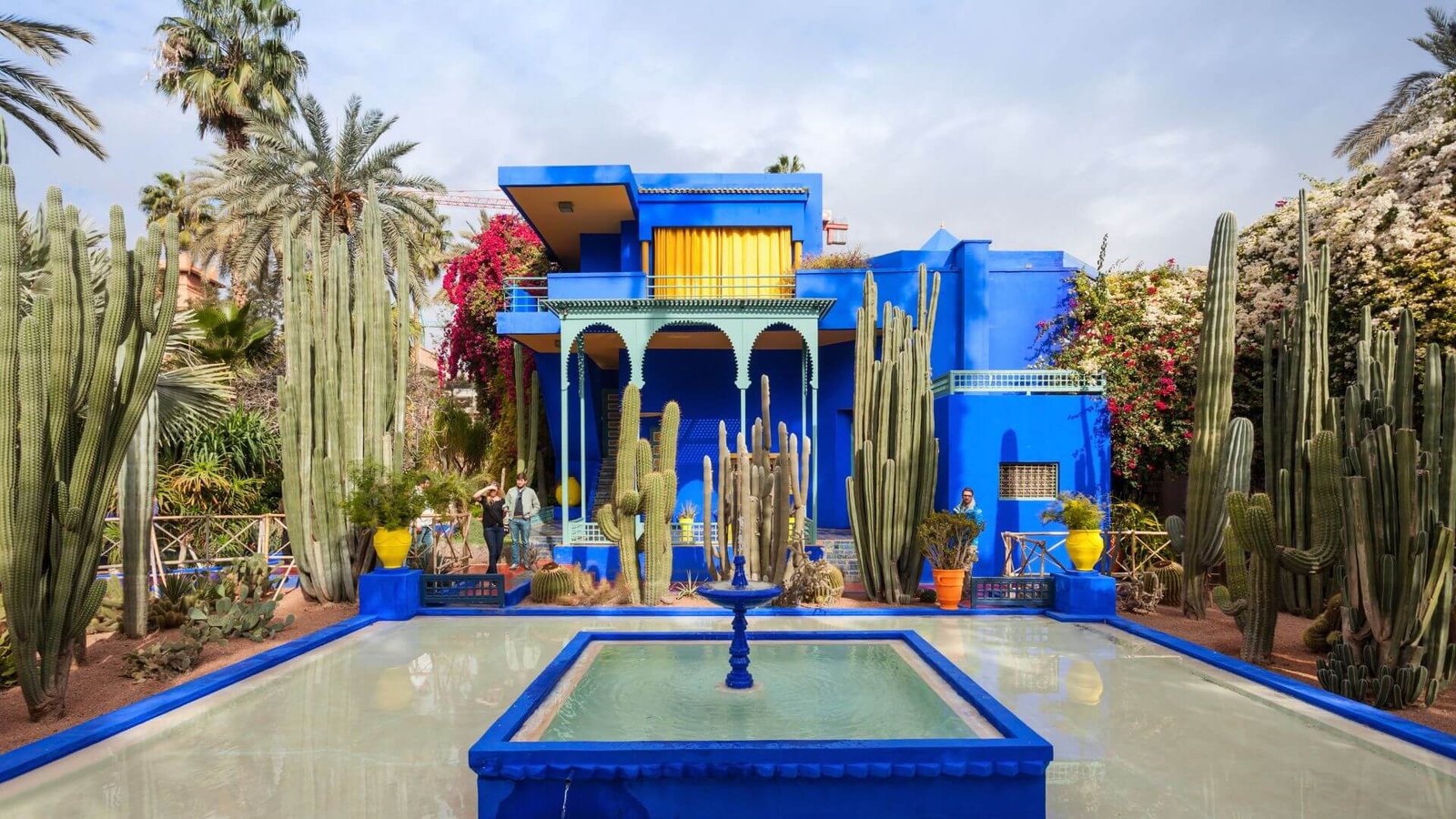
The most visited site in Marrakech and one of the most photographed gardens in the world — for good reason. Jacques Majorelle began designing the garden in the 1920s and spent nearly forty years developing it as a working artist’s space, collecting plants from five continents and arranging them around a series of pathways, pools, and painted structures in his signature cobalt blue. After his death the garden fell into disrepair, and was rescued in 1980 by Yves Saint Laurent and Pierre Bergé, who restored it and eventually had their ashes scattered there.
The botanical collection is genuinely impressive: over 300 plant species, including towering cacti, bamboo groves, and subtropical plantings that create dense shade and a sense of enclosure entirely at odds with the city outside. The blue and yellow architecture — villas, pergolas, ceramic pots — creates the visual signature the garden is known for.
The crowds are real. Booking ahead is advisable. Arriving at opening time is the most effective strategy for experiencing the garden at something close to Majorelle’s intention.
Travel tip: The museum inside the garden (Musée Berbère) is included in the ticket and worth thirty minutes — an excellent collection of Amazigh textiles, jewelry, and objects rarely seen in such quality.
Powered by GetYourGuide
7. Yves Saint Laurent Museum
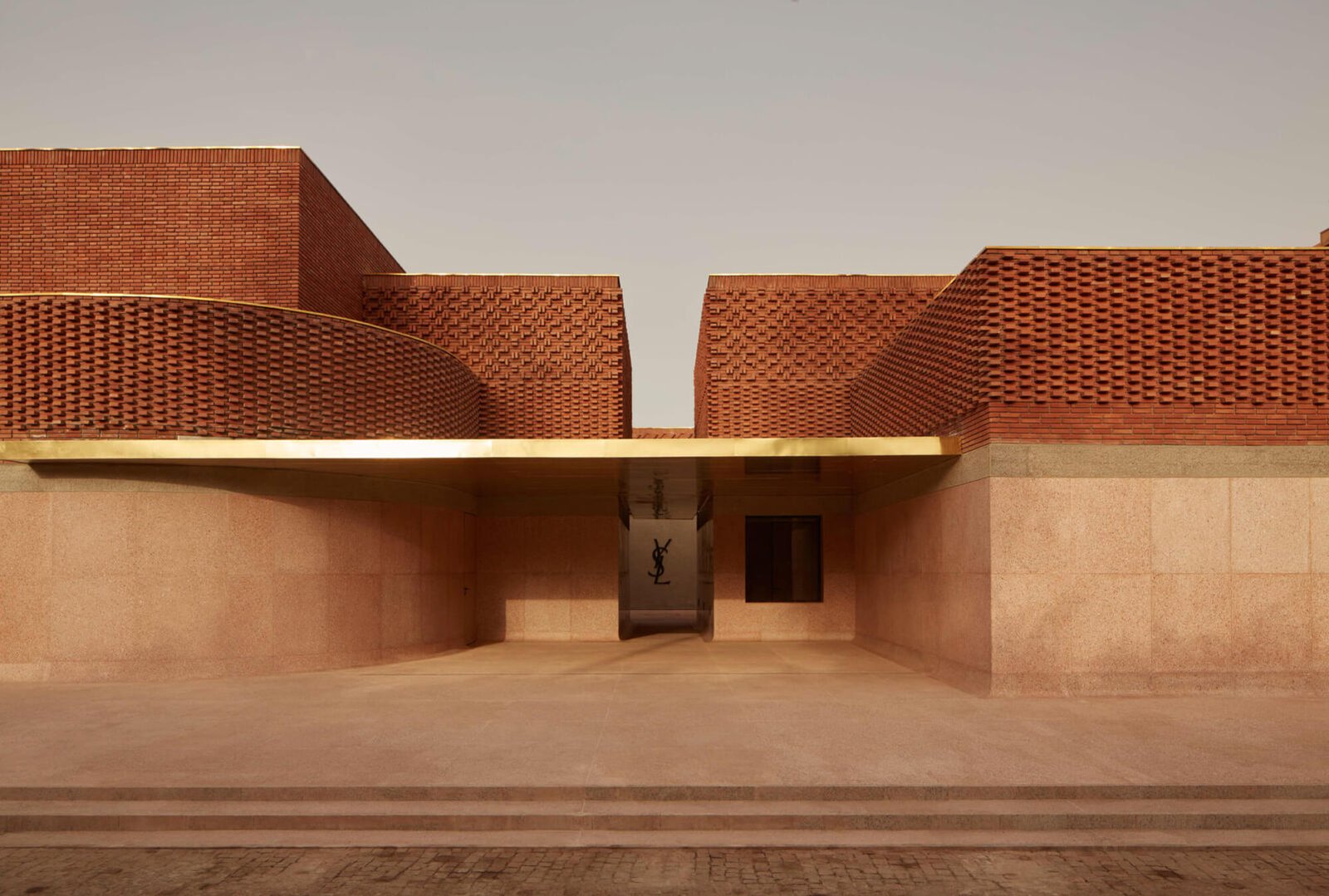
The Musée Yves Saint Laurent Marrakech opened in 2017 — a year before the Paris version — and is genuinely excellent. The building, designed by Studio KO, uses warm terracotta brick that references the city’s palette without copying it, and the interior spaces work well for both fashion display and the temporary exhibitions that rotate through.
The permanent collection traces Saint Laurent’s career from his earliest work at Dior through fifty years of his own house: original garments, sketches, photographs, and footage that give a real sense of the creative process rather than just the finished product. His relationship with Marrakech — which he first visited in 1966 and returned to throughout his life — runs through the whole narrative.
The building is steps from Majorelle Garden. Most visitors do both in the same visit; a combined ticket is available and makes sense.
Travel tip: The temporary exhibitions are often as interesting as the permanent collection. Check what’s showing before you go — it can significantly change how long you’ll want to spend there.
8. Ben Youssef Madrasa
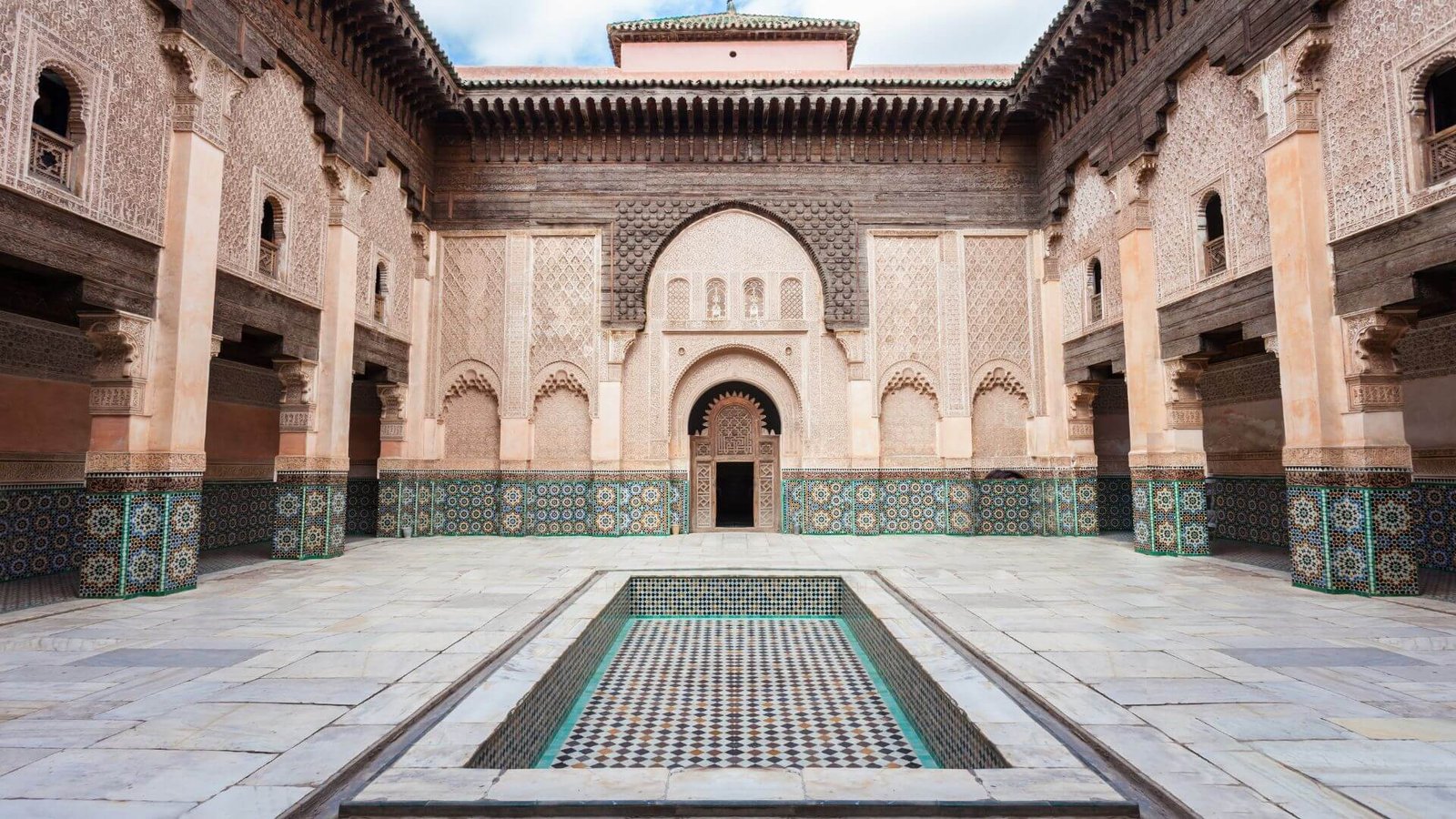
The finest piece of Moroccan-Andalusian architecture in Marrakech, and one of the most beautiful buildings in North Africa. Originally founded in the 14th century and rebuilt by the Saadian dynasty in the 16th century, the madrasa could house nearly 900 students in cells arranged around the central courtyard. It functioned as an Islamic college until 1960.
The courtyard is the building’s heart and its greatest achievement: a reflecting pool at the center, marble floors inlaid with geometric patterns, carved stucco rising to the cedar balconies, and above that the student rooms on two upper levels. Every surface carries decoration; the accumulated effect is genuinely overwhelming in the best sense.
Climb to the upper level and look down into the courtyard. The geometry of the space — the pool’s reflection, the symmetry of the arcades — is best understood from above.
Travel tip: Visit at opening (usually 9am). The morning light falls directly into the courtyard for the first hour, highlighting the stucco carving at its best. By 10:30am tour groups arrive in numbers.
9. Le Jardin Secret
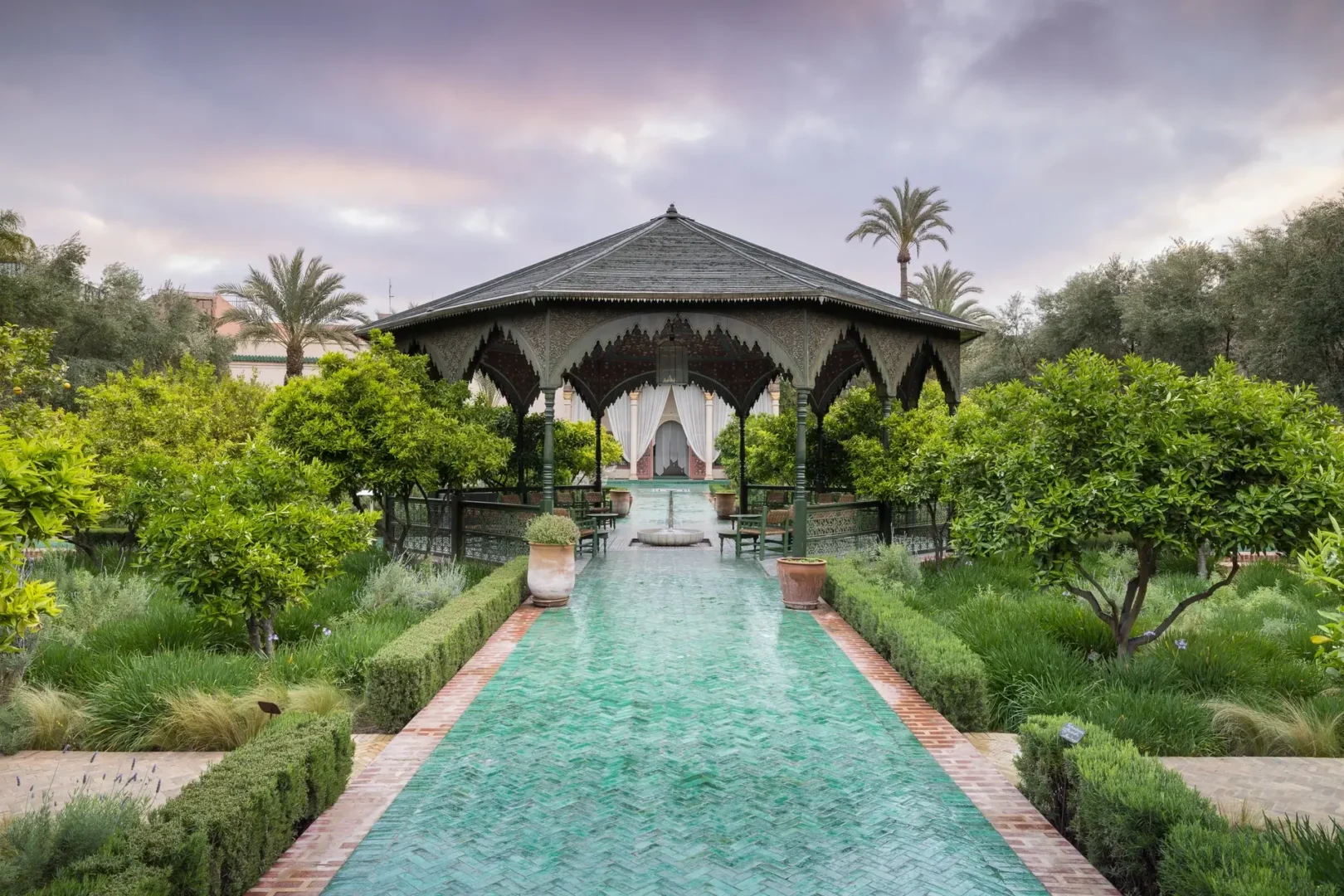
One of Marrakech’s best-kept secrets — genuinely. Le Jardin Secret is a historic garden complex hidden behind unmarked walls in the heart of the Medina’s souk district, a few minutes’ walk from Ben Youssef Madrasa. Closed to the public for most of its history, it was restored and reopened in 2016 after years of careful work.
The site dates to the Saadian period and contains two distinct garden types: an Islamic garden laid out in the traditional four-part (chahār bāgh) arrangement with water channels and geometric paths, and an exotic garden featuring subtropical and Mediterranean species collected from around the world. The Islamic garden in particular — its symmetry, its fountains, its sense of enclosed paradise — is among the most thoughtfully restored spaces in the city.
The tower in the main pavilion provides one of the best viewpoints in the Medina: rooftops stretching in every direction, minarets rising above the density, the Atlas Mountains visible on clear days.
Travel tip: Often empty compared to the major sites. Worth visiting mid-morning when the light in the Islamic garden is at its best and the tour groups are elsewhere.
10. Marrakech Medina
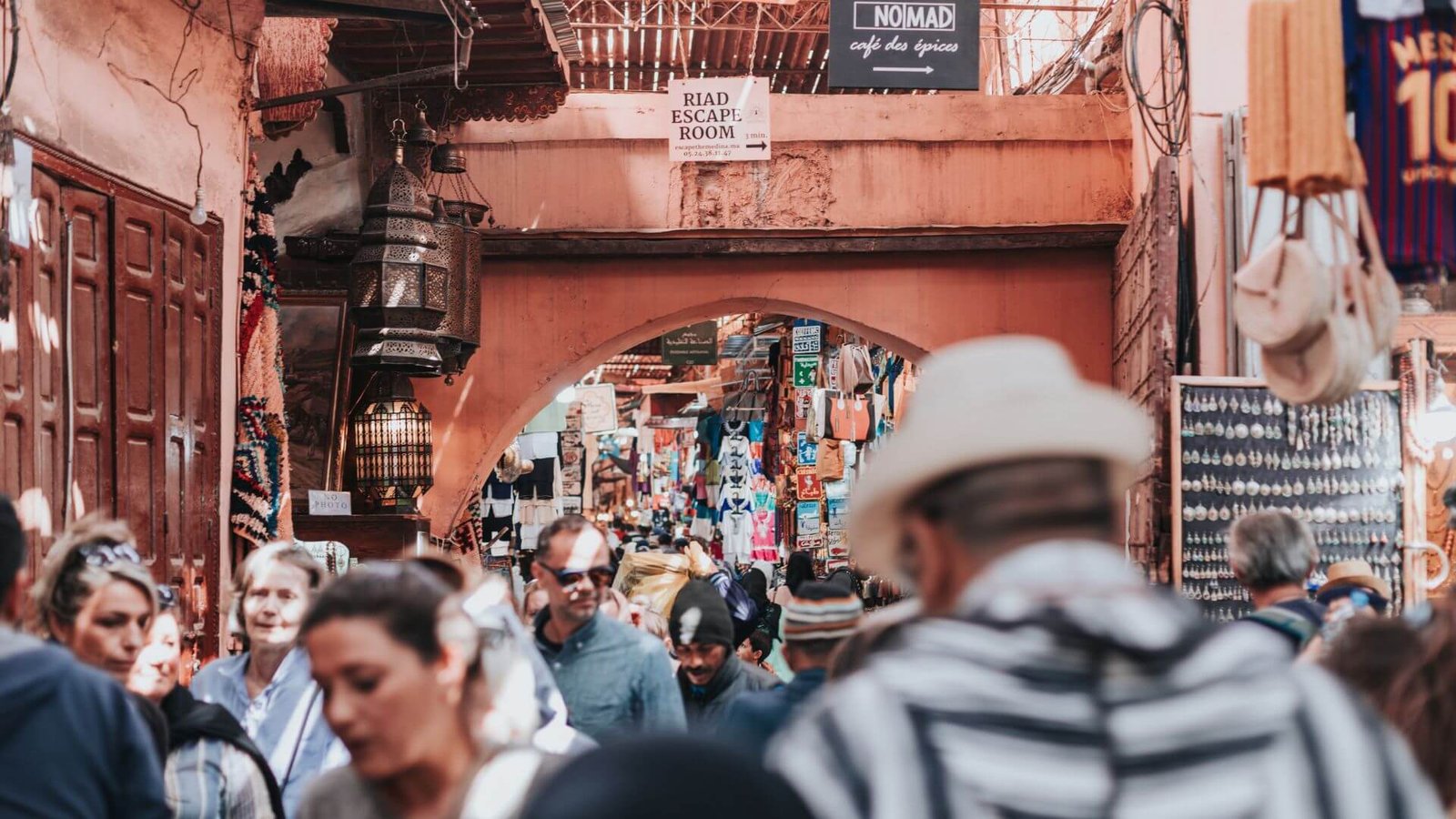
The Medina is not a single attraction — it’s the container for most of what makes Marrakech worth visiting. Founded in the 11th century and listed as a UNESCO World Heritage Site since 1985, it covers roughly six square kilometers and houses a population of around 200,000 people. The walls are real; the streets inside them have been continuously inhabited since the medieval period; the souks have operated in roughly the same locations for centuries.
The experience of moving through the Medina is unlike anything in Europe or North America — genuinely dense, genuinely loud, genuinely disorienting in ways that become enjoyable once you stop trying to navigate and start paying attention to what’s around you. The best moments are in the quieter residential quarters away from the main souk arteries: a courtyard glimpsed through an open door, a fountain in a shaded street, a neighborhood hammam with no particular significance beyond the fact that it’s been there for 400 years.
The major landmarks (Koutoubia, Bahia, Ben Youssef, the Saadian Tombs) are all inside or immediately adjacent to the Medina walls.
Travel tip: Allow at least one morning of genuine wandering with no specific destination. The Medina rewards getting lost in a way that no other city in the region matches.
11. Dar Si Said Museum
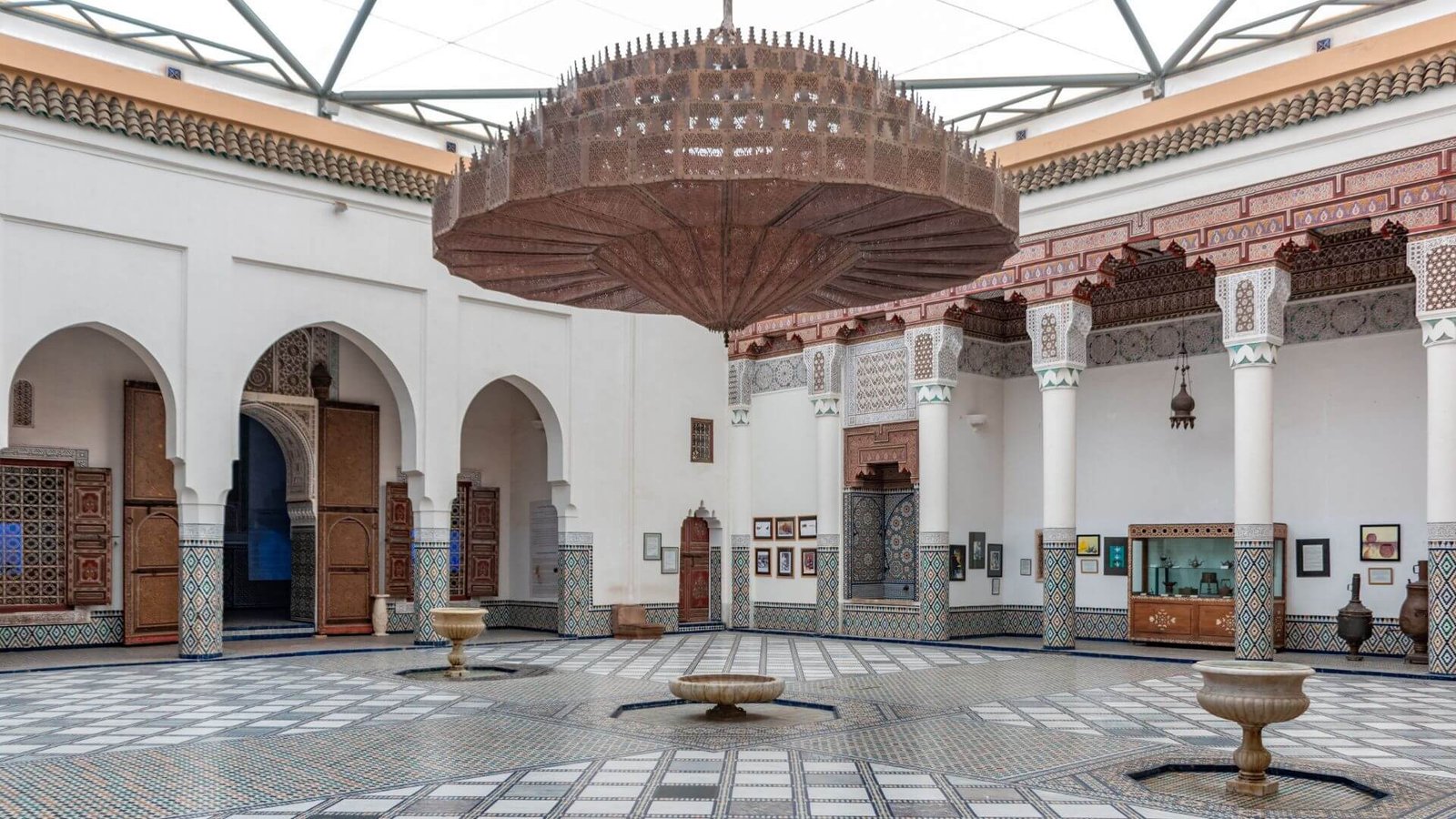
The Dar Si Said is a late 19th-century palace built by the brother of Bou Ahmed — the same family who built Bahia Palace — and shares something of its architectural character: carved cedar ceilings, zellige mosaics, painted stucco. It was converted into a museum of Moroccan arts and crafts in the 1930s and houses one of the best collections of traditional Moroccan objects in the country: Amazigh jewelry, carved doors and architectural woodwork, textiles, pottery, and metalwork spanning several centuries.
The building is genuinely beautiful and often significantly less crowded than Bahia Palace, which is only a few hundred meters away. For visitors interested in the craft traditions behind what they’re seeing in the souks — understanding what genuine quality looks like, what different regional traditions produced, how objects were made — this is an essential stop.
Travel tip: The carved wooden pieces on the upper floor — door panels, Quranic inscription boards, architectural fragments — are among the finest objects in the museum and get less attention than the jewelry and textiles. Worth finding.
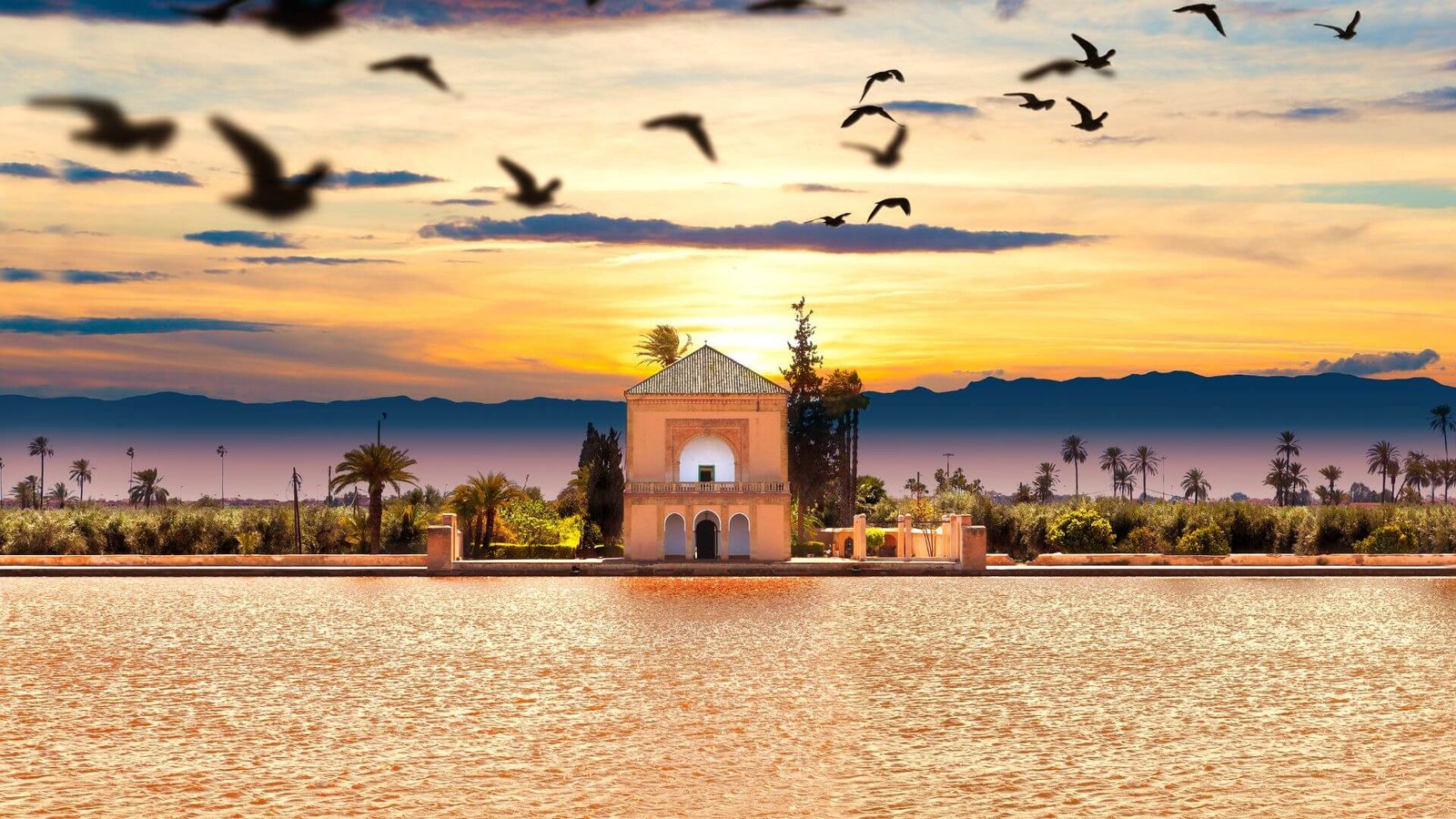
12. Menara Gardens
The Menara Gardens are primarily about one thing: the view. A 12th-century Almohad hydraulic system feeds a vast reflecting pool surrounded by olive groves, and on the far side of the water a 19th-century pavilion sits against the backdrop of the Atlas Mountains. On a clear day in winter or spring, with snow on the peaks and the mountains reflected in the water alongside the pavilion, it’s an extraordinary scene.
The gardens are a twenty-minute walk or a short taxi from the Medina and function as a city park as much as a tourist site — families, cyclists, picnickers. The experience is calmer and less structured than anything in the old city.
Travel tip: The Atlas Mountains are most visible in the morning before the haze builds, and in winter after rain. If you’re visiting specifically for the mountain backdrop, choose a clear morning.
13. Koutoubia Gardens
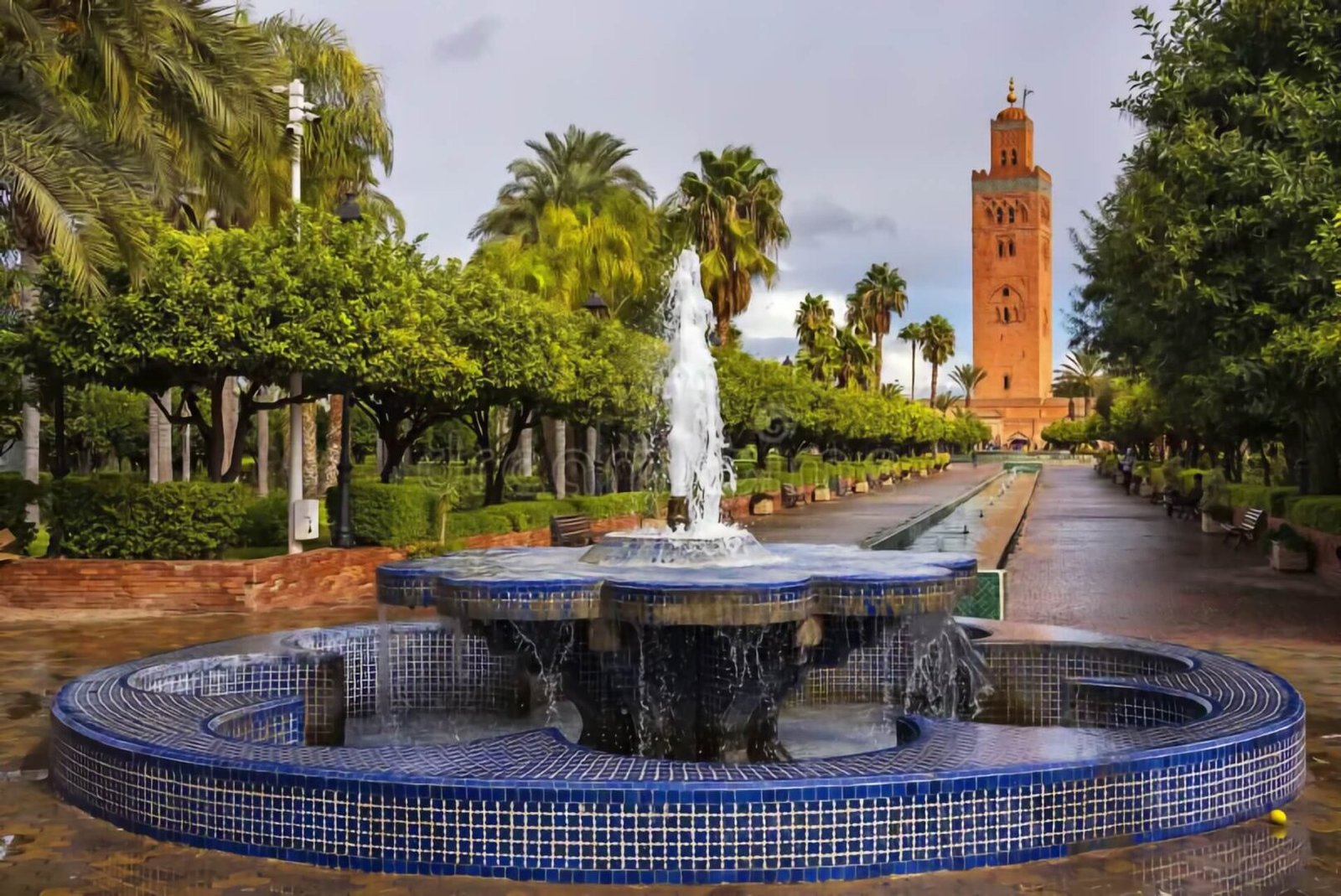
The gardens surrounding the Koutoubia Mosque are often overlooked in favor of the mosque itself — which is a mistake. The space is generous, well-maintained, and provides the best extended views of the minaret from multiple angles. Palm trees, flowering hedges, shaded paths, and enough space to actually sit and do nothing for a moment in the middle of the old city.
The gardens also function as the natural route between Jemaa el-Fna and the southern Medina, so they tend to be visited without being visited — walked through rather than appreciated. A few minutes on one of the benches looking up at the minaret in the late afternoon light is worthwhile on its own terms.
Travel tip: The western side of the gardens, away from the main Jemaa el-Fna approach, is the quietest. Also where the best light on the minaret falls in the afternoon.
14. Rahba Kedima Square
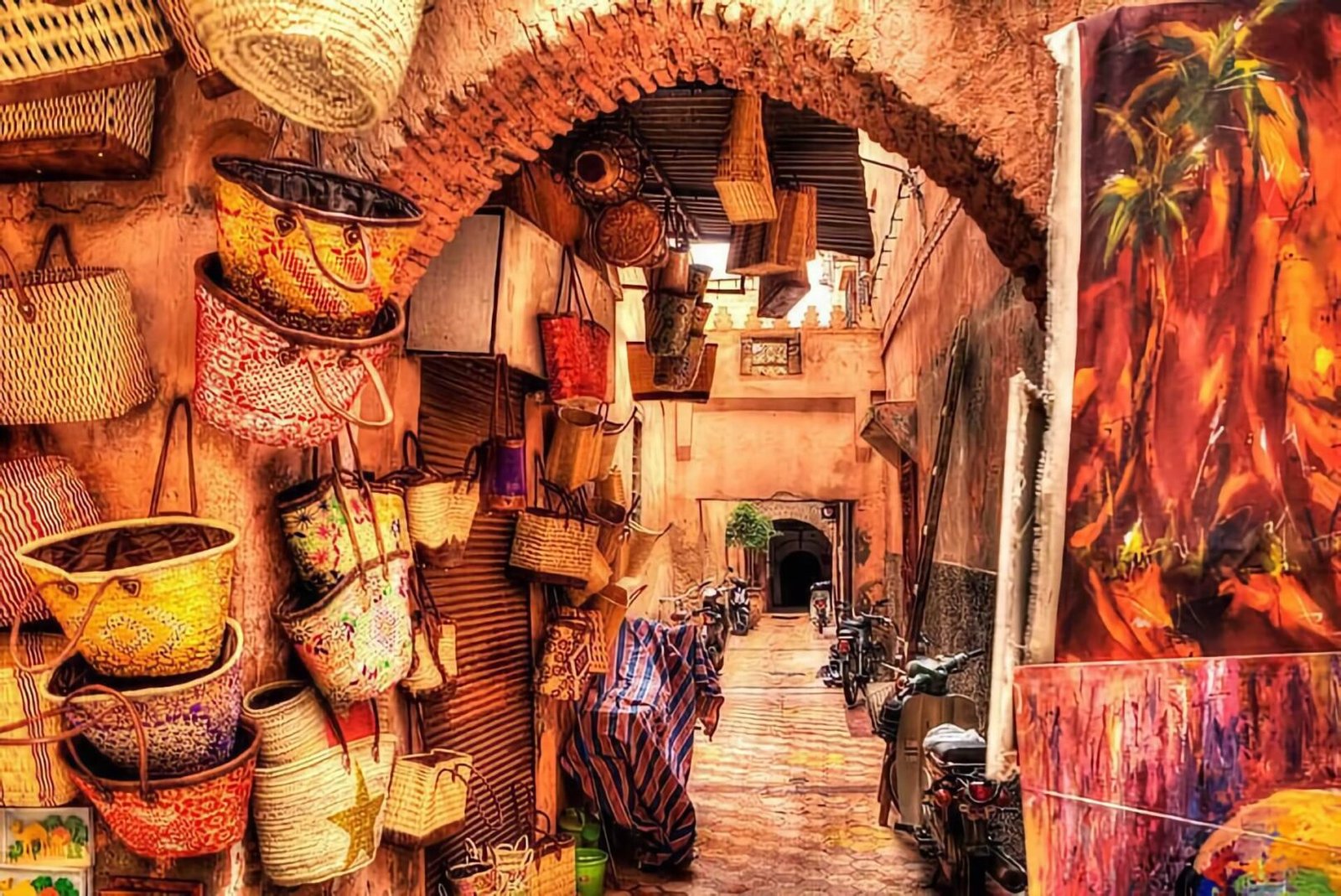
Rahba Kedima is the most interesting of the Medina’s secondary squares — a small open market space a few minutes north of Jemaa el-Fna where the merchandise leans toward the traditional and the practical: dried herbs, medicinal plants, spices sold loose by weight, pottery, and the kind of goods that local households actually need rather than tourists.
The square has a different character from the main souk arteries. It’s less pressured, the vendors less focused on catching passing visitors, and the merchandise more genuinely local. Snake charmers and herbalists still operate here, but without the intense performance quality of the main square. The surrounding architecture — an old caravanserai, the criée berbère where carpets were historically auctioned — gives the space historical texture.
It connects directly to the carpet souk and the textile souk, so natural to visit as part of a broader souk circuit.
Travel tip: The alley leading north from Rahba Kedima — Souk el-Attarine, the spice and perfume souk — is one of the most sensory experiences in the Medina. Follow it rather than doubling back.
15. Mellah Market
The Mellah is Marrakech’s historic Jewish quarter, established in the 16th century and adjacent to the royal palace — a deliberate architectural arrangement that placed a vulnerable minority community under the protection of the sultan’s walls. It remains architecturally distinct from the rest of the Medina: narrower balconies on the upper floors, wrought-iron details, facades with a different character from the mud-brick construction elsewhere.
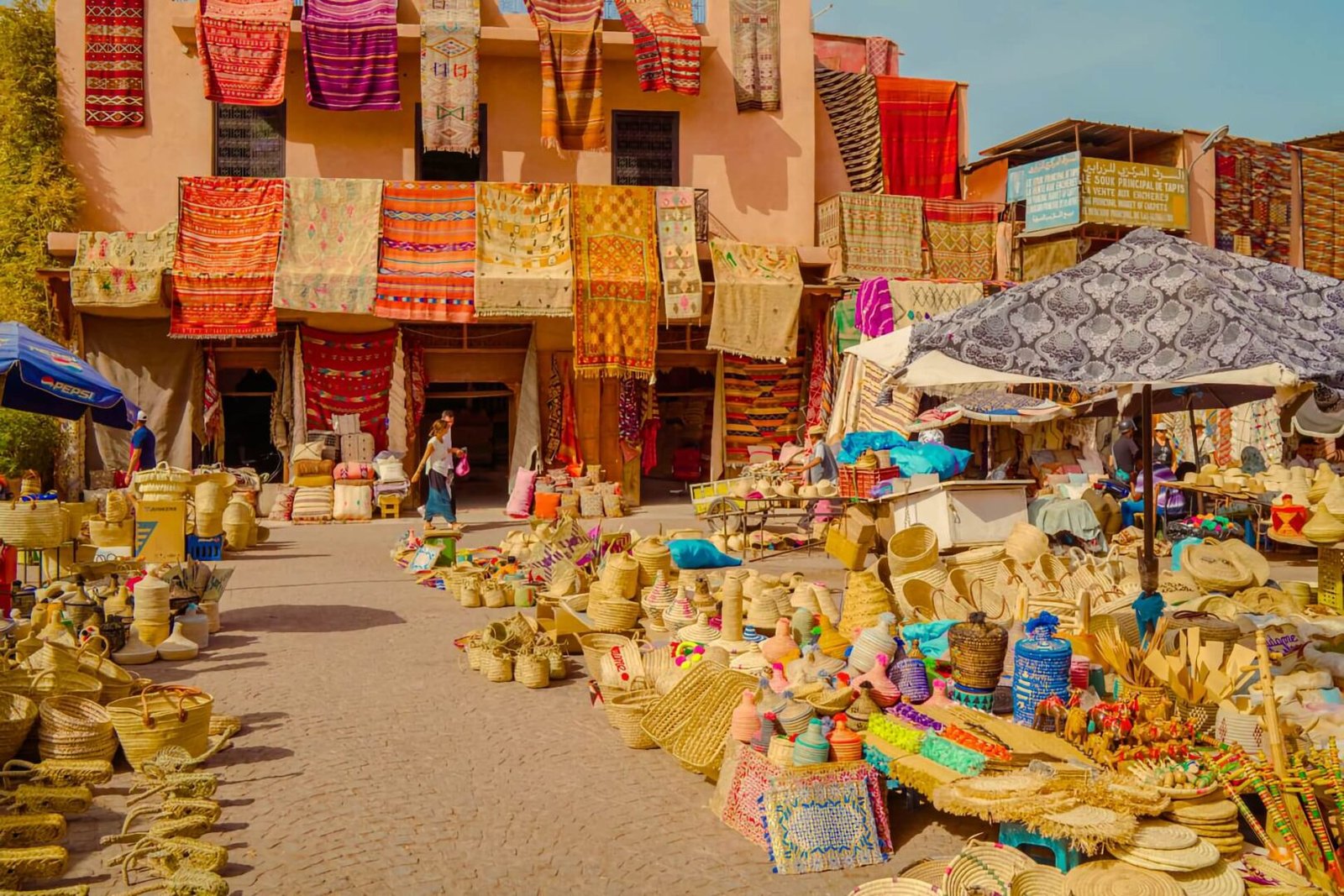
The market here is a local food and household goods market rather than a craft or souvenir market — fresh produce, olives, preserved lemons, spices sold to cooks rather than visitors. It’s among the most genuinely local commercial spaces in the city. The synagogues nearby (Lazama is the most accessible) are worth seeking out; several have been recently restored.
The Mellah is undervisited relative to its historical and architectural interest and tends to be quieter than the northern souk districts.
Travel tip: The Jewish Cemetery adjacent to the Mellah is one of the oldest in Morocco, with graves dating back several centuries. Open to visitors and worth a short visit for context on the quarter’s history.
Best Time to Visit Marrakech Attractions
Timing matters more in Marrakech than in many cities because the combination of heat and crowds can genuinely diminish several of the major sites.
Mornings vs. afternoons
For palaces, gardens, and the madrasa: arrive within the first hour of opening. The light is better, the crowds are thinner, and the temperature is manageable. By 11am in summer the heat is serious and the tour groups are at their peak. Jemaa el-Fna runs in the opposite direction — the evening visit (from sunset onward) is the one that matters.
Best seasons
Spring (March to May) and autumn (September to November) are the most comfortable for outdoor exploration. The weather is warm rather than hot, the light is excellent, and the Atlas Mountains are often snow-capped in spring which improves the view from Menara Gardens and El Badi Palace considerably.
Summer
June to August is the most crowded and hottest period. Schedule museums, the madrasa, and Dar Si Said during the midday heat; save outdoor sites for early morning and late afternoon. Majorelle Garden is particularly difficult in high summer — book ahead and arrive at opening.
Tips for Visiting Attractions in Marrakech
- Arrive at opening time for the major sites. Bahia Palace, Ben Youssef Madrasa, and Majorelle Garden are all significantly better before 10am — emptier, better light, more time to look.
- Carry cash. Most palace and museum entrances are cash only, in Moroccan dirhams. There are ATMs near Jemaa el-Fna and in Gueliz.
- Dress modestly. Shoulders and knees covered is appropriate everywhere and required for religious sites. The Medina is a working city, not a tourist zone — dress accordingly.
- A local guide is worth it for half a day. The historical layers of the Medina, the crafts traditions in the souks, the architectural details of the palaces — a knowledgeable guide makes these legible in a way that independent visits rarely match.
- Wear shoes that work on uneven ground. Cobblestones, steps, and uneven courtyard floors throughout. Anything with a heel will be miserable by midday.
- Carry water. There are few places to buy cold water inside the major sites. Bring your own, particularly in summer.
- Group sites by geography. Bahia Palace, El Badi Palace, the Saadian Tombs, and Dar Si Said are all in the southern Medina — natural to combine in one morning. Ben Youssef Madrasa, Le Jardin Secret, and Rahba Kedima are in the northern Medina. Majorelle Garden and the YSL Museum are a short taxi from both.
Attractions vs Experiences in Marrakech
The distinction matters when planning a trip. Attractions are places with fixed opening hours, entrance fees, and a specific visit — Bahia Palace, the Saadian Tombs, Majorelle Garden. You go, you see, you leave. Experiences are activities you participate in — a hammam, a cooking class, a hot air balloon flight, a morning in the souks with a guide. Both have real value; neither substitutes for the other.
The risk with Marrakech is spending all available time on the monument circuit and leaving without a cooking class, a hammam, or a proper morning in the souks — which are, for many visitors, what they remember most. The palaces are extraordinary. The experience of preparing a tajine from scratch in a riad kitchen or emerging from a hammam feeling genuinely different is also extraordinary, and it takes longer to arrange.
A good Marrakech itinerary includes both. Our Unique Experiences guide covers the activities side; this page covers the sites.
Frequently Asked Questions About Marrakech Attractions
What are the most famous attractions in Marrakech?
The five non-negotiable ones: Jemaa el-Fna, Bahia Palace, Majorelle Garden, Ben Youssef Madrasa, and the Saadian Tombs. If you add El Badi Palace and the YSL Museum to that list, you have a genuinely comprehensive overview of what the city offers architecturally and culturally.
Is 2 days enough to see Marrakech attractions?
Enough for the essentials — Jemaa el-Fna, Bahia Palace, Majorelle Garden, the Madrasa, and a walk through the souks. Not enough for the full list on this page. Three days allows a more relaxed pace and covers the secondary sites (Le Jardin Secret, El Badi, Dar Si Said, the Mellah) without rushing anything.
What attractions are free in Marrakech?
Jemaa el-Fna itself, the Koutoubia Gardens, the Menara Gardens (the grounds are free; the pavilion has a small fee), and wandering the Medina and souks cost nothing. The palaces, Majorelle Garden, the Madrasa, and museums all charge entrance fees — generally between 70 and 150 dirhams per person.
Are Marrakech attractions close to each other?
Most are. The southern Medina cluster (Bahia, El Badi, Saadian Tombs, Dar Si Said) can be done on foot in a single morning. The northern Medina cluster (Ben Youssef, Le Jardin Secret, Rahba Kedima) is another morning. Majorelle Garden and the YSL Museum are in Gueliz — a 10-minute taxi from anywhere in the old city.
More Things to Do in Marrakech
-
Top 20 Things to Do in Marrakech
The essential list. Every experience that matters in the city, ranked and explained.
-

Hidden Gems in Marrakech
The Mellah, the Chrob ou Chouf fountain, the Jardin Secret. What most visitors miss.
-
Photography Spots in Marrakech
The best locations for photography, with honest advice on timing and access.
-

Shopping Guide in Marrakech
Which souks sell what, how to navigate, and how to bargain without embarrassing yourself or the seller.
 Marrakist Concierge