
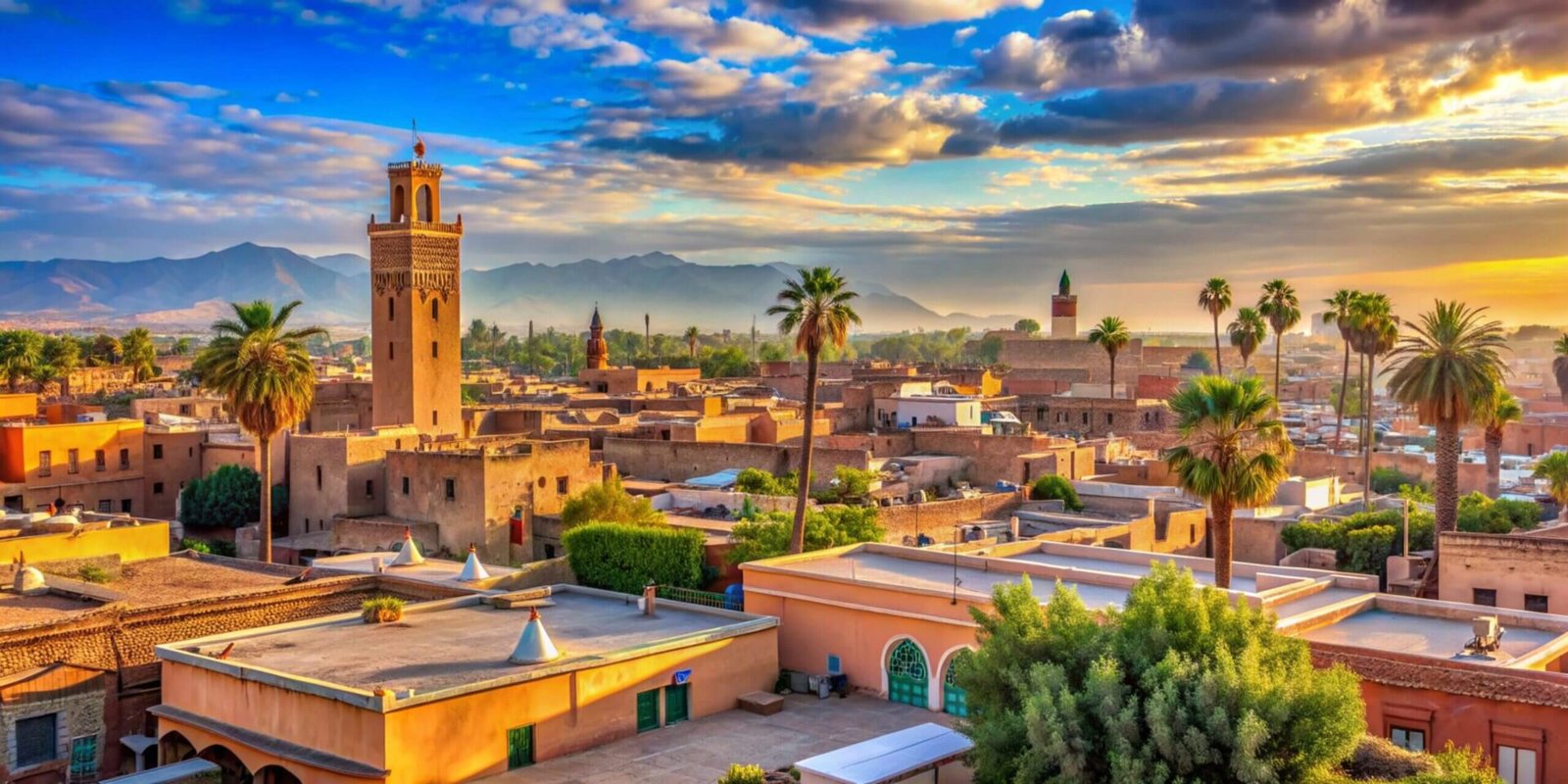
Start at the Koutoubia Mosque rather than the Jemaa el-Fna — the square at 9am is a dusty open space without its evening character, and beginning there produces a flat first impression. The Koutoubia’s 12th-century minaret is the city’s geographic orientation point and is best seen in the morning light. Walk the garden perimeter, then proceed southeast toward Bahia Palace (25 minutes on foot). Allow 45–60 minutes at the palace — the 19th-century 8,000 square metre complex requires time to absorb. Continue to the Saadian Tombs (5 minutes from Bahia Palace), 30–45 minutes. From the Saadian Tombs, the walk north through the Medina toward the central souk spine passes the beginning of the spice market at the Rahba Kedima — a good preview of the afternoon.
7 Days Morocco Trip from Marrakech: City, Desert & Beyond
Seven days is the format that turns a Marrakech visit into a Morocco trip. The shorter itineraries cover the city thoroughly; this one covers the city and then uses the remaining days to traverse the southern Morocco landscape — High Atlas, pre-Saharan desert, the Sahara dunes at Merzouga, the Atlantic coast at Essaouira. Each day covers genuinely different terrain, architecture, and atmosphere.
The structure is: two full days in Marrakech establishing the city, a third flexible day for a nearby excursion or deeper city exploration, a fourth and fifth day for the desert circuit, a sixth day for either the Atlas Mountains or Essaouira, and a seventh day for final Marrakech time and departure preparation. Five nights in Marrakech and one night in the desert is the standard configuration.
Over seven days, the route covers: the medieval Medina of Marrakech, the French-colonial garden quarter of Gueliz, the Berber villages of the Ourika Valley or the falls at Ouzoud, the High Atlas crossing via the Tizi n’Tichka pass, the Saharan dunes of the Erg Chebbi at Merzouga or the Agafay plateau, and either the Atlantic port city of Essaouira or the mountain trails above Imlil.
- Ouzoud Waterfalls
- Morocco's highest at 110m — 2.5 hours from Marrakech
- Jebel Toubkal
- 4,167m — North Africa's highest peak, reachable from Imlil
- Standard configuration
- 5 nights Marrakech + 1 night desert
- Final souk morning
- budget 400–600 dirhams before entering
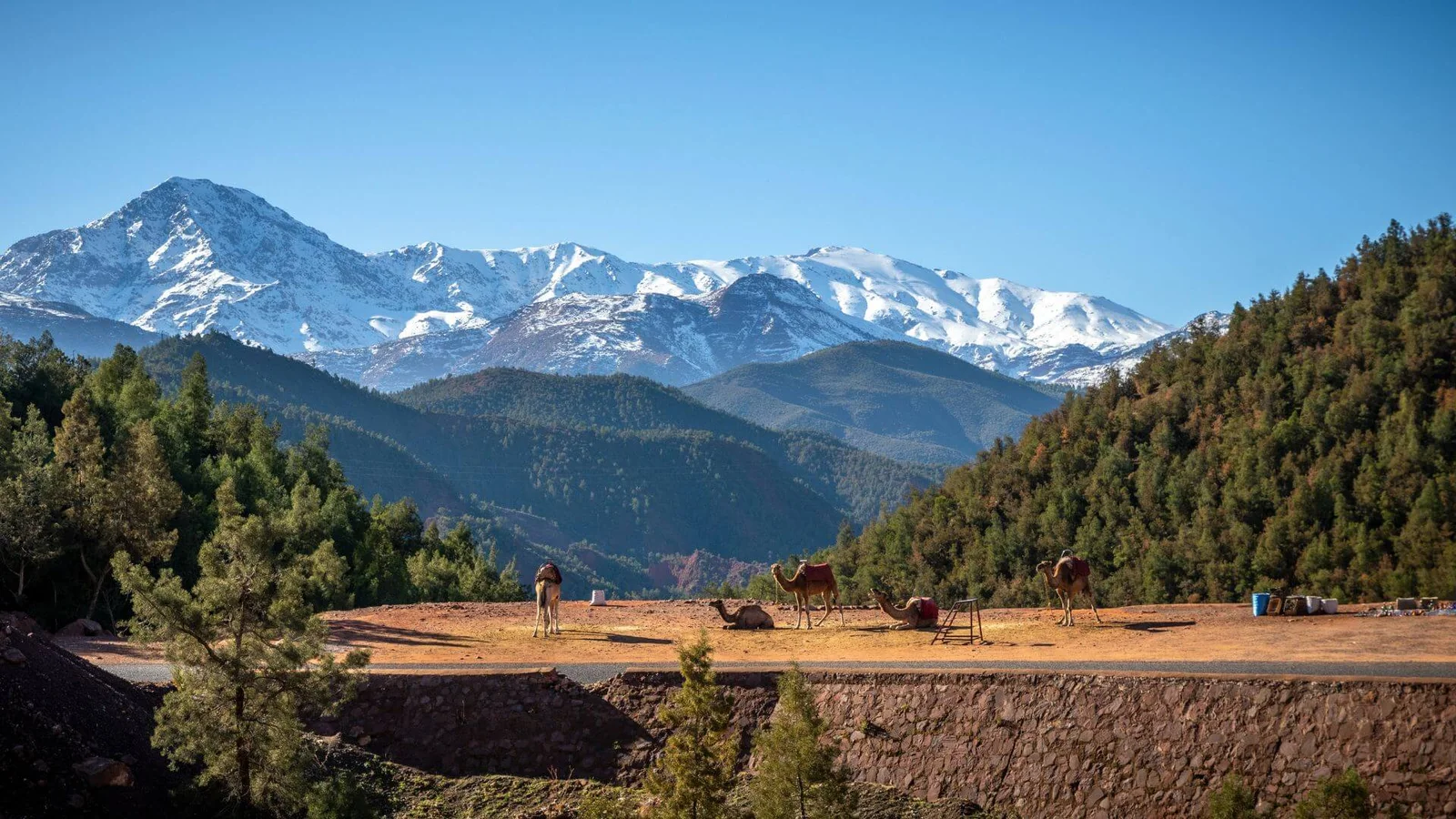
7 days in Morocco — city, desert, mountains, coast: the format that turns a Marrakech trip into a country-wide journey without leaving a single day feeling rushed
Itinerary at a Glance
Seven days structured into four distinct phases: the city (Days 1–2), a flexible day for nearby exploration (Day 3), the desert circuit (Days 4–5), and the landscape day plus final Marrakech time (Days 6–7). Each phase uses different transport, different scenery, and a different pace.
- Day 1: Koutoubia, Bahia Palace, Saadian Tombs, souk circuit, Jemaa el-Fna at sunset
- Day 2: El Badi Palace, Majorelle Garden, YSL Museum, hammam
- Day 3: Ourika Valley or Ouzoud Waterfalls day trip, or deeper Medina exploration
- Day 4: Desert departure — Agafay (40 minutes) or Sahara (9–10 hours) — overnight in the desert
- Day 5: Return from the desert, rest, final Marrakech evening
- Day 6: Atlas Mountains excursion or Essaouira day trip
- Day 7: Final Marrakech morning, souks, last meal, departure
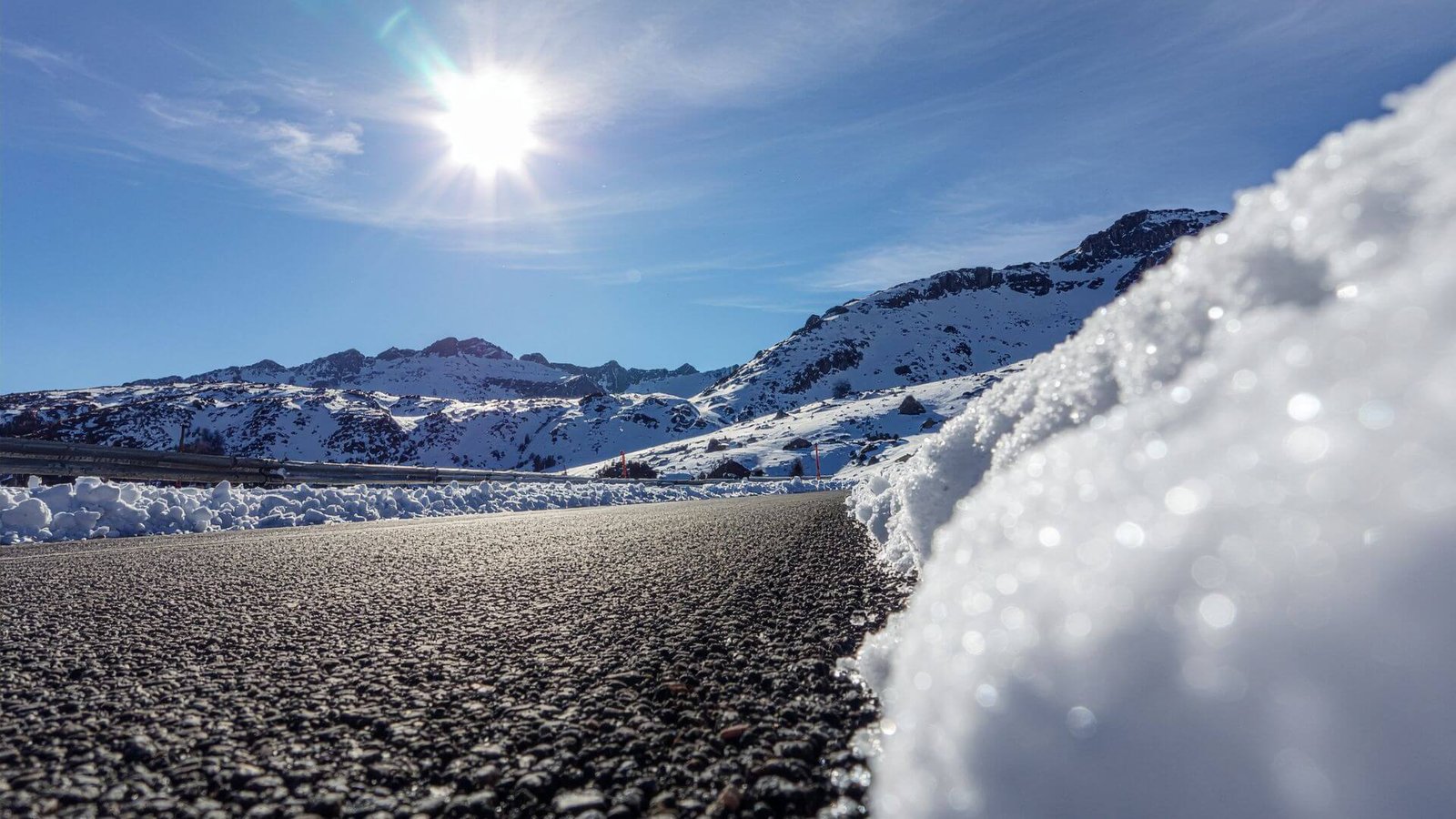
Day 1: Explore Marrakech Medina & Iconic Landmarks
Day 1 establishes the Medina — its monuments, its geography, its evening character. The seven-day format is more forgiving than shorter itineraries because Days 1 and 2 share the Marrakech load, but the Day 1 sequencing logic still applies: monuments first, souks after lunch, Jemaa el-Fna in the evening.
Morning: Jemaa el-Fna & Medina Walk
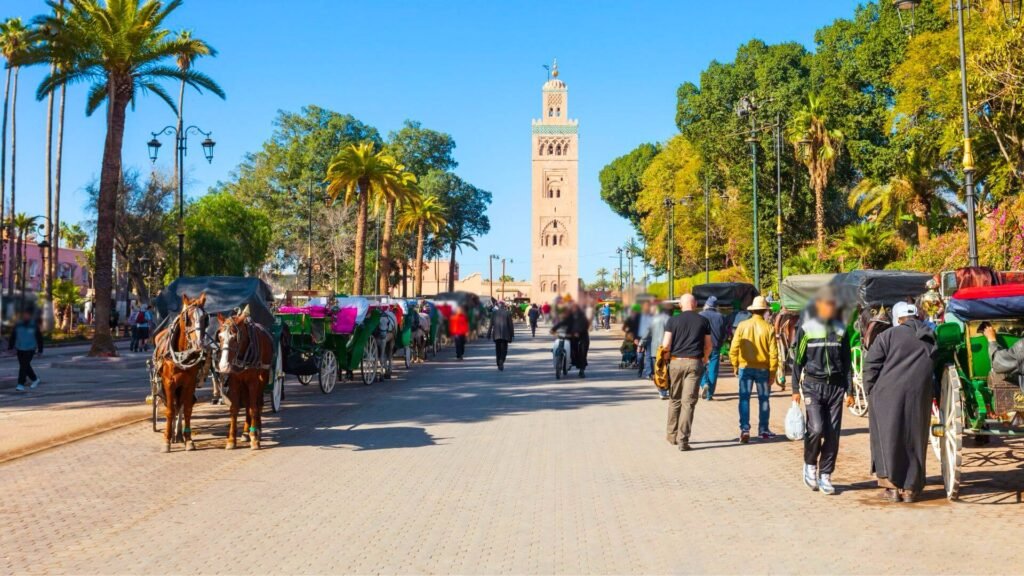
Lunch: Traditional Moroccan Cuisine
A rooftop lunch above the souk circuit rather than a ground-level café inside it. Nomad and Café des Épices are both on the Rahba Kedima perimeter — both have terrace views, both serve reliable Moroccan food. The practical purpose of the rooftop lunch on Day 1 is identical to its purpose in the shorter itineraries: spatial recovery and perspective before the afternoon souk immersion.
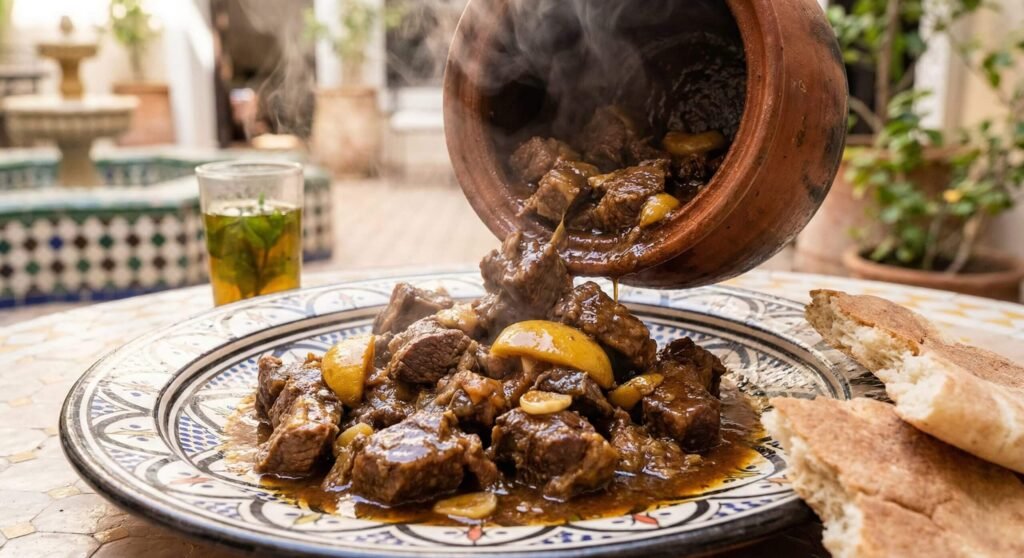
Afternoon: Majorelle Garden & Historical Sites
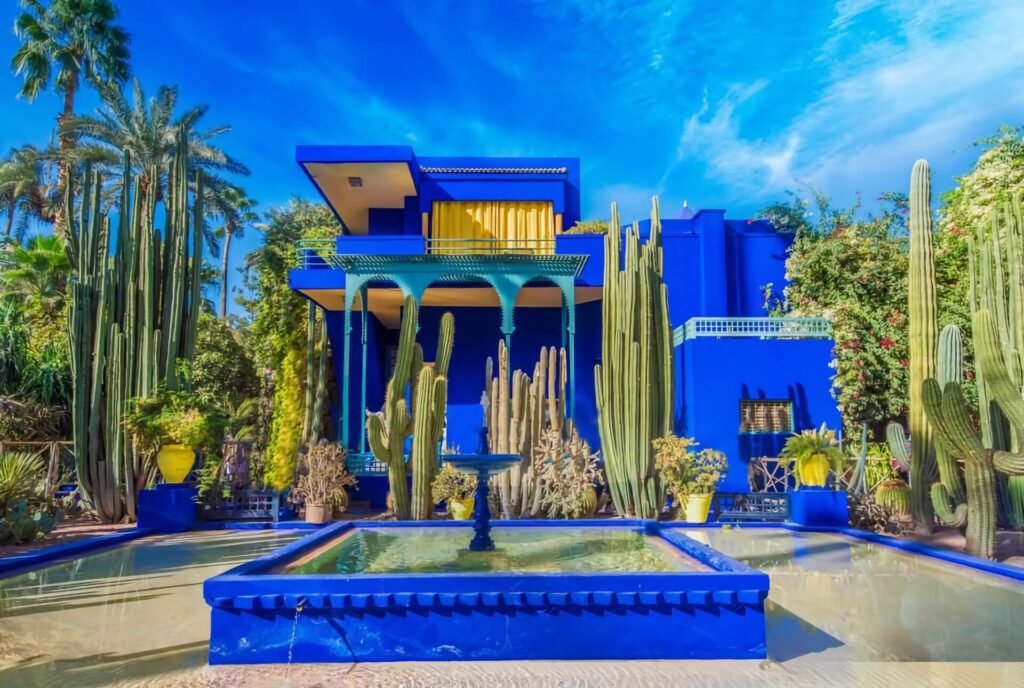
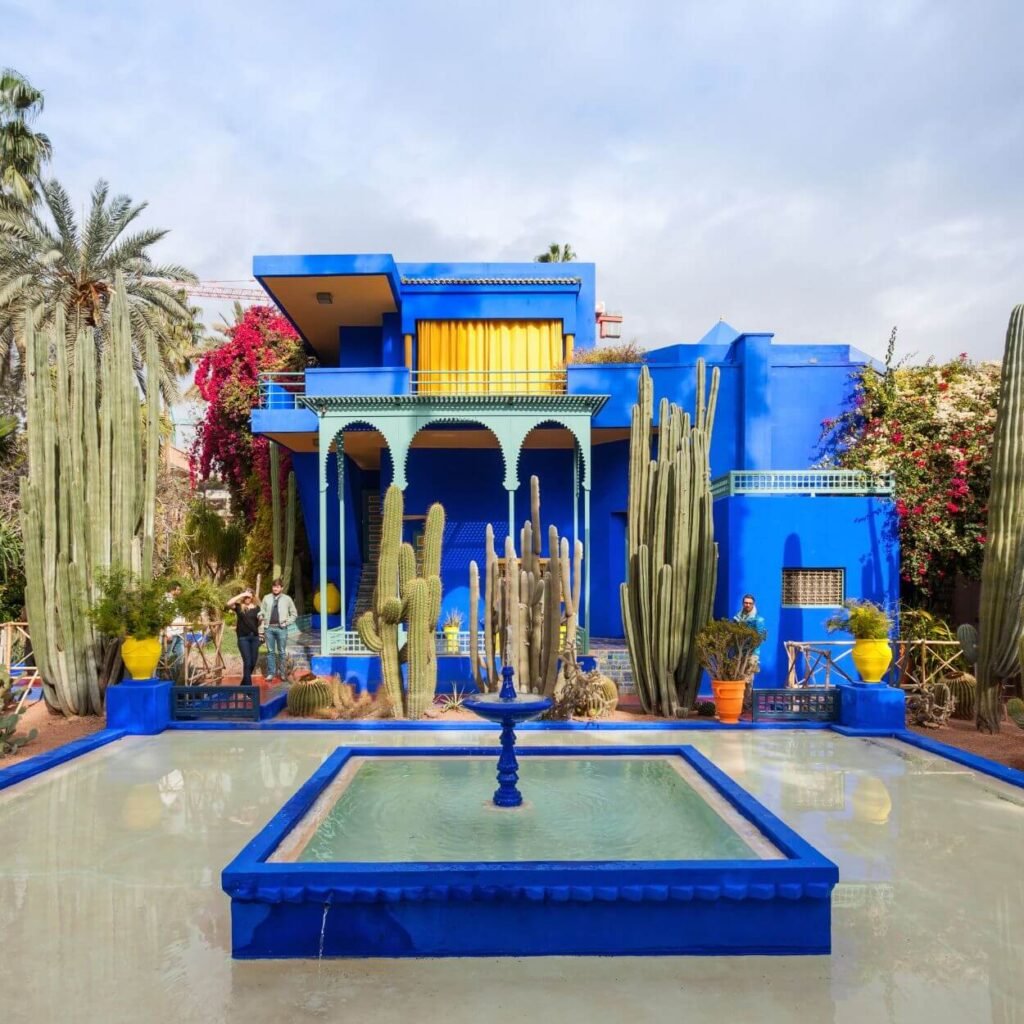
The Jardin Majorelle is a 15-minute taxi from the Medina. In the seven-day itinerary, moving Majorelle to Day 1 afternoon is logical if Day 2’s morning is reserved for El Badi Palace and the southern Medina. Alternatively, keep Majorelle on Day 2 and use the Day 1 afternoon for deeper souk exploration — the Mouassine quarter, the dyers’ souk, the artisan workshops north of the central souk spine. The Koutoubia and Saadian Tombs have already been visited in the morning; the afternoon can be souk-only.
Evening: Dinner & Sunset Views
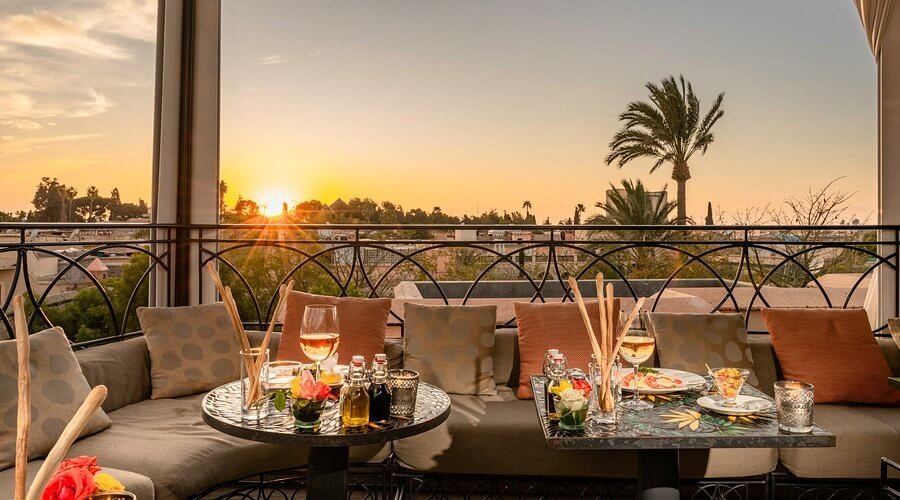
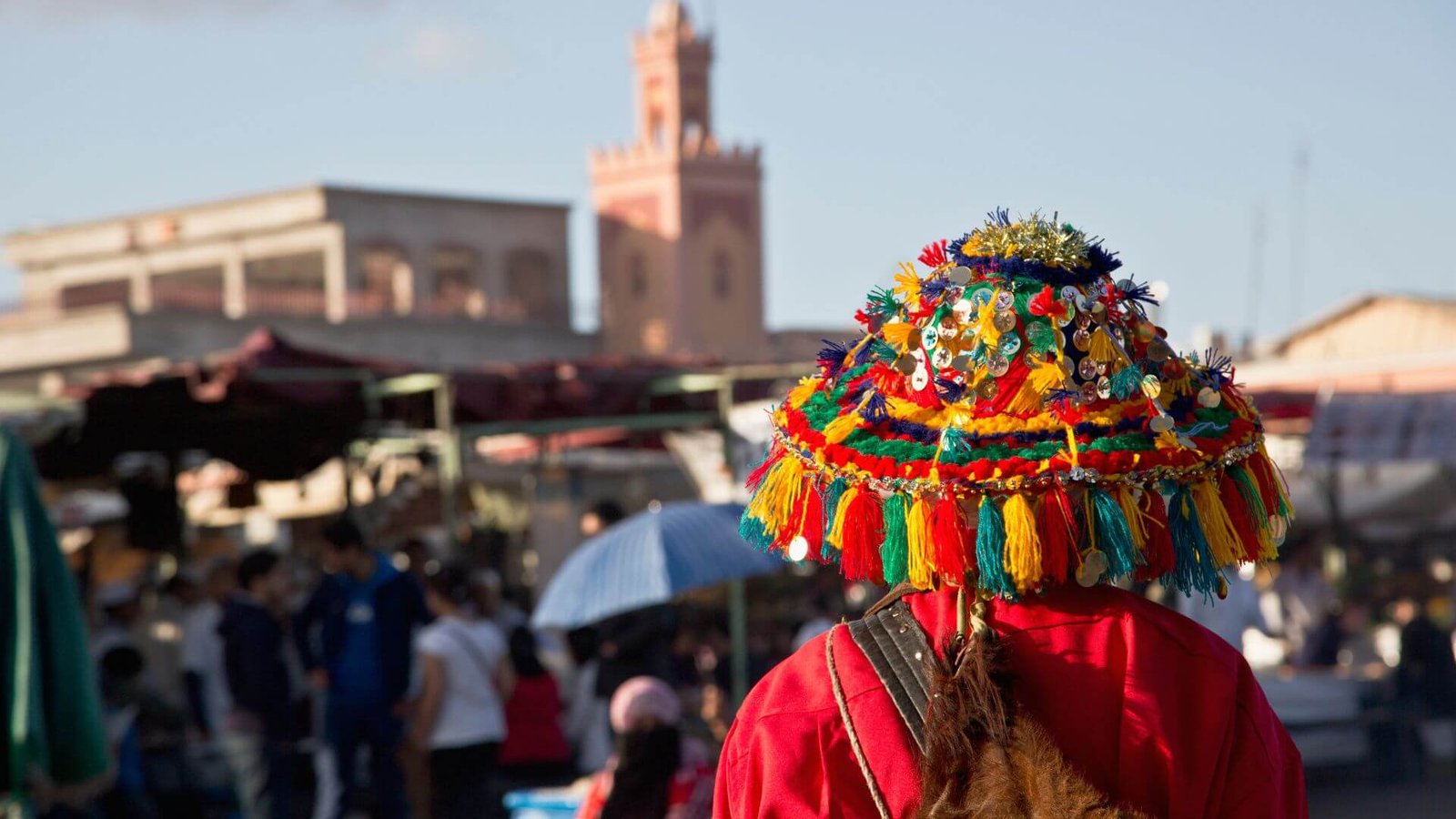
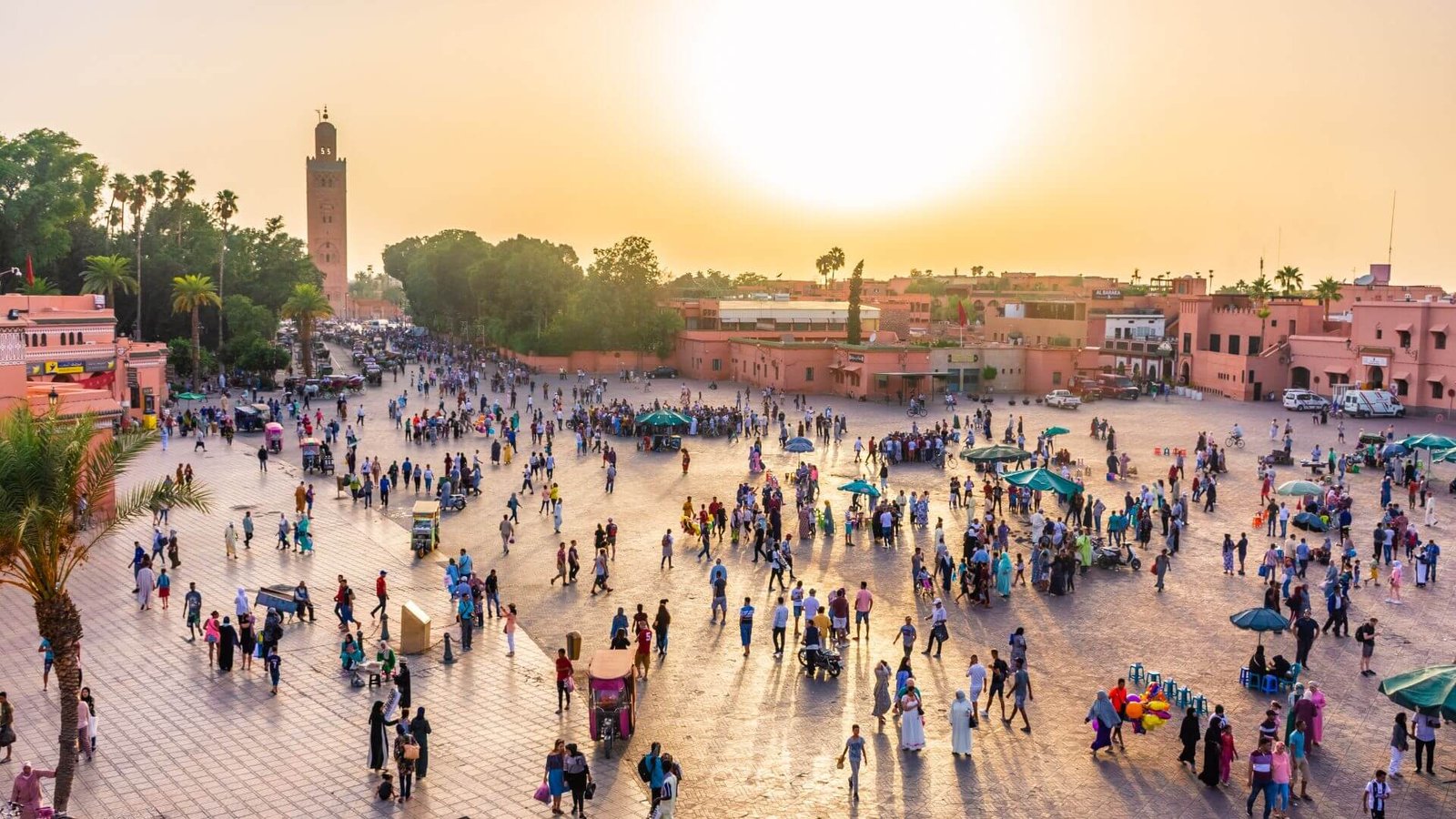
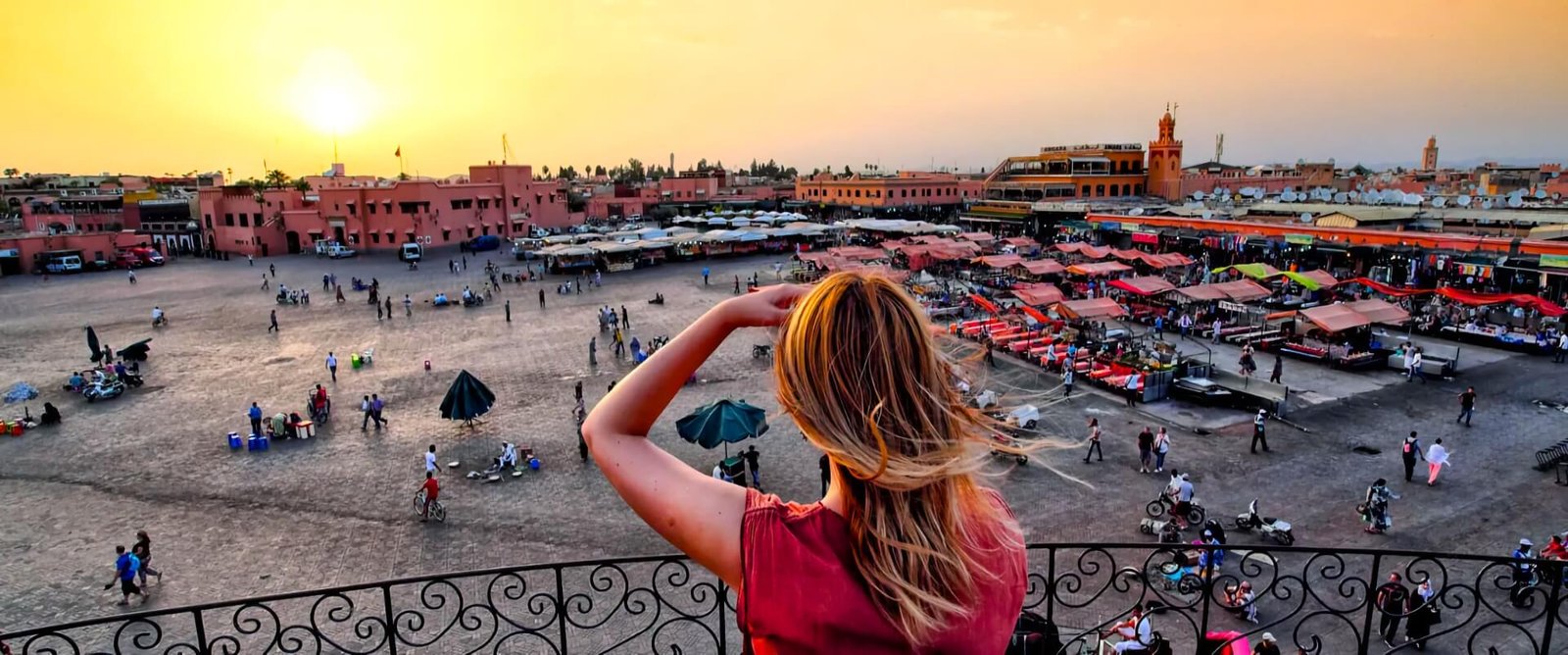
The Jemaa el-Fna between 6 and 9pm is the correct first evening in Marrakech. Find a rooftop terrace 30–45 minutes before sunset — Café de France or the hotel terraces on the northern side of the square — watch the food stalls set up below. Descend after sunset and walk through the square at full evening operation. A rooftop dinner (Café Arabe, Terrasse des Épices, Le Marrakchi) gives the view and the meal in one; a food stall dinner gives the square experience from inside it. Both are correct on Day 1.
Day 2: Palaces, Gardens & Authentic Cultural Experiences
Day 2 completes the Medina’s historical programme and adds the hammam or cultural workshop that marks the end of the Marrakech city phase. The seven-day itinerary has the luxury of giving Day 2 its own monument (El Badi Palace) rather than requiring everything to fit into Day 1.
Morning: Bahia Palace & El Badi Palace
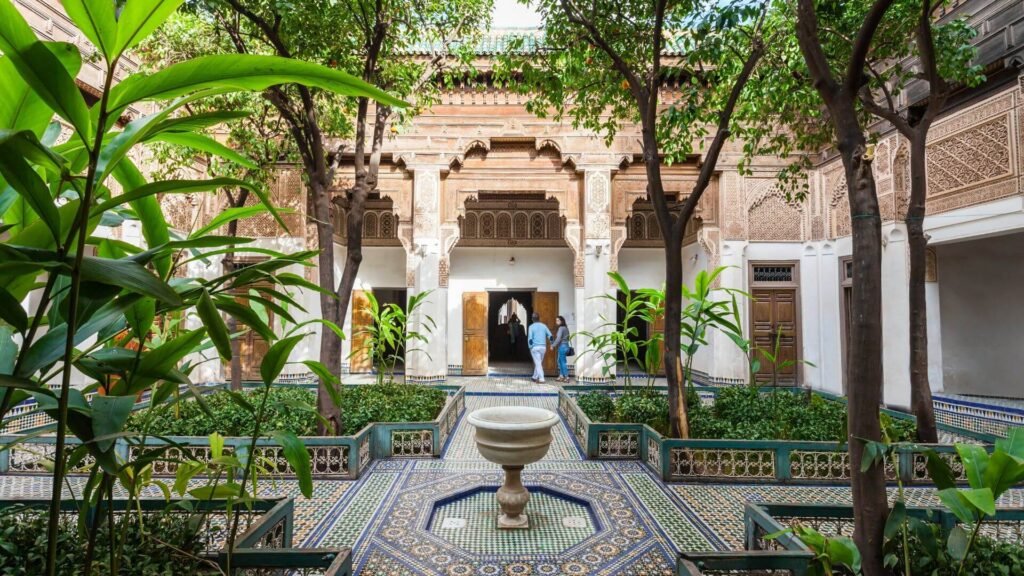
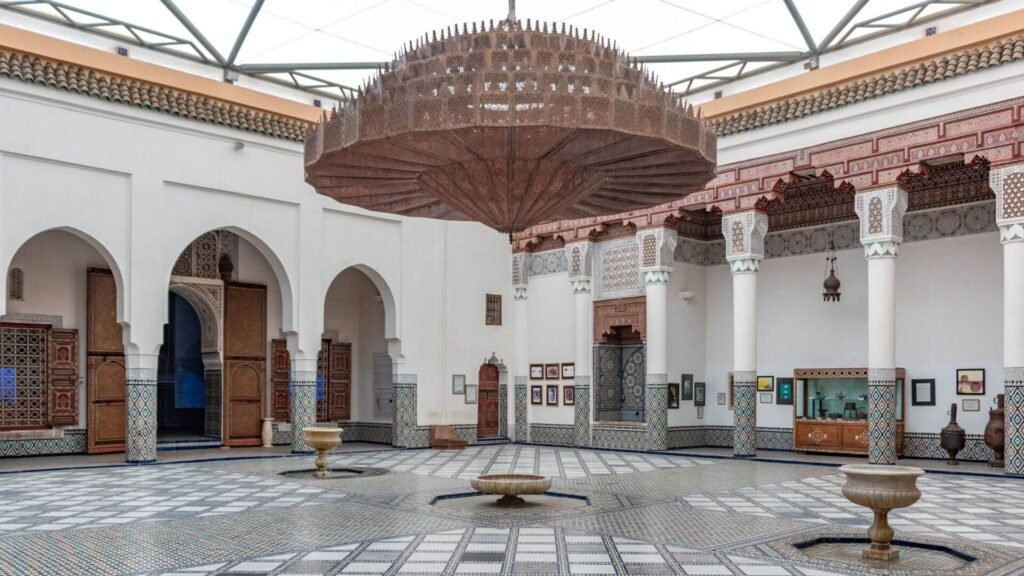
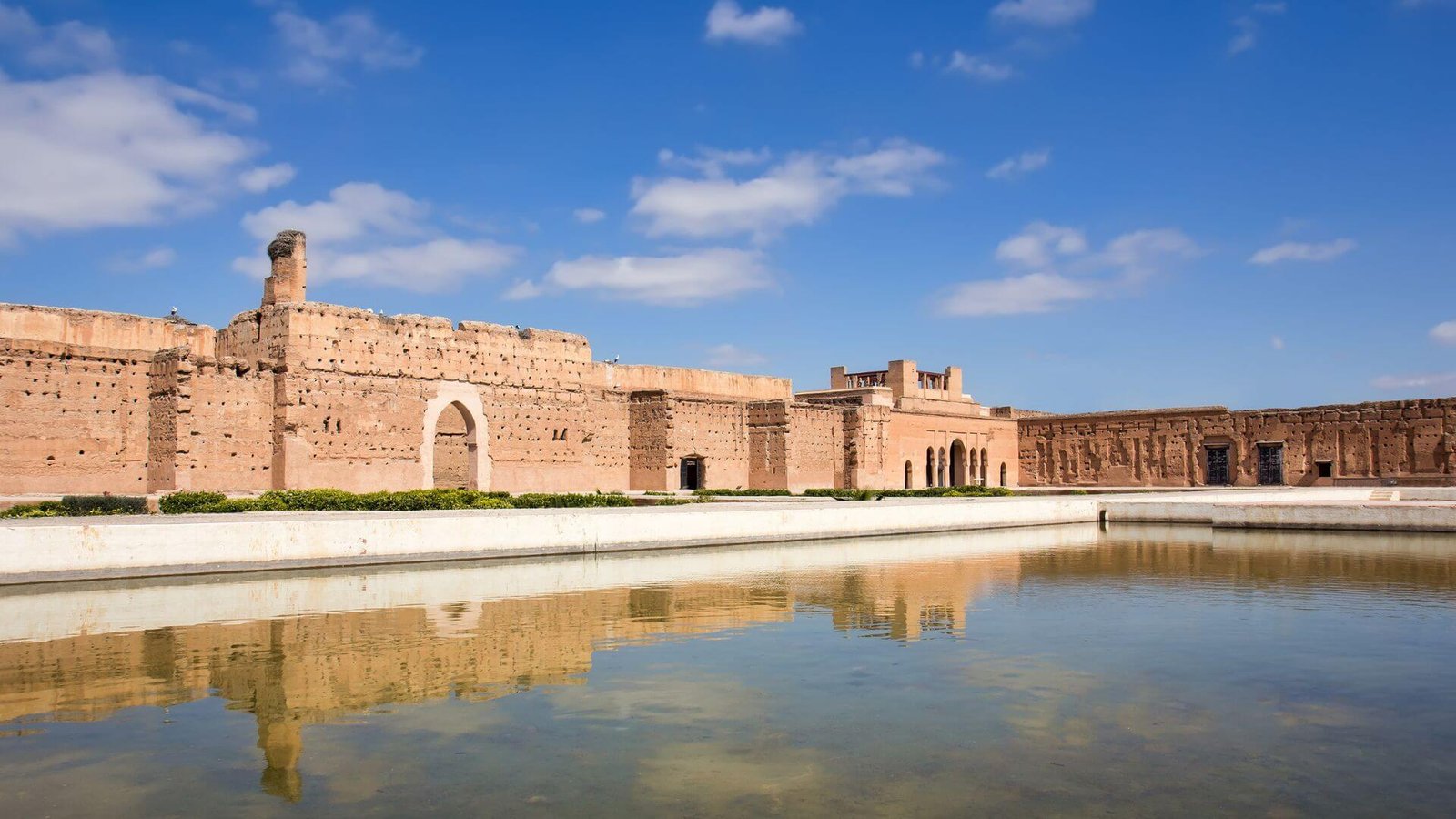
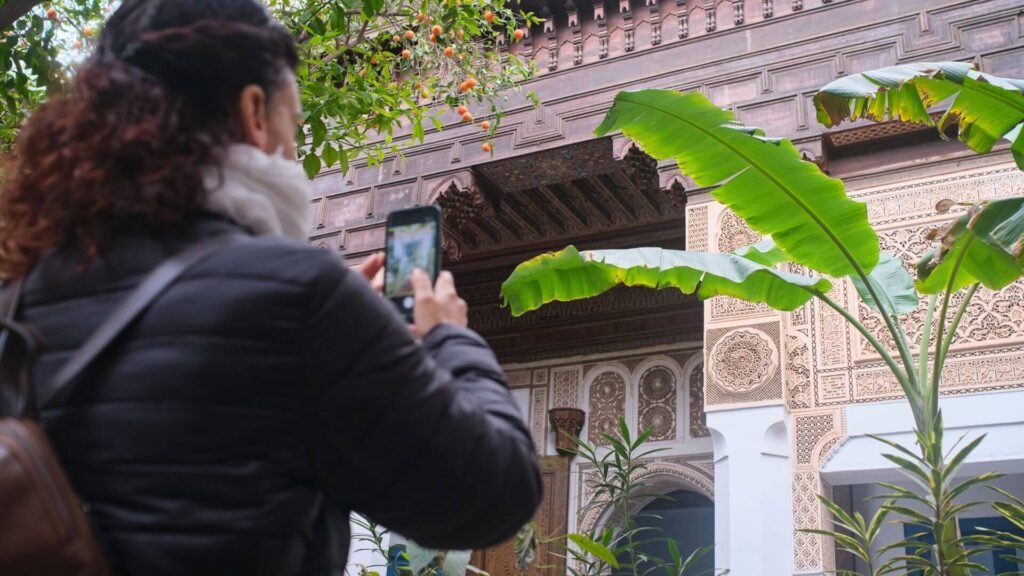
El Badi Palace is a 10-minute walk from Bahia Palace in the same southern Medina quarter. The two palaces represent different historical periods and different architectural registers: Bahia is a 19th-century palace in habitable condition, its 8,000 square metres of cedar, zellige, and stucco in the state its last occupant left it; El Badi is a 16th-century palace reduced to excavated ruins after its stones were stripped for other projects in the 1700s, leaving a vast open enclosure with stork nests on the surviving towers and an underground network of subterranean passages. Allow 45–60 minutes at each.
Arrive at Bahia Palace before 9:30am. By 10:30am the tour groups begin arriving — the palace is popular and the narrow courtyard sequences become congested. El Badi Palace is less crowded and can be visited at 11am without the same pressure.
Lunch: Local Riad or Café
The southern Medina around place des Ferblantiers (adjacent to El Badi Palace) has a cluster of cafés and small restaurants serving local clientele rather than tourists — harira soup, briouates, msemen. Alternatively, a café inside the Mellah (the old Jewish quarter, immediately adjacent) for a quieter lunch in a less tourist-facing part of the Medina.
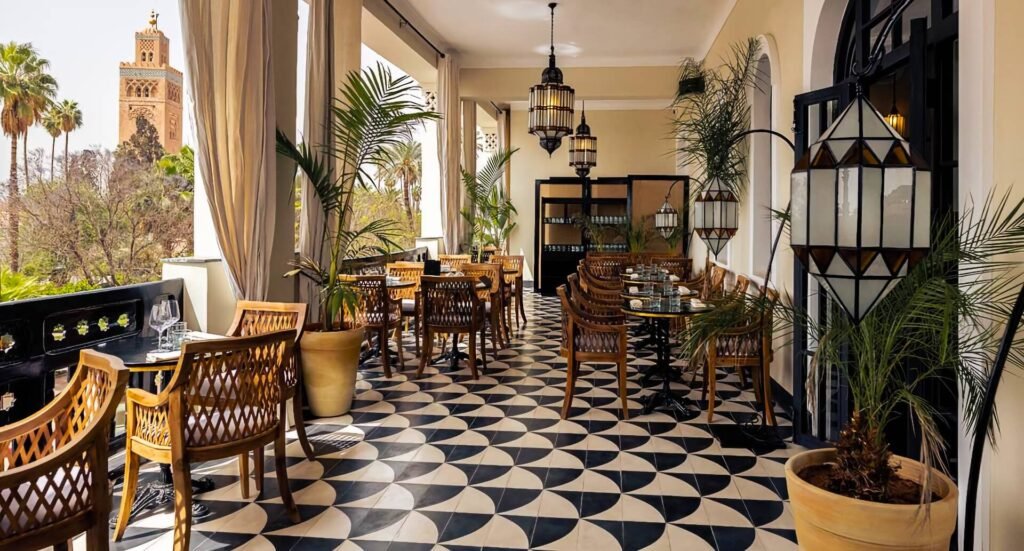
Afternoon: Majorelle Garden & Yves Saint Laurent Museum
If Majorelle Garden was not visited on Day 1 afternoon, this is the correct placement. The garden opens at 8am and is at its least crowded in the morning, but a 2pm visit after the lunch rush has cleared is still significantly more pleasant than a mid-morning visit on a peak day. The YSL Museum immediately adjacent covers the designer’s Moroccan period (1966–2008) — the permanent collection is specifically relevant to Marrakech’s palette and architectural vocabulary and is worth an hour if design history is a priority.
Evening: Hammam or Cultural Workshop
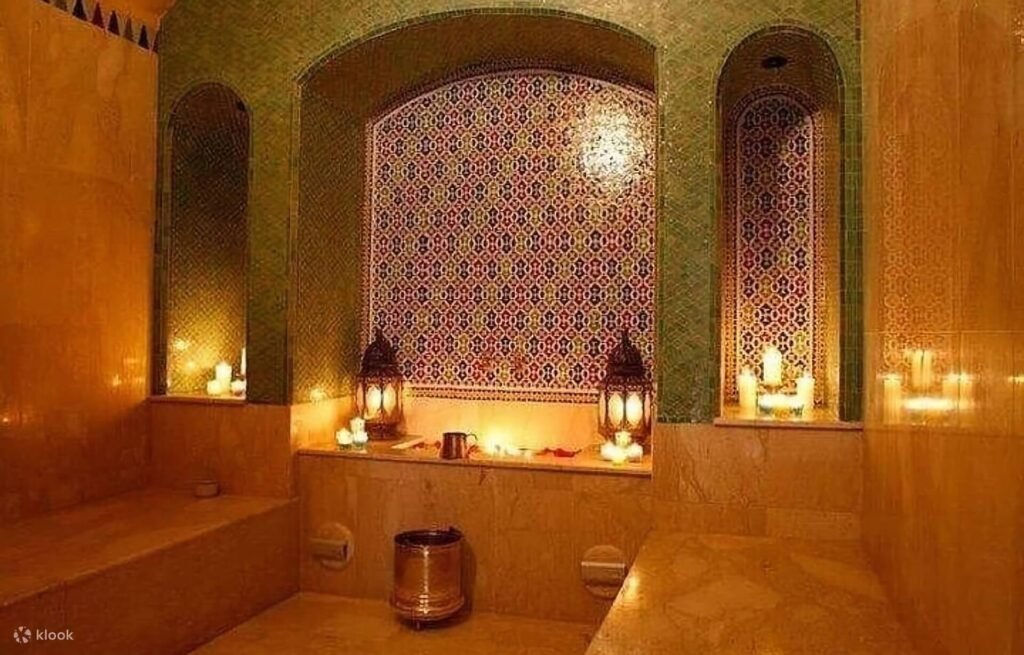
The hammam closes the Marrakech city phase cleanly — a 90-minute physical reset before the day-trip and desert days begin. Hammam de la Rose (near Mouassine), Les Bains de Marrakech, or a riad hammam for a first visit; book in advance. For a cooking workshop as an alternative: a 3-hour evening class in a Medina riad (typically 6–9pm) covers a tagine, salad selection, and mint tea and is one of the more social experiences available in the city. Both produce a different kind of engagement with Moroccan culture from monument visiting, and Day 2 evening is the correct placement for this in a seven-day itinerary.
Day 3: Optional Day Trips & Hidden Gems Around Marrakech
Day 3 uses the geographic accessibility of Marrakech for one of its two most distinctive nearby landscapes: the Ourika Valley in the High Atlas foothills to the south, or the Ouzoud Waterfalls to the northeast. The third option — staying in the city — is the correct choice for visitors who found the first two days’ Medina intensity higher than expected and need a slower day before the desert.
Option 1: Ourika Valley
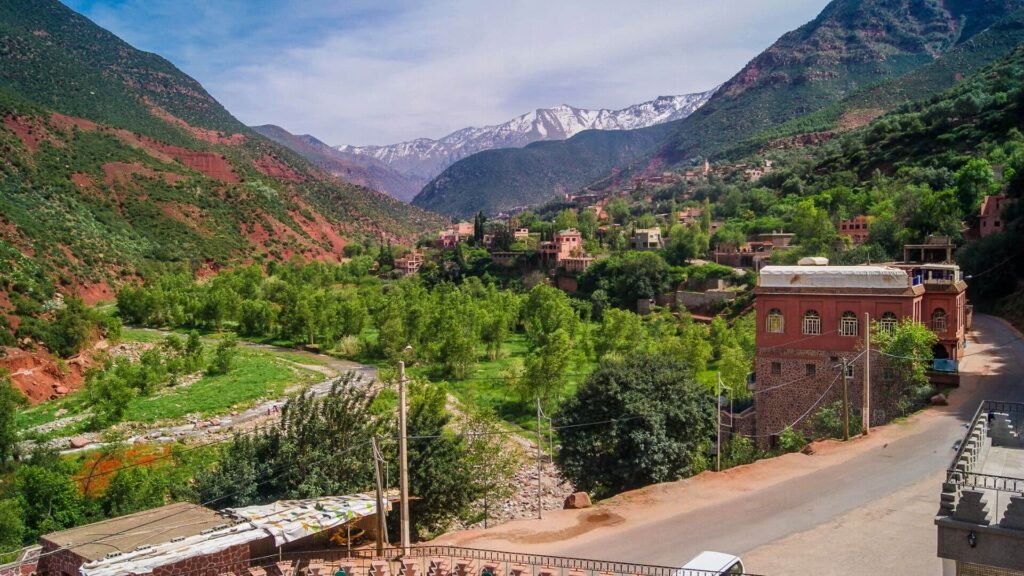
The Ourika Valley is 30km south of Marrakech — 45 minutes by organised transport on the P2017 road. The valley floor is lined with Berber villages, market gardens, and the Ourika river. The upper valley road ends at the trailhead for the Setti Fatma waterfalls (seven cascades, the first accessible in 20 minutes of walking). The landscape transition from the semi-arid plain around Marrakech to the green valley floor is immediate and dramatic — a useful introduction to the High Atlas geography before the Day 4 desert departure. Full-day tours include the valley road, the Setti Fatma waterfalls trail, and a lunch at a riverside restaurant. Half-day tours (4–5 hours) cover the valley without the upper waterfall section.
Option 2: Ouzoud Waterfalls
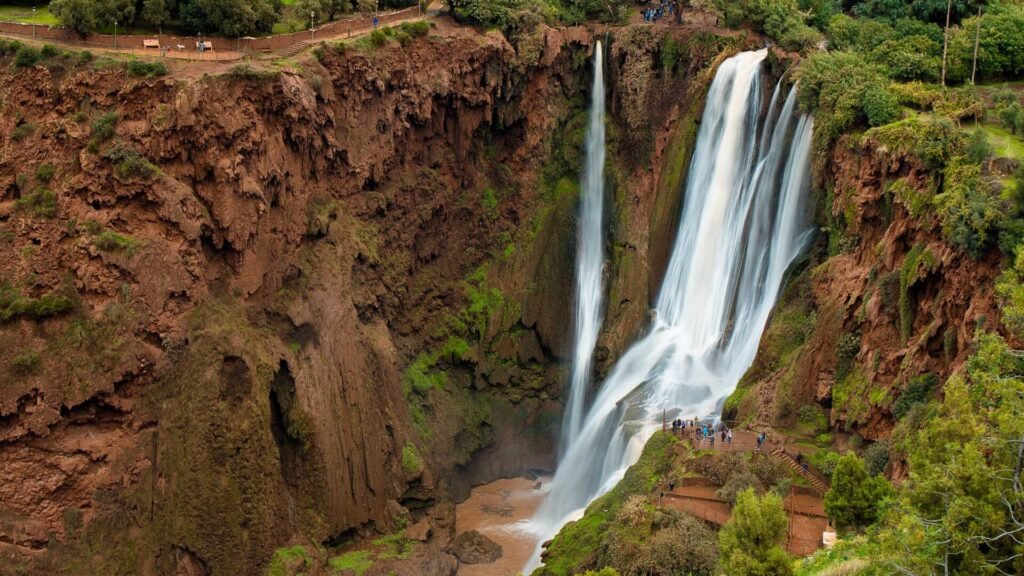
Ouzoud is 150km northeast of Marrakech — 2.5 hours by organised transport on the N8 highway. The falls themselves are Morocco’s highest at 110 metres, tumbling into a gorge below through a series of rainbow-producing sprays. Barbary macaques (Barbary apes) are resident along the walk down to the base of the falls. The surrounding olive grove plateau is farmed by Berber communities; the lunch restaurants above the gorge serve Moroccan food with a view over the falls. A full-day tour is required — Ouzoud is too far for a comfortable half-day. The drive northeast crosses the Khouribga plateau, a different landscape entirely from the Atlas foothill approach of the Ourika Valley.
Option 3: Explore Hidden Gems in Marrakech
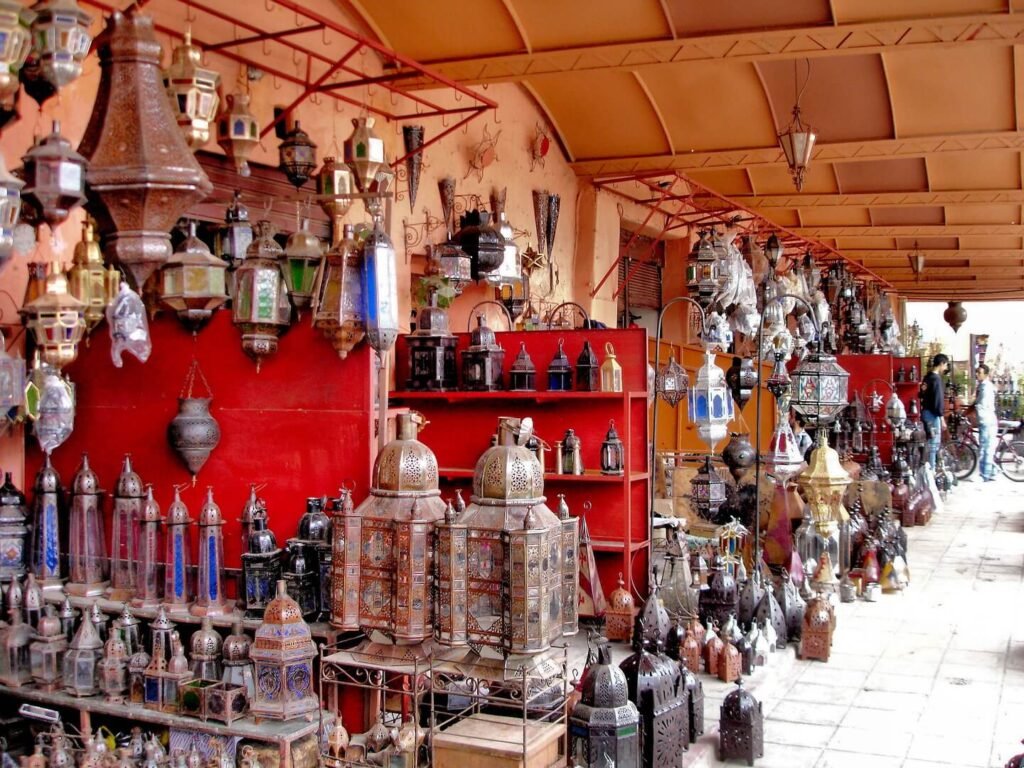
The northern Medina around Mouassine and Dar el-Bacha provides the best slow day in the city. Specific stops: the Medersa Ben Youssef (14th-century Quranic school, carved stucco and cedar interior courtyard — 45 minutes, arrive before 10am), the Maison de la Photographie (historical photography archive of Morocco, four floors, rooftop terrace with mint tea — 45 minutes), and the Souk Haddadine (ironworkers’ souk — the sound of hammering on metal frames the northern Medina). The Mouassine fountain and the neighbourhood around it is the most architecturally coherent section of the northern Medina and the one most worth taking slowly.
Day 4: Begin Your Desert Adventure
Day 4 is the departure from Marrakech — the point where the itinerary leaves the city and enters the landscape. The two desert options below require fundamentally different time commitments and produce different experiences; the choice between them should be made before departure, not on the day.
Morning: Departure from Marrakech
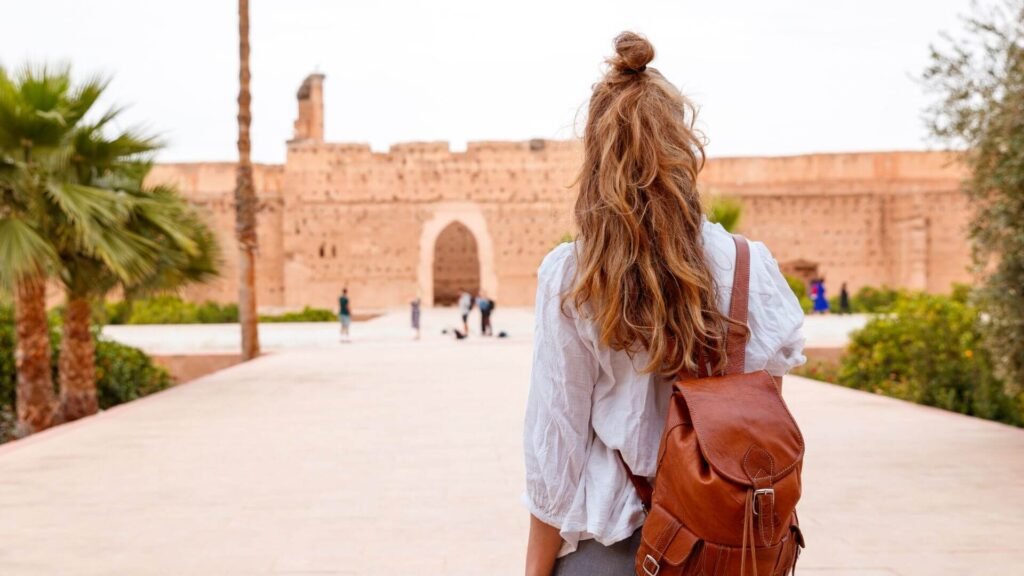
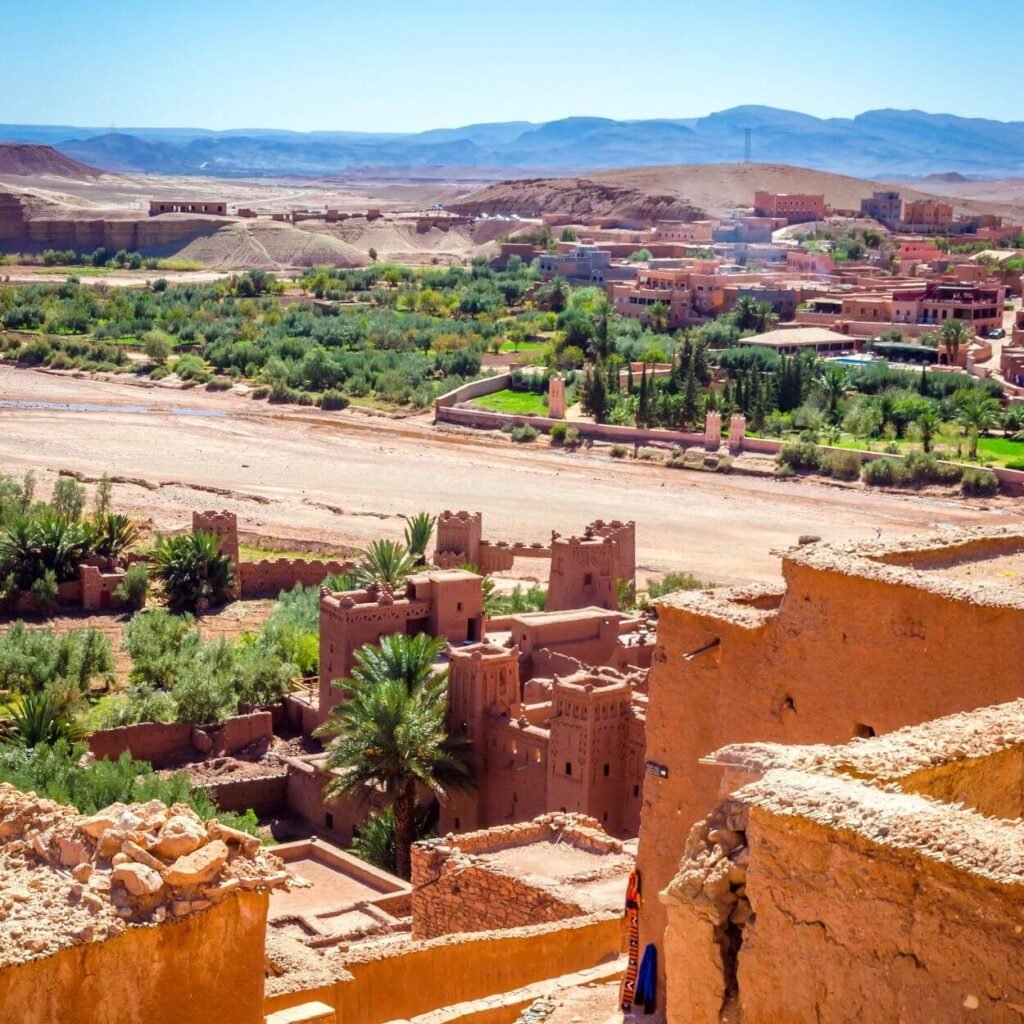
For the Agafay option: depart mid-morning (9–10am), arrive at the desert plateau in 40 minutes, full day available. For the Sahara option: depart at 6am, cross the Tizi n’Tichka pass (2,260 metres) by mid-morning, lunch at Ouarzazate or Agdz, continue through the Drâa Valley date palm oasis road, arrive at Merzouga in the late afternoon. The Sahara drive is 9–10 hours total; the organised tour includes stops, a guide, and comfortable 4WD transport.
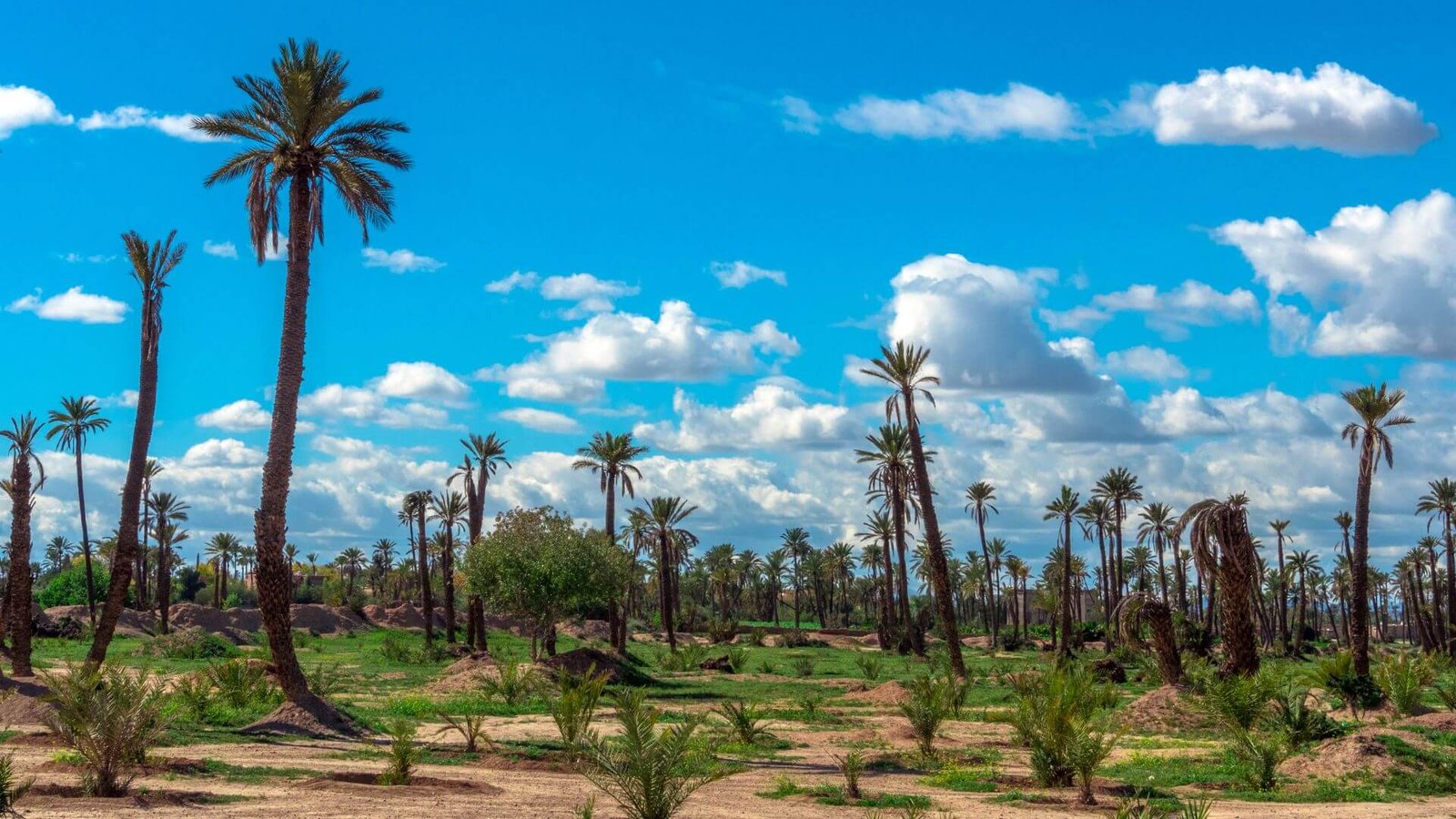
The departure landscape from Marrakech changes within 30 minutes: the ochre buildings thin into olive groves, the olive groves give way to argan trees on the lower Atlas slopes, and the Atlas itself appears first as a wall of stone and then, through the Tizi n’Tichka pass, as a panorama of High Atlas ridgelines extending in both directions. This transition — city to mountain to desert — is specific to the southern Morocco route and is one of the experiences the seven-day format makes possible.
Afternoon: Desert Activities & Experiences
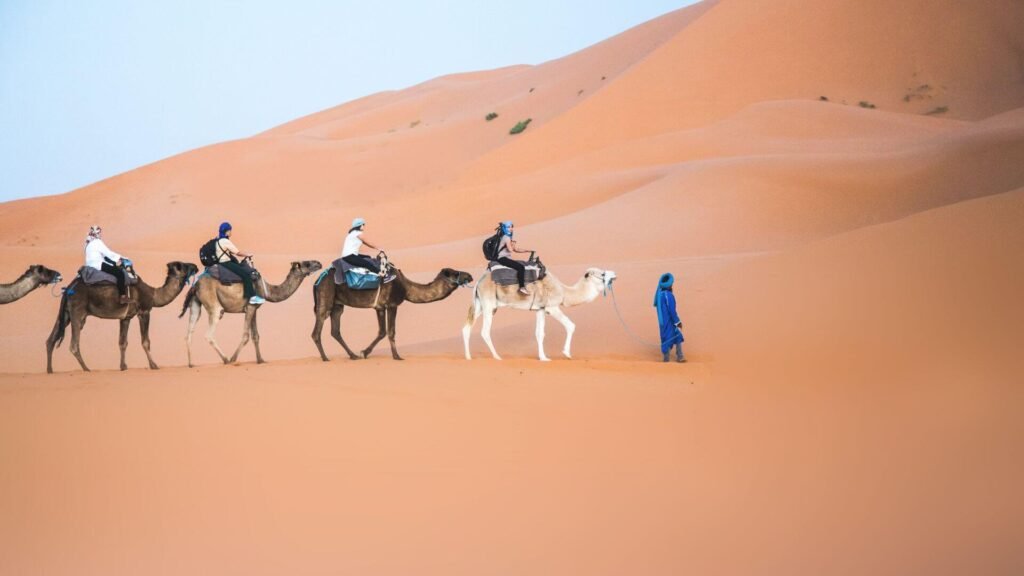
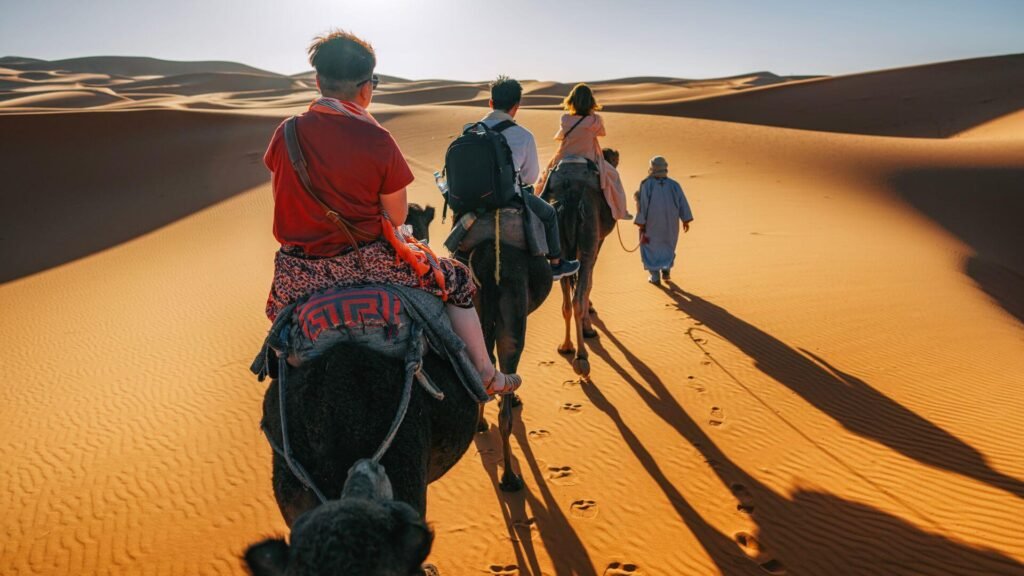
For the Agafay: camel rides, quad bikes, or simply settling into the camp for the afternoon. The plateau light changes significantly between 2pm and 5pm — the bare stone landscape shifts from grey-white to gold as the sun drops. For the Sahara: arrival at Merzouga in the late afternoon, transfer to camels for the 40-minute ride into the Erg Chebbi dunes as the sun sets. The Erg Chebbi is 22km long and up to 150 metres high — the scale of the dune landscape is significantly different from anything in the Agafay.
Evening: Sunset & Overnight in the Desert
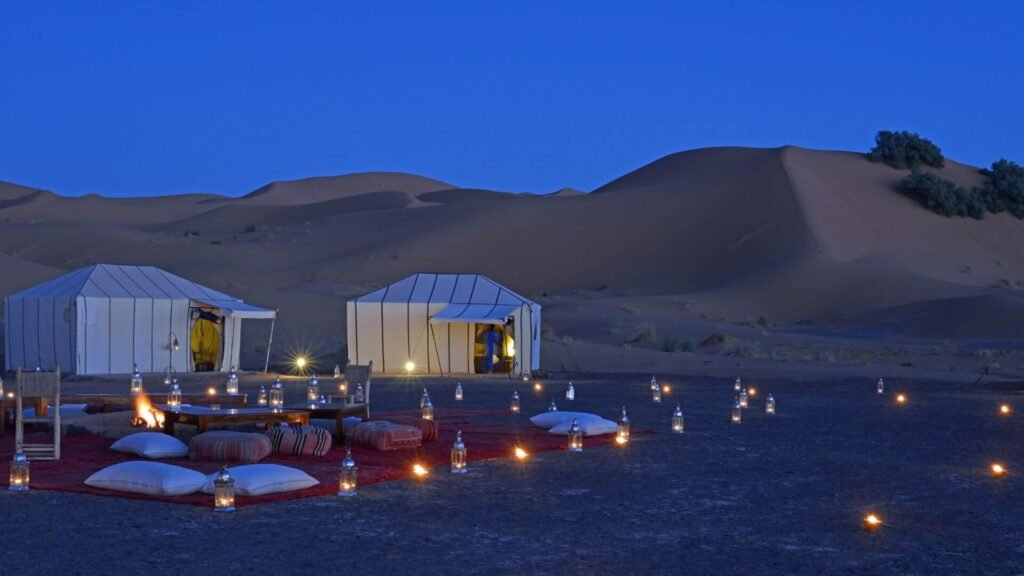
The desert evening in both locations follows the same structure: sunset from an elevated point, dinner in the camp (traditional tagine, mint tea, live music), and the night sky once the camp fires die down. The Agafay camp sky is darker than Marrakech but retains some light pollution from the city on the northern horizon. The Saharan sky at Merzouga is fully dark — no settlements within visible range — and on a clear night the Milky Way is visible with the naked eye. The temperature drop after sunset in both locations is 10–20°C depending on season; bring more layers than the daytime temperature suggests necessary.

Day 5: Return from the Desert & Relax in Marrakech
Day 5 is the return and the reset. The Agafay return is 40 minutes and arrives in Marrakech by late morning, leaving a full afternoon free. The Sahara return is a full day — departing Merzouga after sunrise, returning to Marrakech in the late afternoon. Day 5 for the Sahara traveller is effectively a travel day with a few hours in the city at the end; the itinerary accounts for this by keeping Day 5 deliberately unstructured.
Morning: Return Journey
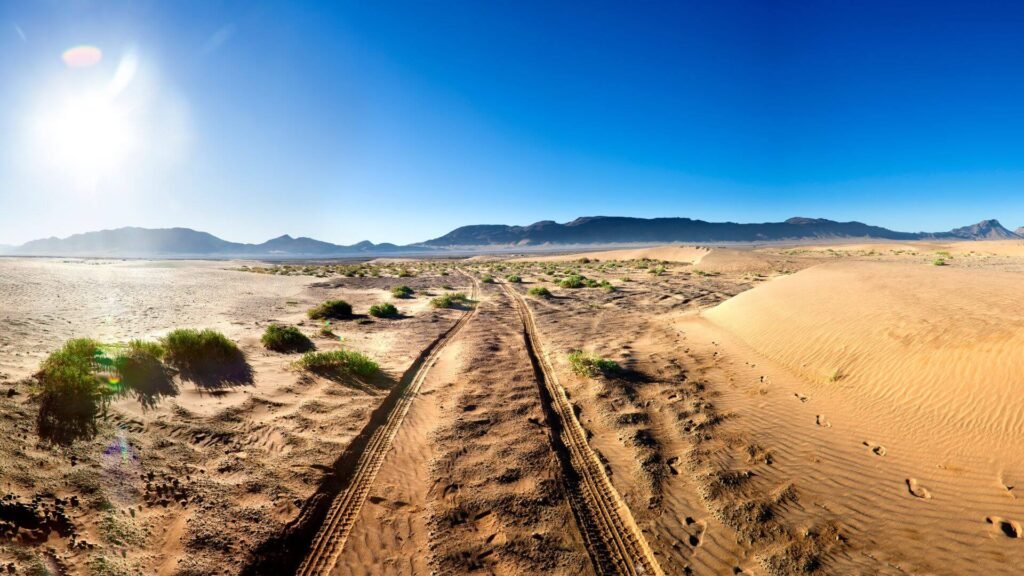
For the Agafay: 40-minute transfer back to Marrakech by mid-morning, with the full Day 5 available. For the Sahara: wake before sunrise for the dawn light on the dunes — the low-angle early morning light on the Erg Chebbi is a different visual from the golden sunset light, worth the early start. Depart Merzouga by 7–8am, arrive Marrakech by 5–6pm with stops. The return route passes through the same landscape as the outward journey — the Drâa Valley date palms at a different time of day, the Atlas crossing in the afternoon rather than the morning, Marrakech visible as a golden wash of light on the plain as you descend.
Afternoon: Leisure & Optional Activities
For the Agafay returnee: a lighter Day 5 afternoon than the first two Marrakech days. Revisit the souk section not covered on Days 1 and 2 — the northern Medina around Mouassine if the Day 3 option was a day trip; or Gueliz for a coffee and a walk if the Medina has been saturating. For the Sahara returnee: a riad rest before dinner is the correct choice — 9 hours of vehicle travel leaves most visitors physically tired regardless of the quality of the journey.
Evening: Dinner & Sunset Views
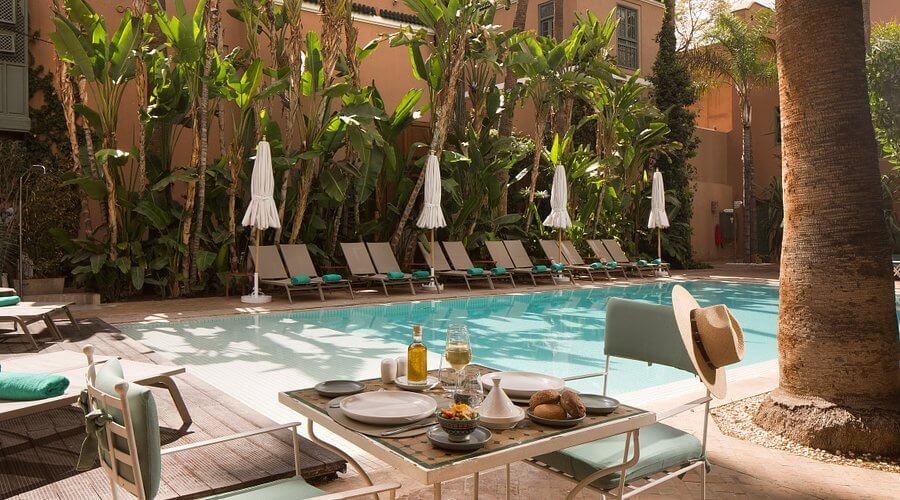
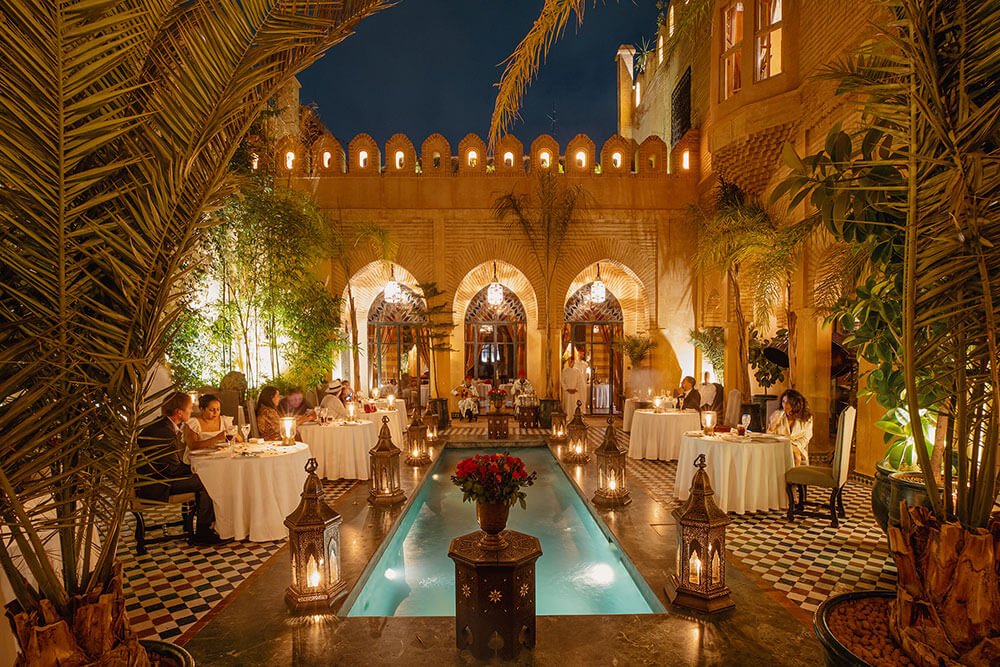
The Day 5 dinner is the first Marrakech evening after the desert contrast, and it benefits from the perceptual shift the desert produces — the city’s density and colour read differently after two days of the plateau’s silence. Dar Yacout (traditional Moroccan feast, multiple rooms, requires advance booking) is the most elaborate option for a significant evening. A riad rooftop dinner or a return to the Jemaa el-Fna food stalls is the less structured alternative — both are appropriate for a Day 5 that doesn’t require planning energy.
Day 6: Atlas Mountains or Coastal Escapes
Day 6 is the second landscape day of the itinerary — after the desert, a different kind of outdoor experience. The Atlas Mountains and Essaouira represent opposite directions from Marrakech and opposite types of landscape: the Atlas is mountain and altitude, Essaouira is ocean and wind. Both require a full day and organised transport; the choice depends on which kind of contrast to the first five days is most appealing.
Option 1: Atlas Mountains
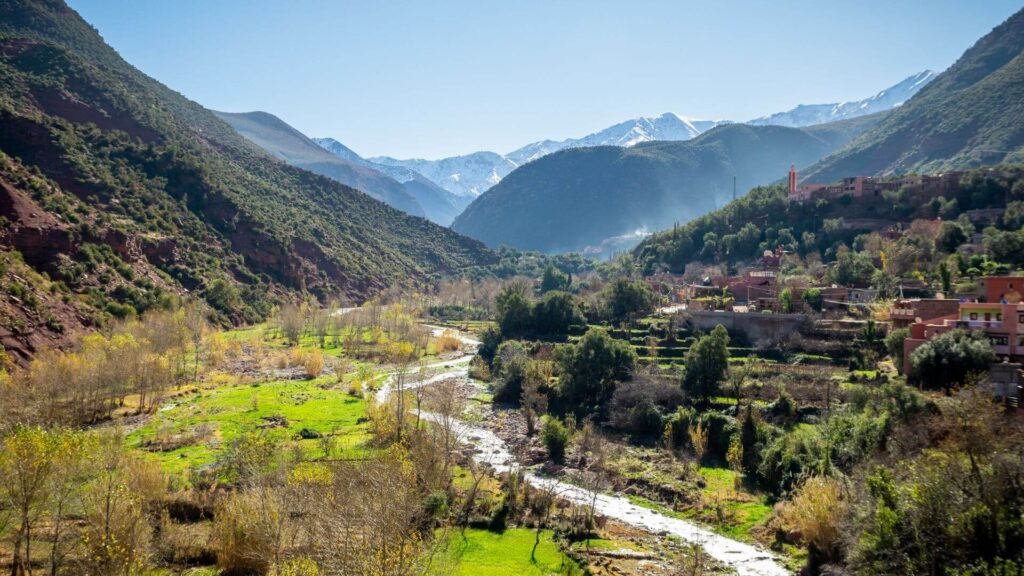
The Imlil valley (60km south of Marrakech via Asni) is the Haut Atlas day-trip destination for hiking. The road from Asni climbs through Berber villages to Imlil at 1,740 metres — the trailhead for Jebel Toubkal (4,167 metres, North Africa’s highest peak) and the starting point for shorter valley walks accessible without trekking experience. A full-day organised tour from Marrakech typically includes the drive to Imlil, a 2–3 hour walk in the valley, lunch with a Berber family in a village, and the drive back — 10–11 hours door-to-door. The High Atlas in clear weather shows the snowline (October–April) or the summer-bare ridgelines; in both cases the scale is unexpected and significant. The Asni and Imlil road is the Haut Atlas approach route rather than the Tizi n’Tichka Saharan approach — different valley, different vegetation, different architecture.
Option 2: Coastal Escape
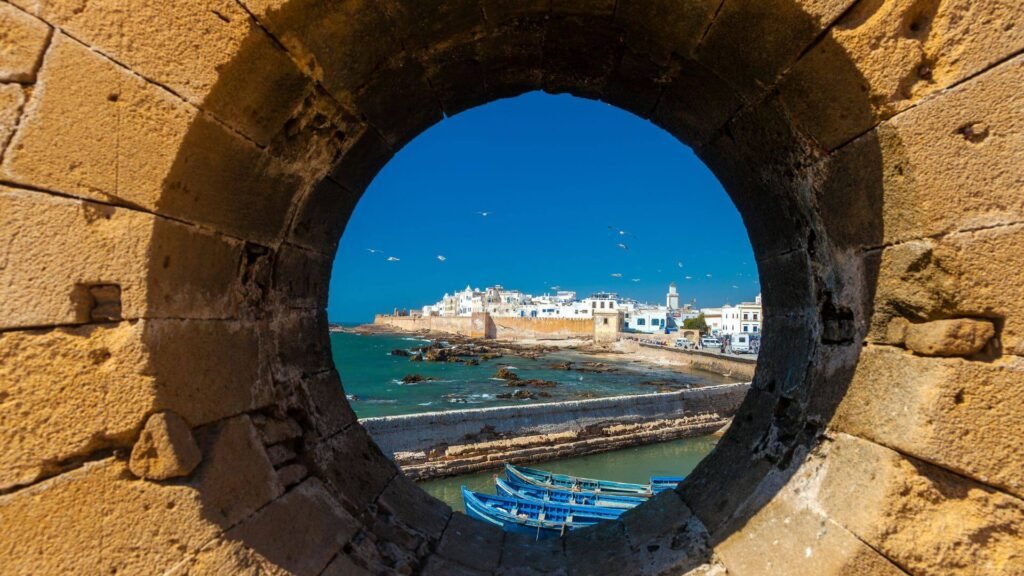
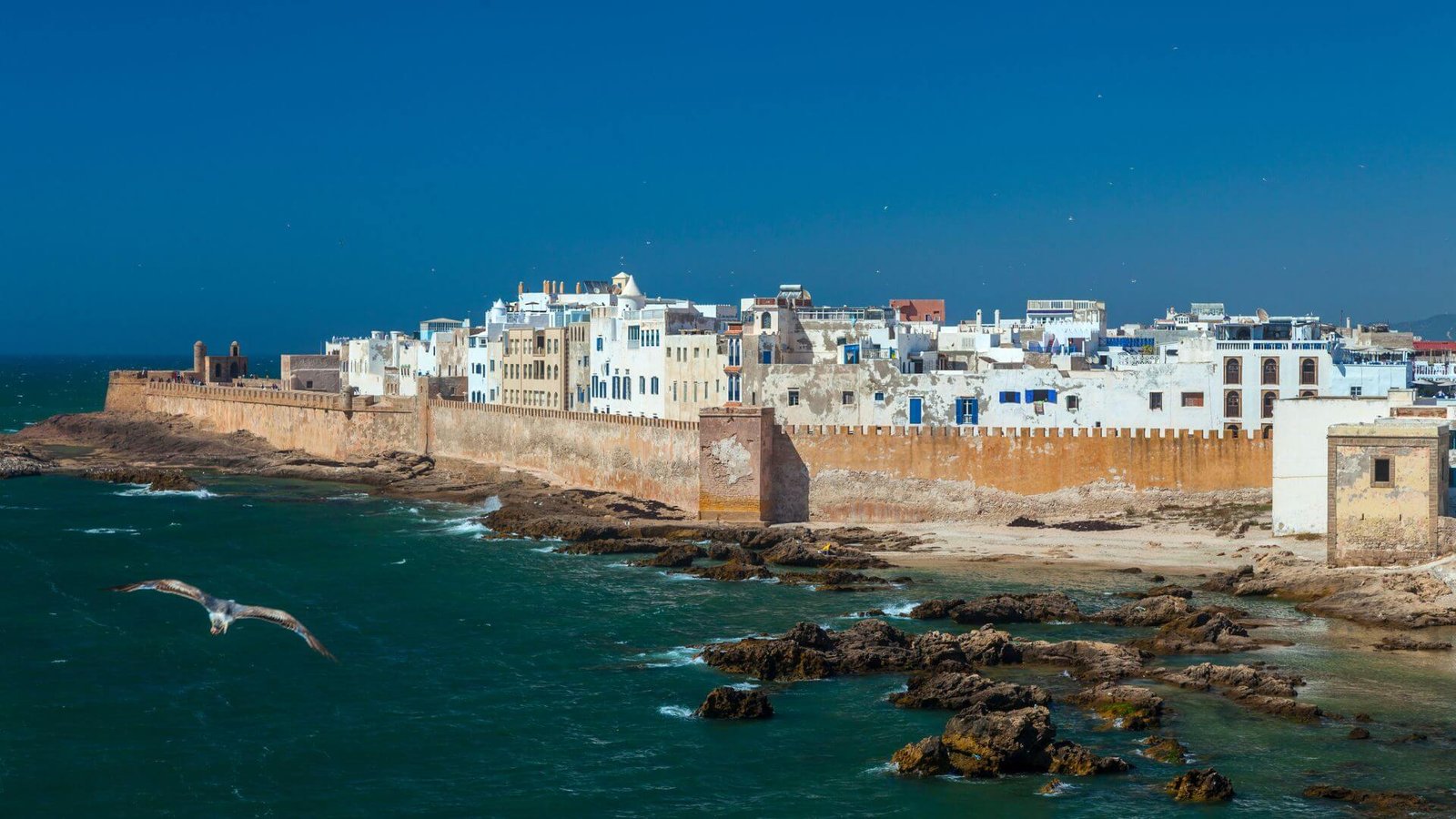
Essaouira is 170km west of Marrakech — 2.5 hours by organised transport on the N1 highway. The city is a UNESCO-listed medina built on a promontory above the Atlantic, with 18th-century Portuguese-influenced ramparts, a blue and white fishing harbour, and persistent Atlantic winds that have made it the kitesurfing capital of Morocco. The Essaouira medina is smaller and more navigable than Marrakech’s — the main square (place Moulay Hassan), the harbour, the ramparts walk, and the souk area can all be covered in 2–3 hours on foot. The seafood restaurants near the harbour (grilled fish, sea urchin, shrimp — ordered by weight at the market stalls) are the specific food experience. Return to Marrakech by late afternoon or early evening.
Day 7: Last-Day Highlights, Shopping & Departure
Day 7 is the final day — a slow Marrakech morning before departure. By this point the Medina navigation is automatic, the daily rhythm is known, and the visit has a clear character. Day 7 should use the familiarity the previous six days have built rather than adding new experiences.
Morning: Souks & Local Markets
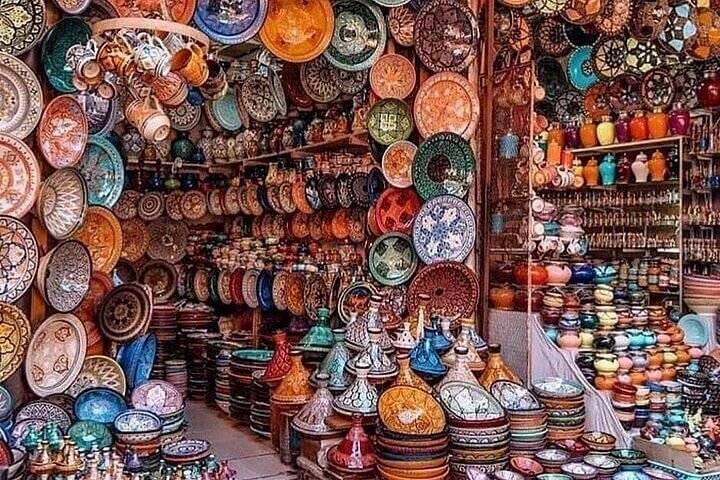
The final souk morning is best used for the purchases deferred from Days 1 and 2. The northern Medina souk circuit — Mouassine neighbourhood boutiques, the Souk des Teinturiers (dyers’ souk), the metalworkers’ Souk Haddadine — is the area with the highest concentration of quality craft and fixed-price design shops. The central souk spine (Souk Semmarine and its tributaries) for negotiated purchases of spices, textiles, and ceramics. A rough guide to souk morning logistics: withdraw 400–600 dirhams in cash before entering; allow 2–3 hours; the souk is most navigable in the first hour after 9am before the tourist volume builds.
Afternoon: Last Sightseeing & Relaxation
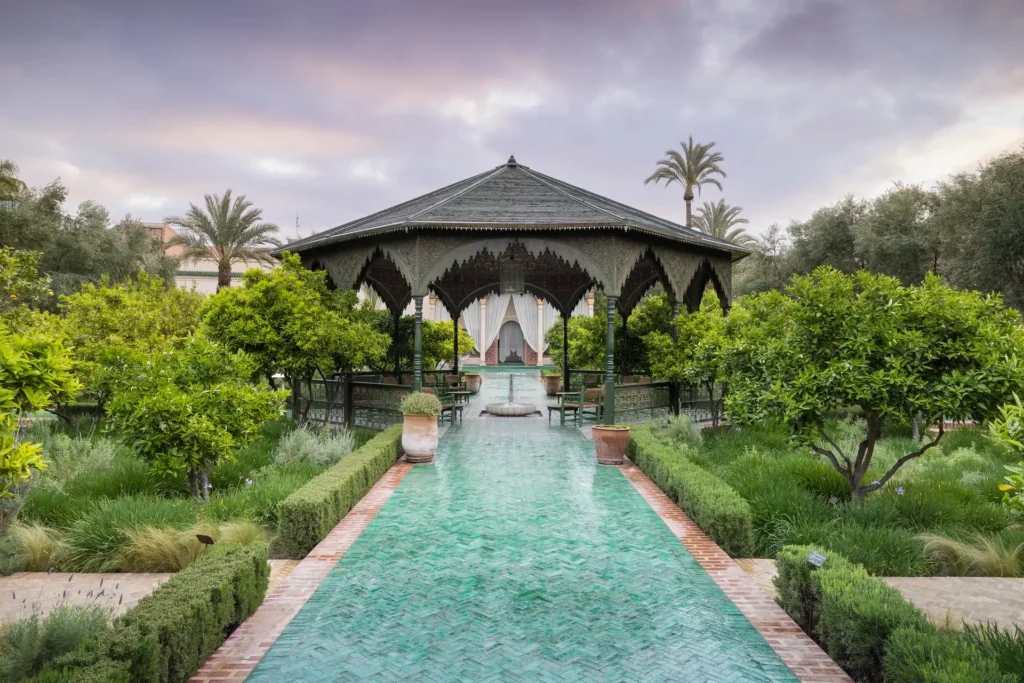
Le Jardin Secret in the northern Medina (if not visited on Days 3 or 5) is the correct final afternoon cultural stop — quiet, rarely crowded, with a rooftop terrace view over the northern Medina roofscape and mint tea included in the entrance fee. A final return to Majorelle Garden is worth considering if it was only seen once — the late afternoon light on the Majorelle blue is different from the morning light and worth the 15-minute taxi from the Medina.
Evening: Departure Preparation
Return to the riad by 6–7pm for packing. The airport taxi (70–100 dirhams, 15–20 minutes) should be ordered or pre-arranged rather than hailed at the Medina gate at departure time — the Medina navigation in the dark while carrying luggage is the one logistics friction point worth eliminating. If there’s time before packing: a final rooftop view from the riad terrace or a 20-minute walk through the Medina at its quietest hour (the streets around 7pm, after the souk vendors have packed up and before the evening food stall crowd reaches its peak) gives a final specific view of the city that differs from every earlier view.
Where to Stay for This 7-Day Morocco Itinerary
Five nights in Marrakech and one night in the desert (Day 4) is the standard configuration. The Marrakech nights can all be in one accommodation or split — the seven-day format makes the split stay worth considering more seriously than the shorter itineraries.
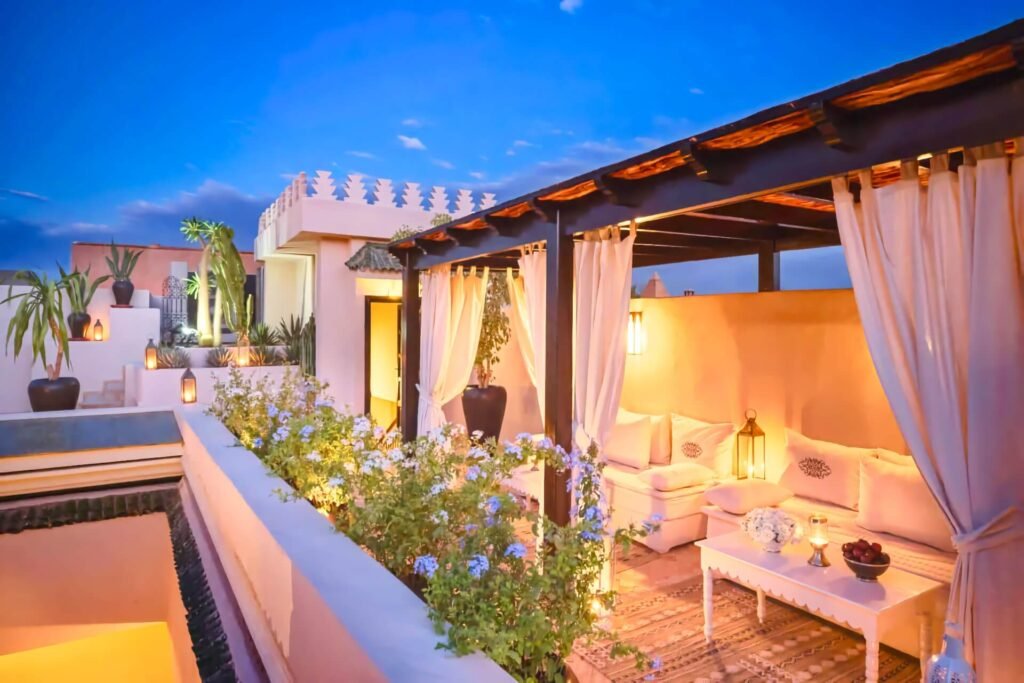
Stay in the Medina (Best First-Time Experience)
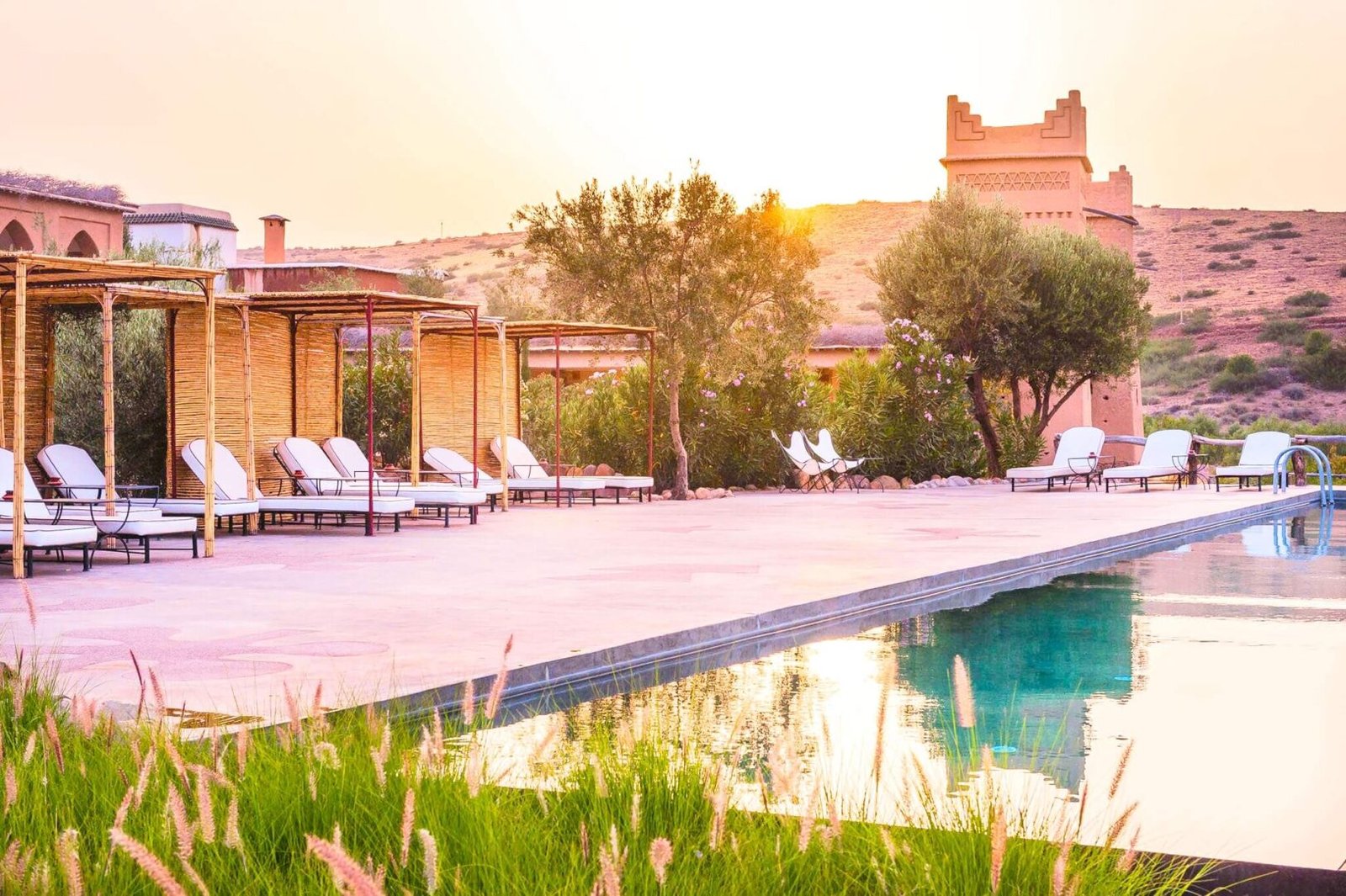
A Medina riad for all five Marrakech nights is the immersive option — the riad experience deepens over multiple nights, the daily navigation becomes automatic, and the city reveals itself at the pace the format allows. By Day 7, a Medina riad feels known rather than logistically challenging.
- Ideal for Days 1, 2, 3, 5, and 7 — all primarily Medina-activity days
- Authentic Moroccan atmosphere that deepens over a full week
- Easy access to souks, monuments, and restaurants throughout
Best for: first-time visitors who want the complete Marrakech experience across seven days.
Split Your Stay (Best Overall Strategy)
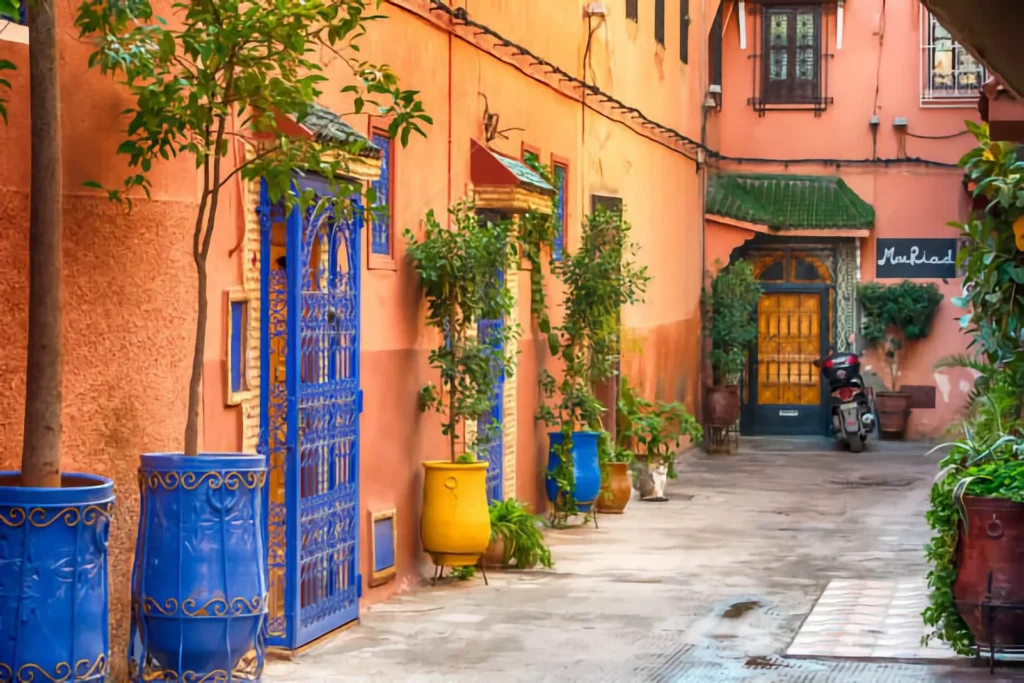
The seven-day format supports a three-phase split: three nights in a Medina riad (Days 1–3), one night in the desert (Day 4), two nights in Gueliz or Hivernage (Days 5–6). The Gueliz or Hivernage base for Days 5 and 6 provides physical comfort infrastructure after the desert travel and puts you closer to the Day 6 Atlas Mountains or Essaouira departure points. Day 7 can be spent in either location before a final airport transfer.
- Balanced experience: Medina immersion at the start, comfort and ease at the end
- More comfort after the desert travel — when it’s most needed
- The Gueliz or Hivernage base for Day 6 is closer to the departure points for both Atlas Mountains and Essaouira excursions
Best for: travellers who want a complete experience of both traditional and modern Marrakech, and a comfortable final two nights after the desert.
Choose Accessible Riads (Important for Desert Pickup)
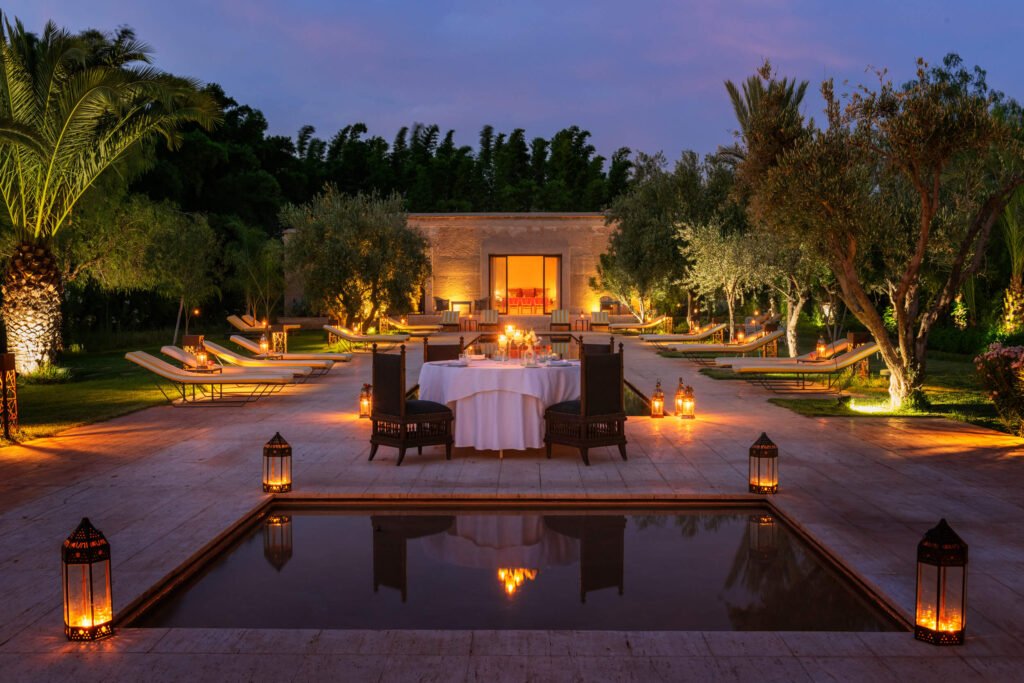
The Day 4 desert departure logistics are the one accommodation-specific practical concern in this itinerary. Sahara tours depart at 6am; Agafay tours typically at 9am. Most Medina riads can arrange transfer to the pickup point, which is usually at or just outside the Medina gate. Confirm this with your riad in advance rather than assuming it’s included. If the riad is in the deeper northern Medina (more than 10 minutes from the nearest vehicle-accessible point), this conversation is essential.
- Easier Day 4 logistics — the most complex departure in the itinerary
- Less stress with luggage on the only day requiring early departure
- Smoother experience for Sahara option specifically, where the 6am start requires everything to be ready the night before
Tip: ask your riad to arrange a taxi or transfer to the tour operator pickup point the night before departure, confirm the arrangement in the morning, and store your main luggage with the riad while in the desert.
The standard recommendation holds at seven days as it does at five: Medina immersion first, comfort after the desert. The extra nights in the seven-day format mean the comfort phase can last longer, which makes the final two days more genuinely relaxed than the equivalent days in a five-day trip.
Not sure yet? If you want a curated selection based on different budgets and travel styles, you can explore our full guide here: Where to Stay in Marrakech (Best Areas & Stays)
Getting Around Morocco & Desert Logistics
The seven-day itinerary uses four transport modes across different situations. The city days follow the same pattern as the shorter itineraries. The day-trip and desert days add organised tour transport. The coastal or mountain day adds a longer organised tour. The distinctions are clear and don’t change from day to day.
Walking (Best for the Medina)
Days 1, 2, 3 (city option), 5 (afternoon), and 7 are primarily walking days in the Medina. The Medina interior is inaccessible to cars; walking is the only practical navigation for the souk circuit, the monument route, and the residential alleys.
- Ideal for all Medina activity on Days 1, 2, 3, 5, and 7
- Distances between Day 1’s main monuments: 25–35 minutes on foot
- Day 7 souk morning: 2–3 hours of walking across the central and northern souk circuit
The Koutoubia minaret and the sound of the Jemaa el-Fna are the two reliable reorientation points when navigation becomes uncertain.
Petit Taxis (Easy & Affordable)
All movement between the Medina and Gueliz, Majorelle Garden, and the organised tour pickup points uses petit taxis.
- Day 1 (if Majorelle Garden in afternoon): 15-minute taxi from Medina, 30–40 dirhams
- Day 2 (Majorelle Garden or returning from El Badi Palace area): 10–15 minutes, 20–30 dirhams
- Day 7 (airport departure): 70–100 dirhams fixed rate, 15–20 minutes; pre-arrange rather than hail
Always agree the price before starting or confirm the meter is running.
Day Trips (Atlas Mountains or Coast)
Day 3’s Ourika Valley and Ouzoud Waterfalls options, and Day 6’s Atlas Mountains and Essaouira options, all use organised tour transport as standard. Independent travel to any of these destinations adds road navigation complexity that organised transport eliminates.
- Day 3 Ourika Valley: 45 minutes, half-day or full-day tours available
- Day 3 Ouzoud Waterfalls: 2.5 hours, full-day tour required
- Day 6 Atlas Mountains (Imlil): 1.5 hours, full-day tour, typically 10–11 hours door-to-door
- Day 6 Essaouira: 2.5 hours, full-day tour, typically 10–11 hours door-to-door
Desert Travel (Best Done as a Tour)
Day 4’s desert departure and Day 5’s return use organised tour transport exclusively. The Sahara option (9–10 hours each way) makes independent travel effectively impossible for a one-week visitor without a hire car and familiarity with Moroccan road navigation.
- Agafay: 40 minutes each way, pickup from riad or Medina gate, half-day or full-day with overnight
- Sahara: 9–10 hours each way via High Atlas and Drâa Valley; organised tour is the only practical option; 6am departure required for Day 4
Simple rule: Walk inside the Medina, take petit taxis outside it, and use organised tour transport for everything outside Marrakech. Four modes, four situations, no exceptions throughout the seven days.
Tips to Make the Most of Your 7 Days in Morocco
Six notes specific to a seven-day Morocco trip from Marrakech — the considerations that determine whether the variety of environments and transport modes in this itinerary produces a coherent experience or a fragmented one.
Balance Movement & Rest
Seven days with two travel-heavy days (Days 4 and 5 for the Sahara option, or Days 3 and 6 for day trips) requires deliberate rest placement. Days 2 and 5 are the two days most naturally suited to being lighter — Day 2 because it follows the first full Marrakech day, Day 5 because it follows the desert. Both have their activity structured around the earlier and later parts of the day with an open afternoon. Don’t override this structure by adding activities to these afternoons.
Choose the Right Desert Experience
The seven-day format is the minimum that makes the Sahara at Merzouga genuinely worthwhile — with only five days, the two Sahara travel days take up too large a proportion of the trip. With seven days, two travel days represent a manageable fraction and the Saharan dune landscape justifies the time. The Agafay plateau is the correct choice if time on the road is not a priority or if the Ouzoud Waterfalls on Day 3 has already used a long-drive day.
Pack Smart for Different Environments
Seven days cover city heat, cool mountain or Atlantic coast temperatures, and desert temperature swings. The practical packing list: light city clothes for Marrakech, two warm layers for the desert night and mountain altitude, a light windproof jacket for Essaouira’s constant Atlantic wind, comfortable closed-toe shoes for Medina paving and mountain trails. A smaller day bag for the desert night (main luggage stored at the riad) makes the camp experience more comfortable.
Don’t Overplan Every Day
Days 3 and 7 are the two days where overplanning produces the most friction. Day 3 has three options and should use one of them fully rather than attempting combinations. Day 7 is a departure preparation day disguised as a final city day — attempting to fit Le Jardin Secret, final souk shopping, a farewell riad lunch, and a museum visit into a Day 7 that also requires packing and airport transfer produces exactly the stressed final day the itinerary is designed to avoid.
Use the Middle of the Trip to Reset
Days 3 and 5 are the two natural reset days. Day 3’s pace (day trip or slow city exploration) prepares for the desert departure. Day 5’s pace (desert return and rest) prepares for the final landscape day. Both are correctly lighter than Days 1–2 and Day 6; both are incorrectly used if treated as catch-up days for activities not completed in the first two days.
Book Key Experiences in Advance
In order of booking priority for a seven-day trip: the desert tour (both Agafay and Sahara fill quickly in October–November and March–April), the hammam evening slot (Day 2), any riad dinner reservation (Day 2 or 5 evening), the Majorelle Garden tickets (peak weekends), and the Day 6 excursion (Atlas Mountains and Essaouira tours fill up in high season). Book all of these before departure; the Day 3 options (Ourika Valley, Ouzoud) can be booked 1–2 days before.
Alternative Ways to Experience Morocco in 7 Days
Four adjustments to the standard seven-day structure for different travel priorities.
If You Prefer Less Travel Time
Replace the Sahara at Merzouga with the Agafay plateau (40 minutes from Marrakech) and replace the Ouzoud Waterfalls day trip with the Ourika Valley (45 minutes). This keeps both landscape days within an hour of Marrakech and removes the 9-hour drive days entirely. The Agafay delivers the desert overnight experience without the Saharan scale; the Ourika Valley delivers the mountain landscape without the full-day commitment. The result is a seven-day itinerary where no day involves more than 90 minutes of vehicle travel each way.
If You Want a Deeper Desert Experience
Extend the desert to two nights (Days 4 and 5 in the desert, return on Day 6 morning). This requires moving the Day 6 landscape day to the afternoon of Day 6 only (Essaouira is not possible as a full-day trip with a desert return in the morning; the Ourika Valley is possible as a half-day). The result is a richer desert experience but a compressed final Marrakech sequence. Appropriate for visitors whose primary motivation is the Saharan landscape.
If You Prefer a Slower, More Relaxed Trip
Remove one day trip option and replace it with a second city day. Two full days in Marrakech (Days 1 and 2), one slow city day (Day 3), one desert day with Agafay only (Day 4), one return and rest day (Day 5), one slow Marrakech day (Day 6), one final morning and departure (Day 7). No day requires more than 40 minutes of travel outside the city. The result is a seven-day itinerary that is essentially a long Marrakech stay with one desert night — appropriate for visitors who find sustained travel tiring or who prefer depth over breadth.
If You Want a More Experience-Focused Journey
Add a morning cooking class on Day 3 (instead of a day trip), a guided souk walk on Day 1 late morning, and a pottery or weaving workshop on Day 7 morning (instead of unguided souk shopping). These substitutions don’t change the trip structure but change the relationship with the city from observational to participatory — appropriate for visitors whose interest is specifically in Moroccan craft and food culture rather than landscape diversity.
Frequently Asked Questions About a 7-Day Morocco Trip from Marrakech
Is 7 days enough to explore Morocco from Marrakech?
Yes — seven days is the format that makes southern Morocco accessible as a coherent journey rather than a series of day trips. Two days in the city, one day for a nearby excursion, two days for the desert circuit, one day for the Atlas or Essaouira, and a final day for departure preparation: this structure covers a range of Morocco’s landscapes and experiences that no shorter itinerary can replicate. What seven days doesn’t cover: northern Morocco (Fès, Chefchaouen, Meknès), the Todra Gorge in detail, a second coastal city (both Essaouira and Agadir), or more than one night in the desert. For any of those additions, ten days or more is the correct format.
Should I choose the Sahara or Agafay Desert?
At seven days, the Sahara at Merzouga is genuinely feasible — the two Sahara travel days represent a smaller proportion of the total trip than they do in a five-day itinerary. The question is what the desert is for in the trip. If the Saharan dune landscape (Erg Chebbi, the scale and isolation of the dunes, the full darkness of the desert sky) is a primary objective, the Sahara is the correct choice and the 9-hour drives are part of the experience. If the desert is one element among several and the priority is time in the city and on Day 6’s excursion, the Agafay is the more efficient choice.
Is the desert trip too tiring?
The Agafay version is not tiring. The Sahara version is a physically demanding two travel days — genuinely tiring, and cumulative with the activity of the first three Marrakech days. The Day 2 evening hammam and the lighter Day 3 structure are specifically designed to arrive at Day 4 rested rather than already at capacity. Travellers who don’t follow this structure (using Day 3 for additional monuments and skipping the hammam) consistently report finding the Sahara drive harder than those who do.
How many nights should I spend in the desert?
One night is correct for a seven-day itinerary. One night covers the full desert evening and morning experience — sunset camel ride, camp dinner and music, stars, sunrise camel ride back to the vehicle — which is the complete desert sequence. A second night adds a different kind of value (deeper rest, more time with the landscape) but removes two days from the Marrakech and landscape programme. For visitors specifically interested in a more contemplative desert experience, a separate desert-focused trip is the better vehicle for two or more nights.
Do I need to book tours in advance?
The desert tour and the Day 6 Essaouira or Atlas Mountains excursion should be booked before departure. In high season (October–November, March–April), both fill up weeks in advance. The Day 3 day trips (Ourika Valley, Ouzoud Waterfalls) can be booked 1–2 days before without risk in most seasons. Majorelle Garden tickets should be booked before departure for peak-day visits. The hammam evening slot on Day 2 should be booked at the same time as the riad reservation.
Is it better to stay in one place or move around?
For a seven-day trip, staying in Marrakech as the base for all seven nights (with one night in the desert) is the most logistically simple configuration and works well. The split stay (three nights Medina riad, desert night, two nights Gueliz or Hivernage hotel) is worth the extra check-in because it provides more physical comfort infrastructure for the final two days and puts you closer to the Day 6 departure points. Both configurations are correct; the choice is between simplicity and optimal positioning.
Is Morocco easy to travel around for first-time visitors?
With organised tours for the day trips and desert, yes. The Medina navigation is the only part of this itinerary that requires spatial confidence rather than following instructions, and that confidence develops within the first two days. The key decision for first-time visitors is not whether to use organised tours (the answer is yes for everything outside Marrakech) but which specific tours to choose — quality varies significantly for desert camps and day-trip operators, and the difference is most visible in the camp accommodation quality and the guide knowledge.
Ready to Plan Your 7 Days in Morocco?
The seven-day itinerary above is the most complete Morocco itinerary on this site — the full arc from Marrakech’s Medina through the Saharan desert to the Atlantic coast or the High Atlas. The three links below cover the remaining planning decisions: where to stay in Marrakech (accommodation recommendations across all four neighbourhoods), the desert experiences and quad biking activities, and the top 20 Marrakech activities for context on what the city days cover.
Advance booking priorities before departure: desert tour, Day 6 excursion, Majorelle Garden tickets, Day 2 evening hammam. Everything else is bookable on arrival or the day before.
Related Itineraries You Might Like
The plans below cover the shorter trip lengths for visitors with less time, and the five-day Marrakech-plus-desert combination for those who want the city-desert contrast without the full southern Morocco circuit.
-
2 Days in Marrakech
The core Medina-only format: the monuments, souks, and Jemaa el-Fna that Days 1 and 2 of this itinerary build from
-
3 Days in Marrakech
City-only with a flexible third day — the right format if landscapes beyond Marrakech are not part of the plan
-
4 Days in Marrakech
The city plus one day outside it — Atlas Mountains or Agafay, without the full southern Morocco circuit
-
5 Days Marrakech + Desert
City and desert combined in a tighter format — the right choice when the full seven-day southern Morocco route isn't possible
 Marrakist Concierge