
Marrakech has two great seasons and two you plan around. Tap a month for the details.
The Marrakist guide
Marrakech, the whole picture
When to come, where to sleep, what to see and how to get around: everything you need to plan a first trip, in one place, with links to our full guides.
- Best time
- Mar–May, Oct–Nov
- How long
- 3 to 5 days
- Money
- Dirham (MAD), cash in the Medina
- From the airport
- 15 min by taxi
Why visit Marrakech
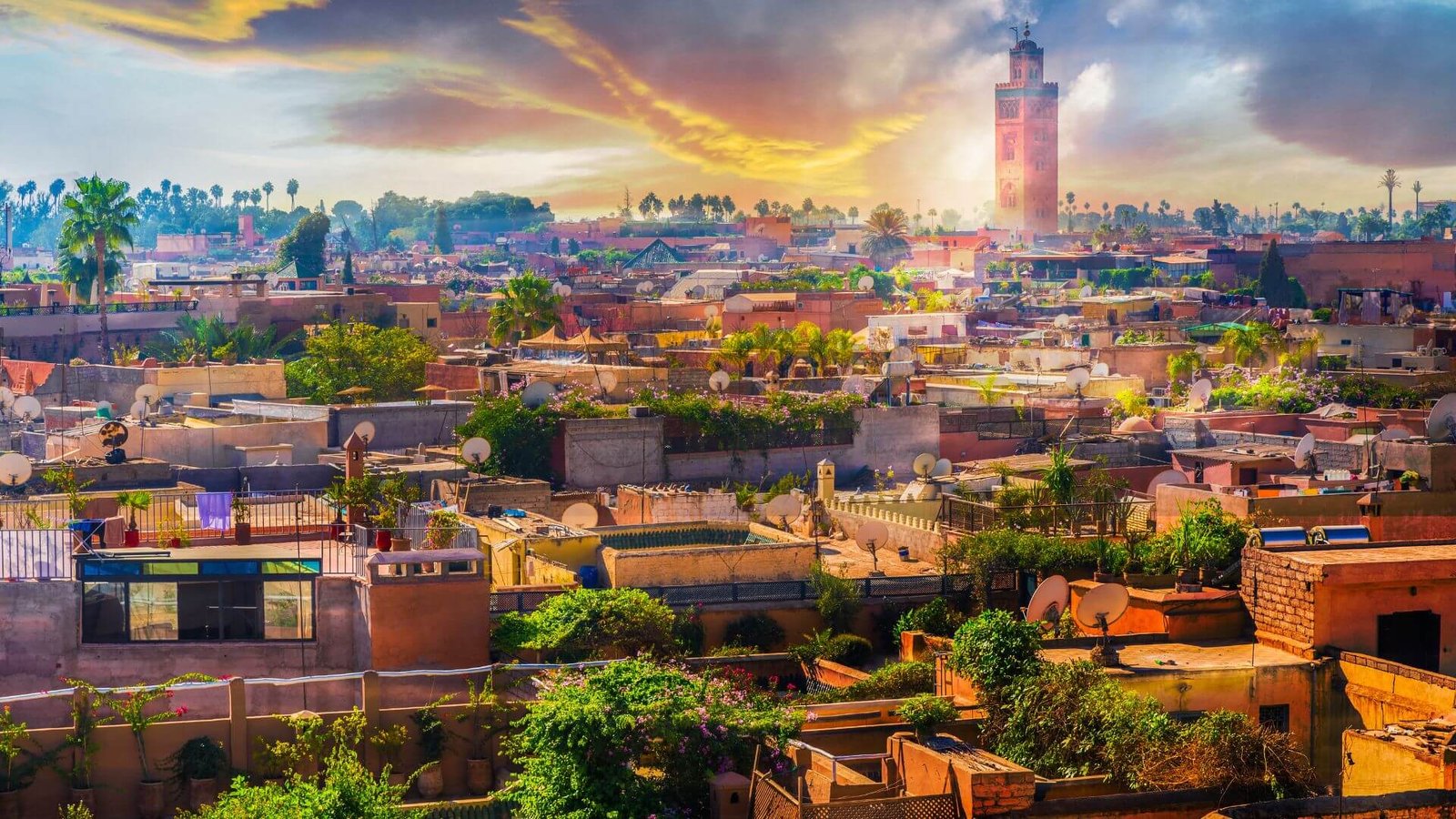
Few cities put this much within walking distance: a medieval Medina that still works for a living, gardens and palaces, and some of the best food in North Africa. Beyond the walls, mountains and desert are a day away.
Marrakech is not a city you tick off. The sights are worth it, but what stays with people is the texture: the call to prayer rolling over the rooftops, mint tea poured from a height, the jump from the noise of the souks to the silence of a riad courtyard behind a plain wooden door.
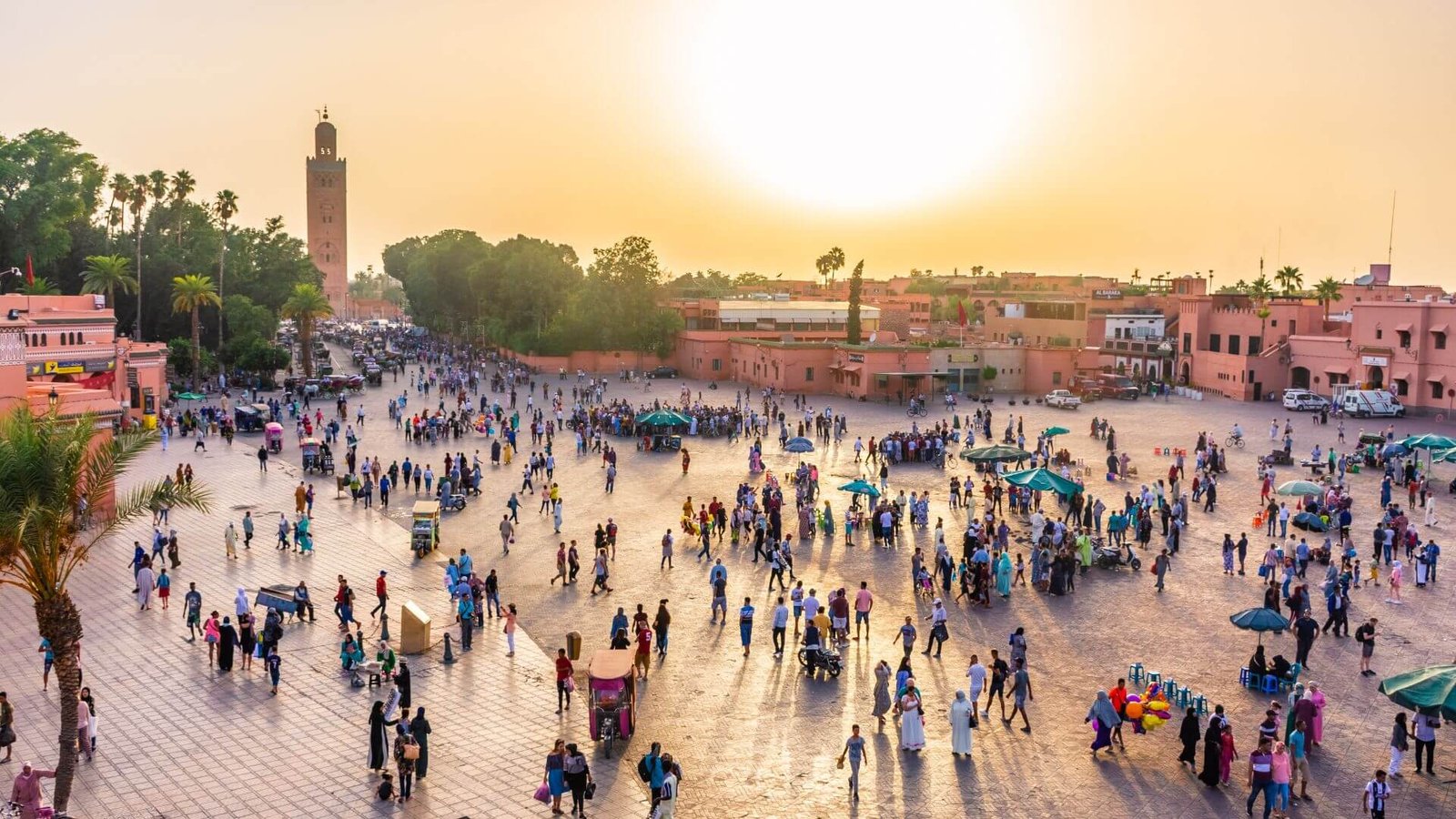
Most of that happens in the Medina, the old walled city and a UNESCO World Heritage Site. Get lost in it on purpose for a morning: it is smaller than it feels, and someone will always point you back to Jemaa el-Fna. Outside the walls, Gueliz and Hivernage are the modern city, with wide avenues, galleries, cafés and the Majorelle Garden.
Then there is the geography. The High Atlas is an hour south, the Atlantic at Essaouira three hours west, and the Sahara a long day over the mountains. And the food: slow-cooked tagines, pastilla, harira at dusk and the open-air grills of the square at night. Come hungry.
When to go
- Best time
- Good
- Very hot
- Crowds
October 28° / 15° 3 rainy days 9h of sun a day Busy Best time
-
Spring
Warm days, cool nights and gardens in flower. The best weather of the year, so it is also peak season: book riads early, especially around Easter.
-
Summer
Afternoons pass 38°C, so the city runs early and late: sights at 8am, a pool through the heat, dinner on a roof at 9pm. Prices drop and riads are easier to book.
-
Autumn
The heat breaks in late September. October is close to perfect, and November is quieter with the same light. Our favourite time to go.
-
Winter
Sunny 20°C days and snow on the Atlas, but nights near 6°C, and old riads are cold. Pick one with heating, and expect crowds over Christmas and New Year.
| Month | High | Low | Rainy days | Crowds | Our verdict |
|---|---|---|---|---|---|
| January | 19 °C | 6 °C | 4 | Steady | Good |
| February | 20 °C | 8 °C | 4 | Steady | Good |
| March | 23 °C | 10 °C | 4 | Busy | Best time |
| April | 25 °C | 12 °C | 4 | Busy | Best time |
| May | 29 °C | 15 °C | 2 | Steady | Best time |
| June | 33 °C | 18 °C | 1 | Quiet | Good |
| July | 38 °C | 21 °C | 0 | Steady | Very hot |
| August | 37 °C | 21 °C | 1 | Steady | Very hot |
| September | 33 °C | 19 °C | 2 | Steady | Good |
| October | 28 °C | 15 °C | 3 | Busy | Best time |
| November | 23 °C | 11 °C | 4 | Steady | Best time |
| December | 20 °C | 7 °C | 4 | Steady | Good |
Long-term averages for Marrakech-Menara, rounded. Crowds and verdicts are our own call.
Where to stay
Your neighbourhood shapes the trip more than your hotel does. Inside the walls you walk everywhere; outside, you trade atmosphere for space and quiet.

By neighbourhood
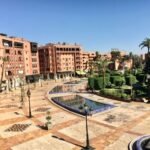
- Medina 26 stays Riads, rooftops and the souks on your doorstep. Best for a first visit.
- Palmeraie 1 stay Resorts and pools in the palm grove, 20 minutes out.
- Hivernage 2 stays Quiet, upscale hotels just outside the walls.
- Kasbah 3 stays The calmer southern Medina, by the palaces.
- Gueliz The modern city: cafés, galleries, a taxi from the Medina.


By style
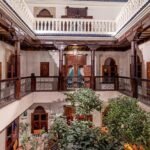
- Luxury riads 7 stays Palaces in miniature, with pools and hammams.
- Boutique riads 10 stays Small, personal, beautifully designed.
- Budget riads 10 stays The riad experience for less.
- Luxury hotels 10 stays Gardens, spas and full service.
- Family-friendly 23 stays Space, pools and connecting rooms.
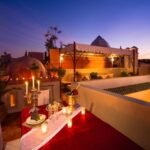
- Romantic stays 21 stays Rooftop dinners and private plunge pools.




Things to do
Leave room to wander, and plan the rest around these. The Medina’s big sights are close together: Jemaa el-Fna, the souks, the Bahia Palace and the Saadian Tombs are all within a 20-minute walk, so two mornings cover most of them.
Go early. By 11am the famous places are busy and hot, and the light is flat. Keep afternoons for a hammam, a rooftop and the slow walk back through the souks as they wind down.
The 20 best things to do-

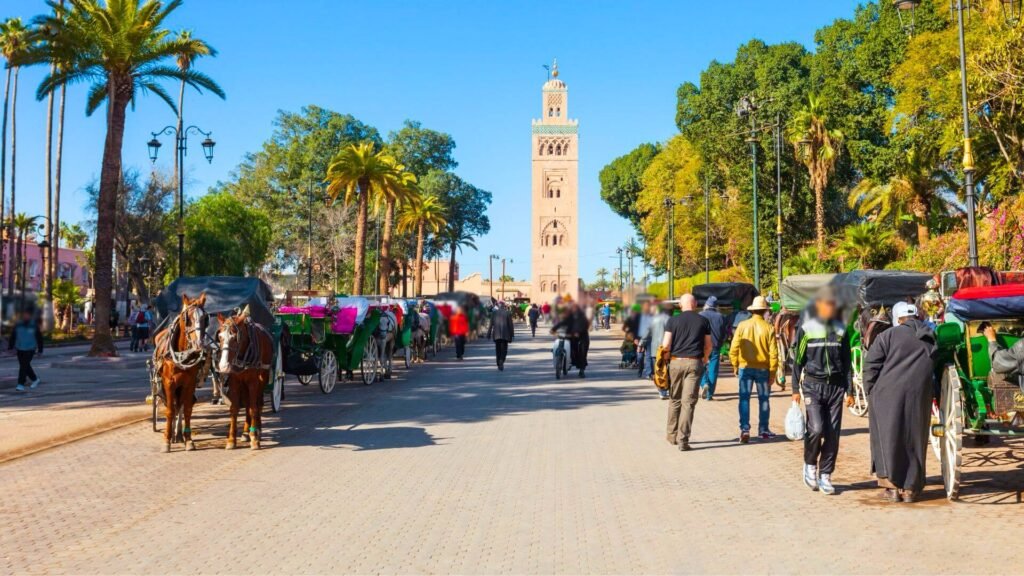
Jemaa el-Fna
Juice stalls by day; smoke, music and storytellers by night. Come back after dark.
-
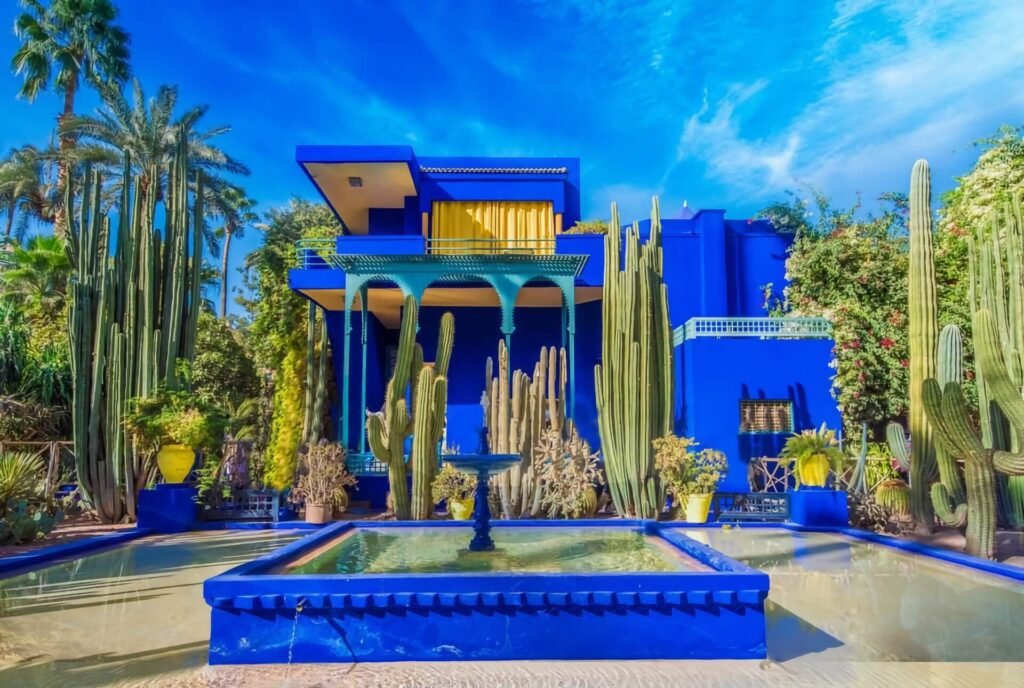
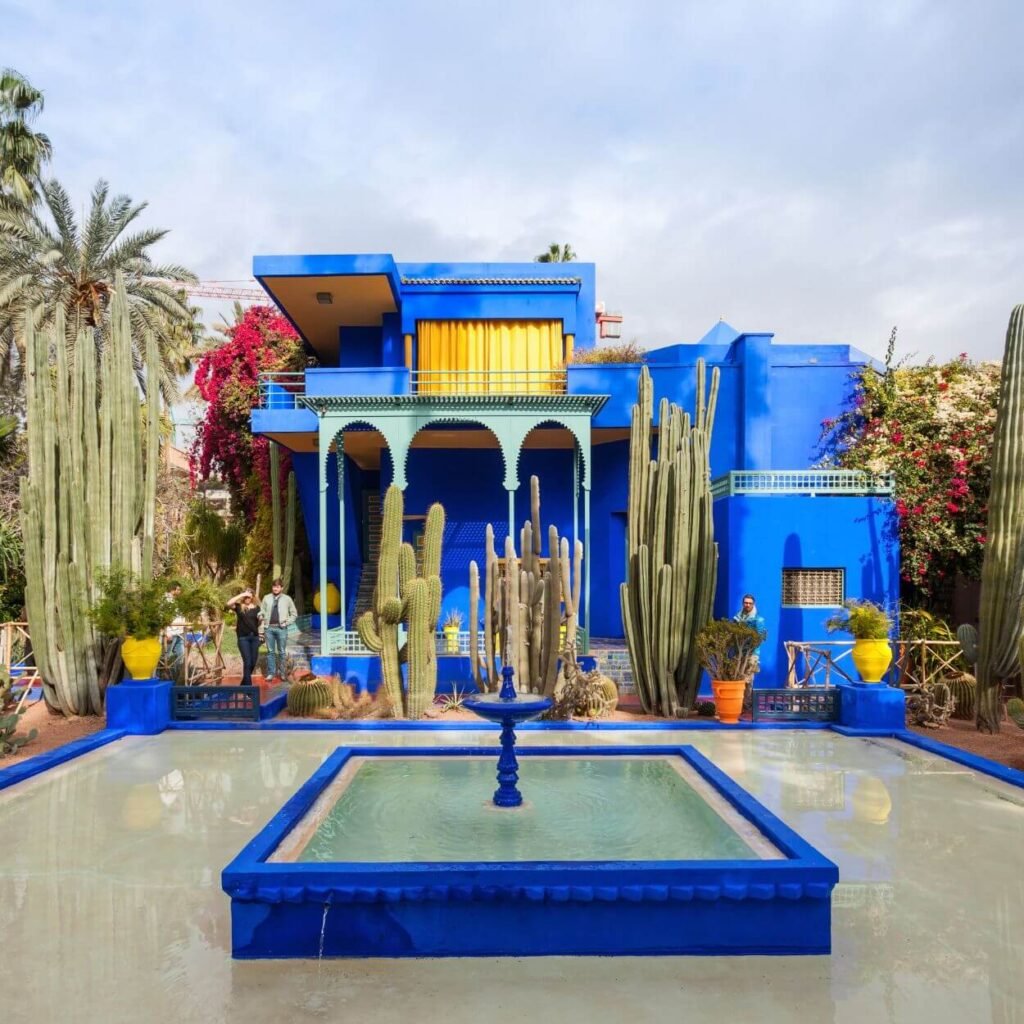
Majorelle Garden
Cobalt walls and cactus, made by Jacques Majorelle and saved by Yves Saint Laurent. Book online, go at opening.
-
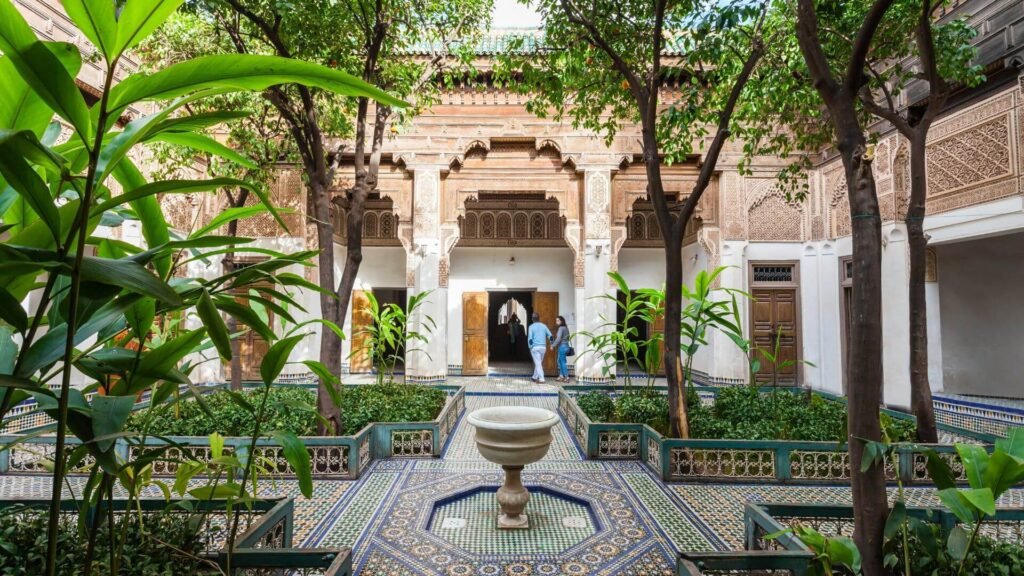
Bahia Palace
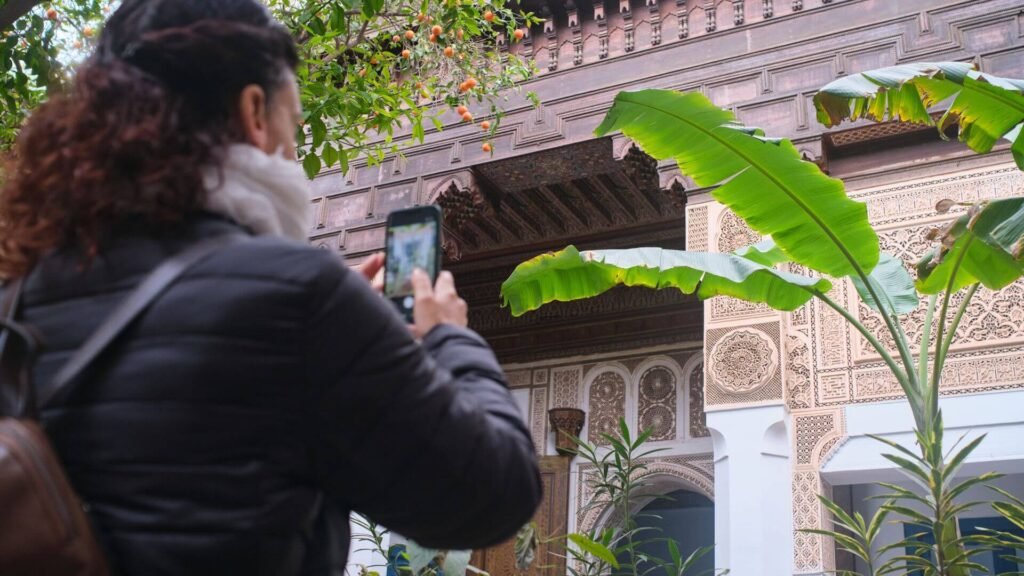
19th-century courtyards of zellige tile, painted cedar and carved plaster.
-
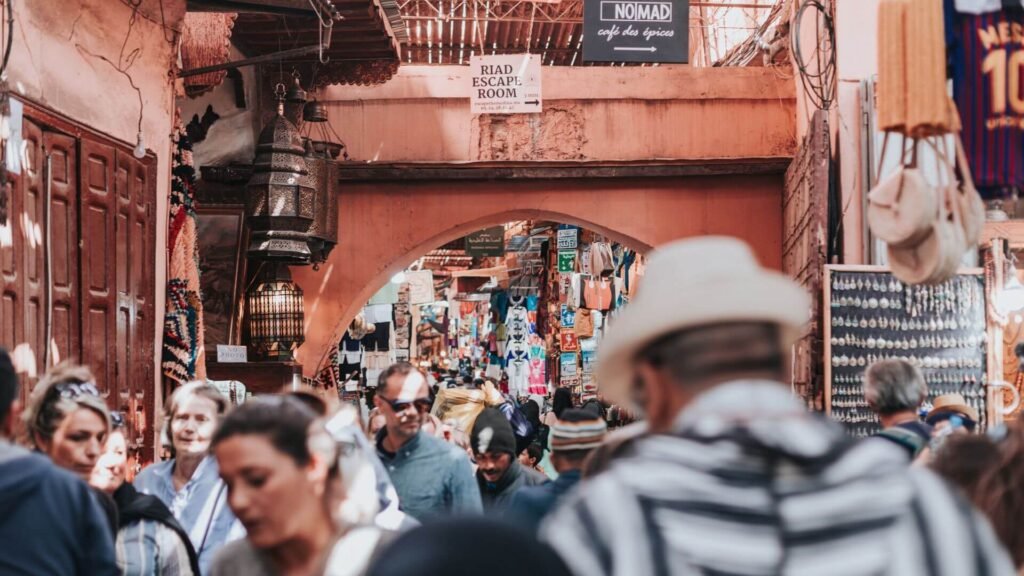
The souks
Leather, lanterns, spices and rugs, in a maze of trades. Bargain with a smile.
-
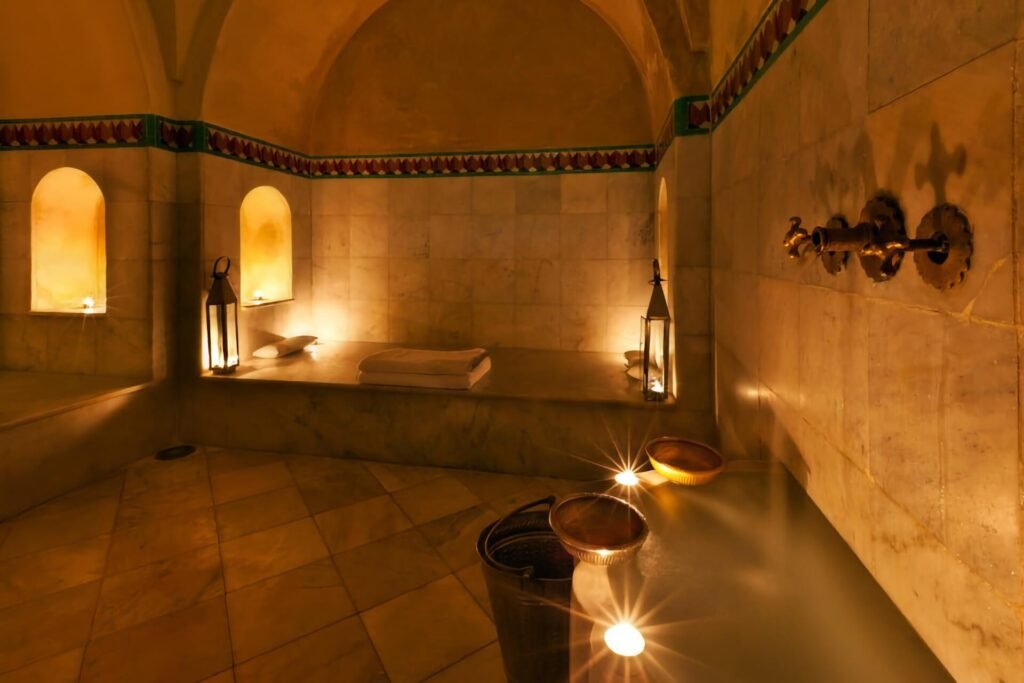
A hammam
Steam, black soap and a vigorous scrub, from a local bathhouse to a palace spa.
-
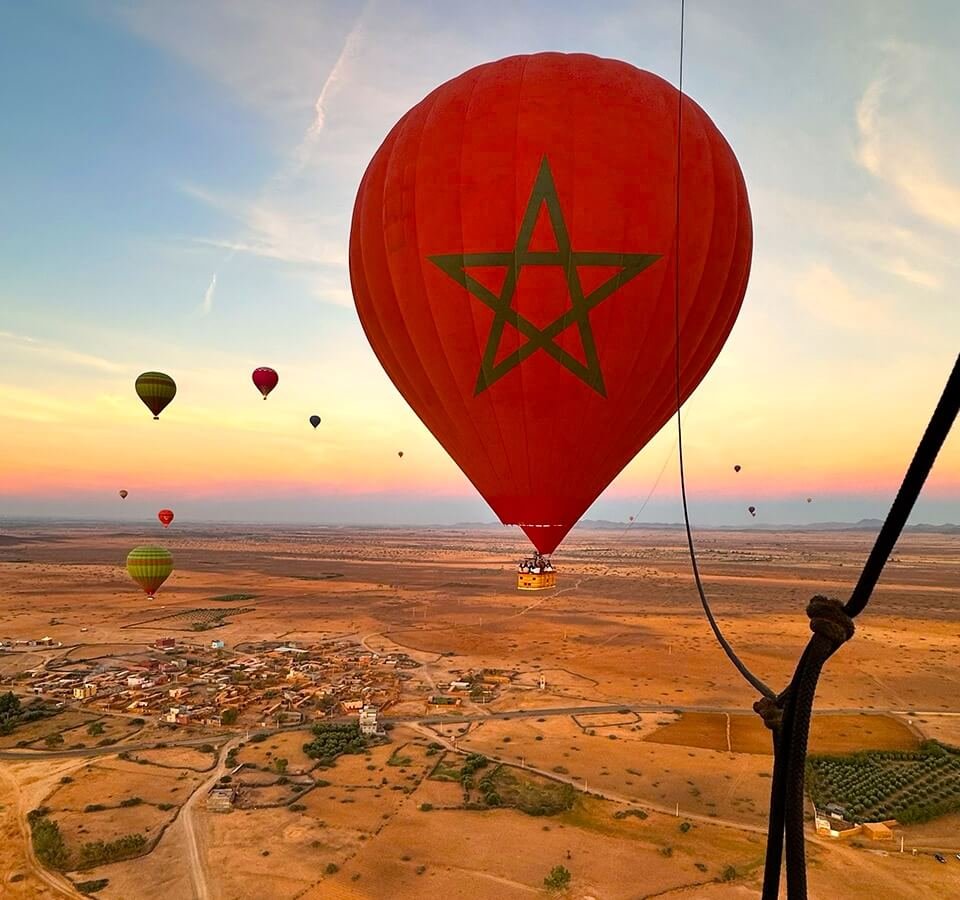
Experiences
Sunrise balloon flights, cooking classes and desert quad rides, bookable ahead.
Day trips
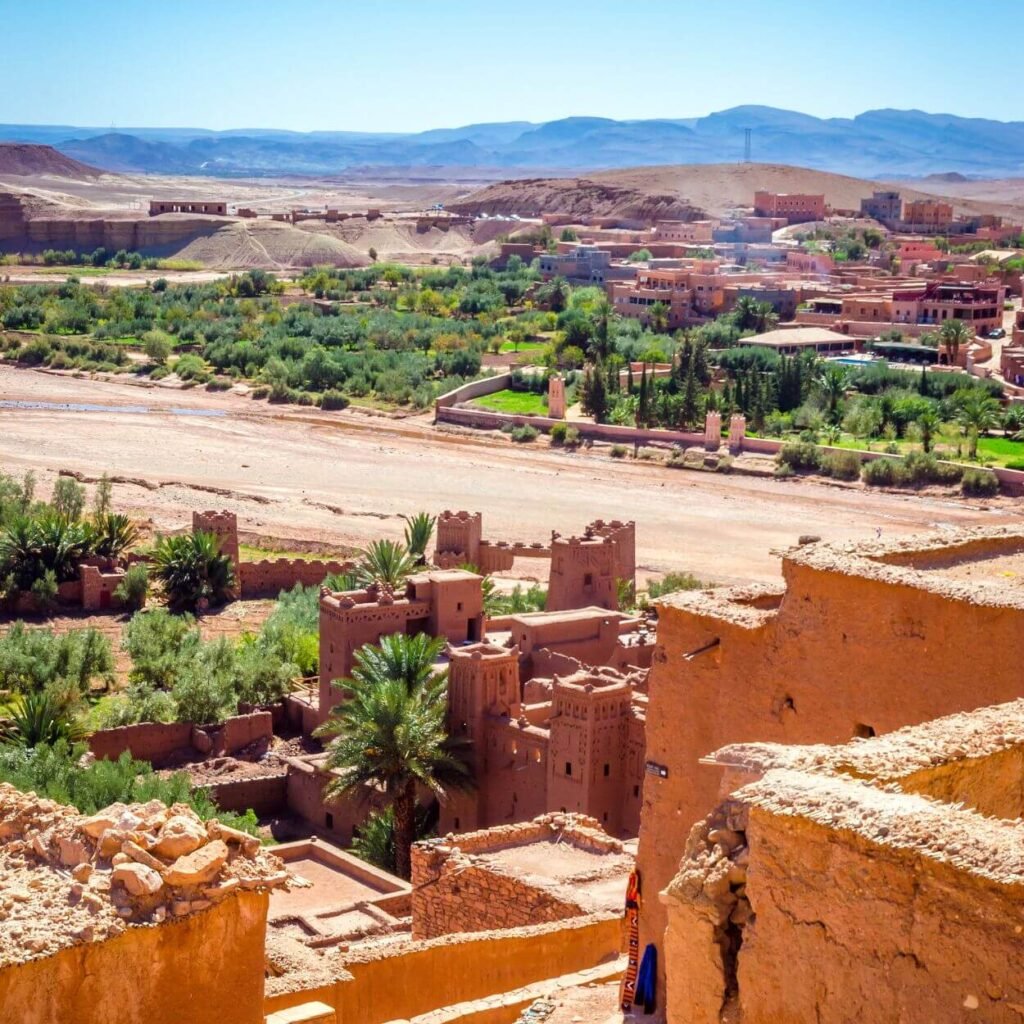
Marrakech sits between the High Atlas and the plains, so mountains, waterfalls, the Atlantic and the edge of the Sahara are all within reach. Even on a three-day stay, one day out of the city is worth it, and it’s the best cure for souk fatigue.
The Atlas and Ourika Valley are under two hours by road; Essaouira is three. The Sahara is the exception: it’s a minimum of two nights, so plan it as its own trip.
All day trips-
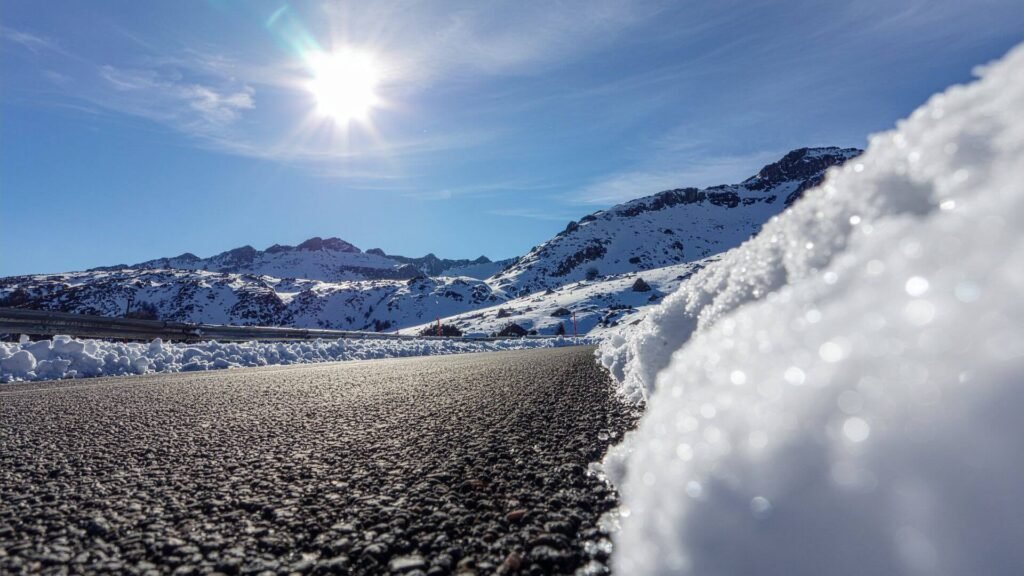
Atlas Mountains
An hour away: Berber villages, green valleys and lunch with a view of the peaks.
-
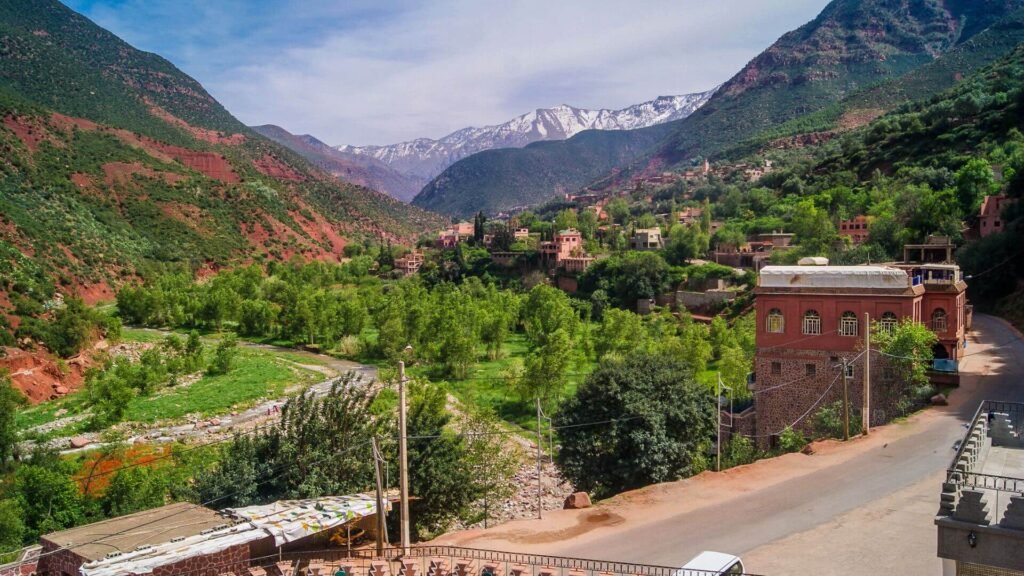
Ourika Valley
The easy half day: river cafés and the waterfalls of Setti Fatma.
-
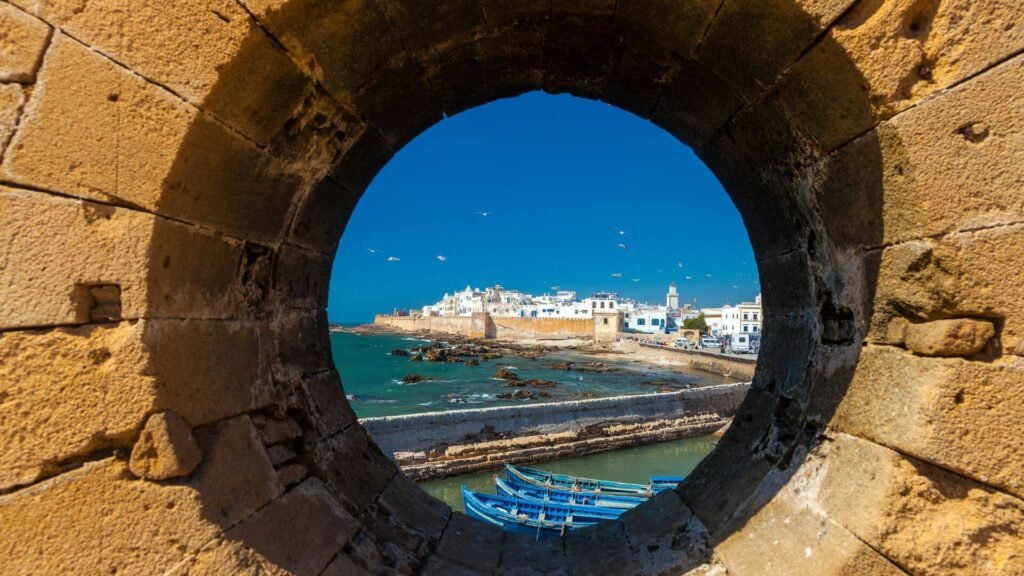
Essaouira
Three hours west: blue boats, white ramparts, Atlantic wind and grilled fish.
-

Sahara Desert
Too far for a day, at 9 hours each way. Give it two or three nights via the Draa Valley.
Food & restaurants
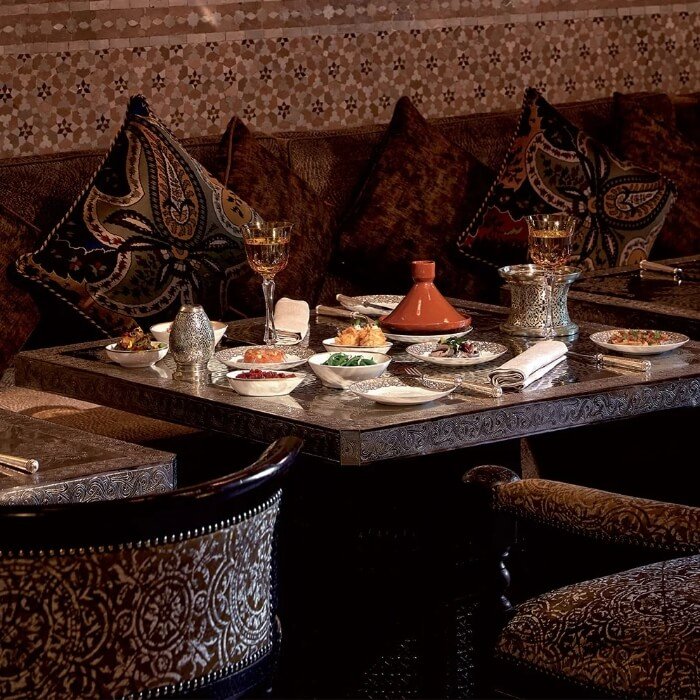
Moroccan cooking is slow and generous: tagines that simmer for hours, pastilla layered with sweet and savoury, harira to break the day. The best of it is still in family-run places and riad kitchens rather than smart dining rooms.
Book good restaurants a day or two ahead, and rooftops for sunset even earlier. Alcohol is served in licensed restaurants and hotels, but many traditional places don’t serve it.
How many days
Three days is the sweet spot for a first visit; add a fourth for a day trip, or two more nights for the desert.
-
2 days in Marrakech
The essentials at a brisk pace. Best as part of a wider Morocco trip. 2 days -
3 days in Marrakech
The sweet spot: the Medina, the gardens, and time to slow down. 3 days -
4 days in Marrakech
Add a day in the Atlas or at the coast. 4 days -
5 days: Marrakech + desert
Two nights in the city, then the Sahara. 5 days -
7 days in Morocco
A loop from Marrakech: Atlas, desert and maybe Fes. 7 days
Travel tips
The handful of things first-timers wish they had known.
-
Cash
Money
The dirham (MAD) can only be bought in Morocco. ATMs are easy to find; souks, taxis and small cafés take cash only.
Currency & tipping guide -
5–10%
Tipping
Leave 5–10% in restaurants, and 10–20 dirhams for porters, riad staff and anyone who helps you find your way.
-
Dress code
Relaxed but conservative: covering shoulders and knees in the Medina means more respect and less attention. Swimwear is for the pool.
-
Safety
Marrakech is generally safe. The usual nuisance is men offering to show you the way: a smiling “la shukran” (no thank you) and walking on works best.
-
⅓ – ½
Bargaining
Start at a third to half of the first price, stay friendly, and be ready to walk away. Fixed-price shops exist if you’d rather not.
-
Shukran
Language
Darija (Moroccan Arabic) and French are spoken everywhere; English is common in tourist areas. “Salam” and “shukran” go a long way.
Getting around
Walk the Medina, take taxis beyond it, and book a driver or a tour for days out.
-
On foot
The Medina
Pedestrian, apart from scooters. Download an offline map and accept you will get lost.
-
Meter
Petit taxis
The small beige taxis take up to three people. Ask for the meter, or agree the price before you get in.
-
15 min
From the airport
Menara airport is 15 minutes away. Ask your riad for a pickup: cars can’t reach most riad doors.
- Koutoubia 5 min on foot
- Bahia Palace 10 min on foot
- Majorelle Garden 35 min on foot 15 min by taxi
- Airport (RAK) 15 min by taxi
- Palmeraie 25 min by taxi
- Ourika Valley 1 h by car
- Imlil, High Atlas 1 h 30 by car
- Essaouira 3 h by car
- Merzouga, Sahara Plan two nights or more 9 h by car
Typical door-to-door times, outside rush hour. Bar lengths use a log scale.
Before you go
Morocco is easier than most people expect, but five things catch first-time visitors out. Tick them off as you go.
All travel planning guides-
Many passports, including EU, UK, US and Canadian, enter Morocco visa-free for up to 90 days. Check yours before you book anything.
-
Medical cover matters more than cancellation cover here: the Atlas and the Sahara are a long way from a hospital.
-
Install an eSIM before you fly and maps, messages and ride apps work the moment you land.
-
The dirham can’t be bought abroad, so you’ll get it on arrival. Keep small notes for taxis, tips and the souks.
-
Light layers, a scarf for sun and mosques, and shoes that can handle uneven lanes.
Some links are affiliate links: if you buy through them we may earn a commission, at no extra cost to you. As an Amazon Associate, we earn from qualifying purchases.
Questions people ask
Short answers to what people ask most. The full guides go deeper.
Plan your trip
Is Marrakech safe for tourists?
Yes, generally. Violent crime against visitors is rare; the usual nuisances are pickpockets in crowds and persistent offers to “show you the way”. Keep valuables zipped, and use official taxis at night.
Do I need a visa for Morocco?
Not for most Western passports: UK, EU, US, Canadian and Australian citizens can stay up to 90 days visa-free. Rules can change, so check your government’s travel advice before you book.
How many days do I need in Marrakech?
Three days covers the Medina, the gardens and a slower afternoon or two. Add a fourth for a day trip to the Atlas or Essaouira, and two or three nights more for the Sahara.
When is the best time to visit?
March to May and October to November: warm days, cool nights. July and August pass 38°C in the afternoon, and winter nights are cold in old riads.
Can I pay by card, or do I need cash?
Hotels, riads and most restaurants take cards; souks, taxis and small cafés are cash only. The dirham can only be bought in Morocco, so withdraw from an ATM on arrival.
What should I wear?
Light, loose clothes that cover shoulders and knees are the most comfortable and draw the least attention in the Medina. Bring a layer for evenings, and comfortable shoes for the cobbles.
Can I drink alcohol in Marrakech?
Yes, in licensed hotels, bars and restaurants. Many traditional places don’t serve it, and drinking in public isn’t done.
Is it a good idea to visit during Ramadan?
Yes, if you plan a little. Sights and tourist restaurants stay open, but some cafés close by day and the city slows down until sunset, then comes alive. Avoid eating or drinking in the street during the day. Dates move about 11 days earlier each year.
Can I drink the tap water?
It’s treated, but most visitors stick to bottled water to avoid an upset stomach. Bottles are cheap and sold everywhere.
How do I stay connected?
Buy a local SIM at the airport (Maroc Telecom, Orange or inwi) or set up an eSIM before you fly. Plugs are the two-pin European type (C/E), 220 V.
 Marrakist Concierge