
Eating Moroccan food in a restaurant is accessible on almost any evening in Marrakech. Understanding how it’s made — where the flavour of smen (aged butter) sits in the tagine sequence, why the chermoula marinade requires its specific herbs in its specific proportions, what the phrase “add the spices” actually means when there are fourteen of them — requires being in the kitchen with someone who has made it hundreds of times. That’s what the cooking class provides.
Moroccan Cooking Class in Marrakech
Moroccan cuisine is built on a specific logic: the right spice at the right moment of cooking, the patient layering of flavour that turns seven ingredients in a clay pot into something precise and irreproducible. This is not cooking that translates well from a recipe card read at home. It needs to be learned in a kitchen, from someone who knows it, with the actual ingredients.
The cooking class in a Marrakech riad is 3–4 hours that cover the essential structure of a Moroccan meal: a tagine (chicken with preserved lemon and olives, or lamb with prunes and almonds, depending on the session), a selection of cold salads, and the mint tea that arrives at the table before and after everything else. Most classes with the market option begin at the Rahba Kedima spice market — the same spice market you may have walked through on your first morning — and make the connection between the raw ingredients and the finished dish explicit.
- Tagine
- 90 minutes slow cook — salads made during the wait
- Group size
- 4–8 people — everyone gets hands-on time at the stove
- With market visit
- 4–5 hours total // without: 3–4 hours
- Arrive hungry
- the shared meal at the end is a full Moroccan lunch
Powered by GetYourGuide
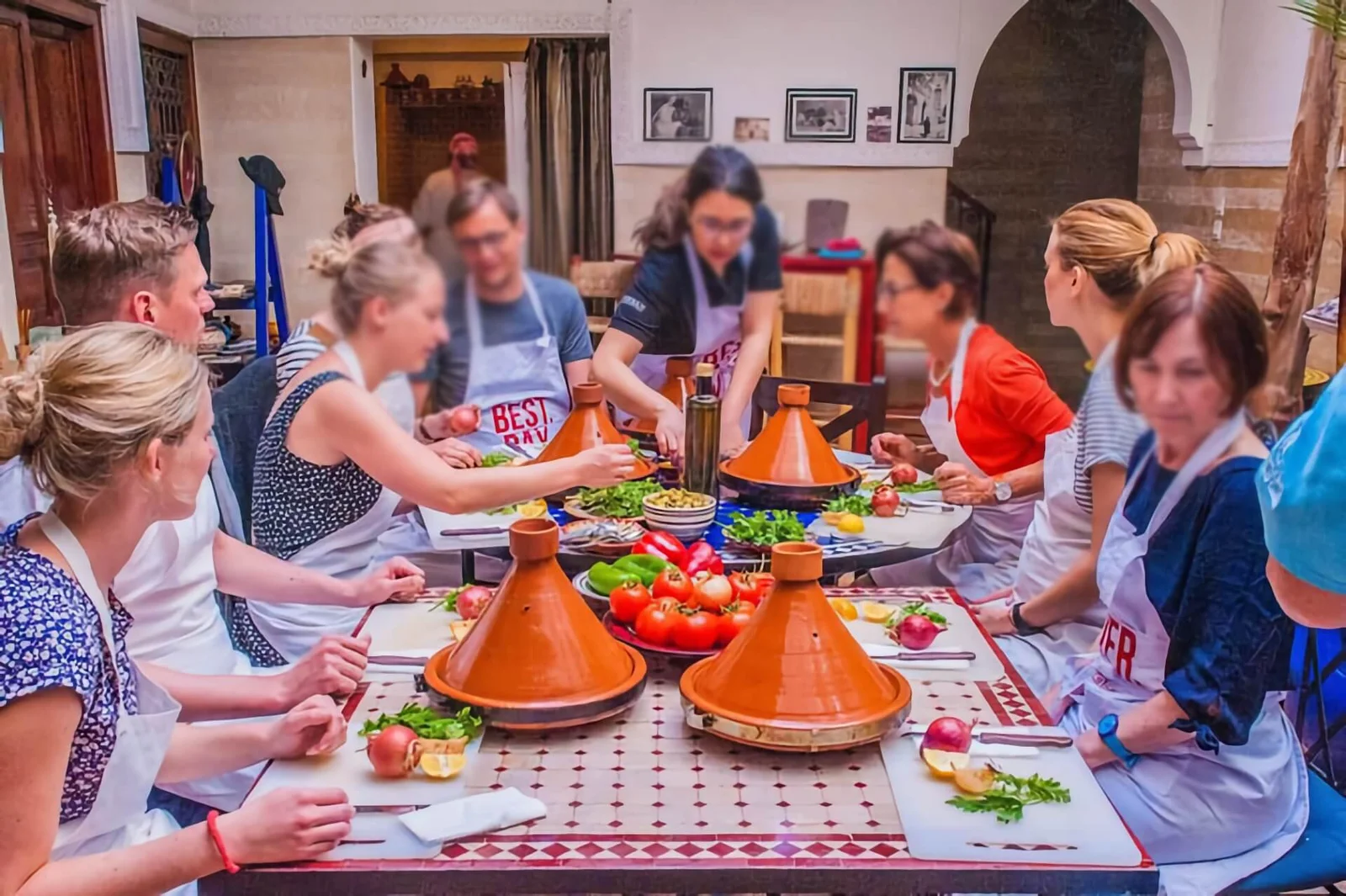
Moroccan cooking class — Marrakech — the spice market first, the riad kitchen after, and a tagine you made yourself at the table: the knowledge you take home outlasts every souvenir
Why This Experience Stays With You
-
Cook Like a Local
The class is hands-on from the first step — chopping, grinding, layering, monitoring heat. The instructor demonstrates each technique before asking participants to attempt it, which means the learning is tactile rather than observational. Group sizes of 4–8 people ensure that each participant has genuine access to the cooking surface rather than watching from three rows back.
-
Discover the Secrets of Moroccan Flavors
Moroccan spice knowledge is the most transferable skill from this class. The logic of ras el hanout (which spice combination, at what point in the process), the distinction between fresh coriander added at the start versus at the end of cooking, the reason preserved lemon is rinsed before use — these are the specific pieces of knowledge that make a Moroccan tagine taste different at home from how it does in the restaurant. The instructor covers this because it's the functional knowledge, not the decorative part.
-
A Cultural Experience, Not Just a Class
Moroccan hospitality is expressed through food in a way that has no direct equivalent in most European or North American cooking cultures — the abundance, the specific sequence of dishes, the mint tea poured and repoured throughout, the fact that refusing a second helping requires a specific verbal formula. These customs emerge naturally during the class and are the context for understanding why the food is what it is.
-
Share a Meal You Created
The meal at the end of the class — eaten at the same table in the same riad kitchen, with the instructor and the other participants — is the moment the experience becomes social rather than educational. The tagine you made, the salads you seasoned, the bread bought at the market that morning: the specific satisfaction of eating food you've prepared from raw ingredients is different from restaurant eating in a way that's difficult to anticipate beforehand.
-
Take the Experience Home With You
The techniques covered in the class — the tagine layering sequence, the chermoula proportions, the mint tea preparation — are reproducible at home with ingredients available in most European and North American cities. Most operators provide a written recipe card at the end. The combination of hands-on learning and a written reference produces a different kind of retention from reading a cookbook.
What to Expect From Your Cooking Class
The class follows a consistent structure across most Marrakech operators: welcome, ingredient sourcing or introduction, cooking, eating. The market-visit option adds a 45–60 minute souk section at the beginning. Here’s how the session unfolds.
-
Welcome & Introduction
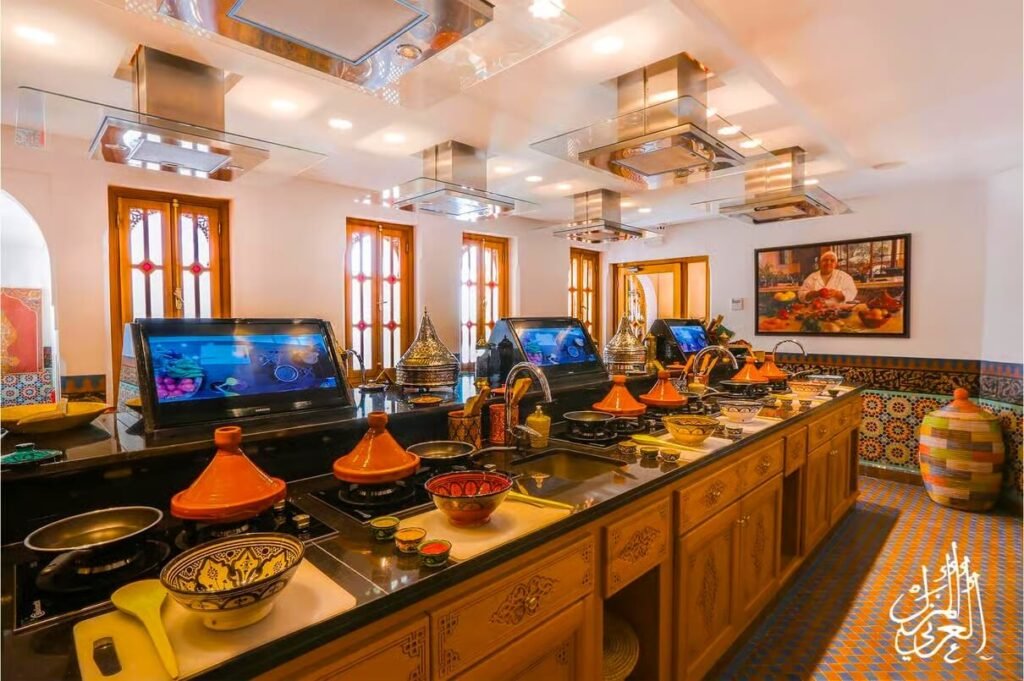
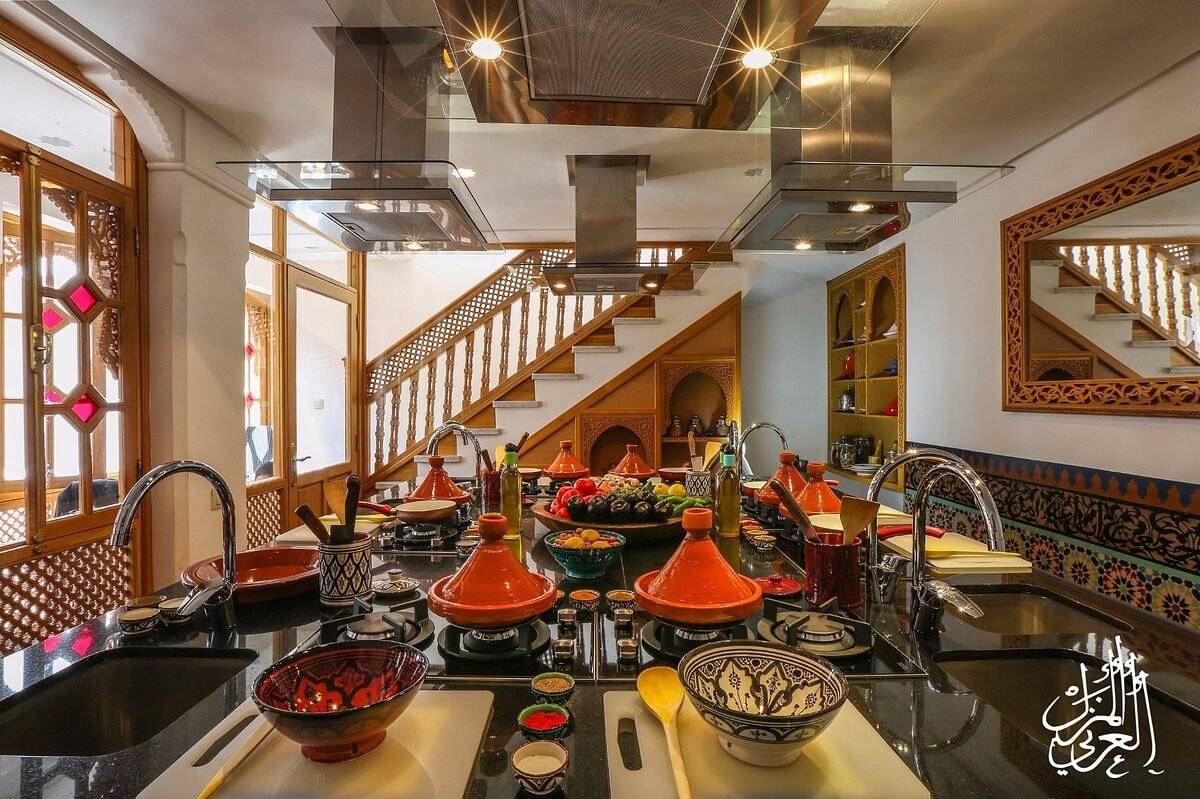
The class takes place in a riad kitchen or a dedicated cooking classroom in the Medina. The space is typically a traditional courtyard building with a kitchen arranged around a central work surface. The instructor introduces themselves, outlines the session's menu, and explains what the group will cook and why those dishes are representative of Moroccan domestic cooking rather than restaurant cooking. The atmosphere is informal from the first minute — this is a home kitchen, and the class functions like a cooking lesson with a knowledgeable host.
-
Ingredient Selection
For classes with the market option, the session begins at the Rahba Kedima spice market, 10 minutes' walk from most central riads. The instructor walks you through the spice vendors — explaining which cumin is worth buying, what the difference between Moroccan and Indian turmeric is at the source, what preserved lemons look like when they're ready — before moving to the produce vendors for the vegetables and herbs. For classes without the market visit, ingredients are presented at the kitchen and introduced before cooking begins.
-
Hands-On Cooking
The cooking sequence for a standard class covers three elements: the tagine (prep, layering, and 90-minute slow cook), two or three salads (cooked Moroccan salads — zaalouk, taktouka, or carrot-cumin — rather than dressed raw vegetables), and the mint tea. Each element is covered in sequence with the instructor demonstrating and then participants doing. The tagine's long cooking time provides the window for the salads, which is why the sequence works as a coordinated class rather than a set of separate recipes.
-
Cooking & Cultural Insights
The 90-minute wait while the tagine cooks is when the class becomes a conversation rather than a lesson. Most instructors use this time to explain the cultural context — the Moroccan meal structure (multiple cold dishes before a single large shared plate), the role of bread (khobz is the Moroccan utensil; no cutlery is required for the tagine), the function of the mint tea ceremony (a form of welcome that has specific protocols around pouring and serving). These conversations are the part of the class that participants most consistently describe as memorable.
-
Enjoy Your Meal
The meal is served at the kitchen table once all dishes are ready — typically 2.5–3 hours into the session. The full sequence: salads and bread first, then the tagine lifted from its cone, then the mint tea. Eating what you've cooked in the space where you cooked it, with the people you cooked alongside, is the correct ending for this experience.
-
Return With New Skills
Most operators provide a printed recipe card covering the session's dishes. Combined with the hands-on learning of the session, the recipe card provides a complete reference for reproducing the tagine and salads at home. The mint tea preparation — the specific ratio of tea to mint to sugar, the pouring technique — is the element most participants report attempting first when they return home.
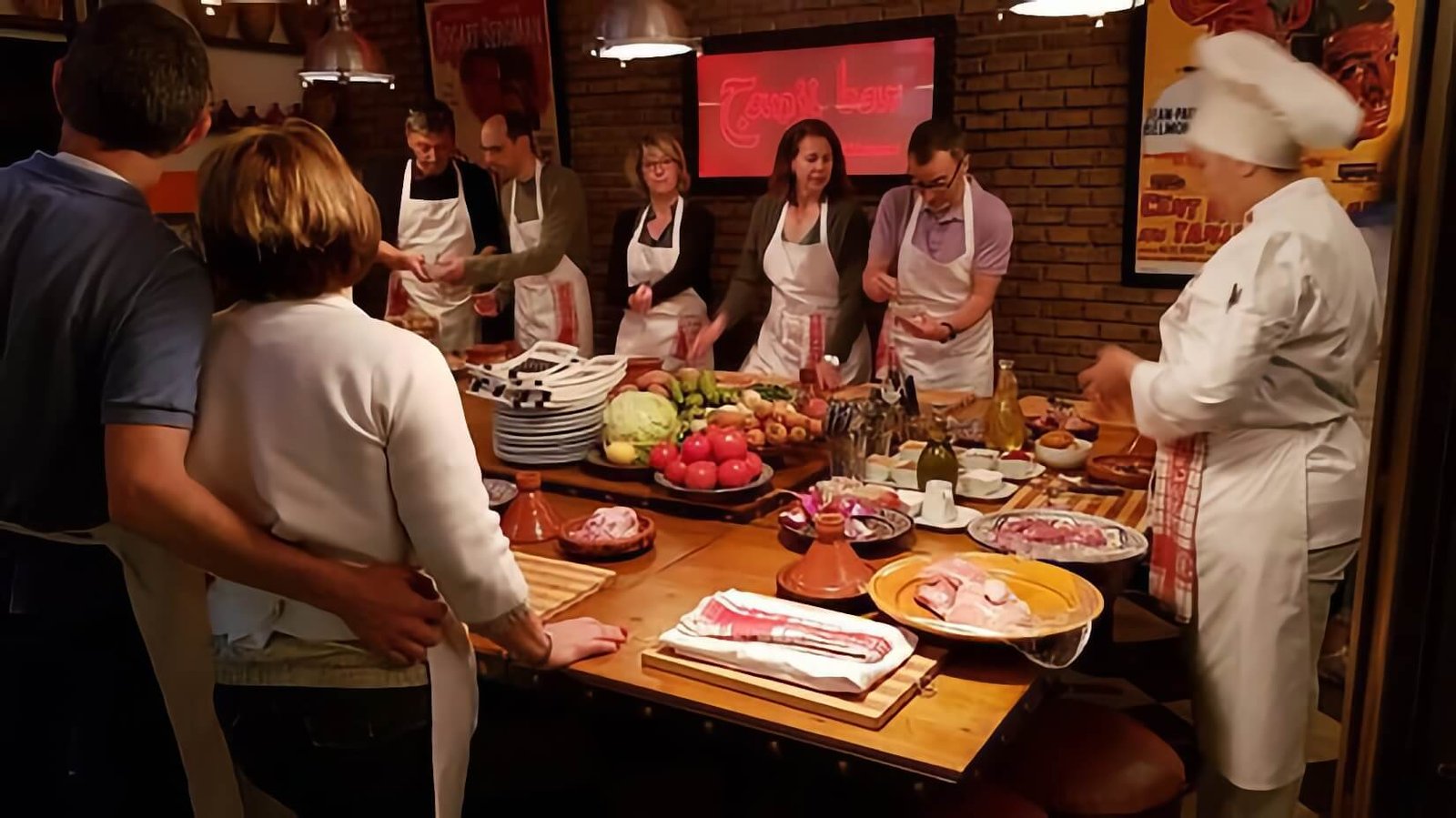
Pricing & Booking Options
The three options cover different levels of immersion and group configuration. The Standard Class and the Market & Cooking Experience are the most commonly booked; the Private Class is appropriate for groups who want a tailored menu or a more intimate session.
Standard Class
A 3–4 hour session in a Medina riad covering a tagine, salad selection, and mint tea preparation. All ingredients provided; professional local instructor; meal eaten at the end of the class. The correct option for most visitors — covers the core of Moroccan domestic cooking in a format that works for solo travellers, couples, and small groups equally well.
- 3–4 hour hands-on cooking session
- All ingredients provided
- Professional local instructor
- Ends with the meal you’ve prepared
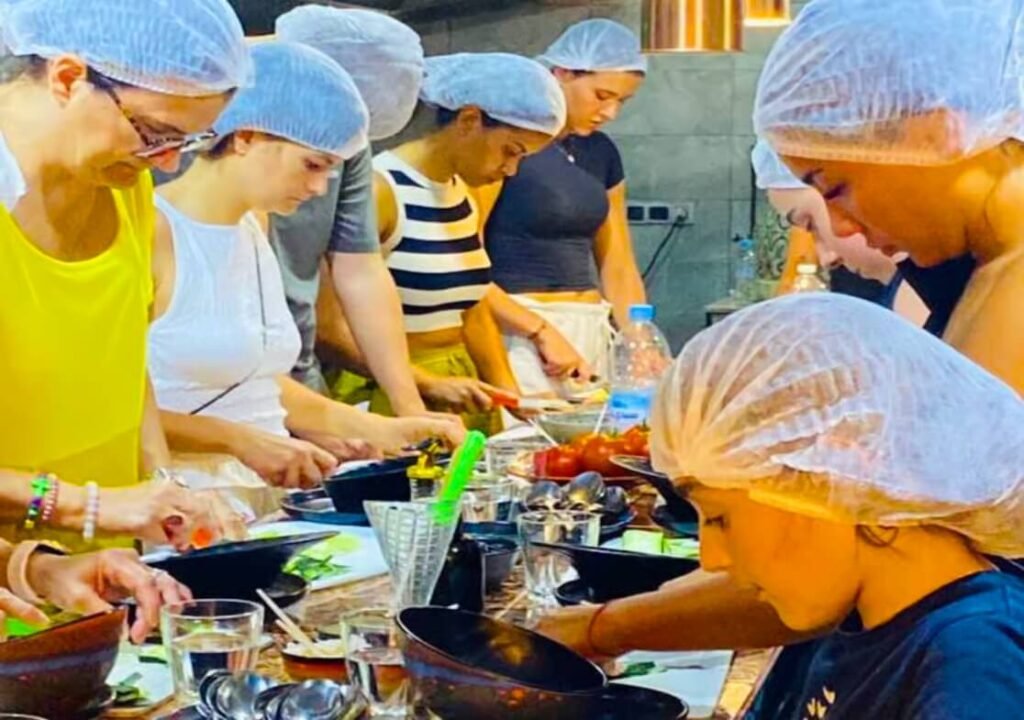
Market & Cooking Experience
The Standard Class with a 45–60 minute Rahba Kedima market visit added at the beginning. The market section is conducted by the instructor and covers spice selection, produce sourcing, and the connection between the ingredients purchased and the dishes they’ll become. The additional context makes the cooking session more specific — the class participants have seen and selected the ingredients rather than encountering them already prepared. The recommended option for visitors who have walked through the spice market and wanted to understand what they were seeing.
- Morning market visit with the instructor
- Hands-on cooking session following the market
- All ingredients sourced and included
- Shared meal at the end
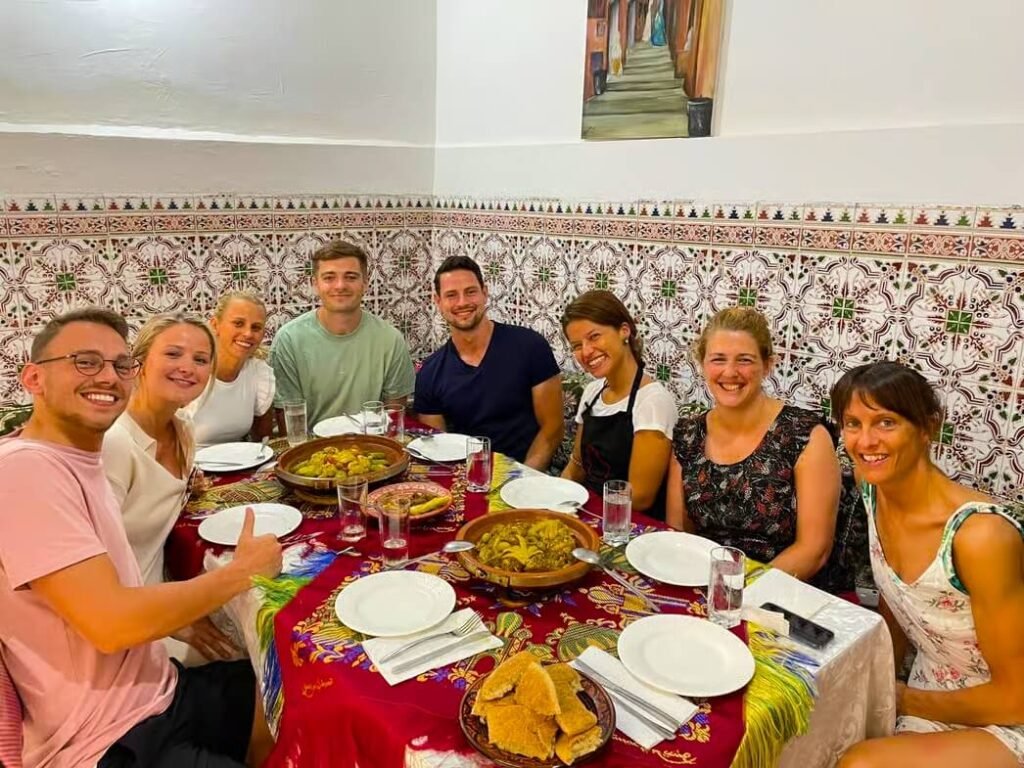
Private Class
A private session for your group only — tailored menu, personal instructor, your own pace. The private format allows for menu customisation (vegetarian dishes, specific tagine combinations, additional pastry techniques) that the shared class format doesn’t accommodate. La Maison Arabe’s cooking workshop is one of the most established private class offerings in Marrakech — a 19th-century riad with a dedicated teaching kitchen and a menu that covers both the home-cooking repertoire and the more elaborate pastilla and mechoui of special occasion Moroccan cuisine.
- Private cooking session for your group
- Customisable menu and dishes
- Personal instructor with full attention
- Appropriate for special occasions and dietary requirements
Tip: Both the Standard Class and the Market & Cooking Experience fill quickly, particularly for morning slots (the most popular format) and during October–November and March–April. Book 2–3 days before your preferred date at minimum; a week in advance in high season.
Tips to Get the Most From Your Cooking Class
The cooking class requires less physical preparation than the outdoor experiences but benefits from a few specific approaches to get the full value from the session.
-
Wear Comfortable Clothing
You'll be standing at a kitchen counter for 2–3 hours, handling hot ingredients, and inevitably absorbing the aromas of cumin, coriander, and slow-cooked meat. Wear clothing you don't mind retaining those smells for the rest of the day — breathable natural fabrics rather than synthetics. Closed-toe shoes are practical for kitchen safety. An apron is provided; you don't need to bring one.
-
Bring an Appetite
The meal at the end of the class is a full Moroccan lunch or dinner — salads, tagine, bread, and mint tea. Participants who arrive hungry consistently describe the eating portion as one of the highlights; participants who have had a large meal beforehand find themselves unable to eat what they've cooked, which is the most avoidable disappointment in the experience. Skip the breakfast or have something light; eat fully at the class.
-
Ask Questions
The instructor's knowledge covers far more than the dishes being prepared in the session. Questions about spice sourcing, regional variations in Moroccan cuisine, the difference between Marrakchi and Fassi cooking, or what to order in a Moroccan restaurant to eat well — these are all within the instructor's knowledge and usually welcomed. The class format is informal enough that questions mid-cooking are standard rather than interruptive.
-
Take Notes or Photos
The recipe card is the primary reference, but photographing the key stages of the cooking process — the layering of the tagine, the consistency of the chermoula before and after cooking, the way the tea is poured — provides a visual record that supports the written recipe when attempting the dishes at home. Most instructors are accustomed to participants photographing the process and accommodate it without slowing the session.
-
Relax and Enjoy
The standard advice about not worrying about perfection applies here with a specific Moroccan context: the instructor knows that the tagine produced in the class will not be identical to one made by someone who has been cooking it for thirty years, and they will tell you this. The point of the class is not to produce a restaurant-quality dish — it's to understand the technique, the flavour logic, and the cultural context well enough to reproduce something close to it at home. The session is structured to make this achievable.
Powered by GetYourGuide
Frequently Asked Questions
Do I need prior cooking experience?
No. The class is structured for beginners — each technique is demonstrated before participants attempt it, and the instructor monitors and corrects as the cooking progresses. Participants with prior cooking experience find the class informative about technique rather than about basic kitchen skills; the Moroccan-specific knowledge (spice logic, tagine layering, salad preparation methods) is unfamiliar regardless of general cooking ability.
How long does the class last?
Standard sessions are 3–4 hours total: approximately 45 minutes for welcome and ingredient introduction or the market visit, 2–2.5 hours of active cooking, and 45 minutes to 1 hour for the shared meal. The market-visit option adds 45–60 minutes to the start of the session and typically runs 4–5 hours in total.
Are ingredients provided?
Yes for all class formats. The standard class and private class include all ingredients at the riad. The market-visit option includes the cost of the market ingredients purchased with the instructor. No additional food purchases are required.
Can children join the class?
Some classes accept children, particularly in the private session format where the age and confidence of participants can be factored into the session design. Children aged 10 and above are typically comfortable with the cooking tasks covered in the standard session; younger children can participate in specific stages (mixing, tasting) but may not be engaged for the full duration. Check with the specific operator at booking.
Do I get to eat what I cook?
Yes — the meal at the end of the session is the dishes prepared during the class. The tagine you layered, the salads you seasoned, the bread bought at the market (or provided) — all are eaten at the kitchen table as the concluding part of the experience. This is the most consistently mentioned highlight by participants in post-class reviews.
Explore More Hands-On Experiences
The experiences below cover the full range of what Marrakech offers — from the landscape experiences that take you outside the city to the wellness experience that takes you deeper into the city’s daily life. Each one produces a different kind of memory from the cooking class.
-

Hot Air Balloon Ride Over Marrakech
The landscape context for the ingredients you cooked with: the Haouz plain's olive groves, the Atlas mountains where the saffron grows, the palmeraie visible in its full extent from 1,000 metres
-

Desert Quad Biking Adventure
The furthest possible register from the cooking class: physical, outdoor, loud. The Agafay plateau at speed — the same landscape the tagine's preserved lemons come from, experienced at an entirely different pace
-

Camel Ride in the Palm Grove
The Palmeraie at walking pace — the outdoor equivalent of the cooking class's unhurried rhythm, both experiences moving slowly enough to register what's around them
-
Traditional Hammam & Spa Ritual
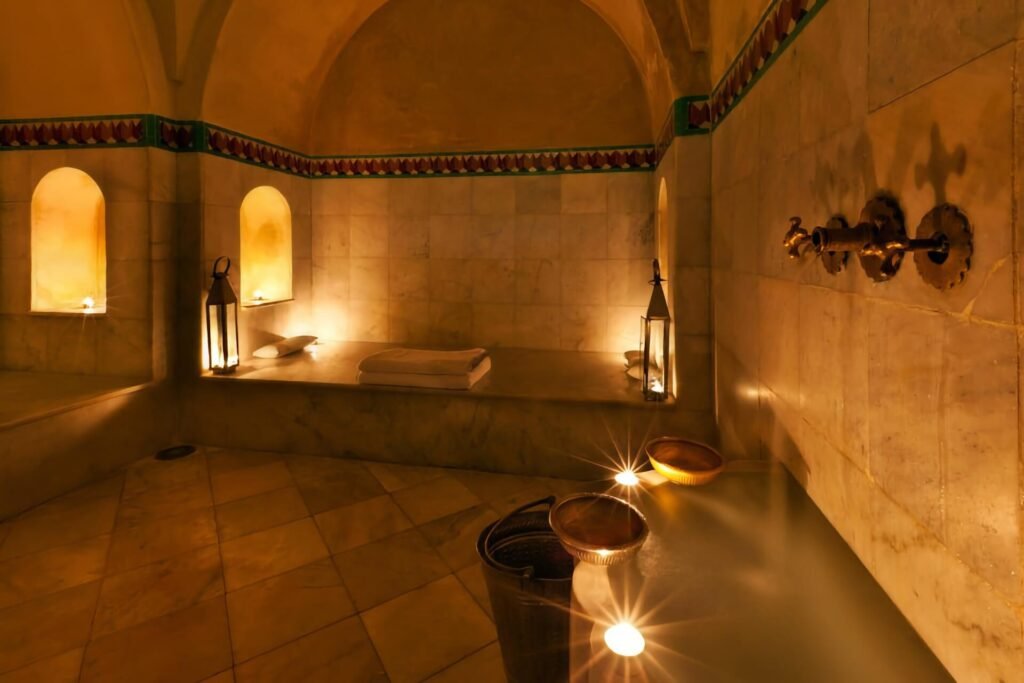
The correct experience to book after the cooking class if both are on the same day — 90 minutes of steam and kessa scrub that uses the same black soap (savon beldi) made from the olive oil that appeared in the salad dressings
 Marrakist Concierge