
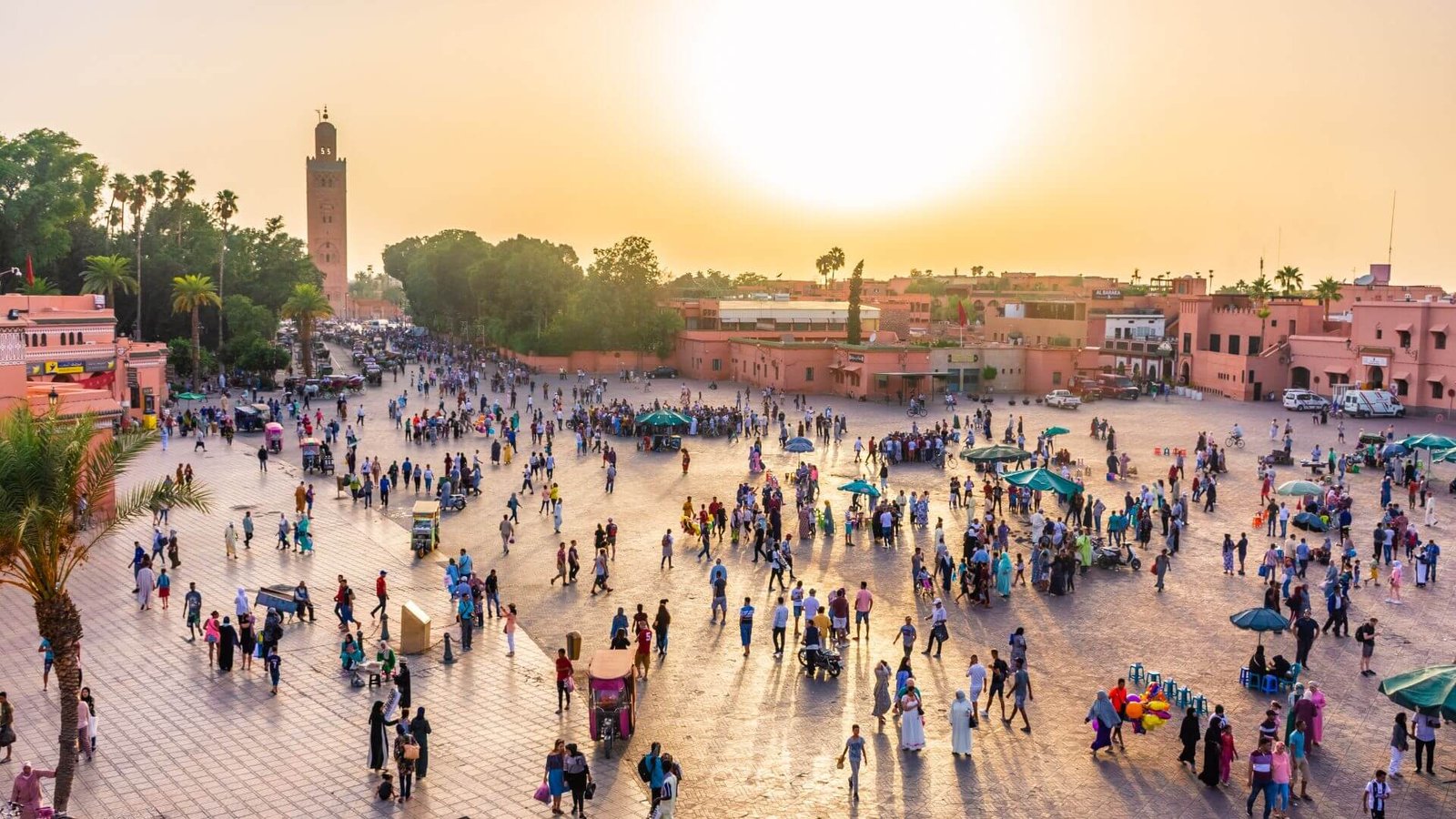
The Koutoubia and the Jemaa el-Fna are the two fixed points of any Marrakech visit — the former the city’s visual reference, the latter its centre of gravity. The route between them passes through the Bahia Palace and the main souk circuit, arriving at the square as it transforms from afternoon market to evening theatre.
2 Days in Marrakech: The Perfect Itinerary for First-Time Visitors
Two days in Marrakech is a tight timeline, and the itinerary below is built around that constraint. The Medina is genuinely disorienting on first encounter — the streets are narrow, the navigation is non-linear, and the souk circuit is longer than it looks on a map. This plan sequences the city in the order that works: monuments before souks, souks before the square, the square at sunset. Day 2 uses Gueliz and the garden quarter to decompress before a final evening back in the Medina.
What this plan covers:
- The Koutoubia, Bahia Palace, and the main souk circuit on Day 1
- Jemaa el-Fna at the right time of day — after dark, when the food stalls are running
- Majorelle Garden and the YSL Museum on Day 2 morning (book ahead)
- A traditional hammam in the afternoon
- Practical logistics: where to stay, how to get around, what the city actually costs
- Day 1 walking
- 10–14 km through the Medina — wear comfortable shoes
- Airport to centre
- 6 km — 15–20 min taxi, ~70–100 dirhams
- Book ahead
- Majorelle Garden & hammam — everything else is walk-in
- Daily cash
- 200–400 dirhams covers most needs in the Medina
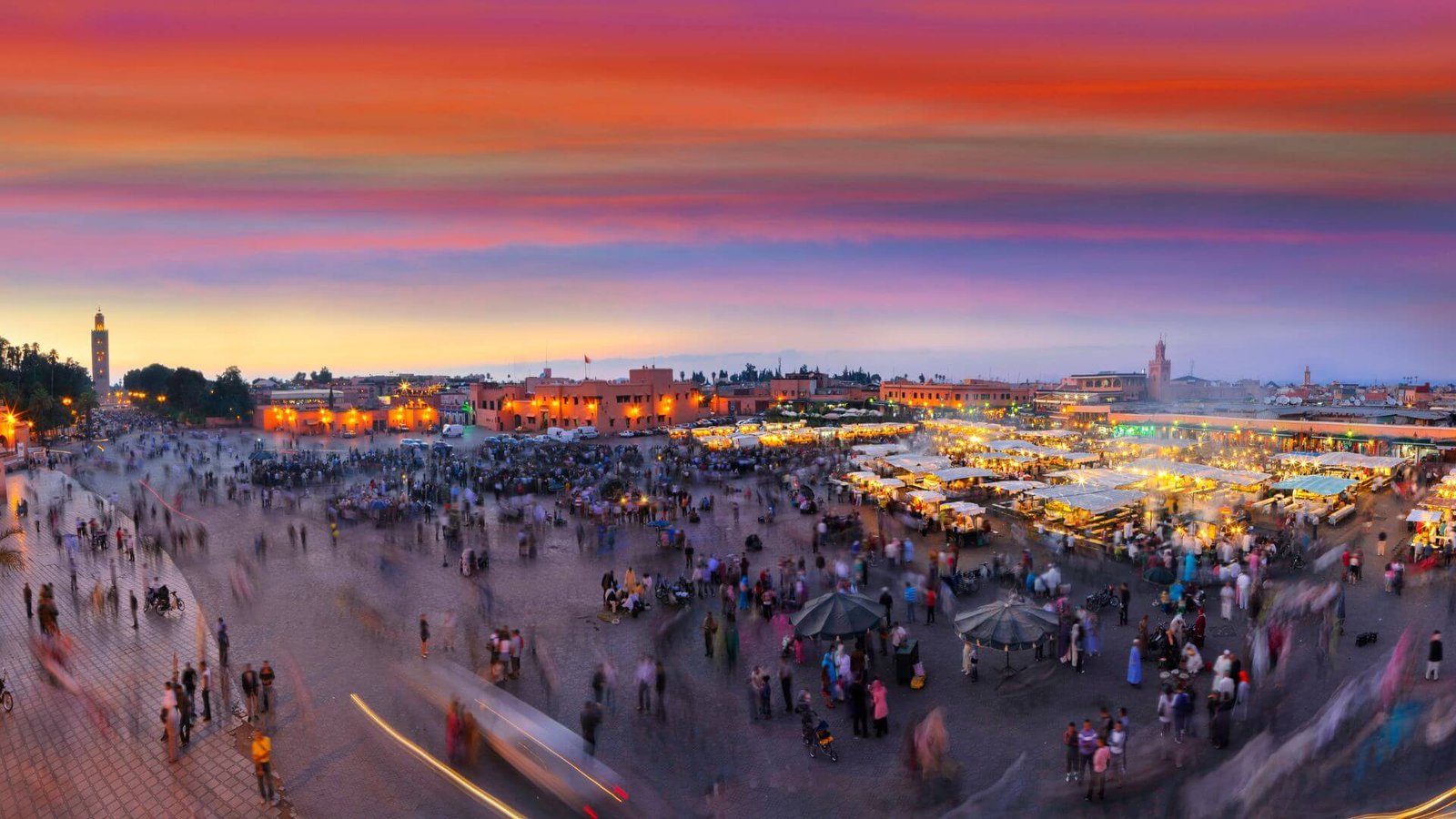
2 days in Marrakech — monuments before souks, souks before the square, the square after dark: sequence matters in this city
Your 2-Day Marrakech Itinerary at a Glance
Two days structures naturally into two different registers: Day 1 is the Medina in full — its monuments, its souks, its square after dark. Day 2 is the city’s other face — the French-influenced garden quarter in Gueliz, the calm of a hammam, and a final dinner that doesn’t need to be rushed.
Day 1: The Soul of Marrakech (Medina & Iconic Landmarks)
Day 2: Gardens, Calm & a Touch of Escape
Majorelle Garden is at its best in the first hour after opening, before the tour groups arrive. The afternoon hammam resets the body after two days of Medina walking. The final evening can be as simple or as elaborate as the trip requires — a rooftop dinner, a last walk through the square, or both.
Local tip: The Medina rewards early starts for a specific reason: the souk vendors are setting up rather than selling, the light is directional and good for photography, and the street-level intensity hasn’t yet built. Arriving at Bahia Palace at 9am rather than 11am is the difference between a calm visit and a crowded one.
Map of Your 2-Day Marrakech Itinerary
The map below shows both days overlaid. Day 1 stays within the Medina — the Koutoubia at the western edge, Bahia Palace at the southeastern end, the souks in the centre, and Jemaa el-Fna at the heart. The distances are shorter than they appear: from the Koutoubia to Bahia Palace is about 25 minutes on foot through the Medina streets. From Bahia Palace to the Rahba Kedima souk square is another 15 minutes. The entire Day 1 circuit is walkable.
Day 2 starts outside the Medina in Gueliz — Majorelle Garden is a 15-minute taxi ride from the Medina. The afternoon hammam can be in the Medina or Gueliz. The final dinner is back in the Medina.
Save the map offline before entering the Medina. Mobile signal inside the old city is intermittent, and GPS positioning in the narrow streets is less accurate than it is on open roads. The map is a reference, not a turn-by-turn guide — the Medina requires a level of spatial intuition that GPS cannot fully provide.
Day 1: Dive Into the Soul of Marrakech (Medina & Iconic Landmarks)
Day 1 is structured to use the Medina’s geography logically rather than randomly. The route starts at the western edge near the Koutoubia — the city’s most legible landmark — and works eastward through the palace quarter and souks, ending at Jemaa el-Fna as the sun goes down. This direction (west to east in the morning, returning to the square in the evening) follows the natural flow of visitors through the Medina and avoids the backtracking that makes the day feel longer than it is.
Morning: A Soft Entry Into the Medina
Start between 8:30 and 9:00am. The Medina at this hour is genuinely different from the Medina at noon: vendors are setting up rather than in full sales mode, the alleys are passable without shoulder-to-shoulder navigation, and the morning light on the ochre walls is specific and good.
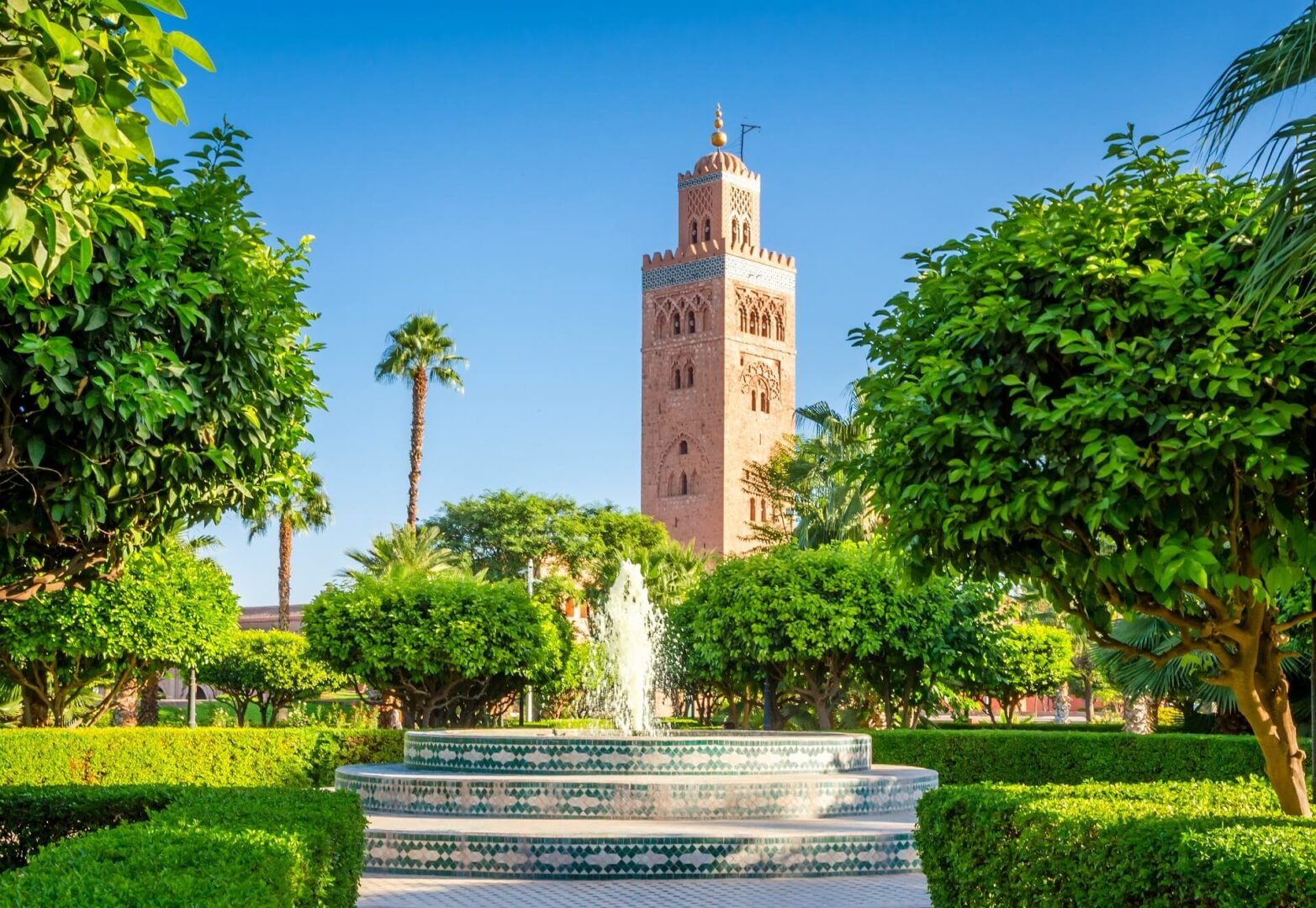
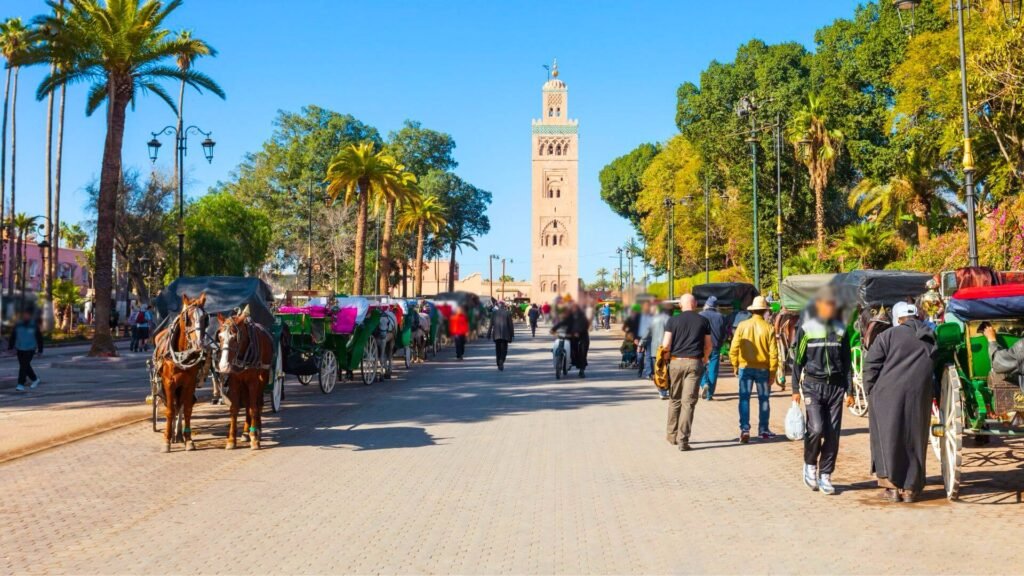
- Koutoubia Mosque (Exterior): The minaret is 70 metres — visible from most of the Medina and the fixed orientation point for the whole city. Walk the garden perimeter rather than just photographing from one angle; the western garden gives the best view of the full tower.
- Walk toward the Medina: The approach from the Koutoubia through the Jemaa el-Fna and into the palace quarter takes you past the square before it’s busy — useful spatial orientation for the evening return.
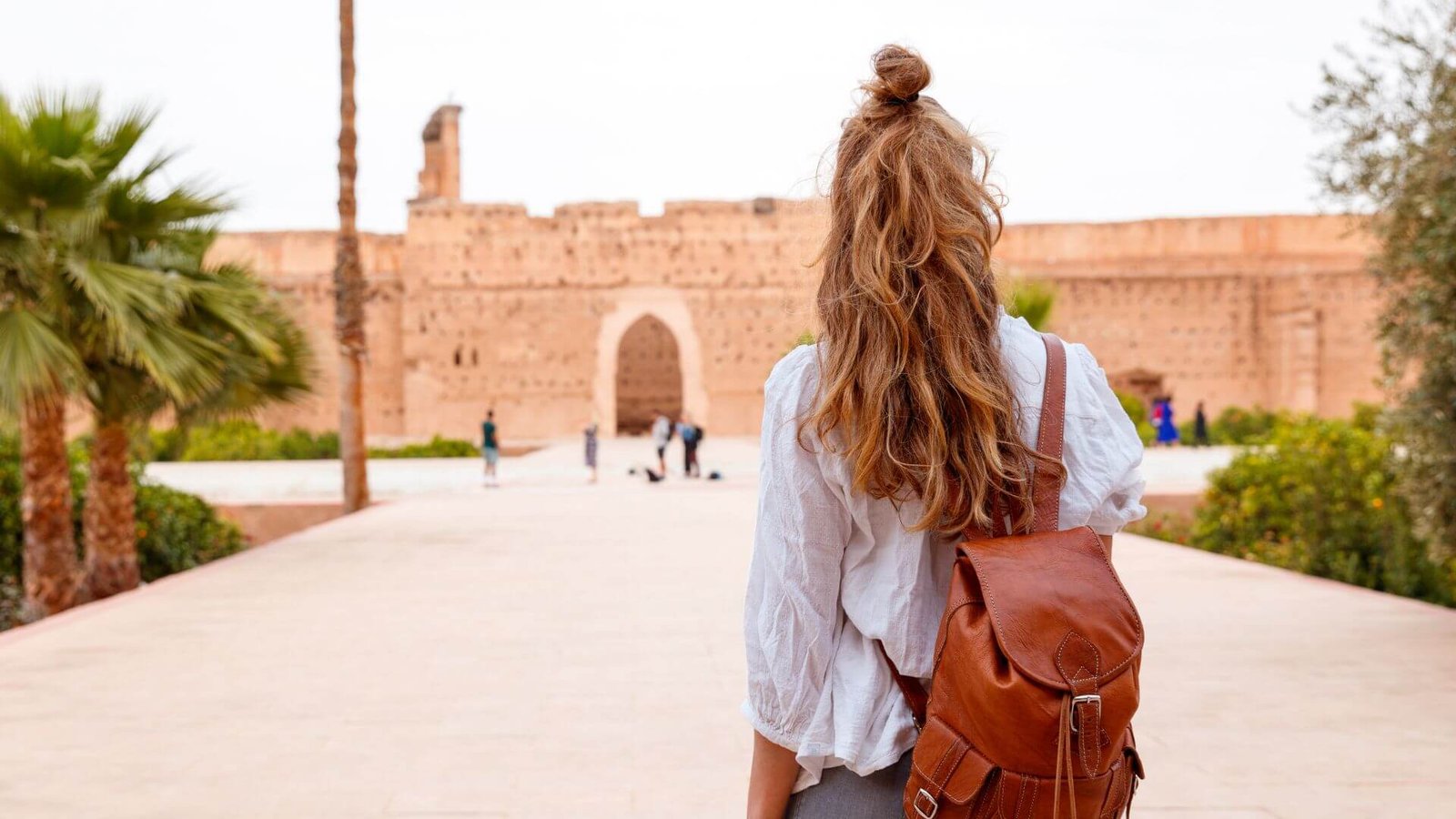
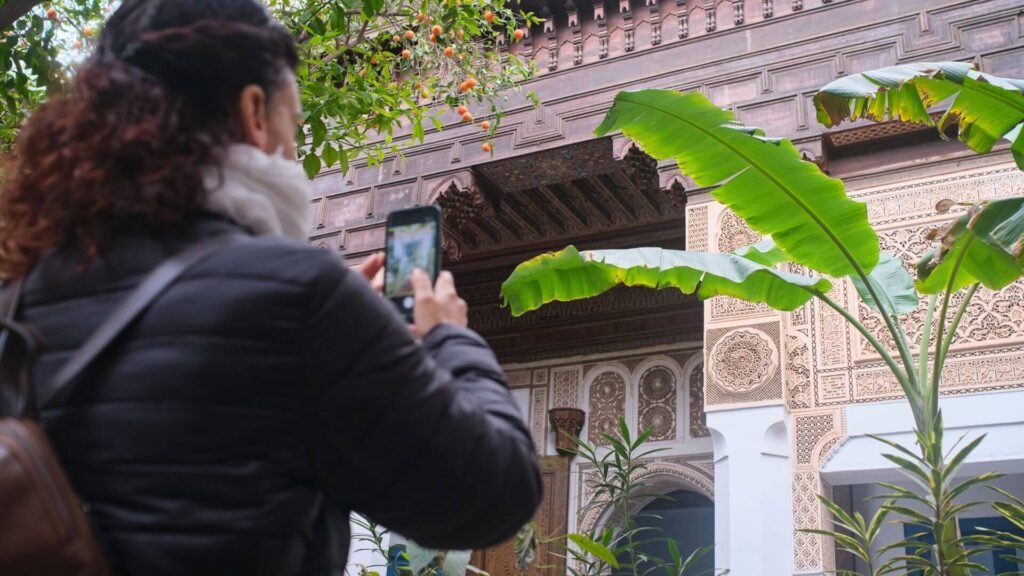
- Bahia Palace: Allow 45–60 minutes. The palace covers 8,000 square metres and the interior courtyard sequence — cedar ceilings, zellige floors, carved stucco — requires time to absorb rather than photographs to collect.
Why this order: monuments before souks means your first Medina impression is architectural and calm rather than commercial and intense. The contrast when you enter the souk circuit after the palace is significant and worth preserving.
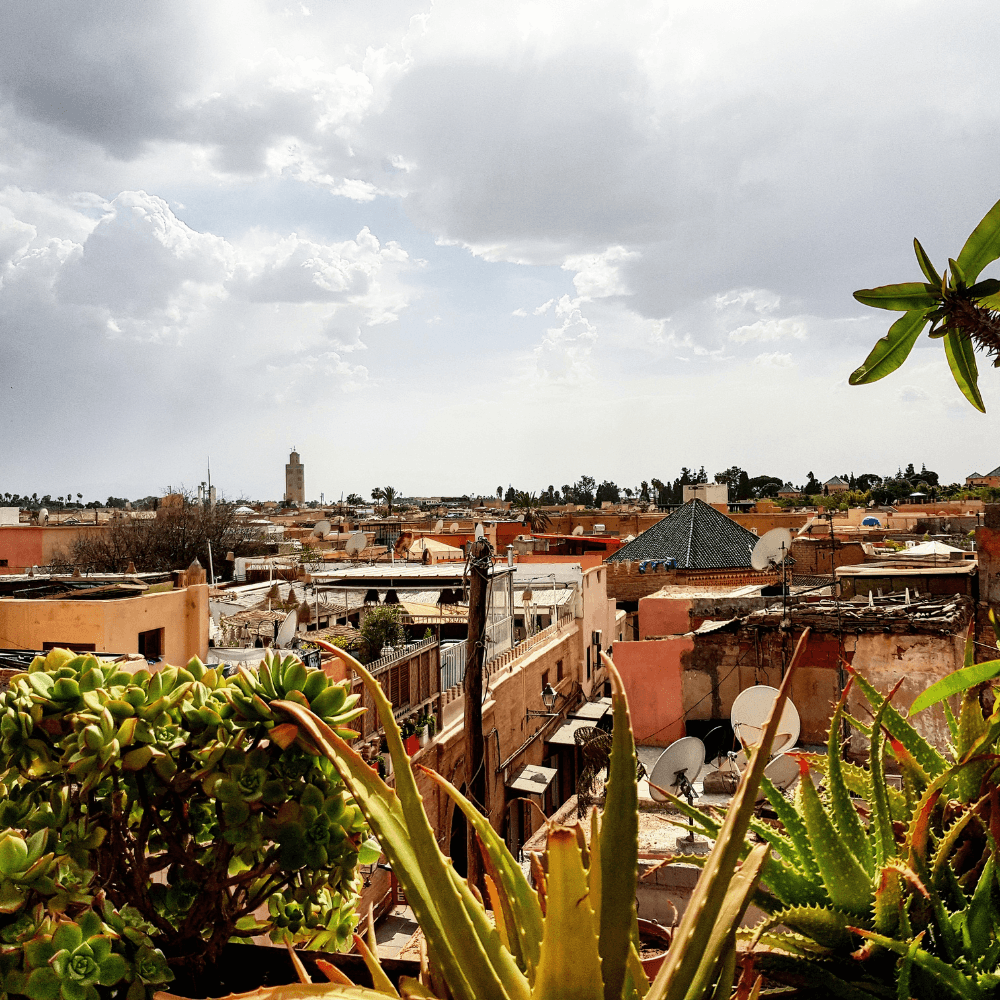
Lunch: A Midday Reset
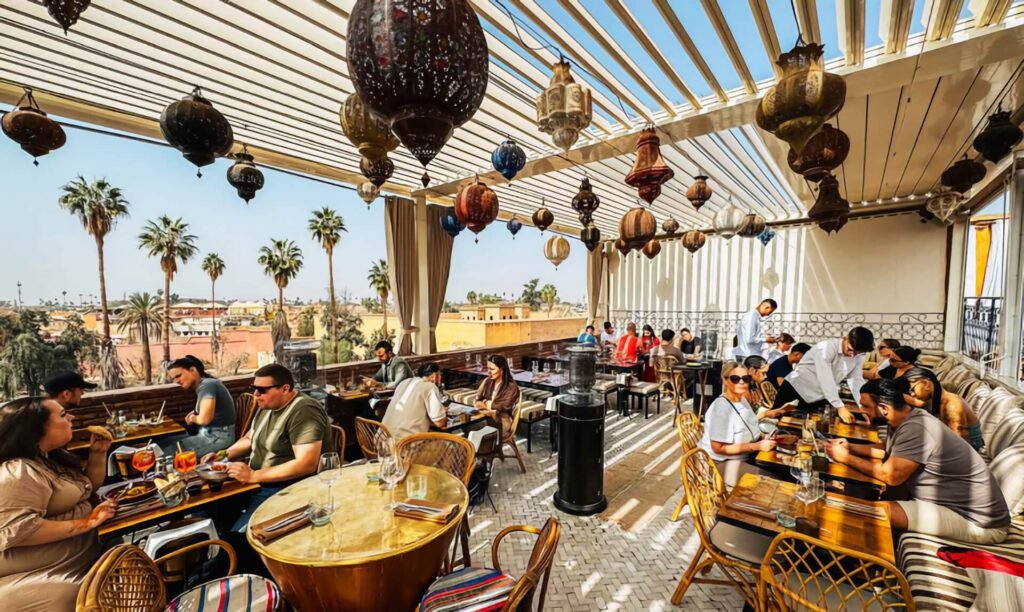
By midday the Medina is at full activity. The logical response is altitude — a rooftop terrace gets you out of the street level while keeping you physically inside the Medina.
- Rooftop Lunch (Dardar, Nomad, or Café des Épices): All three are within five minutes of each other near the Rahba Kedima. Nomad has the highest terrace and the best Koutoubia sightlines. Café des Épices overlooks the spice square directly. Dardar is the quietest. All serve Moroccan food at similar quality; the distinction is the view.
The practical purpose of the rooftop lunch is recovery: thirty minutes above the souk noise, with a view that provides spatial context for where you’ve been and where the afternoon takes you.
Afternoon: Get Lost in the Souks (On Purpose)
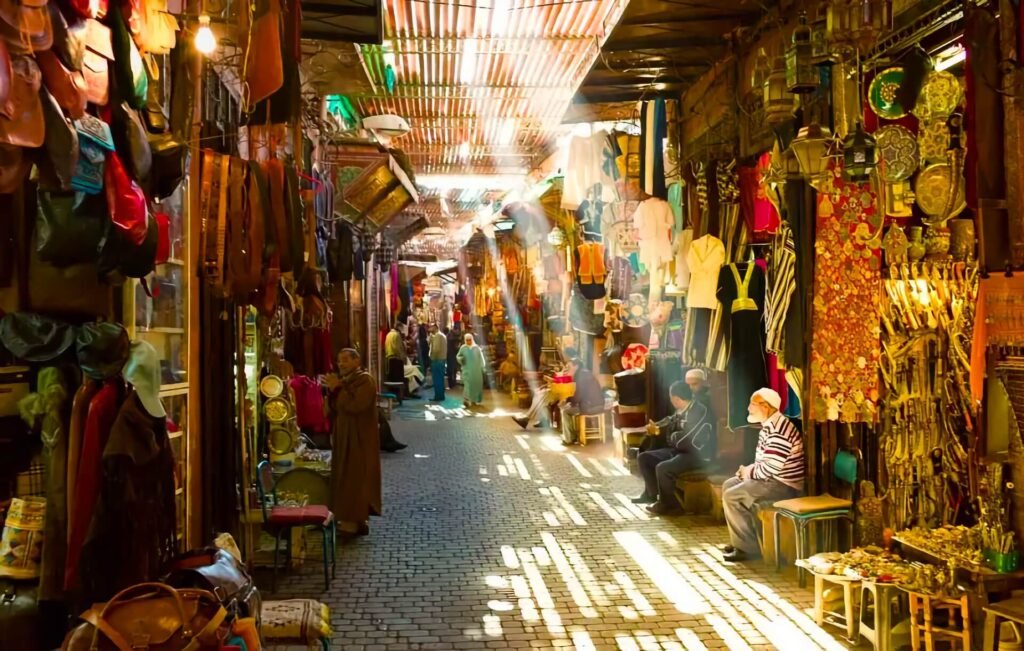
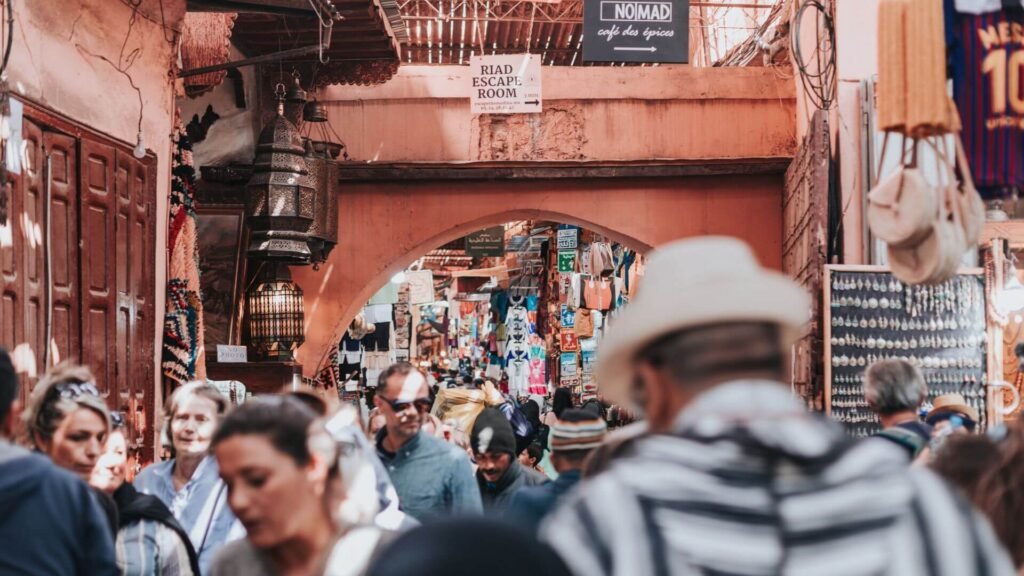
The souk circuit from Rahba Kedima northwest toward Souk Semmarine and back is the core Medina experience. It takes 60–90 minutes at a walking pace with stops; longer with browsing.
- Wander through the souks around Souk Semmarine
- Pass by Rahba Kedima (the spice square) — already visited at lunch, but worth a second pass when the light changes
- Explore the smaller alleys off the main souk spine — the dyers’ quarter, the leatherworkers, the wooden goods section
The productive approach to souk navigation is to pick one direction and walk it rather than trying to cover everything. The souk is not a grid; it’s a series of overlapping circuits that eventually return you to familiar landmarks if you keep moving.
Evening: Sunset & the Magic of Jemaa el-Fna
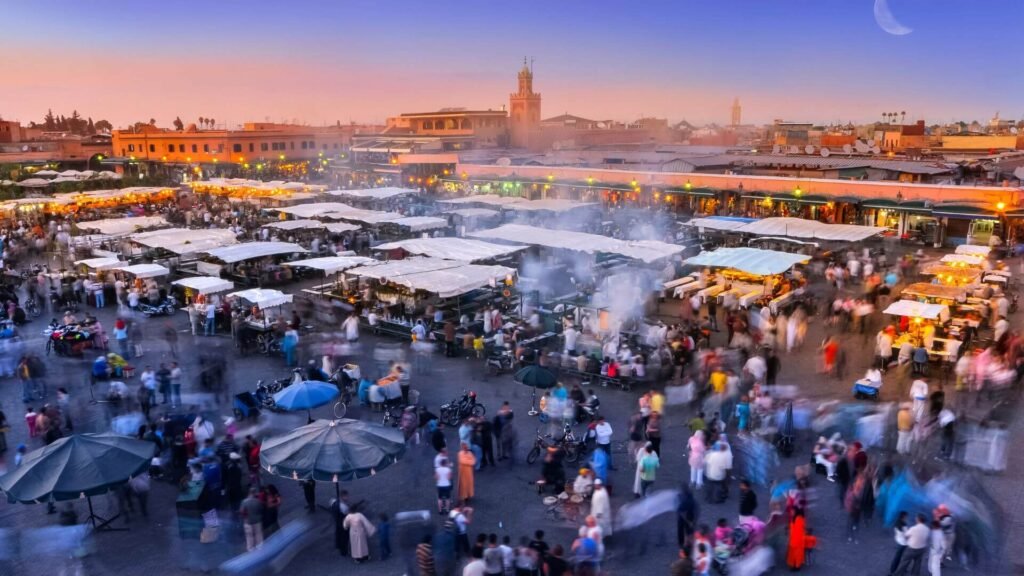
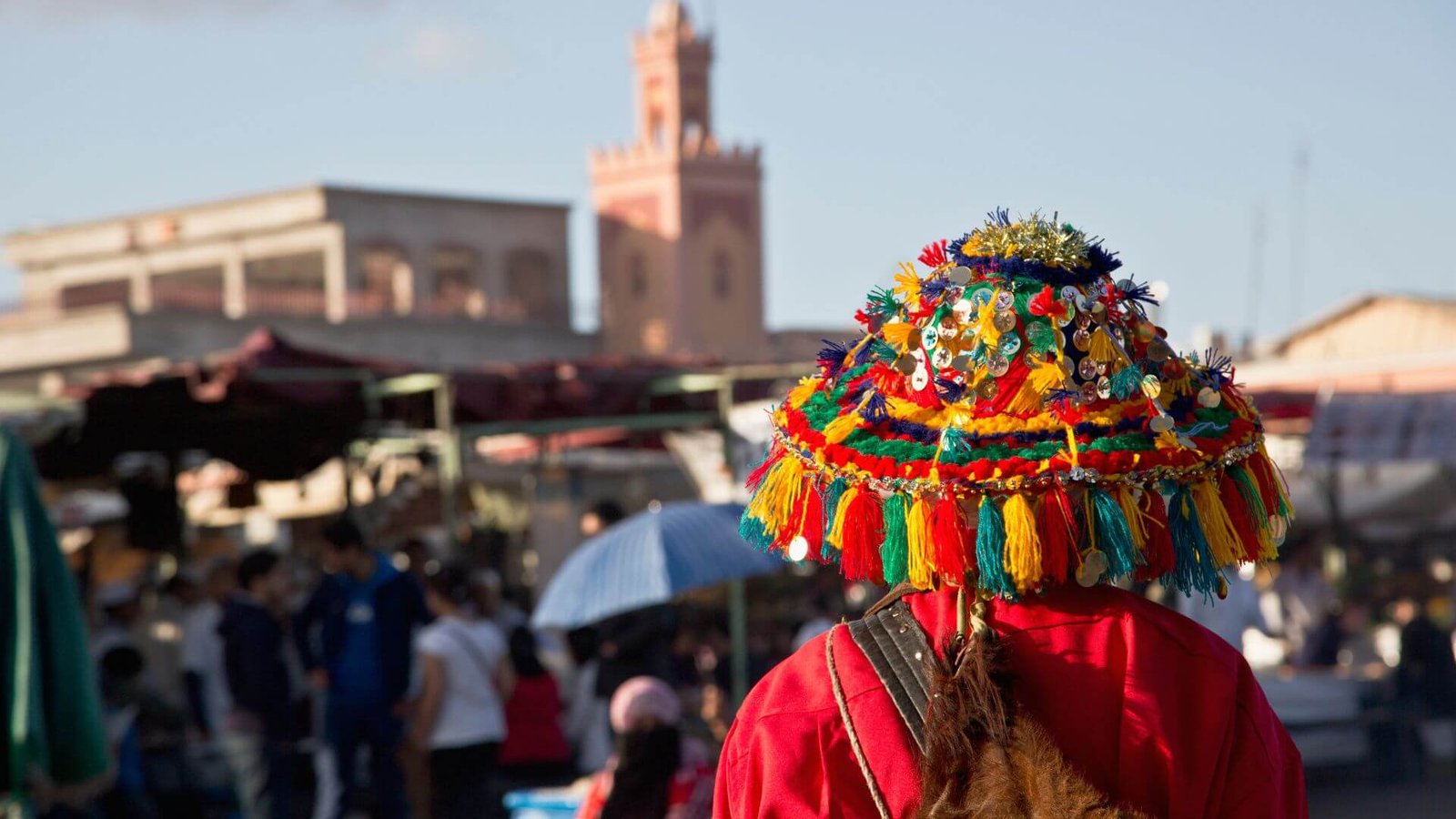
The square changes character across the day but is at its most distinctive between 6 and 9pm — the transition from afternoon market to evening theatre. The food stalls set up from 5pm; by 7pm they’re at full operation.
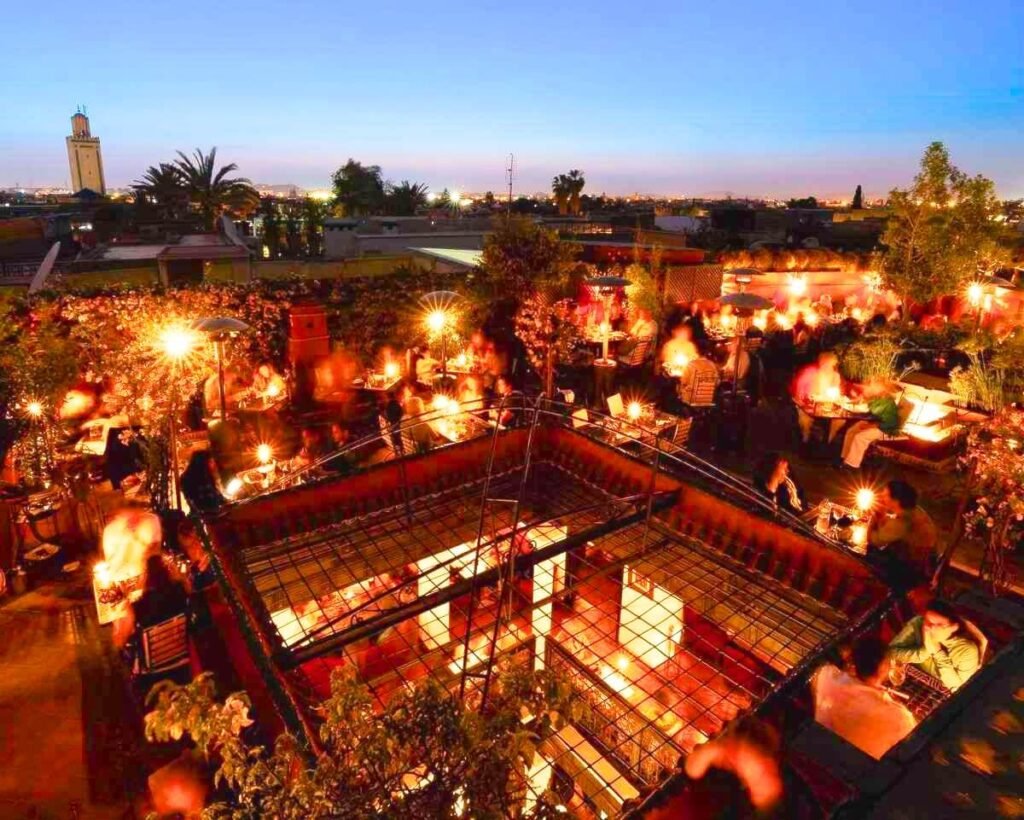
- Sunset Drink on a Rooftop: The terraces overlooking the square are at their best 30–45 minutes before sunset. The standard recommendation of Café de France or the hotel terraces on the northern side of the square gives a direct view over the stall setup below.
- Explore Jemaa el-Fna at Night: The numbered food stalls, the snake charmers (tourist-facing but persistent), the musicians, the storytellers in Arabic working the local crowd — the full evening programme is in place from 7pm.
The most effective approach to the square at night: walk the perimeter first to see all the stall options, then choose one and sit down. The vendor engagement at the stall perimeters is assertive; once you’re seated it stops. The food is the same across most stalls; choose based on which grill looks most active.
Day 2: Slow Down, Breathe & Experience Another Side of Marrakech
Day 2 uses Gueliz — Marrakech’s French-colonial modern quarter — as a deliberate contrast to the Medina immersion of Day 1. The shift from the medieval street network to the wide boulevards and planted pavements of Gueliz produces a different mode of attention; the city becomes navigable by sight rather than by feel, and the pace naturally slows. Majorelle Garden is the anchor of the morning. The afternoon hammam is a functional recovery as much as a cultural experience. The final evening can return to the Medina or stay in Gueliz depending on preference.
Morning: Gardens & Beauty (Start Early)
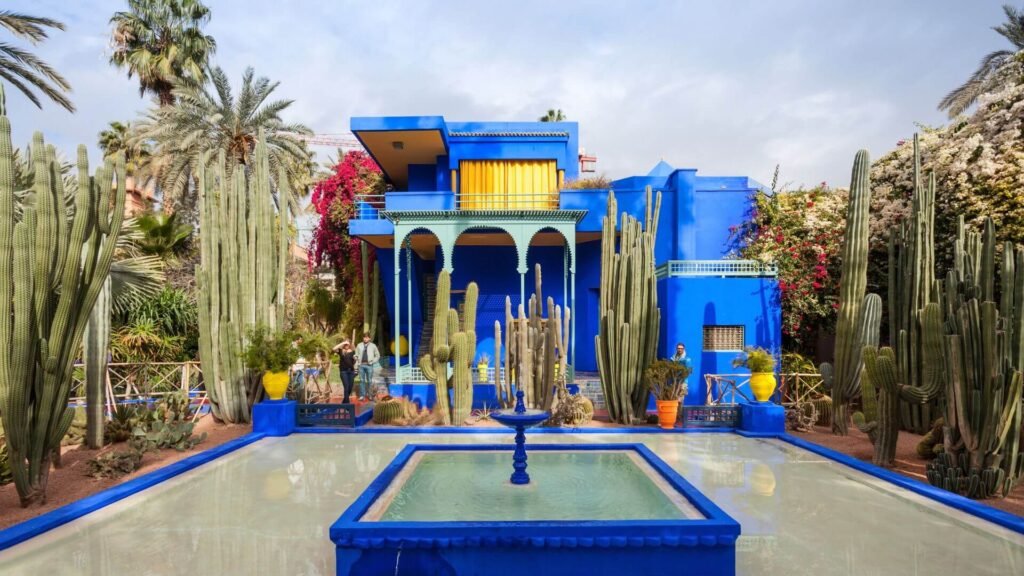
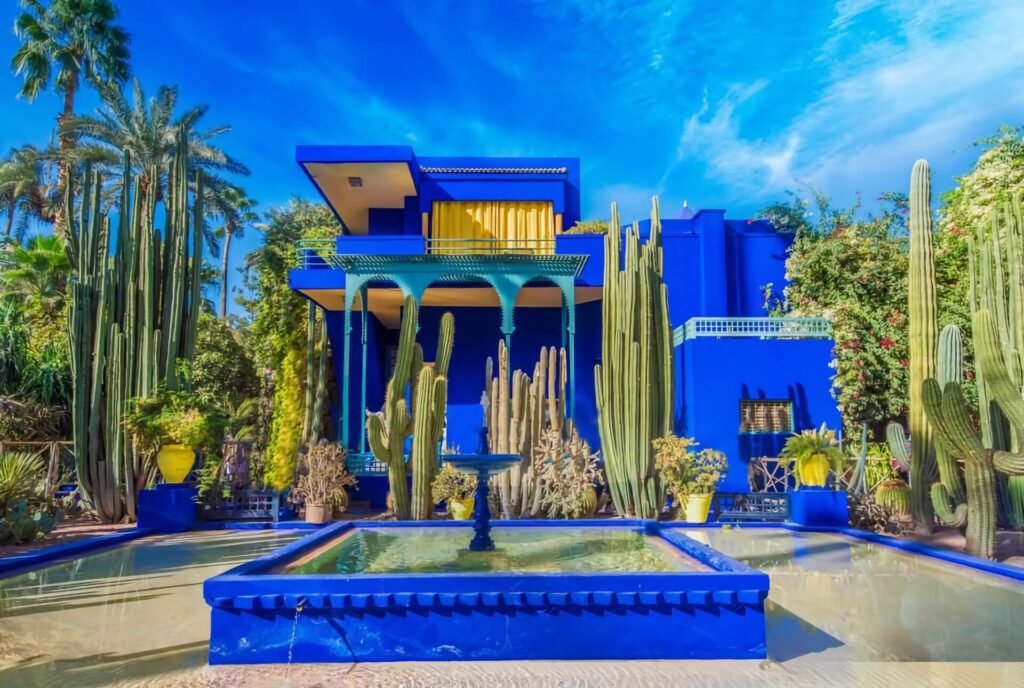
Majorelle Garden opens at 8am and is at its best in the first 30–45 minutes before the tour groups arrive. The combination of the Majorelle blue walls, the bamboo groves, and the cactus garden is genuinely distinctive — this is not a generic botanical garden but a specific aesthetic vision created by Jacques Majorelle over four decades and restored by Yves Saint Laurent and Pierre Bergé from 1980.
- Jardin Majorelle: Arrive as close to 8am as possible. The garden covers 1.2 hectares and takes 30–45 minutes to walk properly. The Berbère Museum inside the pavilion adds another 20–30 minutes and is worth the additional entrance fee.
- Yves Saint Laurent Museum (Optional): The museum is immediately adjacent to the garden. The permanent collection covers YSL’s Moroccan period (1966–2008) and is specifically relevant to Marrakech — the city was central to his colour vocabulary and design work. If fashion or design is not a priority, the time is better spent in the garden or walking toward Gueliz for a longer breakfast.
Book both tickets online in advance. The Majorelle Garden tickets sell out on peak days (October–November, March–April).
Powered by GetYourGuide
Midday: A Different Marrakech (Gueliz or a Calm Lunch)
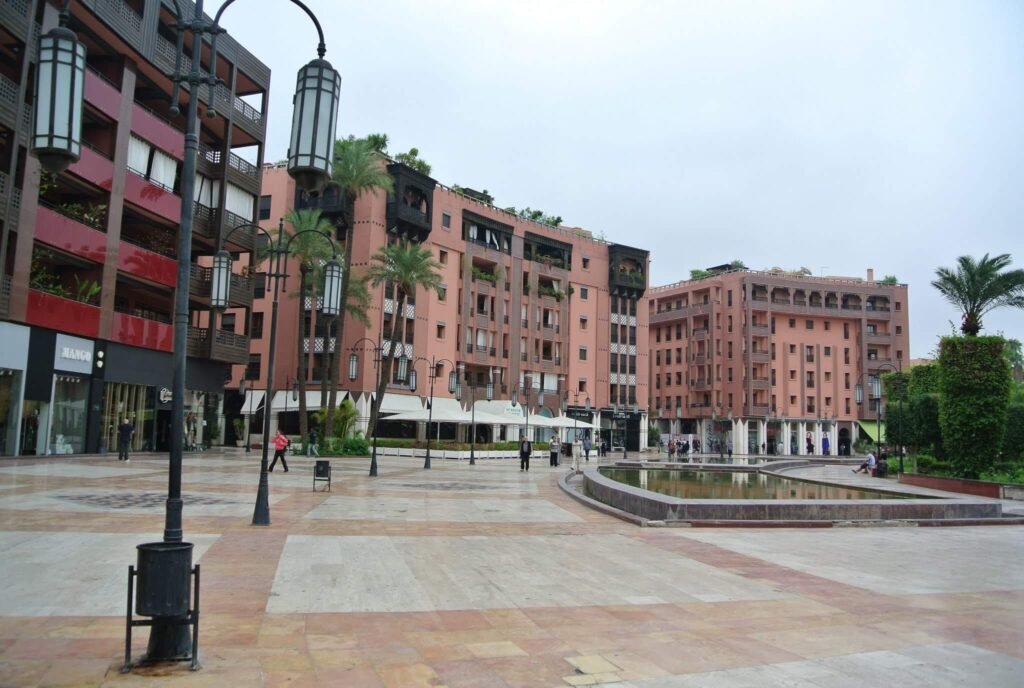
The 15-minute taxi ride from Majorelle Garden to the main Gueliz café circuit brings you into a different Marrakech: avenue Mohammed V, the Grand Café de la Poste (a 1920s colonial building on avenue Imam Malik), the side streets with specialty coffee shops, the tree-lined pavement.
- Lunch in Gueliz: Grand Café de la Poste is the reference address — French-influenced menu, terrace seating, reliable coffee. Café du Livre on rue Tariq ibn Ziad is quieter and better for working or reading.
- Optional stroll: The blocks around the Carré Eden mall have the highest concentration of new restaurants and cafés in Gueliz. The contrast with the Medina souk architecture — the same city, a hundred years of different building logic — is the point of the detour.
Afternoon: Hammam or Spa (Don't Skip This)
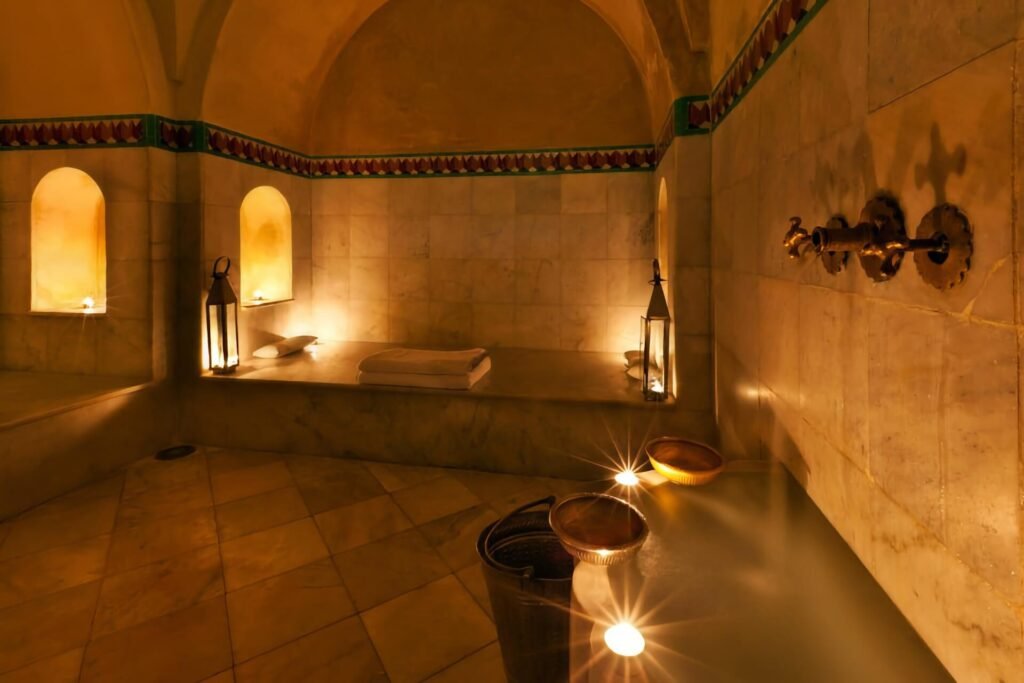
A traditional Moroccan hammam follows a fixed sequence: steam room, black soap scrub (kessa), rinse, optional massage. The experience takes 60–90 minutes and leaves most visitors in a state of physical recovery that two days of Medina walking specifically requires.
- Hammam Experience: For a first visit, choose a riad hammam or a designed hammam rather than a neighbourhood hammam. Hammam de la Rose (near Mouassine), Les Bains de Marrakech, and several riad-based hammams offer the experience with English-speaking staff and clear communication about the sequence.
Book in advance, especially on weekends. The afternoon slot (2–4pm) is typically quieter than morning.
Evening: A Memorable Farewell Dinner
The final evening works best as a single experience chosen in advance rather than an improvised decision. The two main options are a riad dinner in the Medina or a rooftop restaurant; both require a reservation on the day.
- Rooftop or Riad Dinner: For a rooftop with Koutoubia views: Terrasse des Épices in the northern Medina or the rooftop at Nomad. For a full riad dinner experience: Dar Moha (rue Dar el-Bacha, book ahead) or one of the mid-range riad restaurants in the Mouassine area.
After dinner, a 20-minute walk back through the Medina toward Jemaa el-Fna gives a final view of the square as the food stall crowds thin and the musicians begin playing for a smaller late crowd. The Medina at 10pm is a different city from the Medina at noon.
Where to Stay for This 2-Day Marrakech Itinerary
For a two-day itinerary centred on the Medina, accommodation location directly determines how much of the plan is walking versus taxi. The three options below cover the main choices; the Medina riad is the right choice for most first-time visitors on this itinerary.
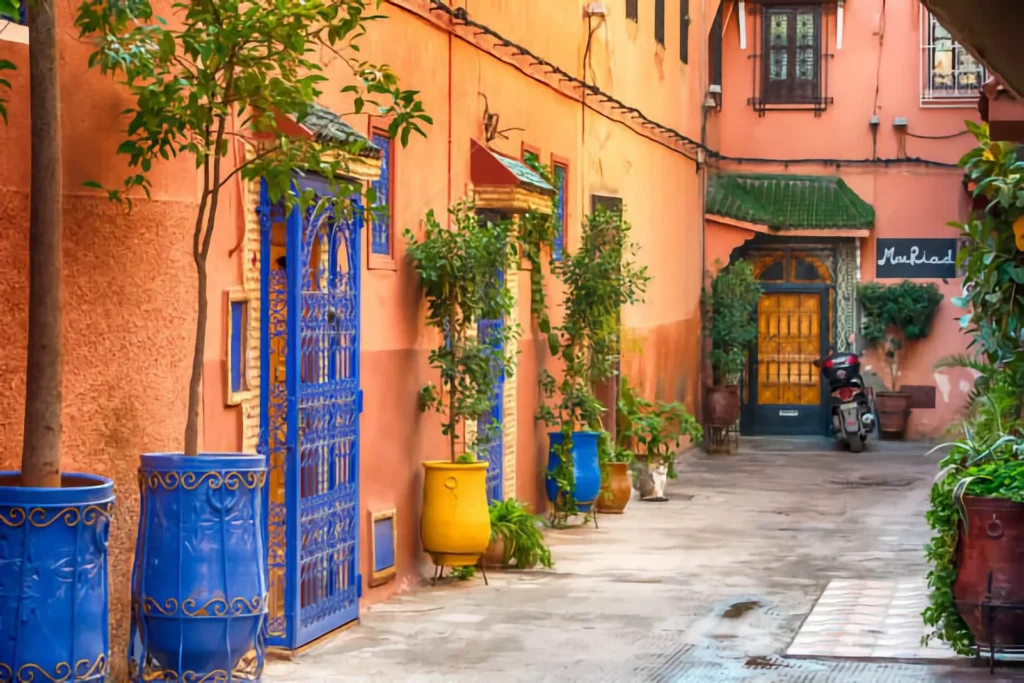
Stay in the Medina (Best Overall Choice)
A Medina riad puts the Koutoubia, Bahia Palace, the souks, and Jemaa el-Fna all within walking distance. The walk from a central Medina riad to Bahia Palace is 10–15 minutes; to Jemaa el-Fna, 5–10 minutes. Day 1 of this itinerary requires no taxis if you stay in the Medina.
- Walking distance to all Day 1 attractions
- Authentic riad experience — the architecture of the accommodation is part of the visit
- Ideal for this itinerary: no transport planning required for the main day
Best for: first-time visitors, anyone who wants the full Medina experience, this specific itinerary.
Stay in Hivernage (Luxury & Calm)
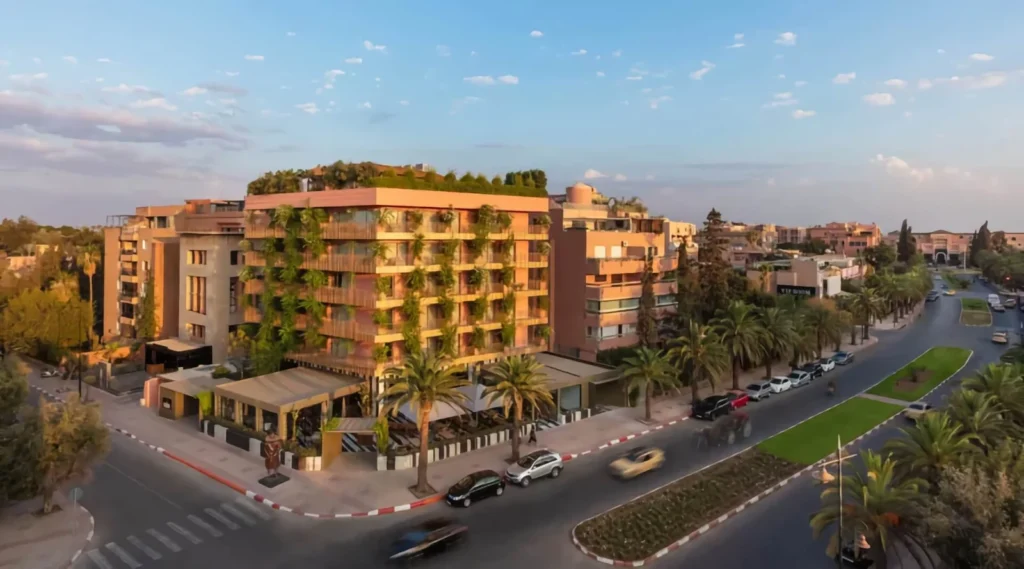
Hivernage is a 15-minute taxi ride from the Medina. The hotels here — La Mamounia at the top, several international luxury brands further in — offer a standard of physical comfort that most Medina riads cannot match. The trade-off is that every Day 1 activity requires a taxi each way.
- International luxury hotel infrastructure
- Quiet streets and controlled environment
- 10–15 minutes from the Medina by taxi
Best for: visitors for whom physical comfort is the priority, La Mamounia guests, people who have been to the Medina before and want a different base.
Stay in Gueliz (Modern & Easy)
Gueliz is a 10–15 minute taxi ride from the Medina or a 20–25 minute walk. The hotels and riads here are typically less expensive than Medina equivalents, easier to navigate to, and better positioned for Day 2 (Majorelle Garden is a 5-minute taxi or 15-minute walk from central Gueliz).
- Easier arrival and navigation from the airport
- Better value for money at most price points
- Closer to Day 2 activities; requires daily taxi to the Medina for Day 1
Best for: visitors who want comfort and ease of navigation; those who find Medina accommodation arrival stressful.
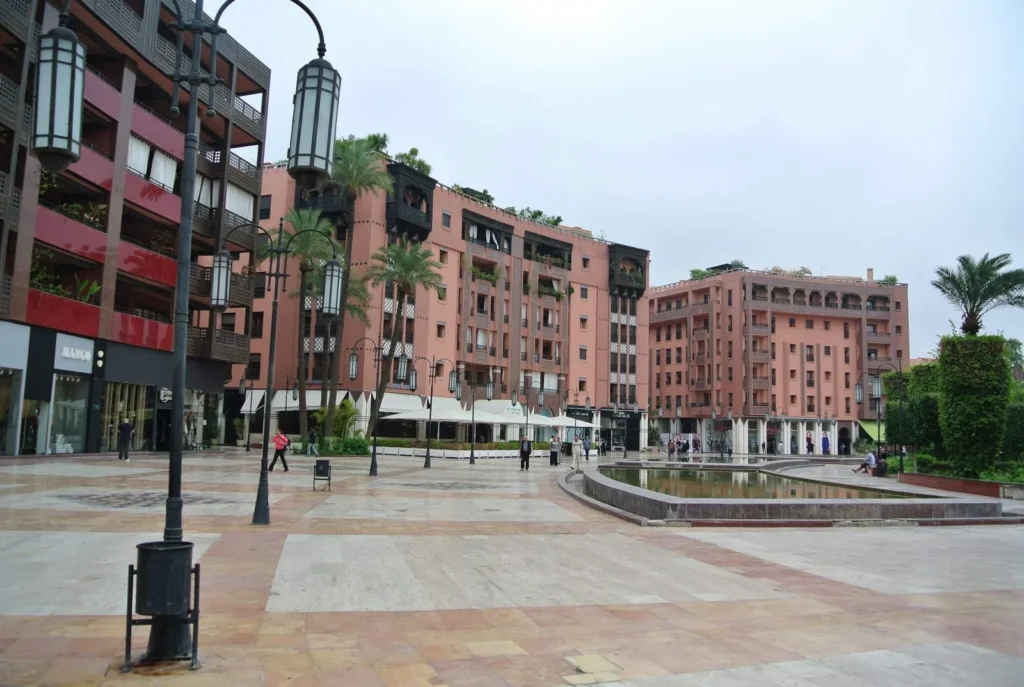
Not sure yet? If you want a curated selection based on different budgets and travel styles, you can explore our full guide here: Where to Stay in Marrakech (Best Areas & Stays)
The single most useful practical advice for Medina accommodation: confirm the GPS location pin with your riad before arrival and arrange pickup at the nearest accessible point if arriving by taxi for the first time. The Medina address system does not translate directly to navigation apps.
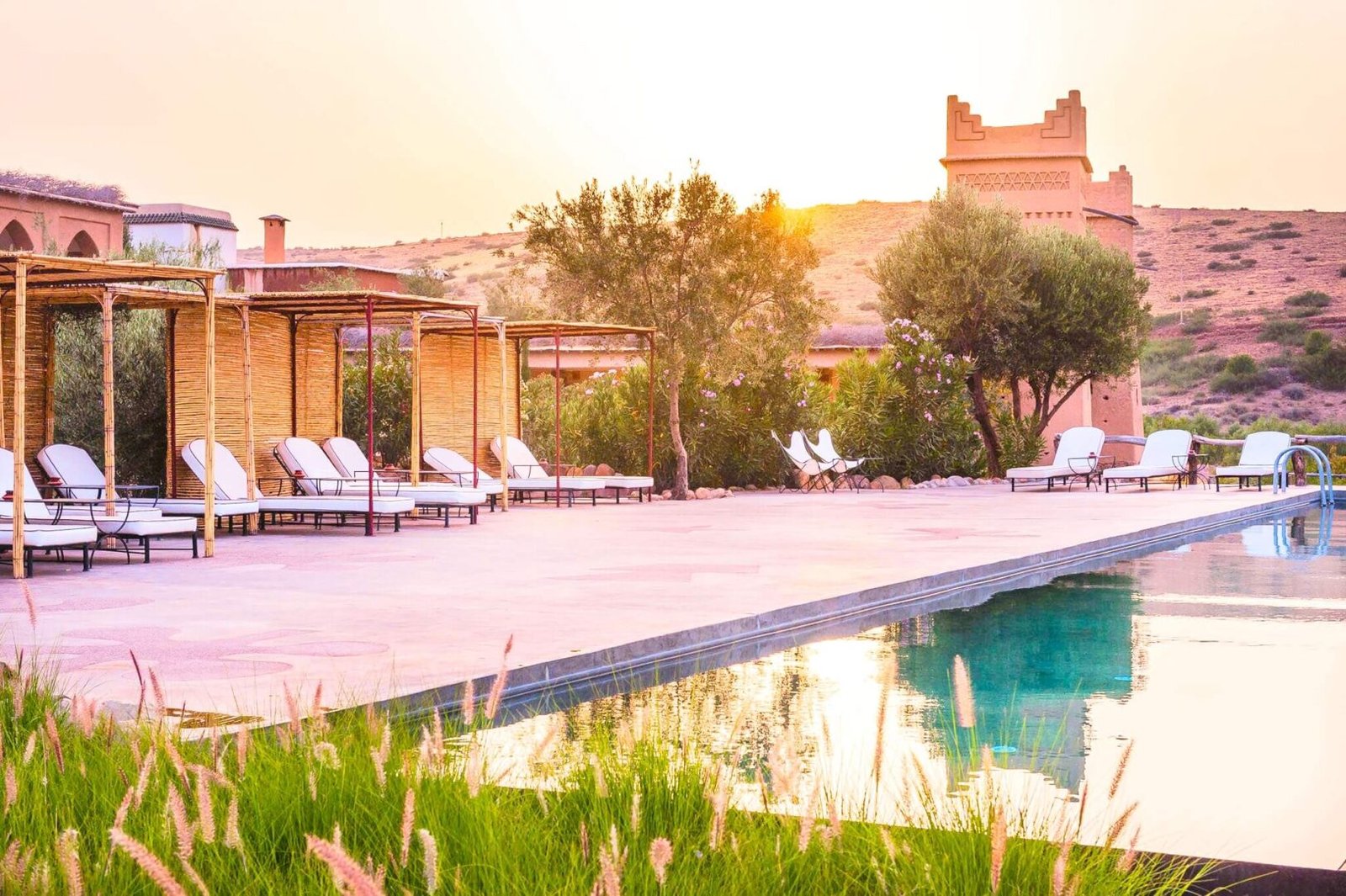
Getting Around Marrakech (Without Stress)
The two-day itinerary above requires walking and taxis in roughly equal measure — walking for all Day 1 Medina activities, taxis for the Day 2 Gueliz and garden circuit. There is no situation in this itinerary where any other transport mode is needed.
Walking (Your Main Way of Exploring)
The Medina cannot be navigated by car in most of its interior — the streets are too narrow. Walking is not a preference but a requirement. The distances between the main Day 1 attractions are:
- Koutoubia to Bahia Palace: approximately 25 minutes on foot through the Medina streets
- Bahia Palace to Rahba Kedima: approximately 15 minutes
- Rahba Kedima to Jemaa el-Fna: approximately 10 minutes
The total walking distance for Day 1 is 10–14 km depending on souk exploration. Comfortable shoes are necessary, not optional.
Google Maps works in the Medina but navigates by the crow-flies route rather than the actual street path, which can be confusing. Use it as a compass rather than a step-by-step guide, and confirm that you’re heading in the right general direction rather than following turn-by-turn instructions.
Petit Taxis (Quick & Affordable)
Petit taxis are the standard urban taxi of Marrakech — small cream-coloured sedans that operate within the city. They are the correct transport for any trip outside the Medina perimeter.
- Medina to Majorelle Garden: 15 minutes, approximately 30–40 dirhams
- Medina to Gueliz: 10 minutes, approximately 20–30 dirhams
- Available at any of the taxi stands at the Medina gates (Bab Doukkala, Bab Leksour) and anywhere in Gueliz
Negotiate the price before starting or confirm the meter is running. The meter fare is always correct; negotiated fares are sometimes slightly higher for tourists but still inexpensive.
Airport Transfers (Recommended)
Marrakech Menara Airport is 6 km from the city centre — a 15–20 minute taxi ride.
- Official taxi fare from the airport: approximately 70–100 dirhams to the Medina, fixed rate
- Pre-arranged transfer from your riad: typically 100–150 dirhams, but removes the negotiation on arrival
- The benefit is not cost but simplicity: arriving in an unfamiliar city at night with a pre-arranged driver waiting is worth the slight premium
Simple rule: For all activity inside the Medina, walk. For everything outside — Gueliz, Majorelle Garden, Hivernage, the airport — take a petit taxi. This covers every situation in this itinerary.
Tips to Make the Most of Your 2 Days in Marrakech
Six practical notes that apply specifically to a two-day Marrakech visit — not general travel advice, but specifics about how this city works.
Start Early, Rest Midday, Enjoy Evenings
This isn’t a general travel tip but a specific Marrakech logistics note. The Medina’s best monuments have significantly shorter queues before 10am. The early afternoon (1–3pm in summer) is genuinely hot and the souks are at their most pressured. The Jemaa el-Fna is not worth visiting before 6pm — the food stalls aren’t running and the square is a dusty open space. Structure the day around this: monuments in the morning, rooftop lunch and afternoon rest, square and dinner after dark.
Don’t Try to “See Everything”
Two days covers the Koutoubia, Bahia Palace, the main souk circuit, Jemaa el-Fna, Majorelle Garden, and a hammam. This is the correct amount. Adding the Saadian Tombs, the Medersa Ben Youssef, the Maison de la Photographie, and the Musée de Marrakech on top of this itinerary is possible but produces exhaustion rather than satisfaction. If those sites are important to you, add a third day.
Expect to Get Lost (It’s Part of the Experience)
The Medina’s souk alleys do not follow a grid. The standard navigation experience is to enter the souk circuit heading in one direction, lose track of orientation after ten minutes, and eventually emerge at a landmark you recognise. This is normal and recoverable. The two reliable reorientation points are the Koutoubia minaret (visible above the roofline from most of the western Medina) and the sound of the Jemaa el-Fna (audible from several hundred metres away). Head toward either of those when uncertain of position.
Dress Comfortably & Respectfully
Practical guidance: light fabrics (linen, cotton) for the heat; closed-toe shoes or good sandals for the uneven Medina paving; a layer for evening terraces which cool quickly after dark. Shoulders and knees covered in the main Medina reduces unwanted attention and is respectful of the local context. This isn’t a formal restriction but a practical one.
Cash is Still King
Souk vendors, street food stalls, neighbourhood cafés, petit taxis, and most hammams are cash only. The Medina has limited ATMs; the most reliable ones are at the Medina gates or on the Jemaa el-Fna perimeter. Withdraw enough cash to cover a full day before entering the souk circuit: 200–400 dirhams covers most needs.
Be Calm, Not Rushed
The specific Marrakech version of this: vendor engagement in the souks is part of the commercial structure and is not designed to be hostile. “La shukran” (no thank you) is understood and respected. Making eye contact while walking quickly through an alley signals availability for engagement; looking purposeful and walking at a steady pace signals otherwise. The first hour in the souks tends to feel overwhelming; by the second hour the pattern is readable.
Alternative Ways to Experience Marrakech in 2 Days
The itinerary above is built for efficiency within the two-day constraint. The four alternatives below adjust the priority without changing the fundamental structure.
If You Prefer a Slower, More Relaxed Pace
Remove one major monument from each day and replace it with extended time at the remaining ones. Bahia Palace in the morning followed by three hours in the souks is a complete Day 1 without the Koutoubia approach. Day 2 without the YSL Museum and with a longer lunch in Gueliz covers the same geographical ground at half the pace. Two days at this pace feels like a short holiday rather than a tour.
If You’re Looking for a More Luxurious Experience
The luxury version of this itinerary is the same plan with upgraded choices at every decision point: a riad in the northern Medina (Mouassine quarter) rather than a standard Medina option; lunch at Nomad rather than Café des Épices; a hammam at Les Bains de Marrakech rather than a riad hammam; dinner at Dar Moha rather than a mid-range rooftop. The itinerary structure doesn’t change; the experience quality at each stop does. Budget: approximately €200–350 per person per day including accommodation.
If You Want a More Cultural & In-Depth Visit
Add the Medersa Ben Youssef (Quranic school from the 14th century, one of the most architecturally significant buildings in the Medina) to the Day 1 morning. Add the Maison de la Photographie (rue Ahl Fès, rooftop terrace and photo archive covering Moroccan history from the 1870s) to the afternoon. Both require 45–60 minutes and are in the northern Medina — accessible on the way from the souks back to the square. This version converts Day 1 from a sensory tour into a historical one.
If You Want Something More Unique
Replace the Day 2 afternoon hammam with a cooking class. Several Medina riads offer 3-hour classes covering a tagine, a salad selection, and mint tea preparation — the cooking is straightforward and the format is social. The Musée du Cuir et de l’Artisanat near the tanneries is an alternative to the Majorelle Garden morning if the fashion and garden context of Majorelle is not a priority.
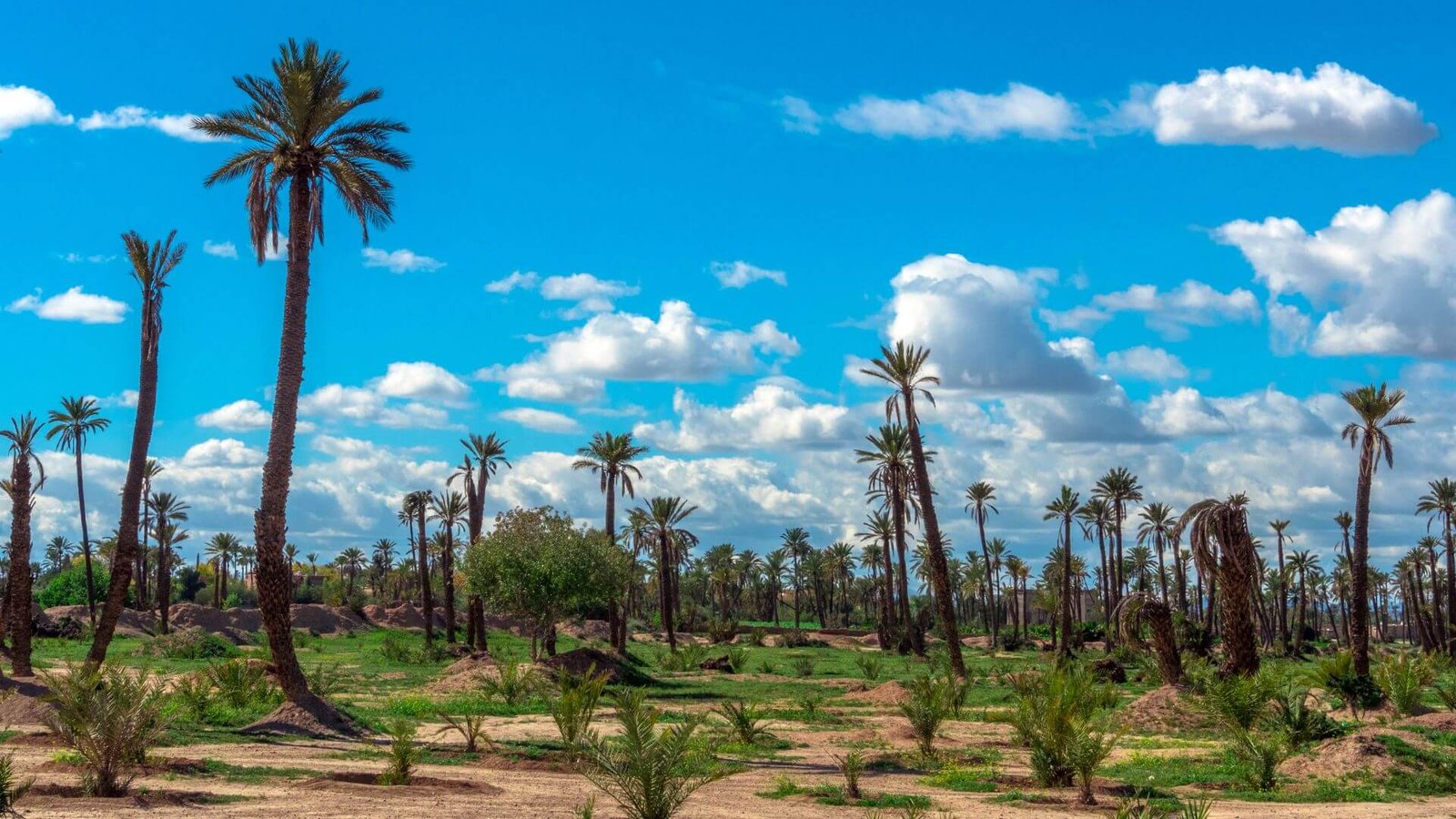
With only two days, adding an out-of-city experience (Agafay desert, Ourika Valley) is possible but compresses the itinerary significantly — worth considering only if the city itself is not the primary interest.
Frequently Asked Questions About Visiting Marrakech in 2 Days
Is 2 days enough in Marrakech?
Yes, with the right plan. Two days covers the Medina’s essential monuments, the souk circuit, Jemaa el-Fna at night, Majorelle Garden, and a hammam — which is a complete and satisfying visit. It doesn’t cover everything the city has to offer (the Saadian Tombs, Medersa Ben Youssef, Musée de Marrakech, the Mellah quarter, and several other significant sites are not in this itinerary) but it covers the core. Most visitors who come for two days leave wanting more; the correct response to that feeling is to return for three.
What is the best area to stay in for a short trip?
The Medina, specifically the central Medina within 10 minutes’ walk of Jemaa el-Fna. This puts Day 1’s entire programme at walking distance and eliminates the daily taxi to and from the Medina gate. The practical caveat: Medina riad arrival on first visit requires either a pre-arranged transfer or patience — the GPS address and the actual entrance are often different points. Confirm the approach with your riad before arriving.
Is Marrakech walkable?
Inside the Medina, entirely — it’s the only way to navigate. The main souk circuit and the monument route from the Koutoubia to Bahia Palace and back to Jemaa el-Fna is approximately 8–12 km depending on how deeply into the souk alleys you go. Outside the Medina (Gueliz, Majorelle Garden, Hivernage), the distances are walkable in theory but petit taxis are more practical — the route from Jemaa el-Fna to Majorelle Garden on foot crosses several large roads and takes 35–40 minutes.
Is it safe to explore the Medina?
Yes. The Medina is a functioning urban neighbourhood with a large resident population and millions of visitors per year. The practical risks are the standard urban ones: pickpocketing in the most crowded areas (Jemaa el-Fna peak evening, the central souk entrance), aggressive vendor engagement in the tourist-facing souk sections, and disorientation. None of these are serious risks for a careful visitor. The Medina at 10pm is quieter than at 3pm and is not significantly more risky.
Do I need a guide in Marrakech?
Not for this itinerary. The route is navigable independently. A guide adds value specifically for the historical context of the monuments — Bahia Palace without context is a series of beautiful rooms; with a knowledgeable guide it’s a story of 19th-century Moroccan court politics. If cultural depth is a priority, a half-day guide for Day 1’s monument section is worth the cost (typically 200–300 dirhams for a licensed guide).
What should I wear in Marrakech?
Light, breathable fabrics that cover shoulders and knees — linen trousers or a long skirt, a lightweight shirt. Closed-toe shoes or solid sandals (the Medina paving is uneven and the souk floor is a mix of stone, compacted earth, and occasional wet spots). A light jacket or layer for evening — rooftop terraces cool quickly after dark and the temperature difference between 3pm and 9pm in autumn and spring can be 10–15°C.
When is the best time to visit Marrakech?
October–November and March–April are the optimal months: daytime temperatures of 22–28°C, low likelihood of rain, and manageable tourist volumes. June–August is very hot (35–40°C regularly) and requires adjusting the itinerary to avoid outdoor activity between noon and 4pm. December–February is cool (8–18°C) with clear air and the best visibility of the Atlas Mountains; evenings require a warm jacket.
Ready to Plan Your Marrakech Trip?
The itinerary above covers the two days in full. The three guides below fill in the remaining planning decisions: where to stay (with specific recommendations by budget and neighbourhood), what to do beyond this itinerary (for future visits or additional research), and where to eat across all categories.
One practical note: the Majorelle Garden and YSL Museum tickets and the hammam booking are the two advance bookings that matter most. Everything else in this itinerary is walk-in or same-day. Book those two before departure and the rest falls into place.
Explore More Marrakech & Morocco Itineraries
If two days leaves you wanting more, the plans below extend the same approach to longer trips.
-
3 Days in Marrakech Itinerary
Adds the Saadian Tombs, Medersa Ben Youssef, and a full day trip option — the version of this itinerary that doesn't require choosing what to leave out
-
4 Days in Marrakech Itinerary
The city at a slower pace plus a full day outside it — the Atlas foothills or the Ourika Valley on day four
-
5-Day Marrakech + Desert Itinerary
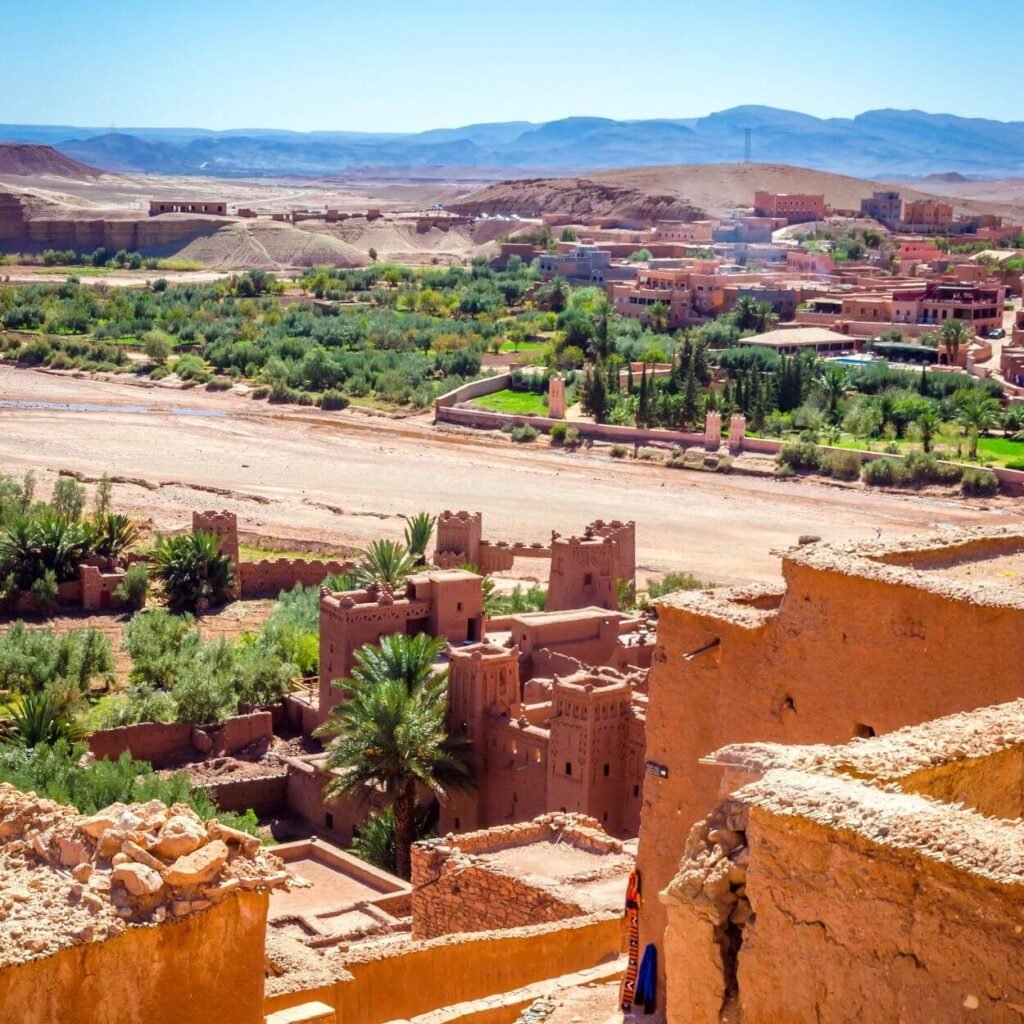
Three days in the city followed by a two-day Sahara circuit via Ouarzazate — the most requested Morocco combination
-
7-Day Morocco Itinerary
Full circuit: Marrakech, High Atlas, Drâa Valley, Sahara, Todra Gorge, and Essaouira — the complete southern Morocco route
 Marrakist Concierge