
The key facts before booking.
Sahara Desert Tour from Marrakech
The Sahara is not a day trip from Marrakech. The nearest serious dune system — the Erg Chebbi near Merzouga — is approximately 560 kilometres away and takes nine to ten hours to reach by road. The closer option at Zagora is seven hours and 350 kilometres. Both require at least one overnight stay; Merzouga genuinely needs two nights to justify the distance.
This page covers the practical decisions: Zagora versus Merzouga, what the journey involves, how to choose between tour formats, and what the desert camp experience actually looks like. The distance is the main variable most travelers don’t think about clearly before booking — getting that right determines whether the trip is a highlight or an endurance exercise.
- Erg Chebbi dunes
- up to 150m high, stretching ~28 km
- Night temperature drop
- 15–20°C after sunset — even in July
- Camel trek to camp
- 30–45 min into the dunes — no road in sight
- Sunrise wake-up
- 5:00–5:30am — cold, silent, worth every minute
Powered by GetYourGuide
Quick Navigation
- 1. Sahara Desert from Marrakech: Quick Overview
- 2. Why Visit the Sahara Desert?
- 3. Zagora vs Merzouga: Which Sahara Desert Experience Is Right for You?
- 4. Top Experiences in the Sahara Desert
- 5. How to Visit the Sahara Desert (Tours, Private Trips & DIY)
- 6. Best Sahara Desert Tours from Marrakech
- 7. Sample Sahara Desert Itineraries
- 8. Best Time to Visit the Sahara Desert
- 9. Practical Tips for Your Sahara Desert Trip
- 10. Sahara Desert Tour FAQ
- 11. Plan the Rest of Your Morocco Journey
- 12. Final Thoughts
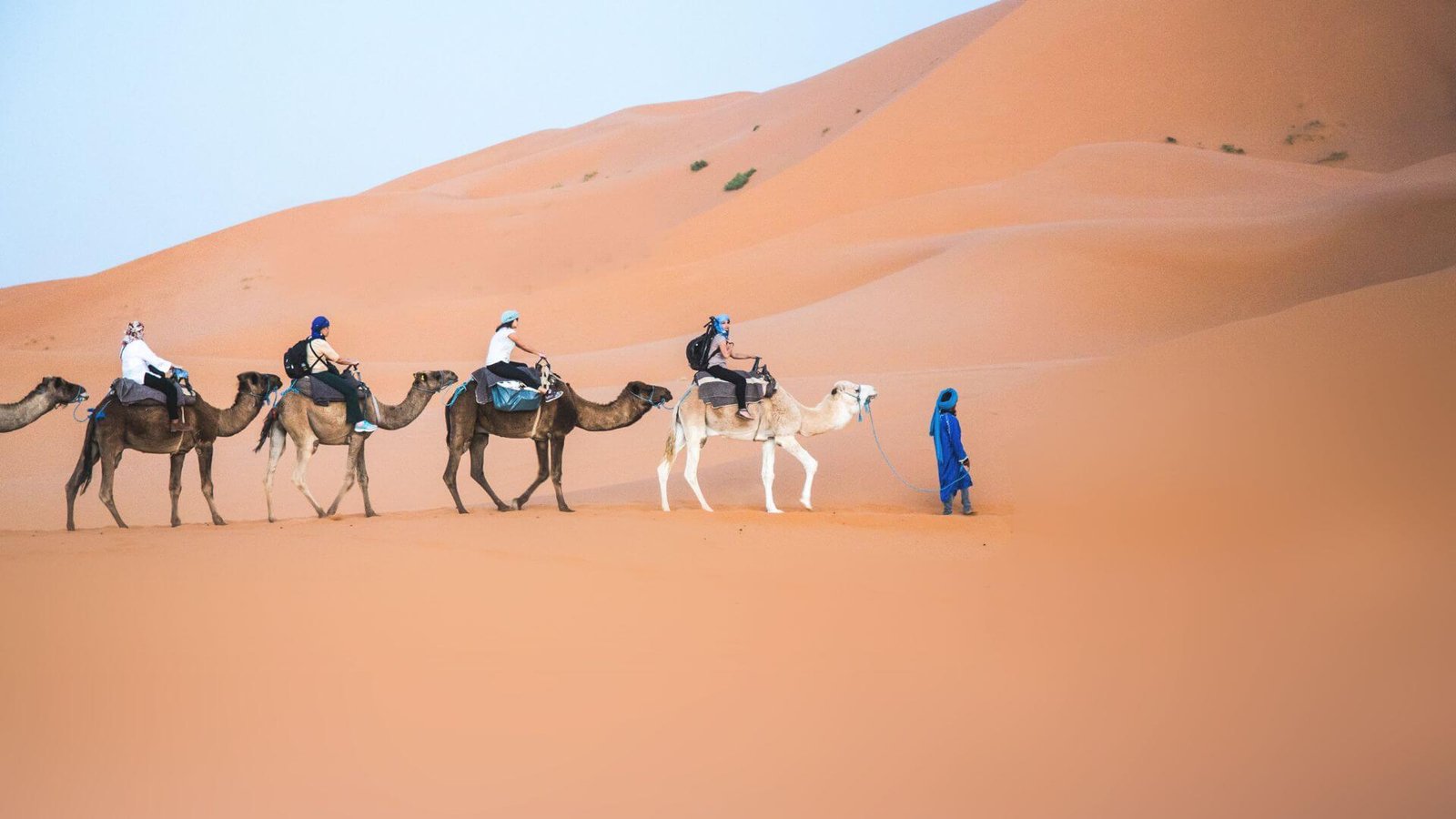
Sahara Desert — 560 km from Marrakech, 150-metre dunes, and a sky with no light pollution for hundreds of kilometres: some things require the distance
Sahara Desert from Marrakech: Quick Overview
-
Distance from Marrakech
350 km – 560 km (depending on destination)
-
Travel Time
7 to 10 hours (with scenic stops)
-
Main Destinations
Zagora Desert (closer) vs Merzouga (real Sahara dunes)
-
Minimum Duration
2 days (Zagora) / 3 days (Merzouga recommended)
-
Experience Includes
Camel trekking, desert camp, sunset & sunrise
-
How to Go
Organized tour (most common), private tour, or self-drive
Honest insight: If the high dunes are the reason you’re going — the ones that fill photos of Morocco — choose Merzouga and allocate three days minimum. Zagora is shorter but the landscape there is flat and rocky, not the Saharan dune system most visitors have in mind.
Why Visit the Sahara Desert?
The Sahara from Marrakech is a substantial commitment — two to four days, long driving hours, significant distance — and it’s worth being clear about what that commitment delivers before making it.
What it delivers is genuinely unusual. The Erg Chebbi at Merzouga is one of the largest sand dune systems in Morocco, with dunes rising to over 150 metres. At sunset, the light on the dunes changes minute by minute from gold to deep orange to purple. Overnight in a desert camp with no city light interference, the sky is the clearest most travellers from Europe or North America will have seen. The camel trek in from the nearest road — typically thirty to forty-five minutes each way — gives enough time in the dunes to feel the scale and silence properly.
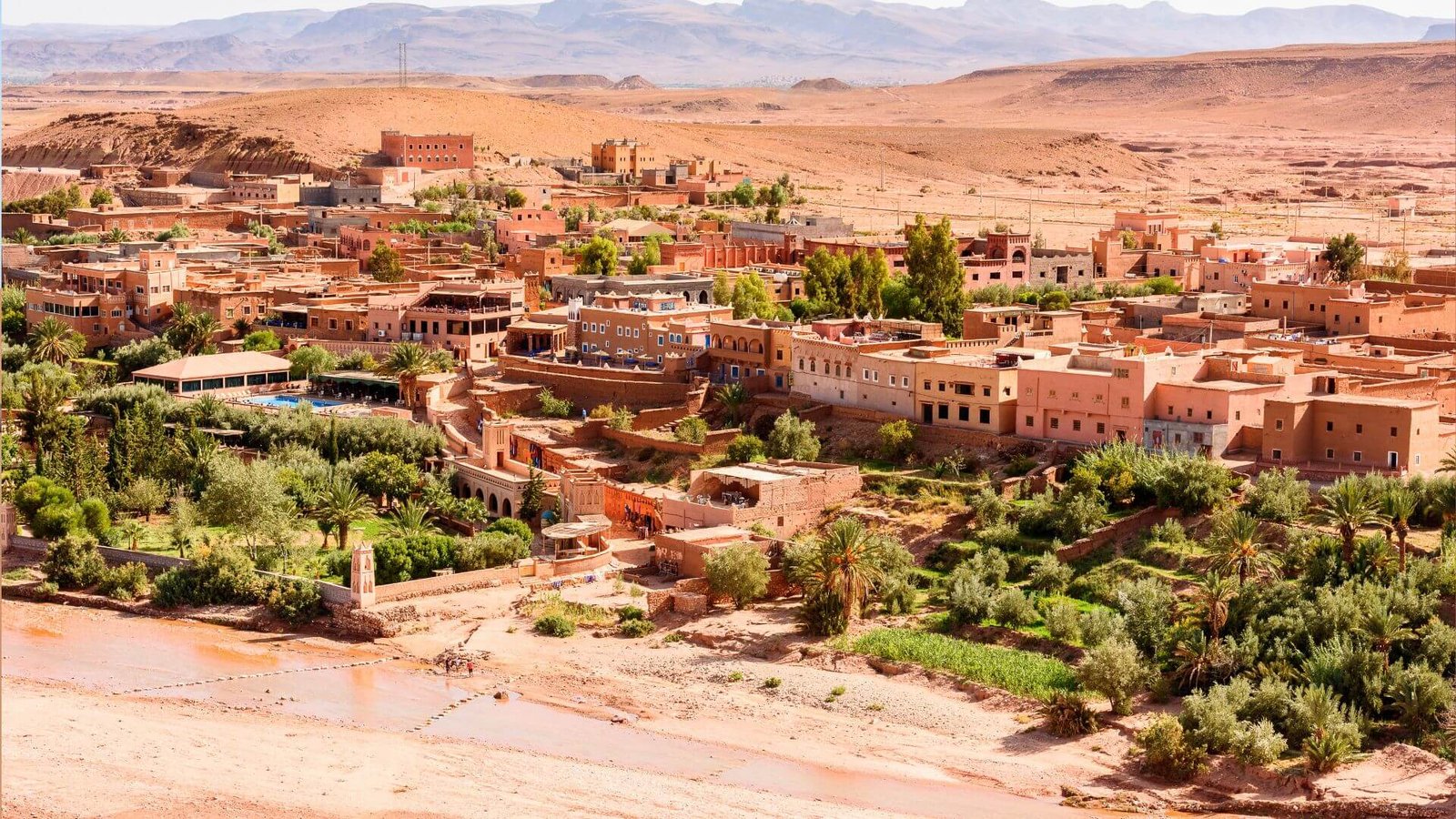
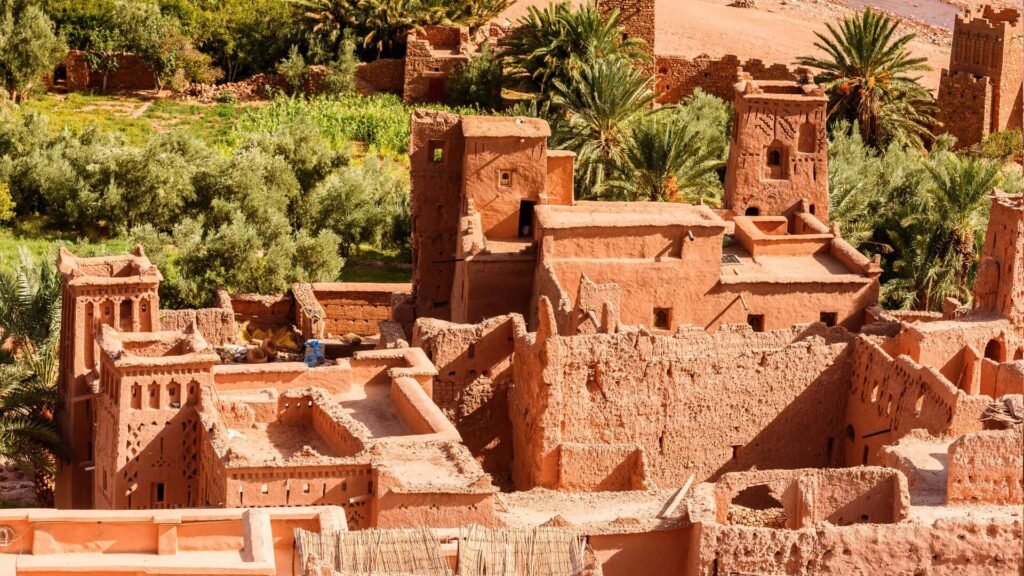
The journey south is also part of the experience rather than dead time. The route passes Aït Ben Haddou (a UNESCO World Heritage kasbah used as a film set for Game of Thrones, Gladiator, and others), Ouarzazate, the Dadès Valley and its rock formations, and the Todra Gorge — a narrow canyon with 300-metre walls. None of these are secondary to the dunes. A three-day itinerary that includes them gives a cross-section of southern Moroccan geography that is difficult to replicate any other way.
- The dune experience itself: camel trek at sunset, overnight camp, sunrise on the erg — the sequence every visitor comes for
- Stargazing: no light pollution within hundreds of kilometres; the night sky is the clearest available in Morocco
- The route south: Aït Ben Haddou, the Dadès Valley, the Todra Gorge — each substantial enough to justify a stop
- Scale and silence: the desert at its most effective is simply the experience of a landscape with nothing built in it; the Erg Chebbi delivers this reliably
Zagora vs Merzouga: Which Sahara Desert Experience Is Right for You?
The most important decision on this page. “Sahara tour from Marrakech” covers two genuinely different destinations — and most travelers who book Zagora thinking they’re getting the iconic dune landscape are disappointed when they arrive.
Zagora Desert — The Shorter, Easier Option
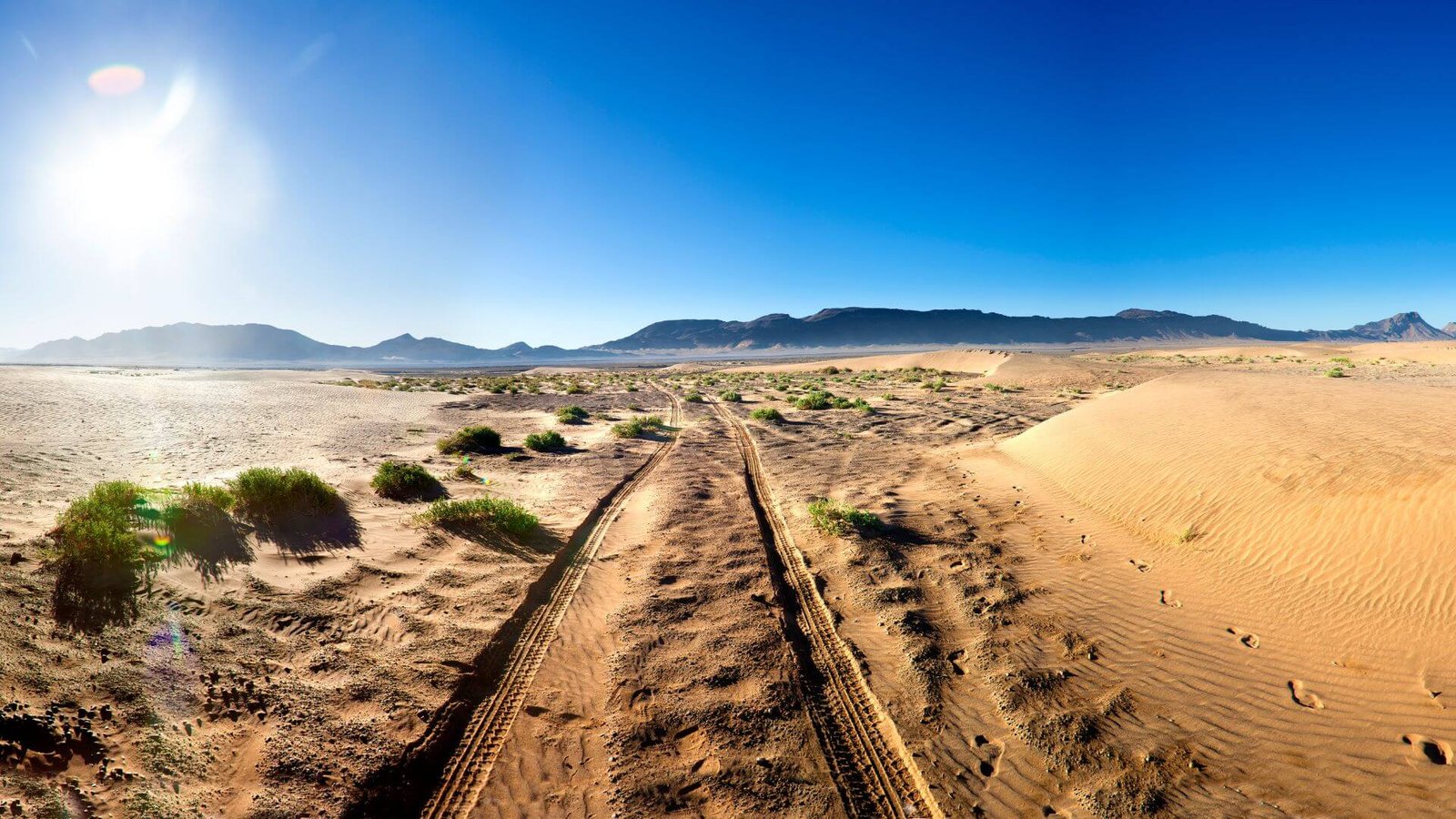
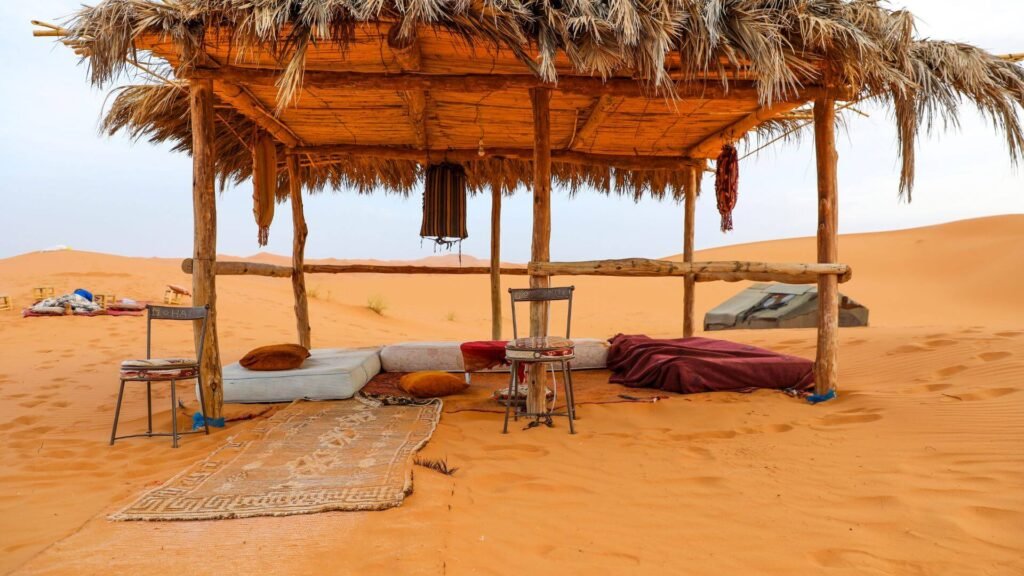
Zagora sits in the Draa Valley, 350 kilometres from Marrakech. The desert around it — the Erg Chegaga and the pre-Saharan area near Tinfou — is real desert in the sense of hot, dry, and sandy, but the dunes are modest in height and the landscape is primarily flat and stony rather than the rolling erg most people picture. The camel trek here is shorter, the scenery less dramatic, and the overall sense of scale is significantly reduced compared to Merzouga.
The main advantage is time: Zagora is reachable as a two-day trip with one night in the desert, making it viable if three days genuinely aren’t available. It’s also cheaper. But expectations need to be calibrated — Zagora is a desert experience, not the Saharan dune experience.
- Travel time: ~7 hours from Marrakech
- Minimum trip: 2 days / 1 night
- Landscape: Pre-Saharan rocky terrain with limited dunes
- Best for: Travelers with only two days, budget-constrained travelers, those who want a desert taste rather than the full experience
Merzouga (Erg Chebbi) — The Real Sahara Experience
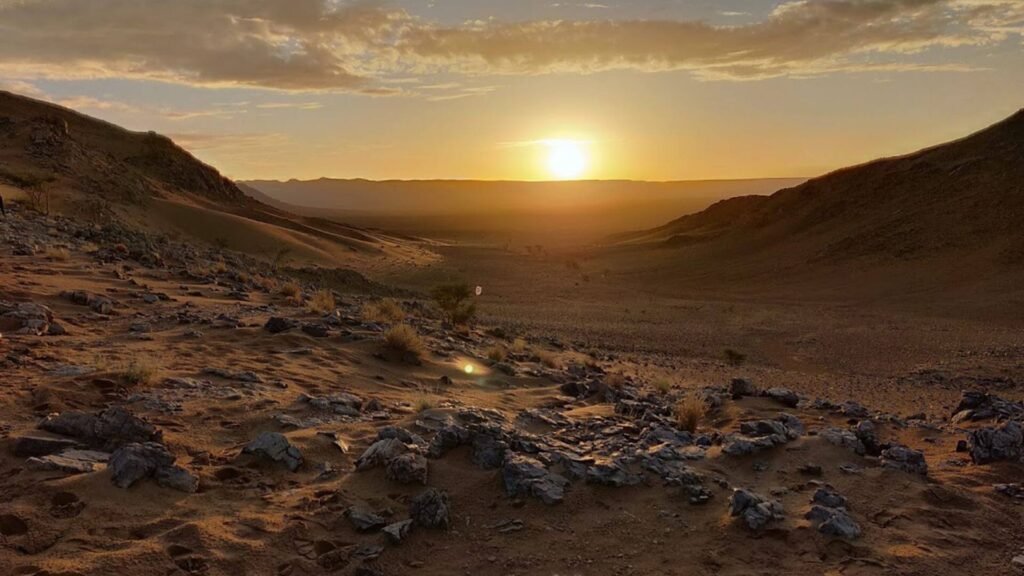
The Erg Chebbi near Merzouga is what the phrase “Sahara dunes” actually means for most travellers. Dunes up to 150 metres high, extending for roughly 28 kilometres — the sand a consistent warm ochre that changes colour dramatically with the light. This is the landscape in every Morocco travel photo. At 560 kilometres from Marrakech, it’s a nine-to-ten hour drive and requires a minimum of two nights — one in Ouarzazate or the Dadès area, one in the desert camp at the dune’s edge.
The camel trek from the nearest accessible point to the interior of the erg takes thirty to forty-five minutes, which is enough to be properly inside the dunes rather than at their edge. Camps are positioned to see both sunset and sunrise over the sand. The experience of the night — the silence, the temperature drop, the sky — is qualitatively different from anything at Zagora.
- Travel time: 9–10 hours from Marrakech
- Minimum trip: 3 days / 2 nights (strongly recommended)
- Landscape: Major dune system, 150-metre dunes, the Erg Chebbi
- Best for: First-time visitors wanting the full experience, photographers, anyone for whom the Sahara is a significant reason for the Morocco trip
Honest recommendation: Merzouga if you have three days and the desert matters to you. Zagora if you have two days and want any desert experience rather than the definitive one. The difference in experience is larger than the difference in distance.
Powered by GetYourGuide
Top Experiences in the Sahara Desert
The Sahara experience has a sequence to it. Understanding what each element involves helps set expectations and get the most from the time in the desert.
Camel Trek to the Desert Camp
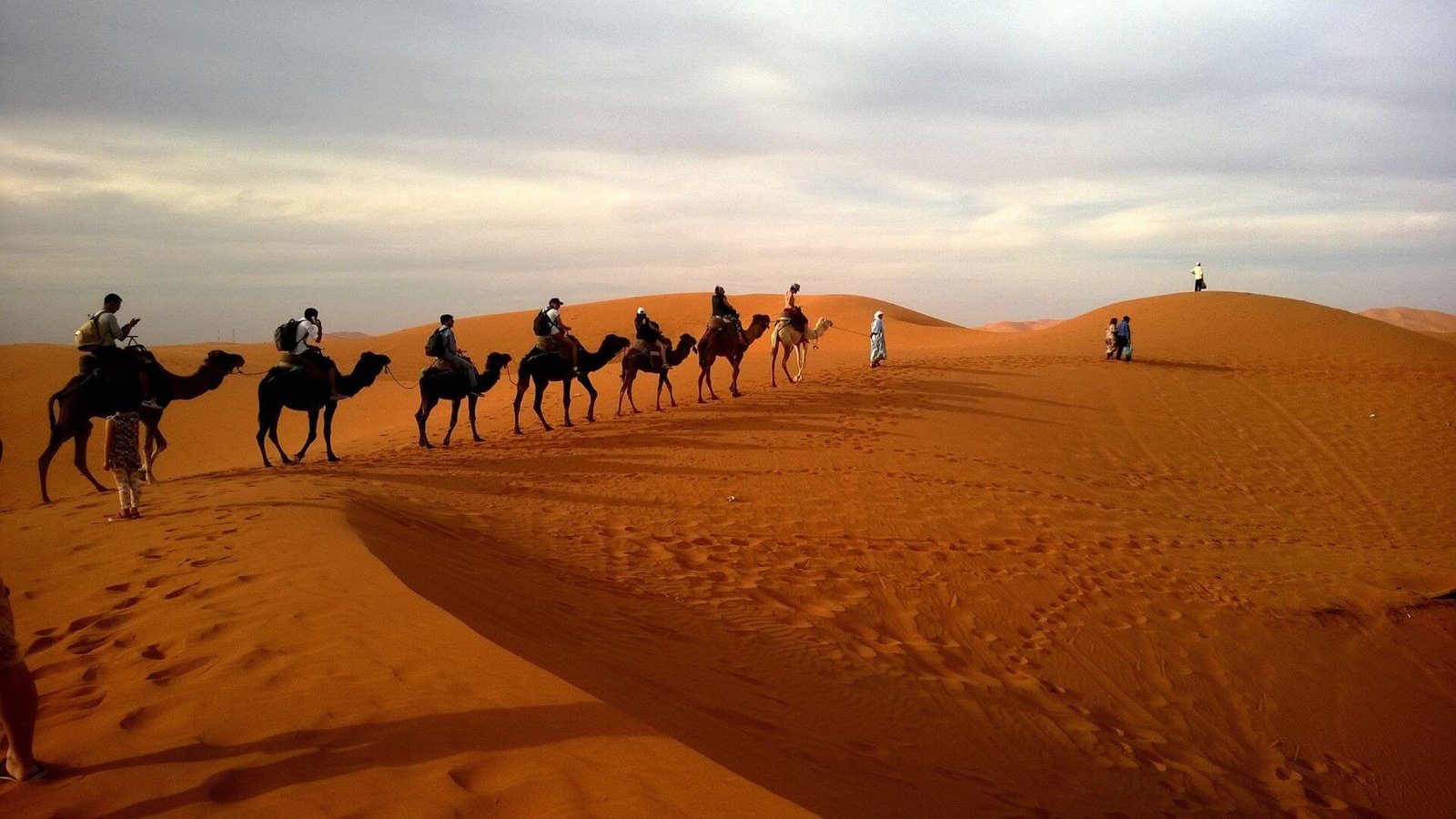
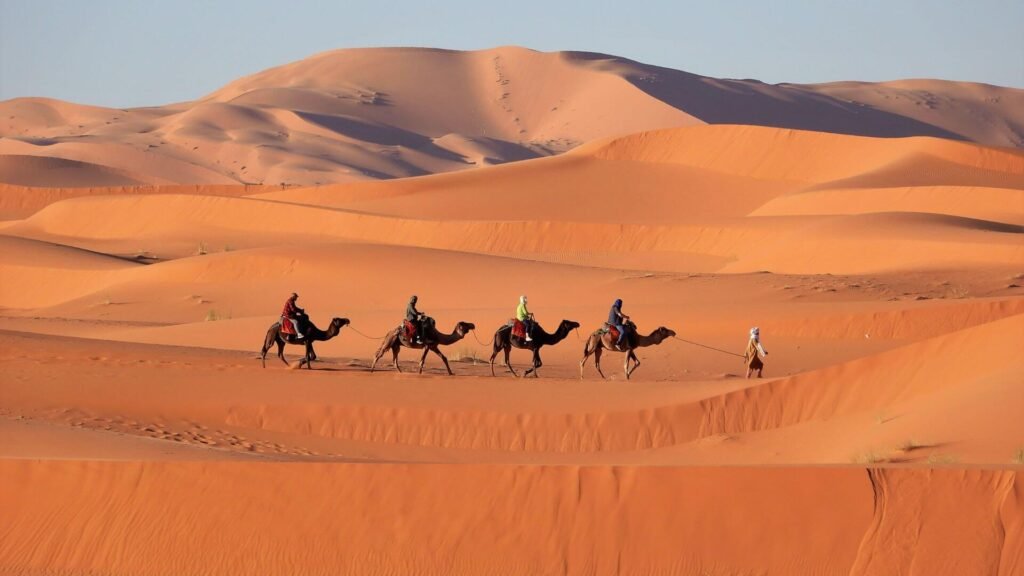
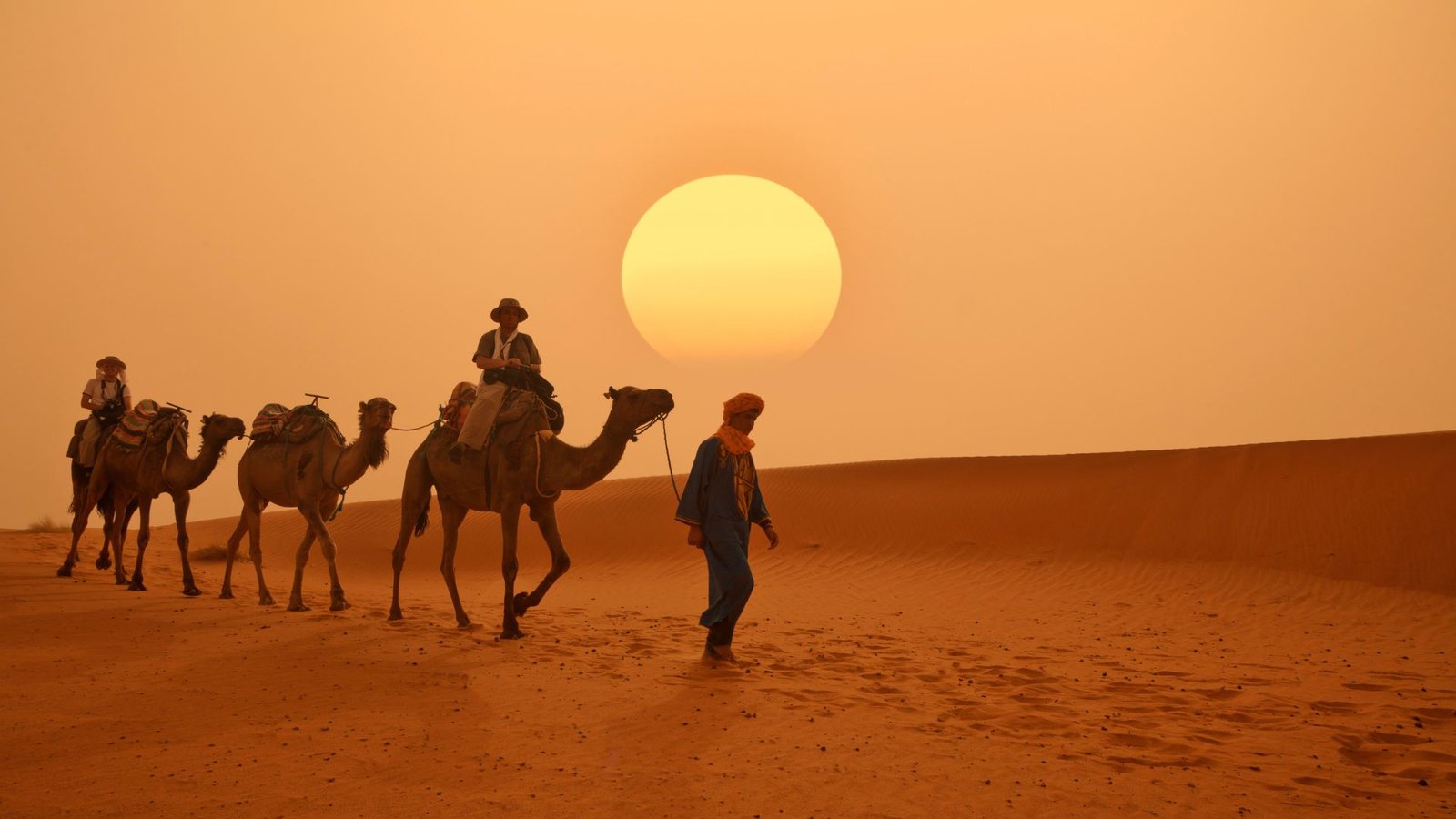
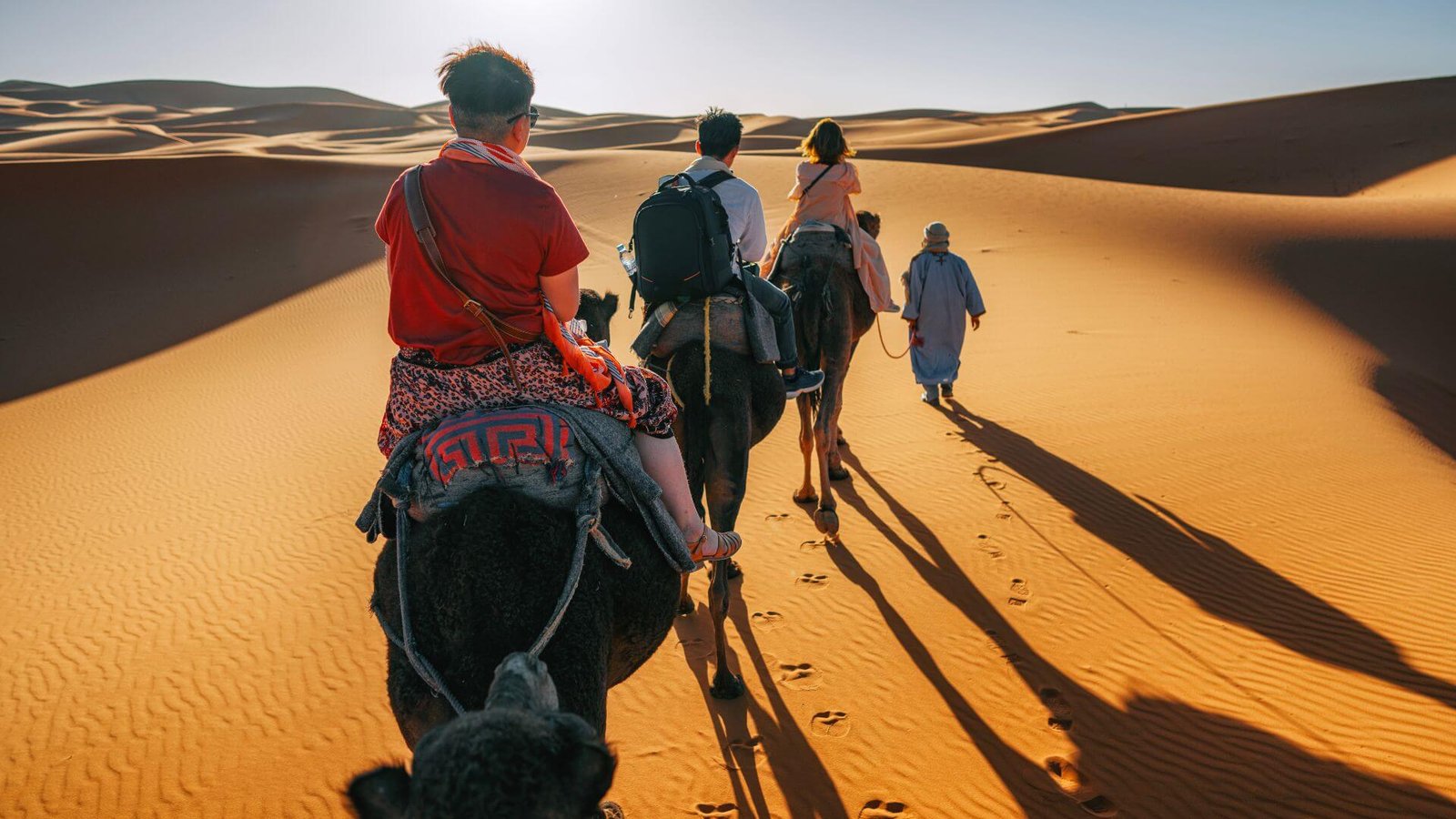
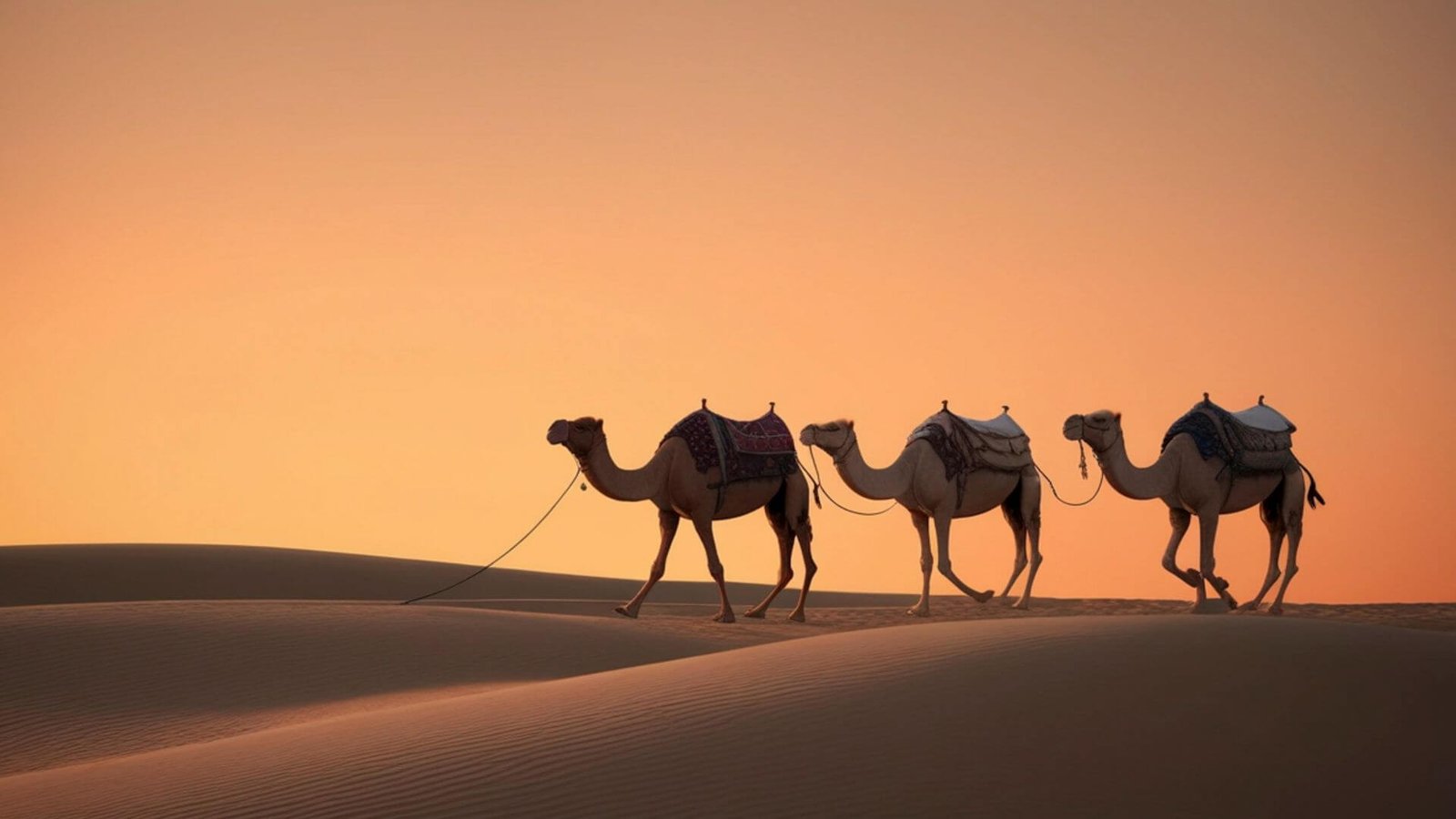
The trek from the drop-off point to the desert camp takes thirty to forty-five minutes at a walking pace. The camels are single-humped dromedaries; the ride is slow and slightly rolling — not uncomfortable once you find your balance, but genuinely unusual for the first ten minutes. The route goes into the dunes rather than along their edge, which is why the trek matters: arriving in the camp on foot via camel, with no vehicle visible in any direction, is what makes the location feel properly remote. The return trek the following morning for sunrise works in reverse.
Night in a Desert Camp
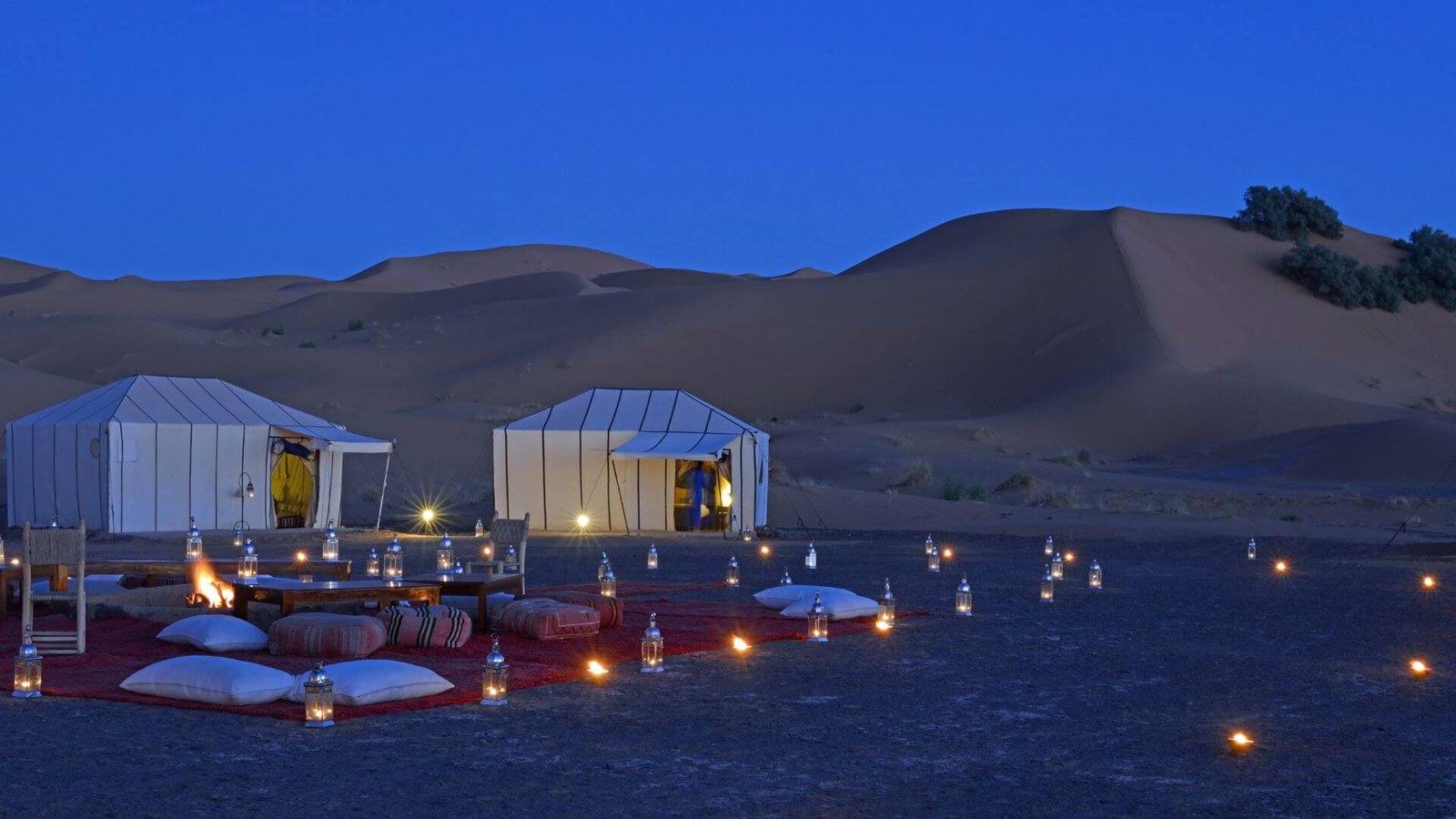
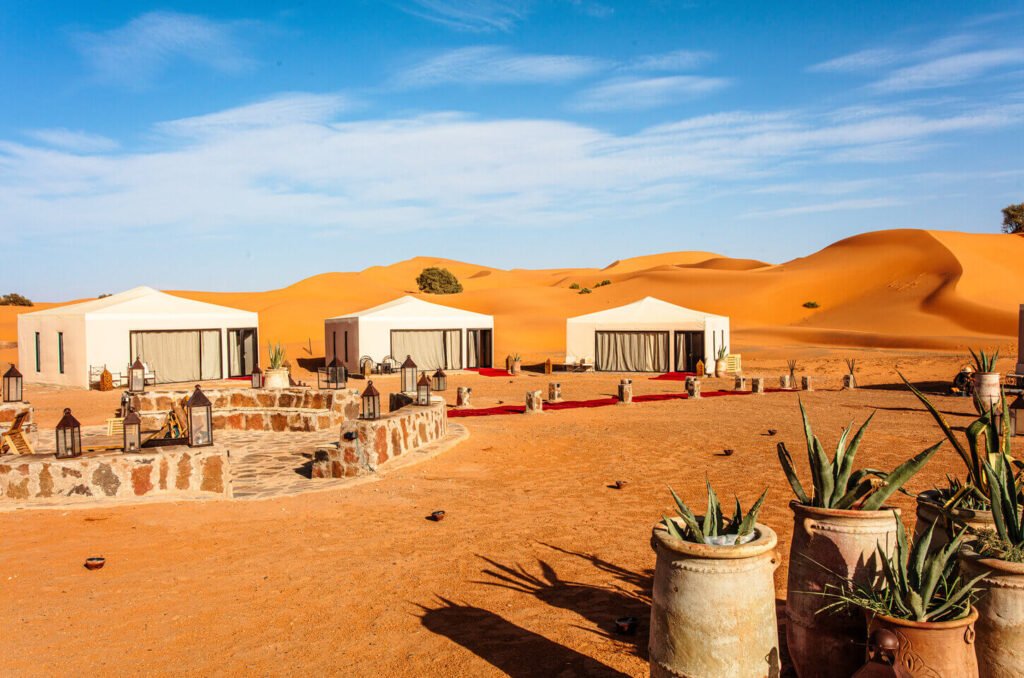
Camps vary from standard (shared tents, basic bedding, communal washing facilities) to luxury (private tents with proper beds, en-suite facilities, electricity). Both have the same desert location and the same sky. The practical difference is comfort level rather than experience quality. Blankets and layers are essential regardless of camp type — desert nights drop significantly in temperature even in summer, and dramatically in winter.
Campfire and Berber Music
Most standard itineraries include an evening around a campfire with music played by camp staff — typically hand drums and singing. The quality varies. At its best it’s genuinely atmospheric; at its most commercial it can feel routine. The campfire itself, in the absence of any other light source, is the main practical warmth source for the evening.
Sunrise Over the Dunes
The most reliably worthwhile moment of the trip and the one most travellers name retrospectively as the highlight. The early morning light on the erg is cooler in colour than sunset, the dunes cast longer shadows, and there are almost no other people visible. Wake-up for a sunrise trek is typically 5:00–5:30am depending on season. It is cold. It is worth it.
The Route Stops
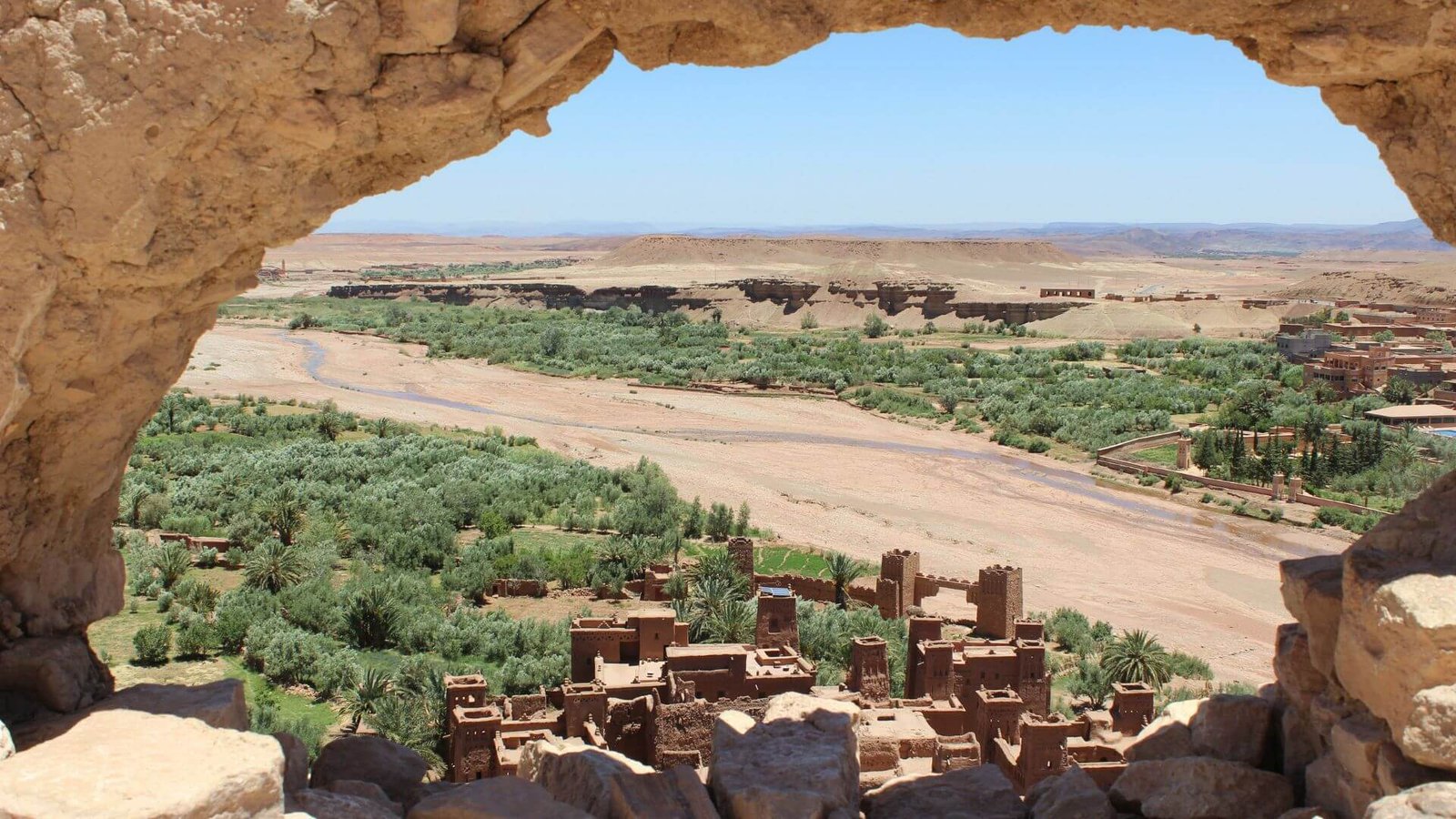
The journey south is not background noise. Aït Ben Haddou — a 11th-century kasbah on the former trans-Saharan trade route, UNESCO-listed, used as a set for multiple major film productions — is a two-hour stop and a genuinely impressive site. The Dadès Valley and its rock formations (locally called the Valley of a Thousand Kasbahs) provide the most photogenic road section of the drive. The Todra Gorge, where the canyon narrows to 10 metres between 300-metre walls, is a legitimate destination in its own right. A well-paced three-day itinerary gives time to stop at all three without rushing.
Pro tip: The desert camp experience is at its best when it isn’t scheduled to the minute. Build in time to walk the dunes alone before sunset, to sit outside the tent after dark, to watch the sky for an hour after the campfire ends. The commercial parts of the experience — the organised camel trek, the guided music session — are shorter than the time available. What you do with the gaps is what makes it memorable.
How to Visit the Sahara Desert (Tours, Private Trips & DIY)
Three options. The choice matters more for this trip than for the Atlas day trip, because the distances are longer and the logistics more complex.
Organised Group Tours
The standard approach, used by the majority of visitors. A minibus picks up from Marrakech accommodation at around 8am, follows a structured route south with three to five stops, arrives at Merzouga in time for the sunset camel trek, and returns via the same or a different scenic route. Group size typically runs eight to sixteen people. Everything is included: transport, accommodation en route, desert camp, camel trek, meals. The itinerary is fixed and the pace is determined by the group.
The main advantage is logistics simplicity. The main disadvantage is that a group tour at Merzouga means arriving alongside other groups — the “remote desert” experience is relative. Camps are spaced apart enough that the night itself feels genuinely isolated, but the arrival and departure are shared.
- Pros: Everything handled, cost-effective, no planning required
- Cons: Fixed schedule, group pace, limited flexibility at stops
- Best for: Solo travelers, first-time visitors, anyone who doesn’t want to manage logistics
Private Tours
A private vehicle with a driver-guide, same route, more control. You can spend longer at Aït Ben Haddou, leave the Todra Gorge later, adjust meal stops. For a journey this long — nine hours of driving on day one — the difference between a minibus with fourteen people and a private SUV with two or four is felt. The driving time doesn’t change; the experience of it does significantly.
Private tours cost more per person but less than the cost differential suggests when split across a couple or a small family. For couples for whom the desert trip is a significant occasion rather than a logistics exercise, private is worth the premium.
- Pros: Flexible schedule, comfortable vehicle, adaptable to your pace
- Cons: Higher per-person cost
- Best for: Couples, families, anyone for whom the journey matters as much as the destination
Self-Drive
Technically viable and used by some independent travellers. The route is well-signposted and navigation apps work throughout. The main challenges are: nine hours of driving on day one (long even for experienced road-trippers), mountain passes on the Tizi n’Tichka that require care in winter, and the practical question of where to leave a rental car at the dune edge while you go on the camel trek. Self-drive also means managing your own accommodation booking at each stage, finding and booking a desert camp independently, and arranging the camel trek separately.
For the right traveller — experienced road-tripper, comfortable with independent travel in Morocco, travelling over five or more days — self-drive gives the most freedom. For most visitors on a three-day trip, it adds management overhead to what should be an experience of letting go.
- Pros: Complete independence, flexible everything
- Cons: Long driving hours, complex logistics, additional planning
- Best for: Experienced Morocco travellers, dedicated road-trippers with adequate time
Honest advice: For a three-day Merzouga trip, a well-run group tour is better than a poorly-planned self-drive. A private tour is better than both for anyone who can split the cost. The guide makes the route stops significantly more informative — Aït Ben Haddou in particular rewards context.
Best Sahara Desert Tours from Marrakech
Four bookable options organised by duration and comfort level. All links go directly to the GetYourGuide listing.
2-Day Zagora Desert Tour (Quick Experience)
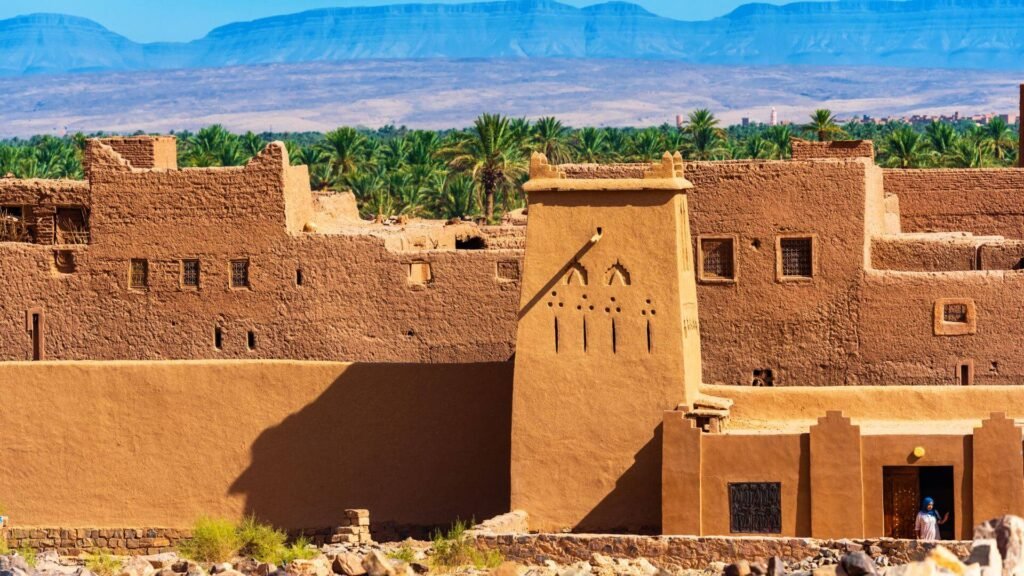
Marrakech to Zagora and back in two days. Day one crosses the Atlas via the Tizi n’Tichka pass, stops at Aït Ben Haddou, continues through the Draa Valley to Zagora and a camel trek to the desert camp. Day two is sunrise and then the long drive back. The day one driving is approximately seven hours with stops; day two is similar. It works if two days is the genuine constraint. Know that the dunes at Zagora are modest and the landscape is pre-Saharan rather than the Erg Chebbi dune system.
- Best for: Tight schedules, any desert experience over none
- Duration: 2 days / 1 night
3-Day Merzouga Desert Tour (Most Recommended)
The standard and most popular option for good reason. Day one: Marrakech to Ouarzazate via Aït Ben Haddou. Day two: Dadès Valley, Todra Gorge, arrival at Merzouga in time for the sunset camel trek and overnight camp. Day three: sunrise on the erg, return to Marrakech. The route covers the major southern Morocco landmarks without rushing any of them. Two nights means one night en route and one night in the desert — the right ratio.
- Best for: First-time visitors, anyone for whom Merzouga is the primary goal
- Duration: 3 days / 2 nights
4-Day Sahara Experience (Deeper Journey)
An extra day added to the three-day route. The additional day typically goes into the Dadès Valley and Todra Gorge, which on the three-day itinerary are passed through rather than properly explored. The four-day version allows a night in the Dadès or at the Todra Gorge — significantly better for anyone who wants those landscapes as destinations rather than driving backgrounds. Total driving time per day is lower, which makes the trip more comfortable.
- Best for: Travellers who want the route as well as the destination
- Duration: 4 days / 3 nights
Luxury Desert Tour (Premium Experience)
The same Merzouga route in a private vehicle with a dedicated driver-guide, upgraded accommodation en route, and a luxury camp at the erg rather than a standard one. Luxury camps at Merzouga have private tent structures with proper beds, electricity, and sometimes a plunge pool. The desert location and the sky are identical to standard camps; the comfort is substantially higher. For couples or travellers for whom this is a significant occasion, the premium is material.
- Best for: Couples, honeymoons, premium travellers
- Includes: Private vehicle, luxury camp, upgraded accommodation throughout
Key takeaway: Three days and Merzouga is the right choice for most visitors. The fourth day improves the experience meaningfully if the Dadès Valley or Todra Gorge matters to you independently of the dunes.
Sample Sahara Desert Itineraries
Three itineraries for different time budgets. Driving times are realistic with stops; the route is the same for all three — what changes is the pace and the amount of time at each stop.
2-Day Zagora Desert Itinerary
- Day 1: Marrakech → Tizi n’Tichka mountain pass → Aït Ben Haddou (1.5 hours) → Ouarzazate → Draa Valley → Zagora → camel trek to desert camp (sunset)
- Day 2: Sunrise → breakfast at camp → return to Marrakech (7–8 hours driving)
The day-two drive back is long and unavoidable. Best approached as a recovery day with an audio book rather than more sightseeing.
3-Day Merzouga Desert Itinerary (Recommended)
- Day 1: Marrakech → Tizi n’Tichka → Aït Ben Haddou (full stop, 1.5–2 hours) → Ouarzazate → overnight in Ouarzazate or Skoura
- Day 2: Skoura → Dadès Valley → Todra Gorge (stop, 45 minutes) → Merzouga → camel trek at sunset → overnight desert camp
- Day 3: Sunrise trek → breakfast → return to Marrakech via a different southern route
Day three is a long drive (8–9 hours) but the route via Rissani and the southern pre-Saharan landscape is visually different from the outward journey.
4-Day Sahara Itinerary (Slower Pace)
- Day 1: Marrakech → Tizi n’Tichka → Aït Ben Haddou → Ouarzazate → overnight
- Day 2: Ouarzazate → Dadès Valley → overnight in a guesthouse in the Dadès Gorge
- Day 3: Dadès → Todra Gorge (longer stop, 1–2 hours) → Merzouga → camel trek → desert camp
- Day 4: Sunrise → return to Marrakech
The extra night in the Dadès Gorge is the most significant difference: the gorge itself is spectacular and the guesthouses there are among the most atmospheric accommodation on the route.
Reality check: The driving is real. Day one of the Merzouga trip is nine hours with stops; day three back is similar. This is not a problem if you’re prepared for it — the landscapes through the windows are genuinely worth looking at — but it is a problem if you’re expecting a destination-focused experience where driving is background.
Best Time to Visit the Sahara Desert
Temperature is the main variable. The Sahara at Merzouga sees extreme ranges: summer daytime temperatures routinely exceed 45°C; winter nights can drop below freezing. Spring and autumn are the practical seasons.
- Spring (March–May): The best overall window. Daytime temperatures in the dunes are warm but not punishing (25–35°C), nights are cool but not cold, and the desert vegetation after winter rain is at its most varied. The camel trek and dune walking are physically comfortable. Recommended.
- Summer (June–August): The most challenging conditions for most travellers. Midday temperatures in the dunes are potentially dangerous without careful management of sun exposure and hydration. The desert is genuinely beautiful in summer light — the clarity is exceptional — but the heat limits activity to early morning and evening. Only if you are specifically prepared for extreme heat and time your activities accordingly.
- Autumn (September–November): As good as spring and often better for photography — the post-summer light is exceptionally clear and the dunes are at their most photogenic. Temperatures are comfortable for walking and trekking. Recommended equally with spring.
- Winter (December–February): Cold nights (0–5°C at Merzouga) but clear days and fewer visitors than other seasons. The snow-capped Atlas on the outward journey in winter adds a visual element not available at other times. A warm sleeping bag is essential for camp nights. Worth considering for the solitude and light quality.
Best overall: Spring and autumn. Avoid summer unless you specifically want the extreme heat experience. Winter is underrated for those who pack for the cold.
Important tip: Desert nights are cold regardless of the season. Even in July, temperatures at the Erg Chebbi drop 15–20°C after sunset. A warm layer for the evening is not optional.
Practical Tips for Your Sahara Desert Trip
- Pack a dedicated desert bag. Most tour operators advise leaving your main luggage at the hotel or in the vehicle and taking a small overnight bag into the desert camp. Sand gets into everything; keep valuables and fragile items in a sealed bag.
- Layers for the temperature swing. The day-to-night temperature drop at Merzouga is 15–25°C depending on season. Shorts at 2pm and a down jacket at 10pm is not unusual. Pack for both.
- A scarf or keffiyeh for the camel trek. Wind-blown sand during the camel ride is minor but consistent. A loose cotton scarf over the face is more effective and less uncomfortable than sunglasses alone.
- Footwear: sandals for the dunes, closed shoes for the route stops. The dune sand is fine and warm — sandals or bare feet are better for walking it. The route stops (Aït Ben Haddou, the Todra Gorge) involve rough terrain where closed shoes are more practical.
- A power bank. Electricity in desert camps is limited and often unavailable at standard camps. A power bank for a phone and camera battery is practical insurance.
- Cash. Tips for the camel guide, any small purchases at route stops, and camp extras are cash only. Withdraw in Marrakech before departure — there are ATMs in Ouarzazate but not reliably elsewhere on the route.
- Manage camp expectations by camp type. Standard camps are authentic but basic: shared tent structures, simple bedding, hole-in-the-ground toilet facilities. Luxury camps have private tents, proper beds, electricity, and sometimes en-suite facilities. Book whichever matches your expectations — both deliver the same sky.
- The camel ride is safe and slow. The dromedaries used for tourist trekking are calm and managed by experienced guides. The mounting and dismounting are the most awkward moments; the ride itself settles quickly. Back pain is possible after a long trek — forty-five minutes is fine for most people.
- Prepare for the drive. Nine hours on day one. The road is good (the main N9/N10 route is paved throughout) but long. Download podcasts, audiobooks, or music in advance; mobile data is unreliable in the pre-Saharan south.
Pro tip: The quality of the guide makes the route stops interesting or merely scenic. When choosing between tour operators, the quality of guiding at Aït Ben Haddou and along the route is a better indicator of a good trip than the camp quality or the vehicle.
Sahara Desert Tour FAQ
Can you visit the Sahara Desert in one day from Marrakech?
No. The Erg Chebbi near Merzouga is 560 kilometres from Marrakech — a nine-to-ten hour drive one way. Even Zagora, the closer option, is seven hours. A “day trip to the Sahara” is not possible in any meaningful sense of either the Sahara or the day.
Is the Sahara Desert worth it from Marrakech?
Yes, if you give it the right amount of time. A three-day Merzouga trip with one night in the desert camp delivers what the trip promises — the dune experience, the sky, the silence. A two-day Zagora trip is a compromise. Arriving after a long drive, spending a few hours in the dunes, and driving back the next day risks feeling like the effort outweighed the experience.
Is Merzouga better than Zagora?
For the dune experience specifically, yes — significantly. The Erg Chebbi at Merzouga is a major dune system with 150-metre dunes; the desert around Zagora is flat, rocky pre-Saharan terrain with modest dunes. If the iconic sand dune landscape is the reason for the trip, Merzouga is the correct choice. Zagora’s only advantage is being seven hours from Marrakech rather than ten.
Is the camel ride safe?
Yes. The dromedaries used for tourist trekking are working animals managed by local guides experienced in handling tourists. The ride is slow, the terrain is sand, and falls are extremely rare. Discomfort rather than danger is the realistic concern for most people — lower back strain is possible after forty-five minutes or more.
What is a desert camp like?
Standard camps: shared berber-style tents with thin mattresses, communal washing facilities, generator electricity (if any), Moroccan dinner, campfire. They are basic and authentic. Luxury camps: private tent structures with real beds, electricity, sometimes en-suite shower and toilet, better food. The sky above both is identical. Book the level of comfort you actually want rather than expecting the standard camp to feel like the luxury one.
How much does a Sahara tour cost?
Group tours for three days run approximately €80–150 per person depending on operator and group size, including accommodation and meals. Private tours for the same route and duration run €200–400 per person depending on vehicle quality and camp upgrade. Luxury private tours can reach €500–800 per person. Self-drive costs the rental car plus fuel (roughly €200–300) plus accommodation and camp booked independently.
Plan the Rest of Your Morocco Journey
The desert is the longest excursion from Marrakech but not the only one. These guides cover the city itself and the other day trips.
-
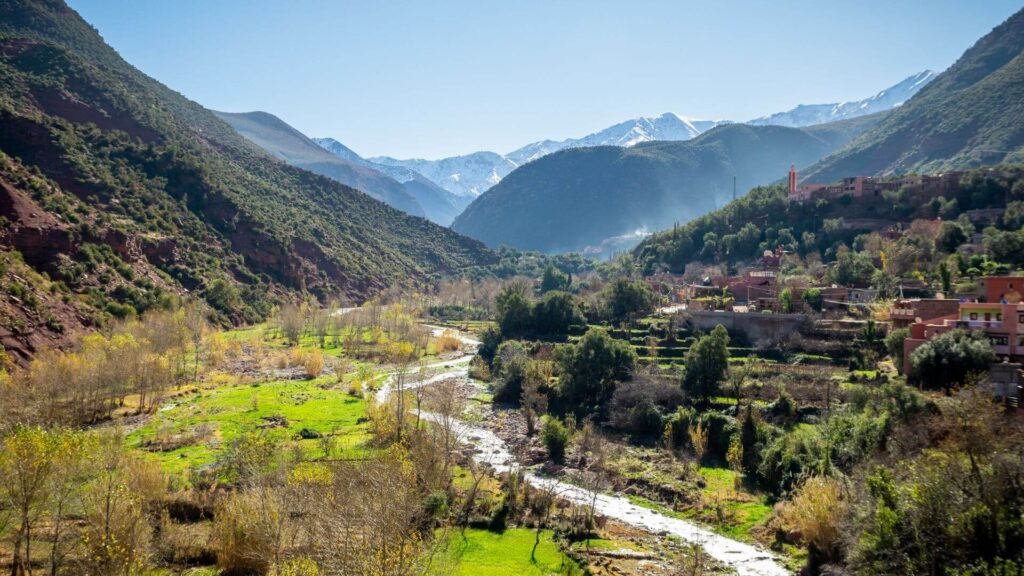
Atlas Mountains Day Trip
A nature escape that works before or after the desert trip
-
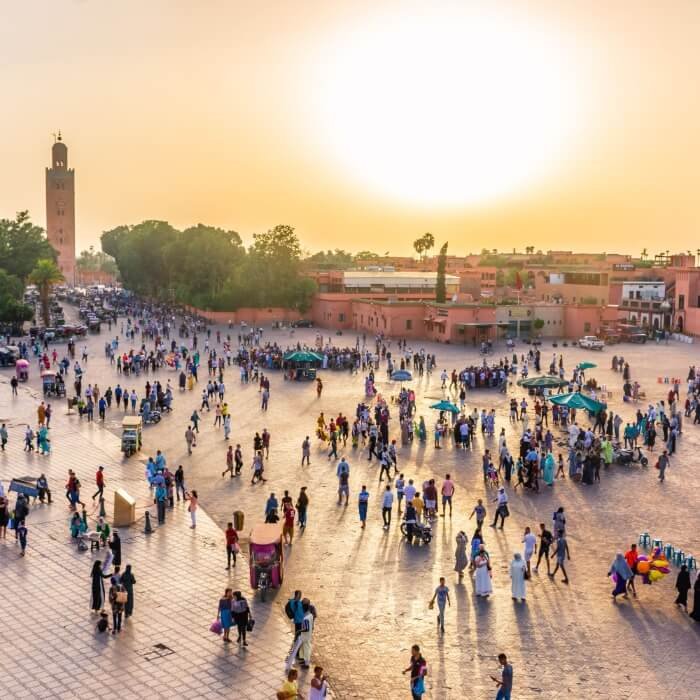
Top 20 Things to Do in Marrakech
The city's essential experiences
-

Camel Ride Experience
Context for camel trekking in Morocco beyond the Sahara
-

Luxury Riads
Where to stay in Marrakech before and after the desert
-
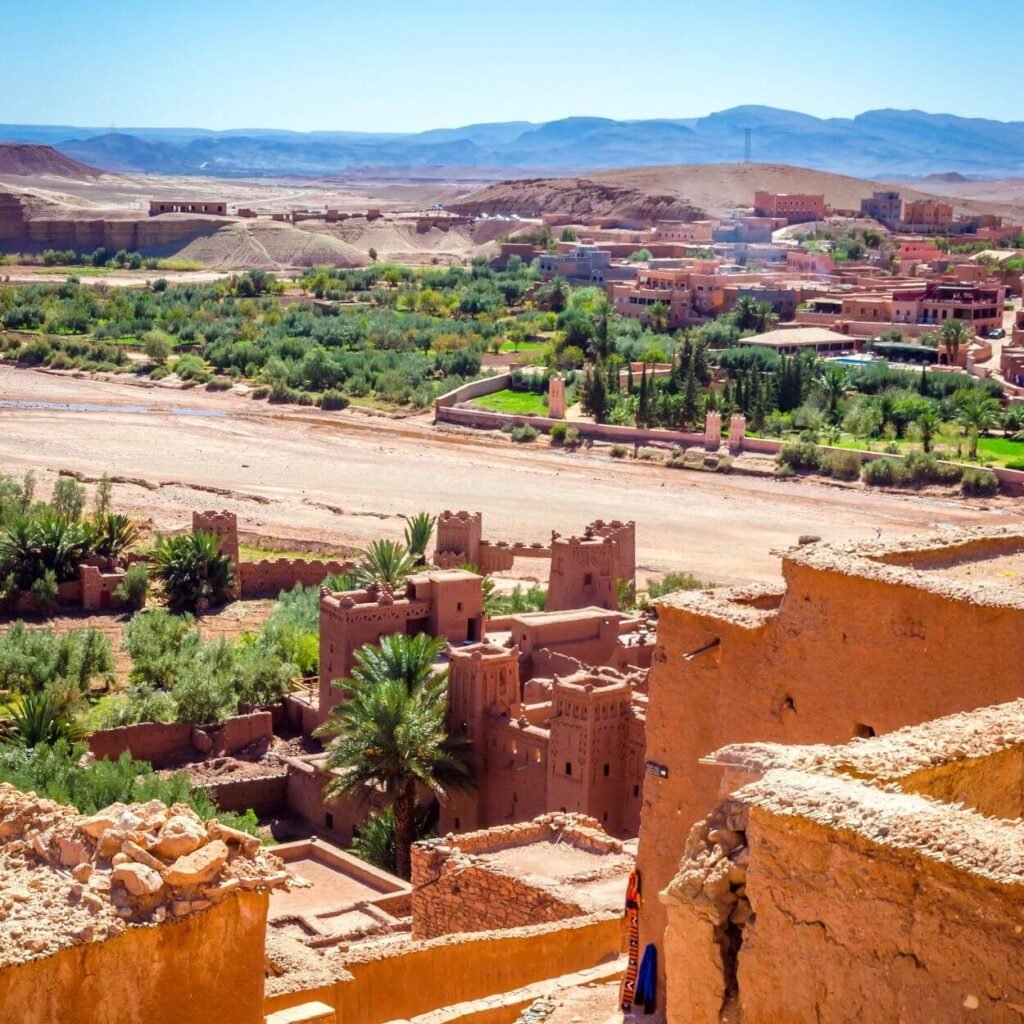
5-Day Marrakech + Desert Itinerary
A structured five-day plan combining city and Sahara
Final Thoughts on Your Sahara Desert Journey
The Sahara requires more planning than any other excursion from Marrakech, and the planning decisions matter. Choosing Merzouga over Zagora, giving it three days rather than two, selecting an operator whose guide adds knowledge to the route stops — these are the differences between a trip that justifies the effort and one that feels like a long drive with a night in a tent.
The experience at its best — the camel trek into the Erg Chebbi at dusk, the camp in the dark with no other light source for fifty kilometres in any direction, the sunrise before anyone else is moving — is genuinely difficult to replicate anywhere else accessible from a major city. It’s worth doing properly.
For the full Marrakech trip framework, the Marrakech travel guide and the 5-day Marrakech + Desert itinerary are the right starting points for planning around the Sahara trip.
 Marrakist Concierge