
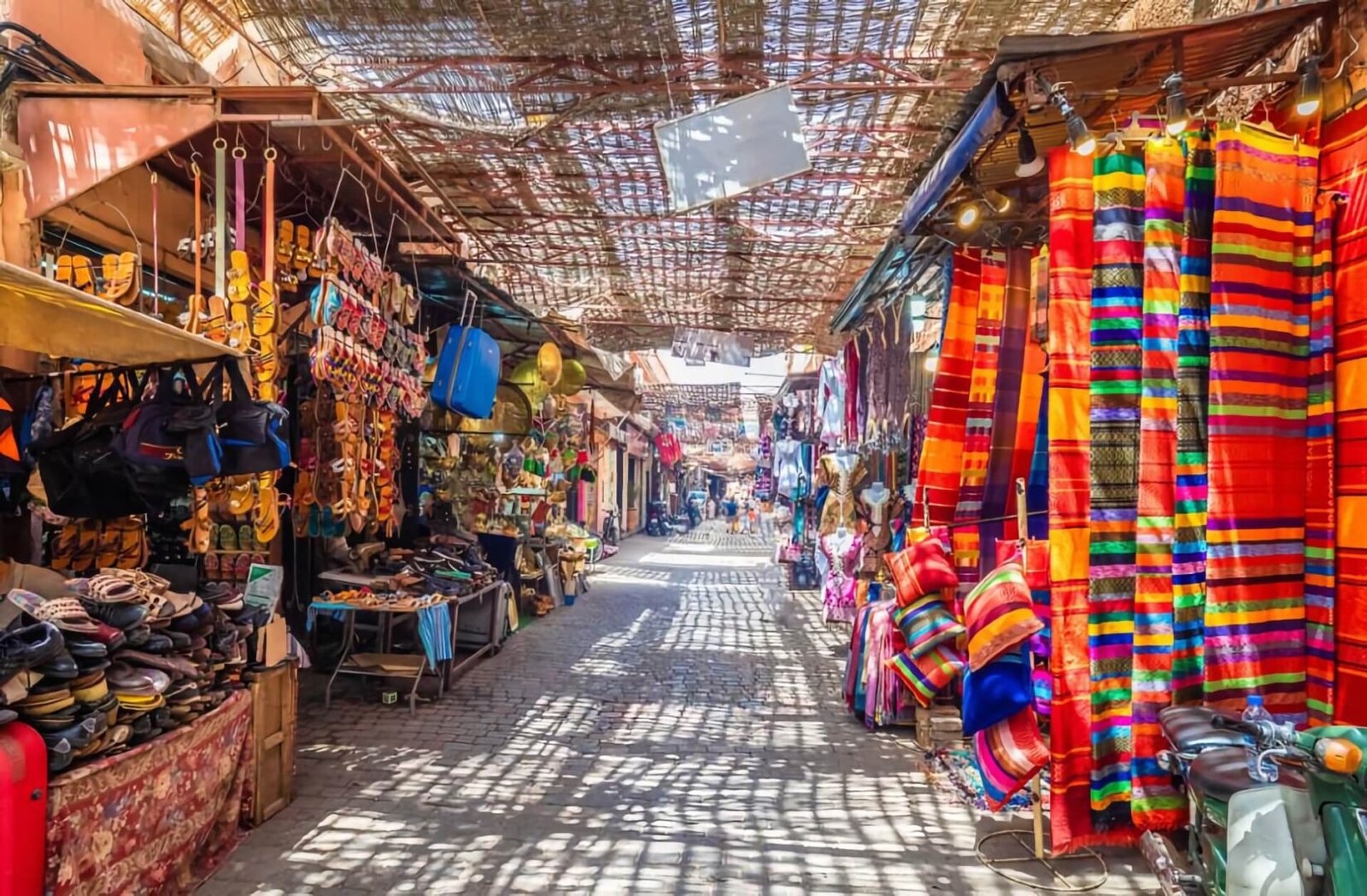
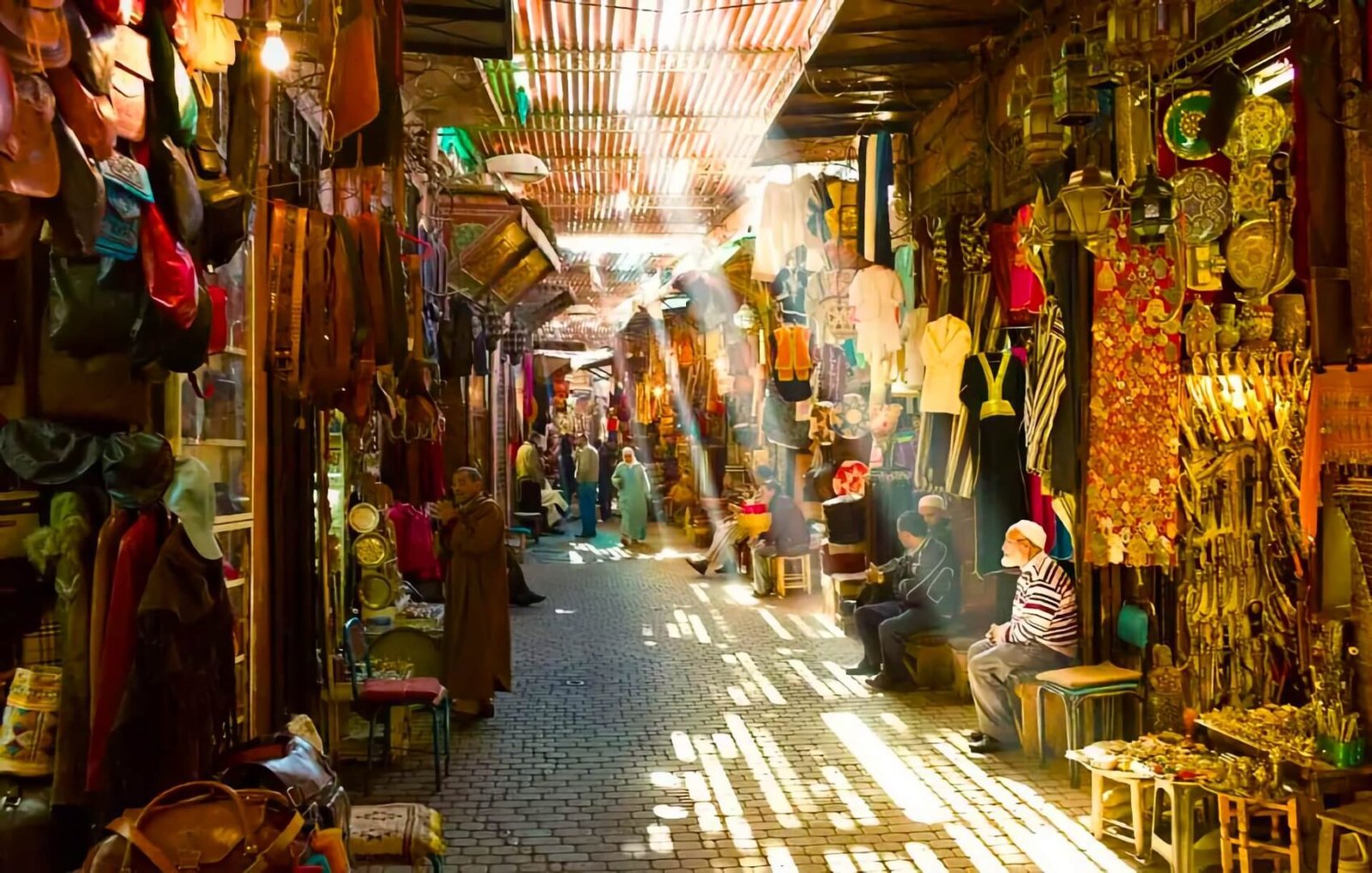
The main commercial artery of the Medina and the first souk most visitors enter from Jemaa el-Fna. Souk Semmarine runs north under a wooden lattice roof and is the widest and busiest of the souk streets — clothing, textiles, slippers, bags, decorative objects, and general crafts line both sides. The quality here varies considerably, and this is where tourist-oriented merchandise is most concentrated. It’s the right introduction to the scale and energy of the souks, but the specialist markets branching off it are where the more interesting shopping happens.
Shopping in Marrakech: Souks, Markets & What to Buy
The souks of Marrakech are one of the oldest continuously operating market systems in the world. They are not a tourist reconstruction of something historical; they are the thing itself — the same narrow alleys, the same trade specializations by street, the same negotiation dynamic that has operated here since the medieval period. Understanding this changes how you approach them.
This guide covers the five souks most worth knowing, the seven products that represent the best of Moroccan craftsmanship, the three shopping areas beyond the Medina, and an honest briefing on bargaining — how it works, what’s expected, and how to do it without embarrassing yourself or the seller.
Best time to shop
mornings 9 – 11am — freshest stock, calmest merchants
Bargaining
open at 40–50%, expect to settle around 60–70%
Calibrate first
visit Ensemble Artisanal before entering the souks
Saffron
buy threads not powder — powder is frequently adulterated
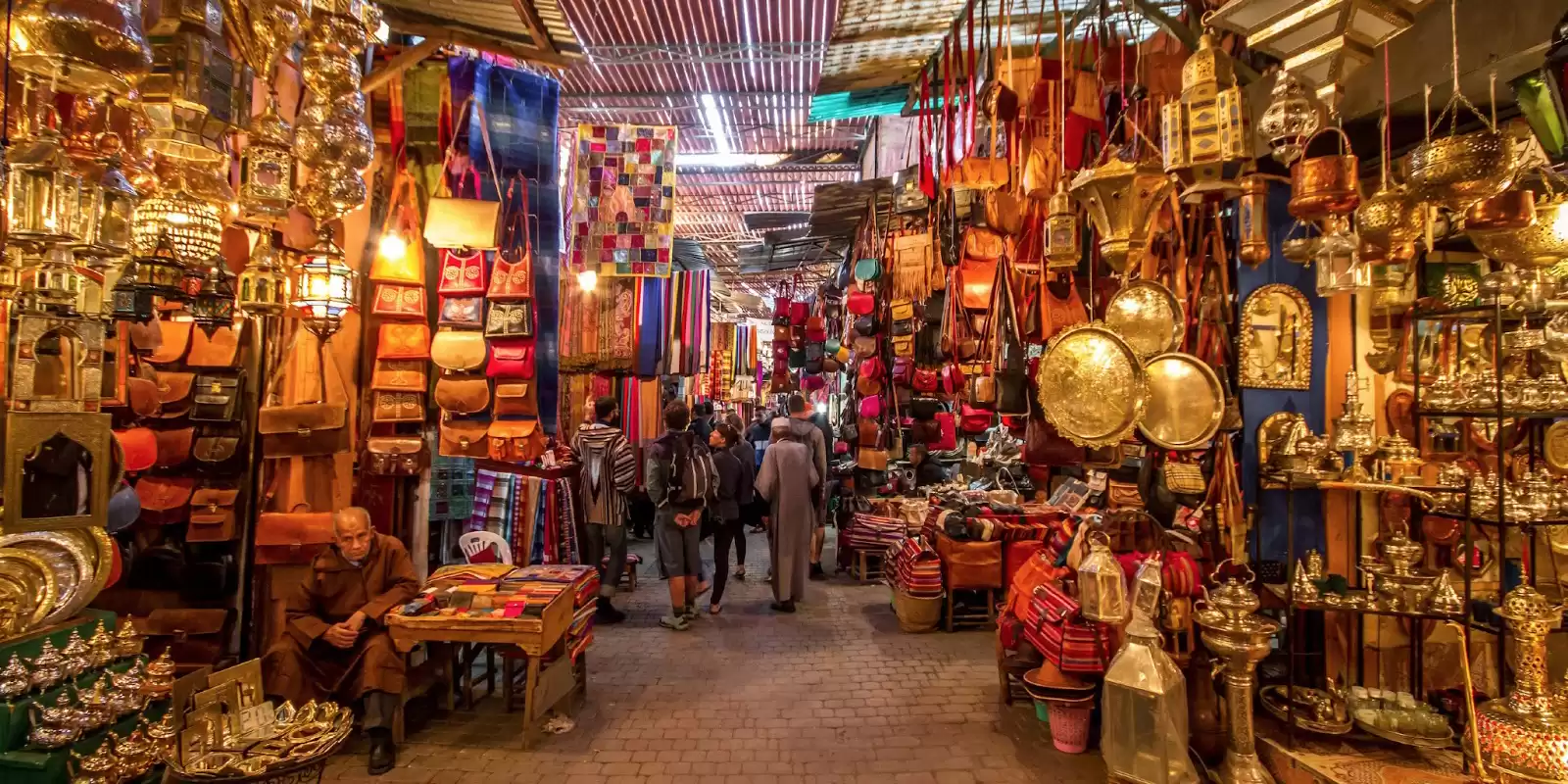
Marrakech souks — same alleys, same trade specializations, same negotiation ritual as the medieval period: one of the oldest market systems in the world, still open for business
Why Shopping in Marrakech Is Unique
The souk system works on a principle of specialization that dates back centuries: metalworkers occupy one street, leather workers another, spice traders another, dyers another. This isn’t decorative organization — it developed as a practical commercial logic that benefits both buyers (easy comparison) and sellers (shared infrastructure and clientele). Walking through it, you move through a living map of Moroccan craft traditions.
What this means practically: unlike a market where everything is sold everywhere, in the Marrakech souks the quality of a specific product category tends to concentrate in one area. The best leather work is in Souk Cherratine, not distributed randomly across the Medina. The best lanterns are in Souk Haddadine. This rewards the visitor who takes time to navigate rather than buying at the first stall that catches their eye.
The other thing that distinguishes Marrakech shopping is that much of what’s for sale is still made here. The copper lanterns in Souk Haddadine are beaten into shape in workshops a few metres from where they’re sold. The babouche slippers in Souk Cherratine are cut and stitched by hand. The wool hanging in Souk des Teinturiers was dyed that morning. The connection between production and sale is unusually short, which means the objects have a traceability that mass-produced souvenirs don’t.
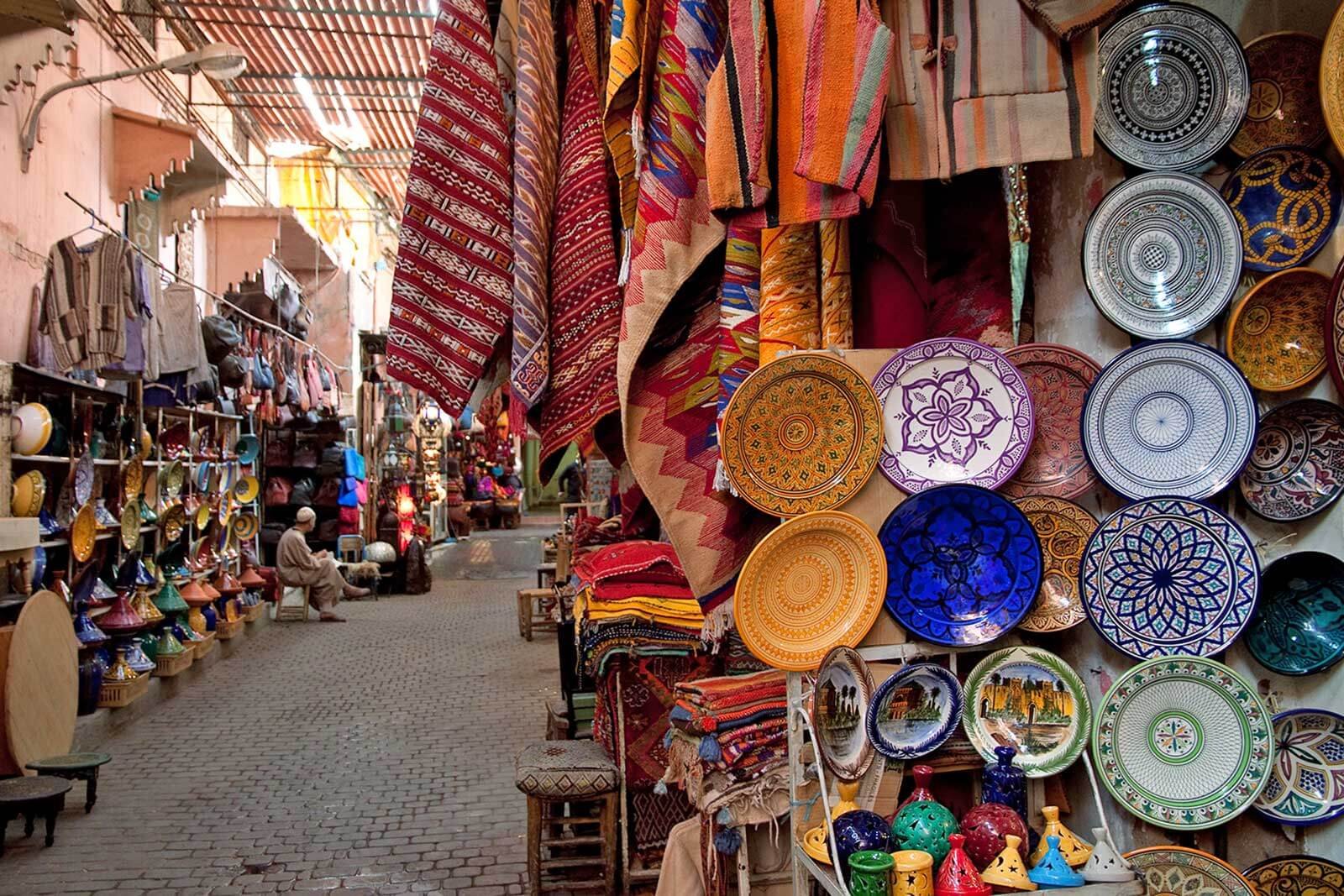
The Souks of Marrakech: A Labyrinth of Treasures
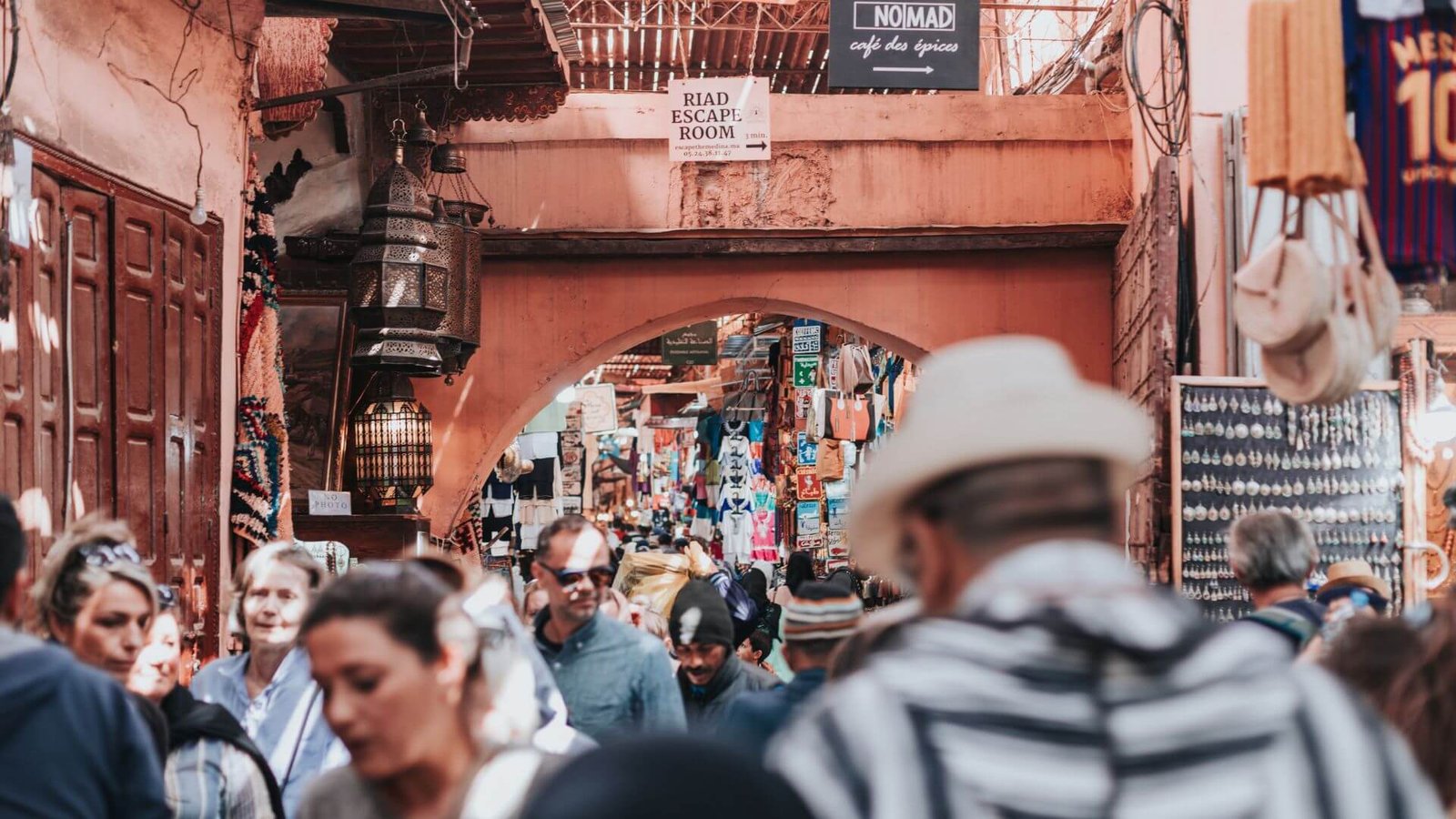
The souks occupy the northern section of the Medina, spreading out from just behind Jemaa el-Fna through a dense network of covered and open-air alleys that takes most visitors several visits to properly understand. The main artery is Souk Semmarine, which leads north from the square; off it branch the specialist markets — metalwork, leather, spices, textiles, dyers — each with its own distinct sound, smell, and character.
The tendency for first-time visitors is to stay on the main arteries where the tourist-oriented shops are most concentrated. The better approach is to follow the side alleys, where workshops are visible and the transition from production to sale is immediate. A carpenter shaping a cedar cabinet, a weaver at a loom, a coppersmith finishing a tray — these are not performances but working operations that have been here for generations.
Getting lost is part of the experience and less alarming than it sounds. The Medina is bounded by walls; following any main artery eventually returns you to a gate or a landmark. The souks are roughly fifteen to twenty minutes of walking end to end, although it’s easy to spend several hours.
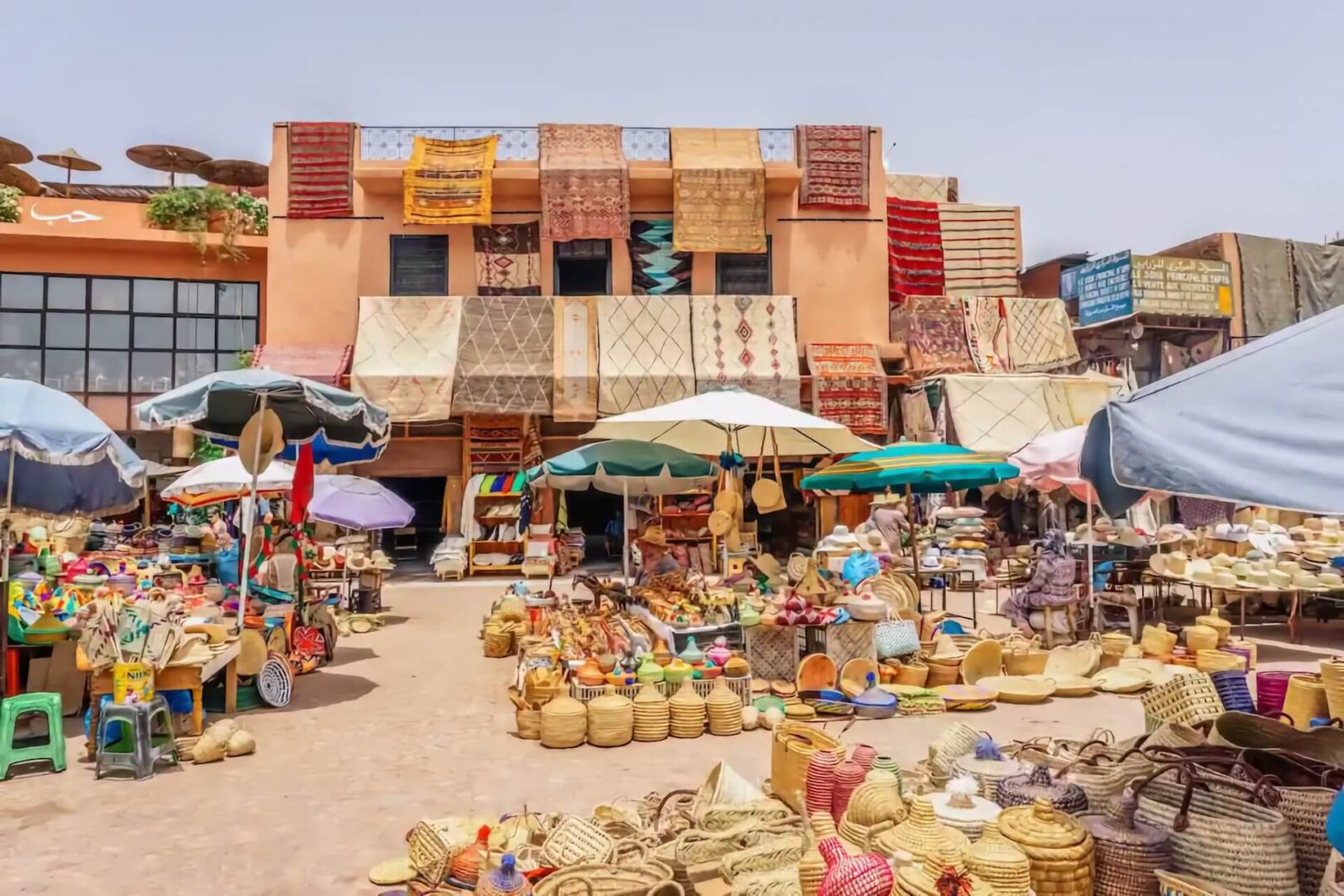
Best Souks to Visit in Marrakech
Each of these five souks has a distinct character determined by its craft specialization. They’re listed roughly in the order you’d encounter them walking north from Jemaa el-Fna into the Medina.
Souk Semmarine
Souk Haddadine
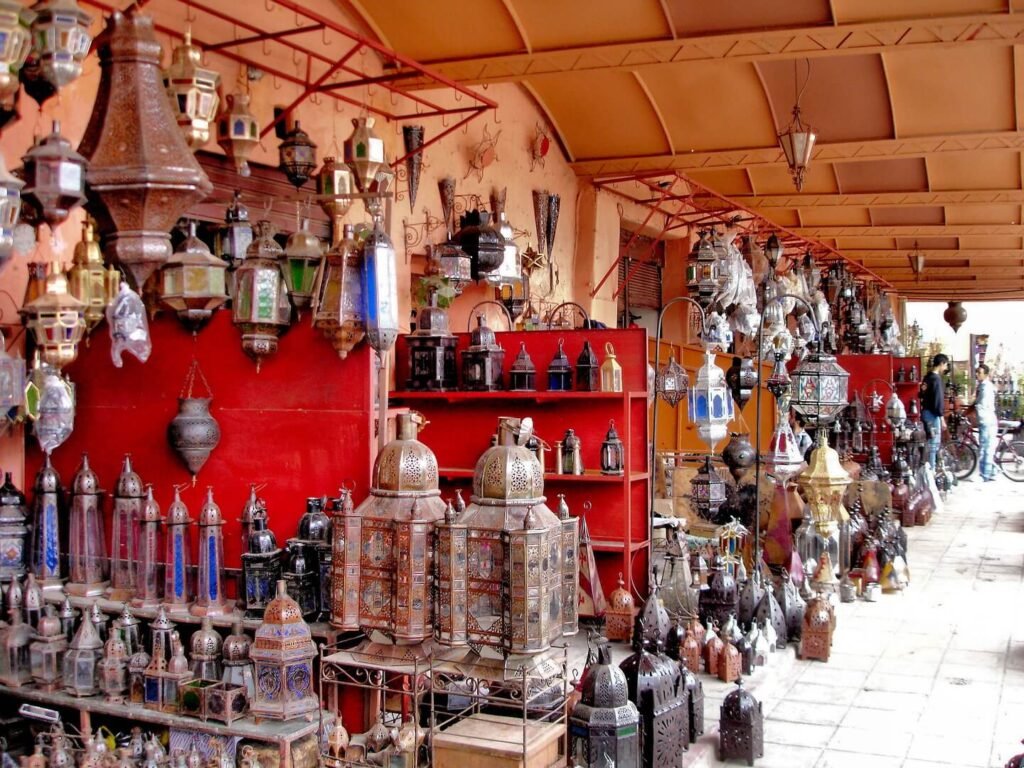
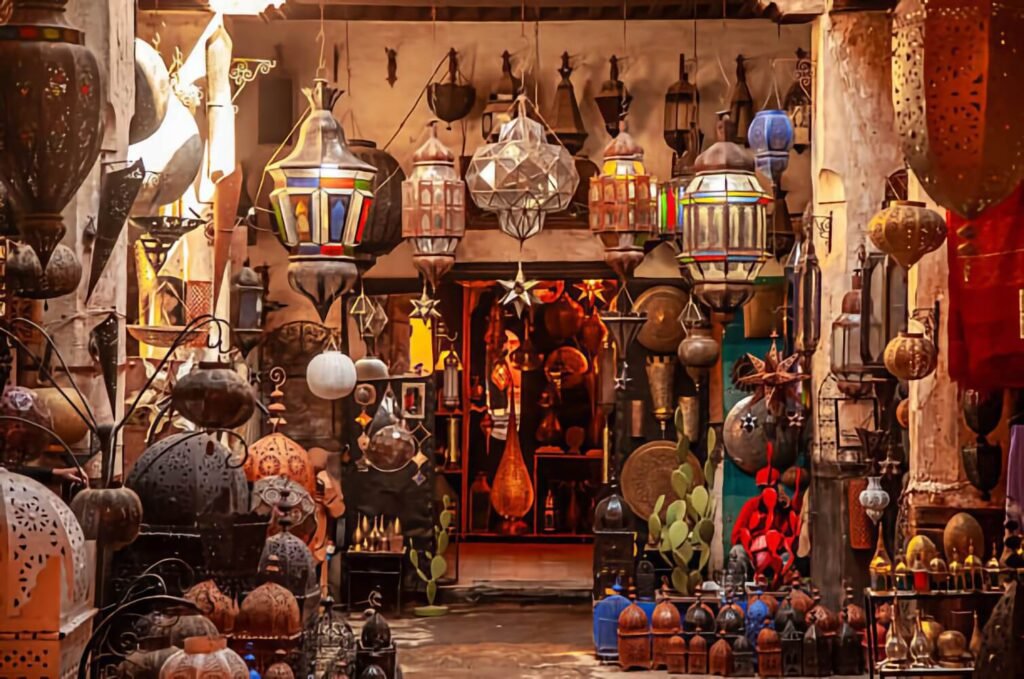
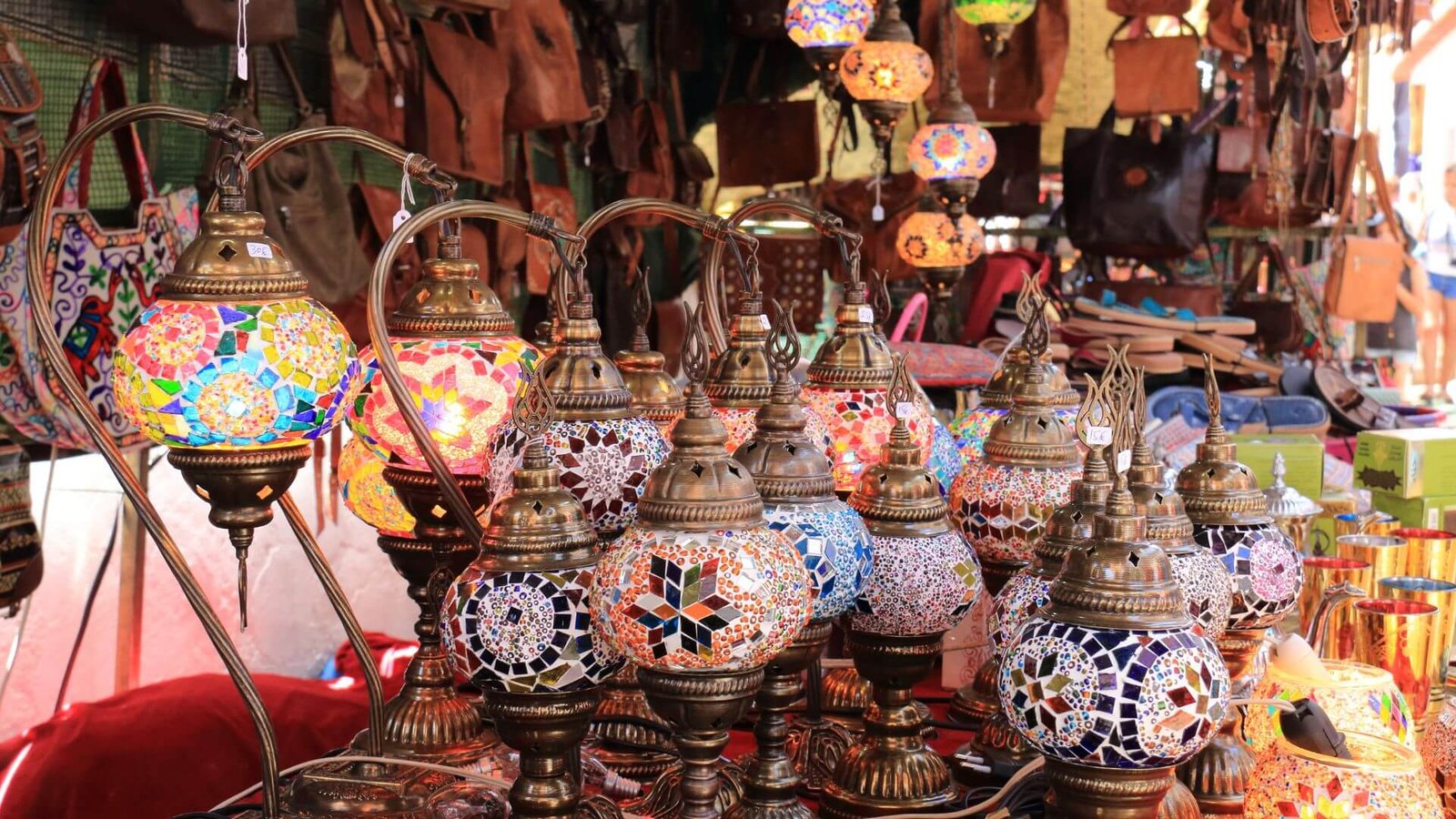
The blacksmiths’ souk, identifiable by the sound before you see it — the rhythmic hammer-on-metal that carries through the alleys some time before you arrive. Artisans here work copper, brass, and iron into lanterns, lamps, decorative screens, and architectural fittings using techniques that haven’t fundamentally changed in centuries. The lanterns are made in the workshops and sold at the front; you can watch the entire process from a few metres away. One of the most atmospheric sections of the souks — the lanterns hanging from shop ceilings in the Moroccan light are genuinely beautiful.
Souk Cherratine
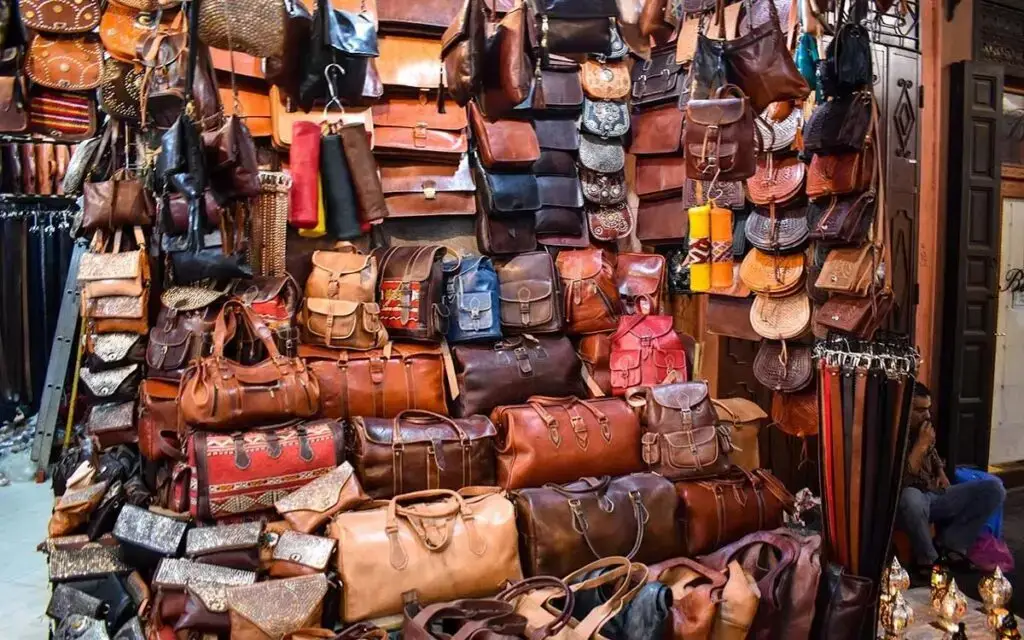
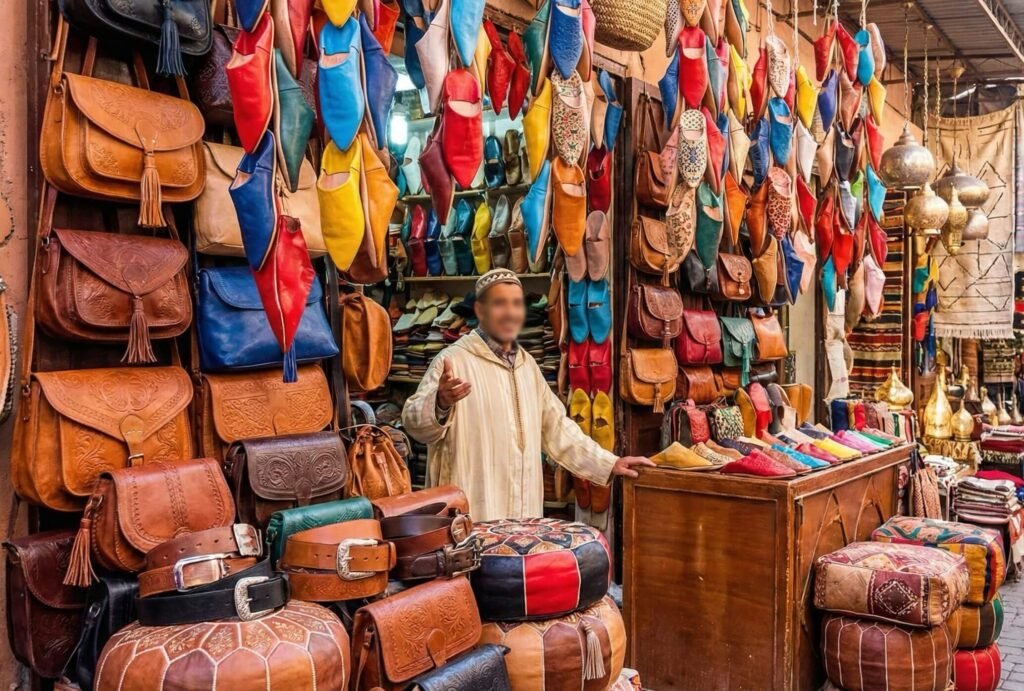
The leather souk, which produces the babouche slippers, bags, belts, and accessories that are among the most popular purchases in Marrakech. Workshops are visible throughout — cutting, stitching, shaping leather by hand — and the range runs from mass-produced tourist goods to genuinely fine handwork. For better-quality leather, look for pieces with clean stitching, even coloring, and some weight to them; the cheapest babouche slippers are often poorly finished. The neighborhood is also adjacent to the Chouara tannery, where the leather is processed — the terrace views over the tannery from surrounding buildings are among the most photographed scenes in Marrakech.
Souk Ableuh (Spice Souk)
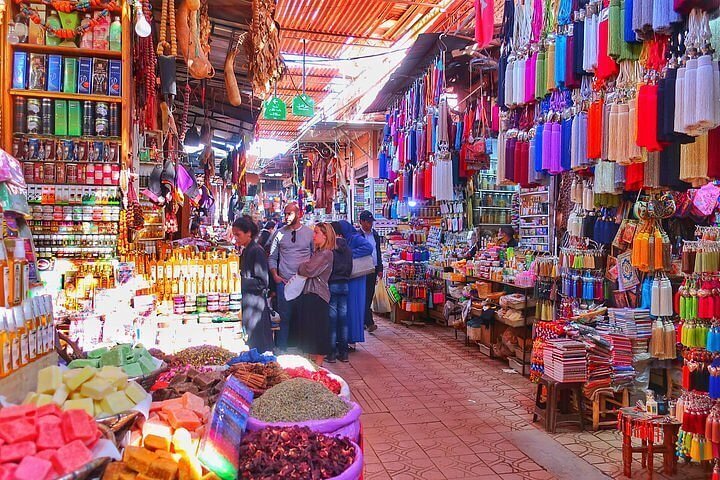
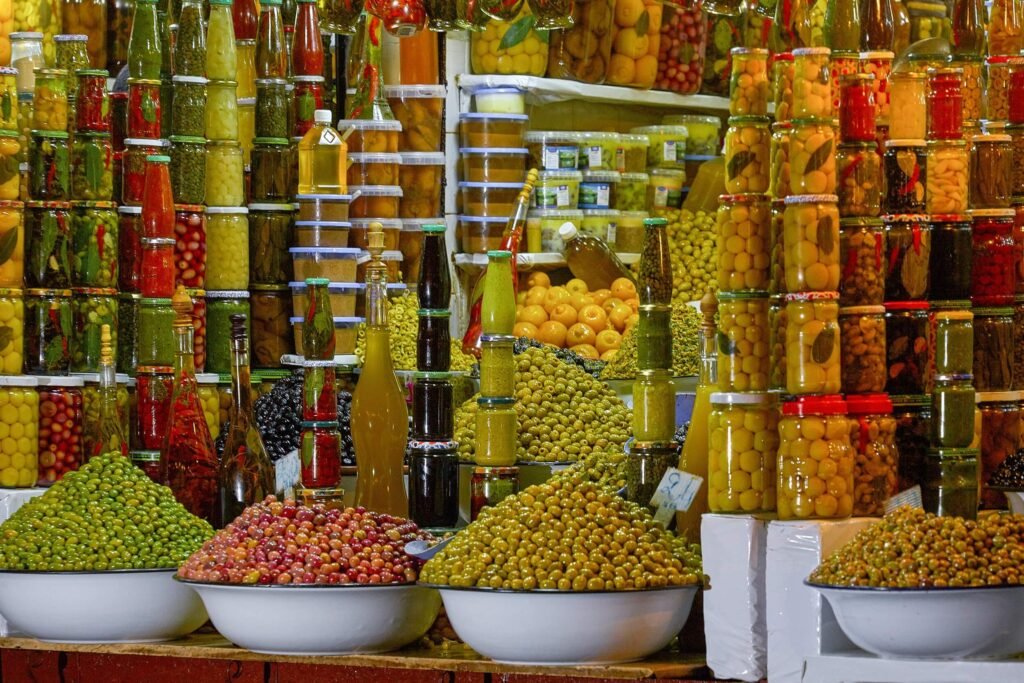
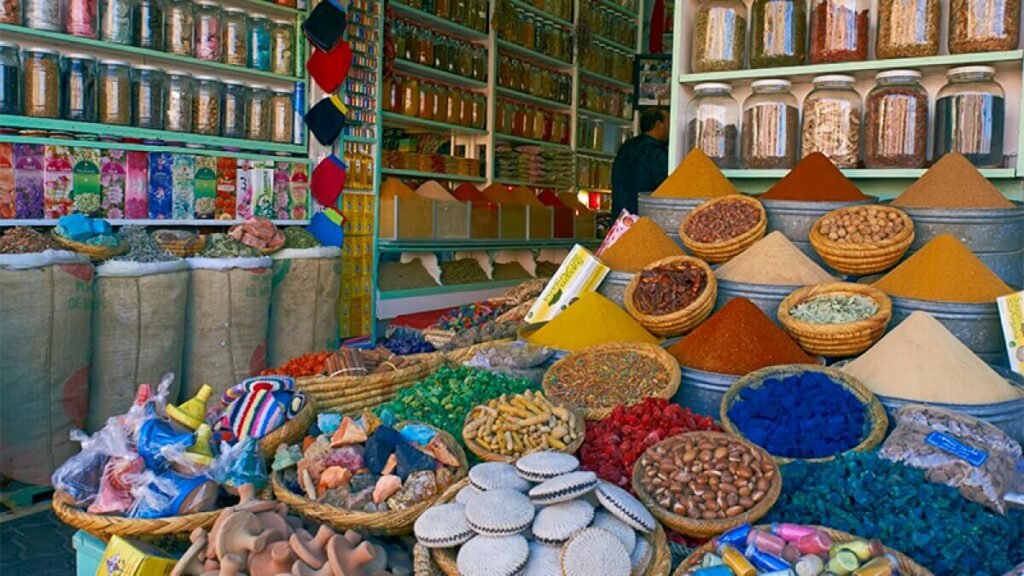
The spice market, organized around the square of Rahba Kedima north of Souk Semmarine. Stalls display turmeric, paprika, cumin, saffron, dried roses, and herbal remedies in the conical arrangements that Moroccan spice vendors have arranged for as long as anyone can remember. Beyond culinary spices, you’ll find argan oil, ghassoul clay, kohl, and natural cosmetics that are cheaper and often better quality here than in the dedicated beauty shops. The best saffron comes in threads rather than powder — the powder is frequently adulterated.
Souk des Teinturiers
The dyers’ souk, tucked into the northern quarter of the Medina near the Mouassine quarter. Skeins of freshly dyed wool hang across the alleys in the vivid colors — red, yellow, blue, green — that eventually become the carpets and textiles sold throughout the souks. The dyeing process uses both traditional natural dyes and modern synthetic ones; the natural-dye work is identifiable by the slightly irregular color distribution. One of the most photogenic corners of the Medina and worth the extra few minutes of navigation to find it.
What to Buy in Marrakech
Seven categories of objects represent the best of Moroccan craftsmanship and make genuinely worthwhile purchases. Each has its own quality markers — things to check that distinguish a well-made piece from a poorly made one at a similar price point.
Moroccan Rugs
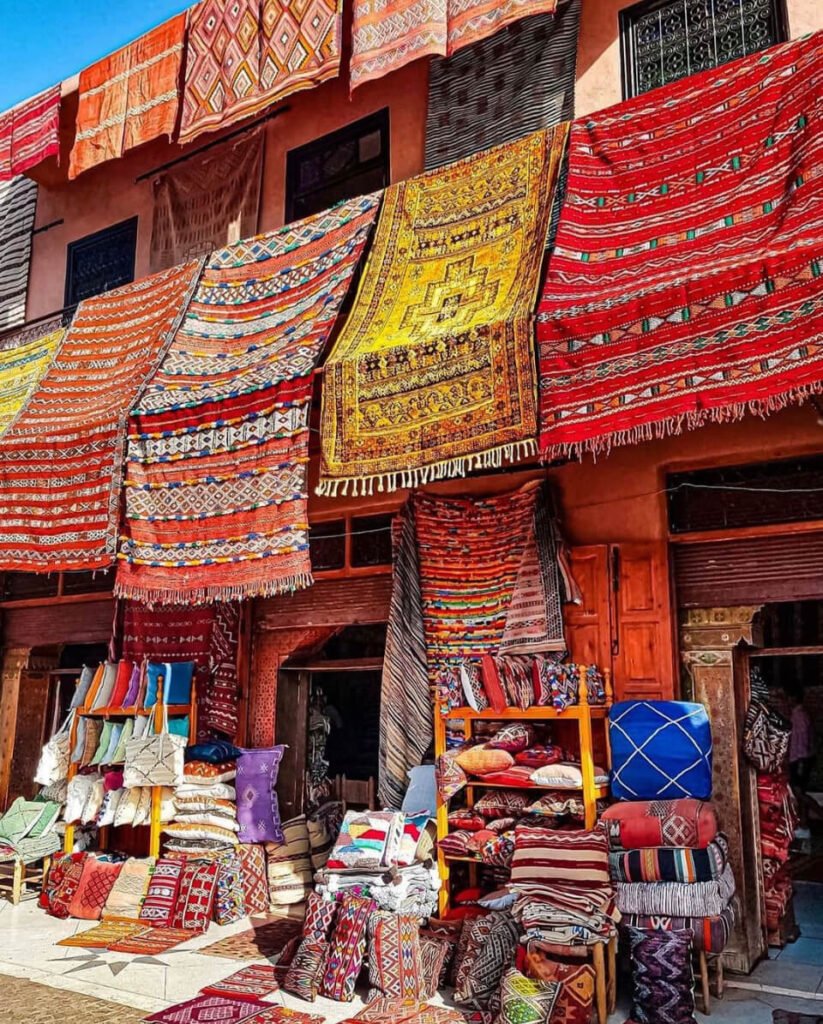
The range is enormous: Beni Ourain rugs from the Middle Atlas (cream wool, black or brown geometric patterns, thick pile), Azilal rugs (thinner, more colorful, often with abstract Berber motifs), Kilim flat-weaves, and the more elaborate pile carpets from the High Atlas region. Each comes from a specific tradition and community; understanding the difference helps you buy the right thing rather than the most aggressively offered one. Quality markers: consistent pile depth, even weave tension visible from the back, and natural dyes that have slight color variation rather than the uniform flatness of synthetics. A genuine Beni Ourain costs considerably more than €50; treat anything under that price with scepticism.
Leather Bags & Babouche Slippers
Morocco’s leather tradition is centuries old and the quality ceiling is high. For babouche slippers, look for full leather construction (not leather over a synthetic base), even coloring, and stitching that lies flat. For bags, check the lining and the hardware — cheap zips and plastic fittings indicate corners cut elsewhere. The Mellah Market and Souk Cherratine have the broadest selection; Gueliz has more contemporary leather pieces at higher fixed prices.
Moroccan Lanterns
Brass and copper lanterns crafted in Souk Haddadine, ranging from small table pieces to large architectural pendants. The quality difference shows in the precision of the geometric cut-out patterns and the finishing of the metalwork — better pieces have clean edges and consistent perforation. Larger lanterns are often made to order and can be shipped. Budget for a medium-quality piece around €30–60; anything significantly cheaper is likely thin-gauge metal.
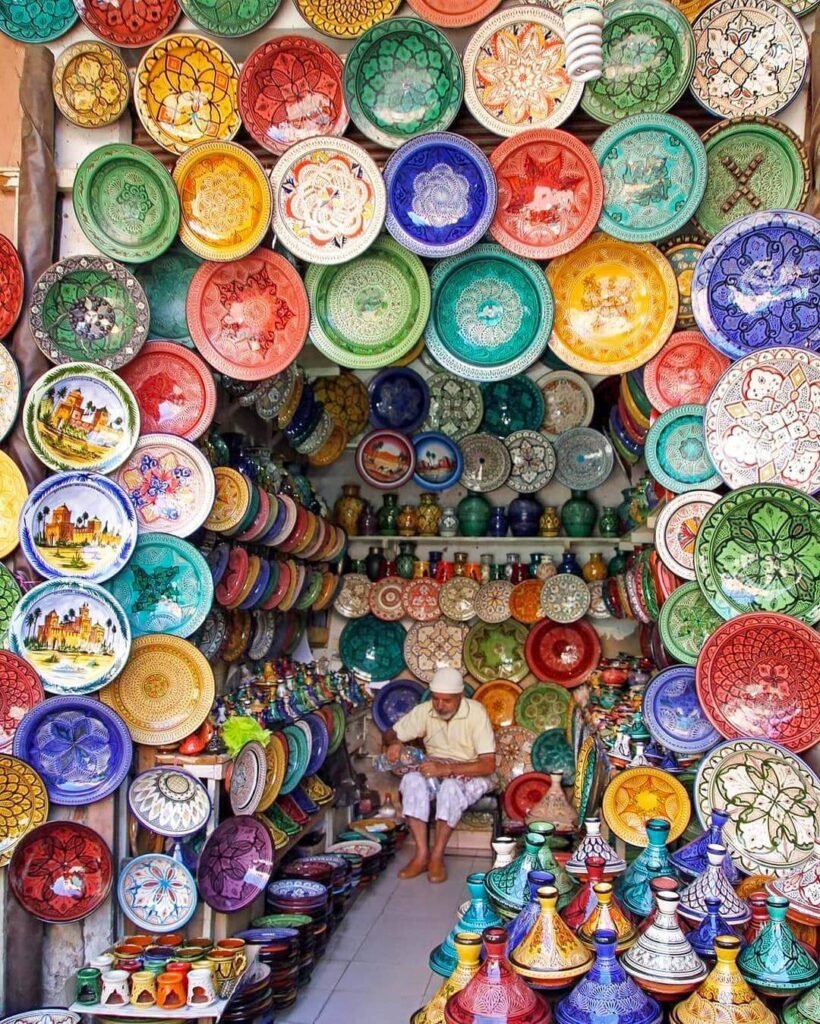
Ceramics & Pottery
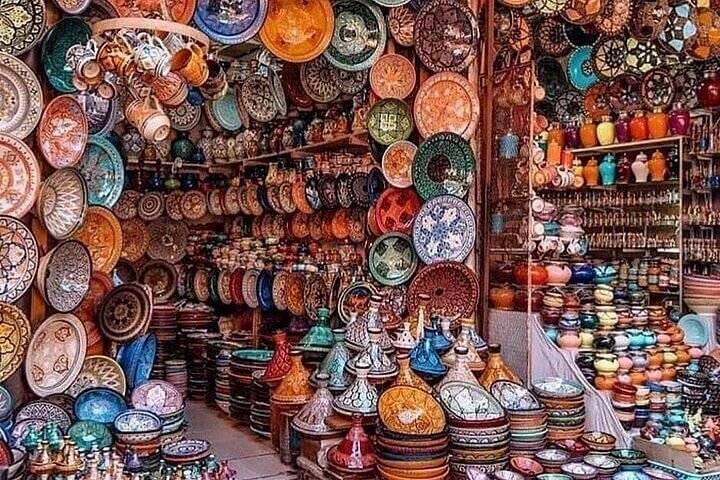
The distinctive Moroccan ceramic tradition comes primarily from Fès (blue and white geometric work) and Safi (earthier, more rustic). Marrakech sells both. For quality, check that painted lines are clean rather than smudged, that the glaze is even without bubbling, and that bowls and plates sit level. The best pieces are lead-free glazed (ask, or buy from established shops that label this). A good hand-painted tagine costs €25–50.
Argan Oil & Natural Beauty Products
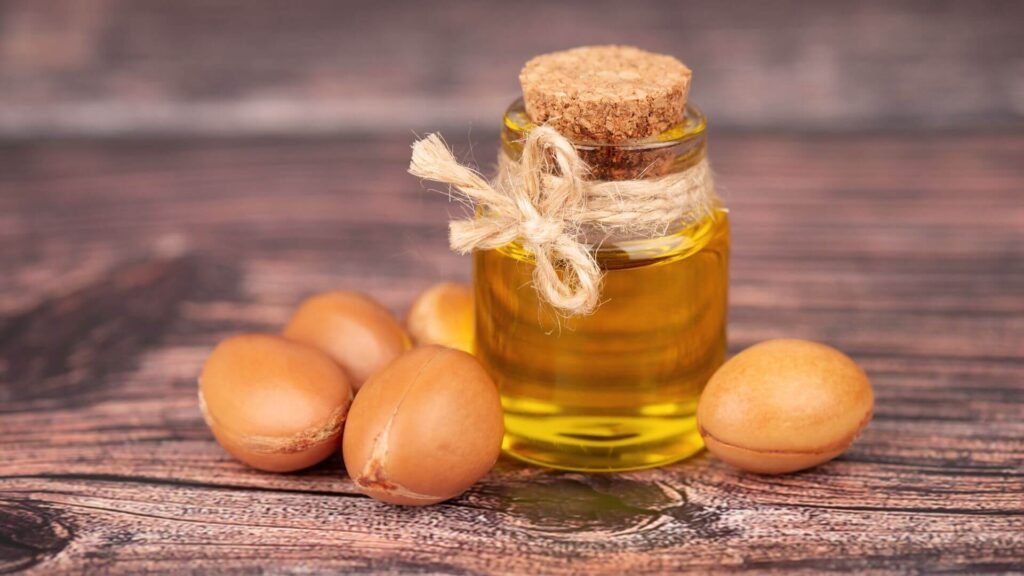
Argan oil is produced by a cooperative system primarily in the Souss region south of Marrakech, and quality varies widely. Pure culinary argan oil should be amber-colored with a distinctive nutty smell; cosmetic argan oil is lighter and less fragrant. Avoid bottles with no certification or labeling; legitimate cooperatives sell labeled, certified oil. Ghassoul clay (for hair and skin), rose water from the Dadès Valley, and prickly pear seed oil are the other products genuinely worth seeking out.
Moroccan Spices
The most portable and practical purchase in the souks. Saffron, ras el hanout (a blend that varies by vendor), cumin, paprika, preserved lemons, and dried rose petals are all worth buying. For saffron, buy threads rather than powder and check that they stain water orange-red immediately — a sign of quality. A genuinely good gram of Moroccan saffron costs more than a few dirhams; the ultra-cheap version is usually adulterated.
Handmade Jewelry
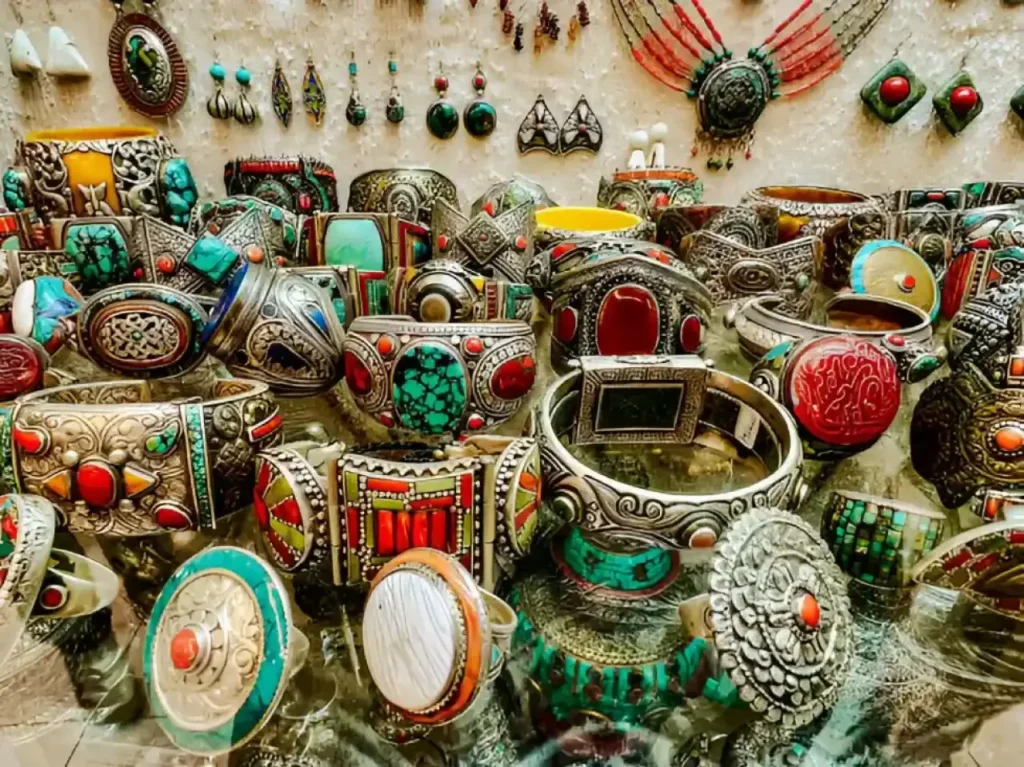
Moroccan jewelry combines Amazigh (Berber), Arab, and Andalusian influences — silver filigree work, enamel inlay, semi-precious stones including coral, amber, and turquoise. Pieces from the Amazigh tradition are often heavier and more geometric; Arab-influenced pieces tend toward more intricate surface decoration. The best jewelry in Marrakech is in the Mellah (the former Jewish quarter) and in specialist shops in Gueliz. Check that silver pieces are stamped — authentic Moroccan silver carries a hallmark.
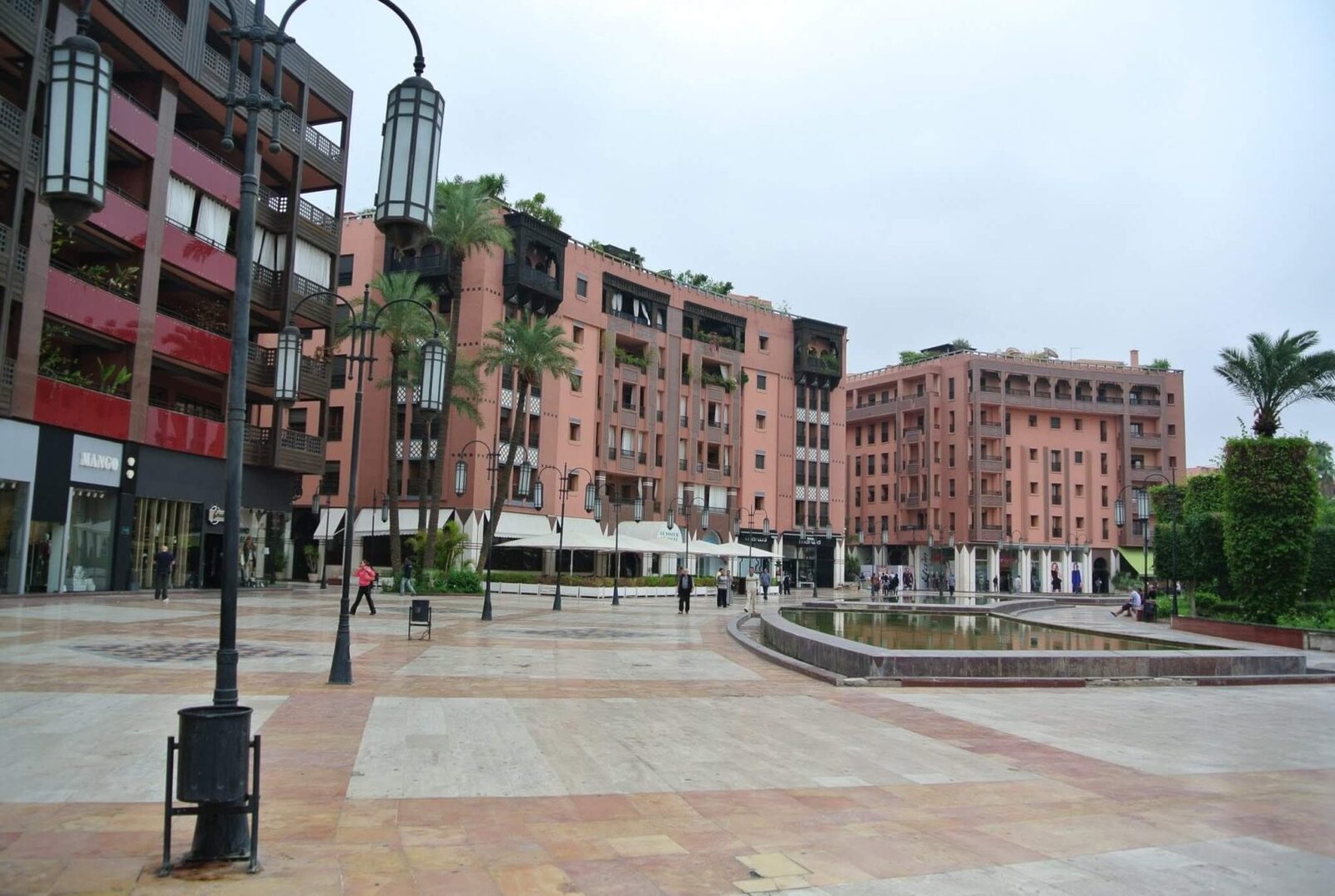
Best Shopping Areas Beyond the Souks
Three areas beyond the Medina souk system offer different versions of Moroccan craft and design — useful for visitors who want fixed prices, a calmer environment, or access to contemporary Moroccan design that the souks don’t carry.
Gueliz Boutiques
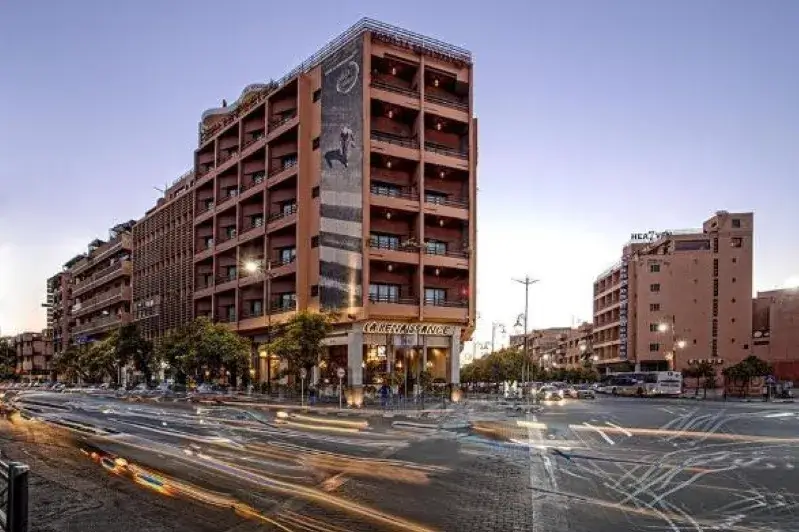
The French-built new town west of the Medina, developed in the early 20th century and now Marrakech’s most sophisticated shopping neighborhood. The key streets are Avenue Mohammed V and the Rue de la Liberté — lined with boutiques selling contemporary Moroccan fashion, jewelry, homeware, and design. Fixed prices, good English, no bargaining expected. Several galleries and concept stores here represent designers who combine traditional Moroccan craftsmanship with contemporary aesthetics: work you won’t find in the souks and can’t buy anywhere else. Worth an afternoon, particularly if the Medina’s energy has become too much.
Ensemble Artisanal
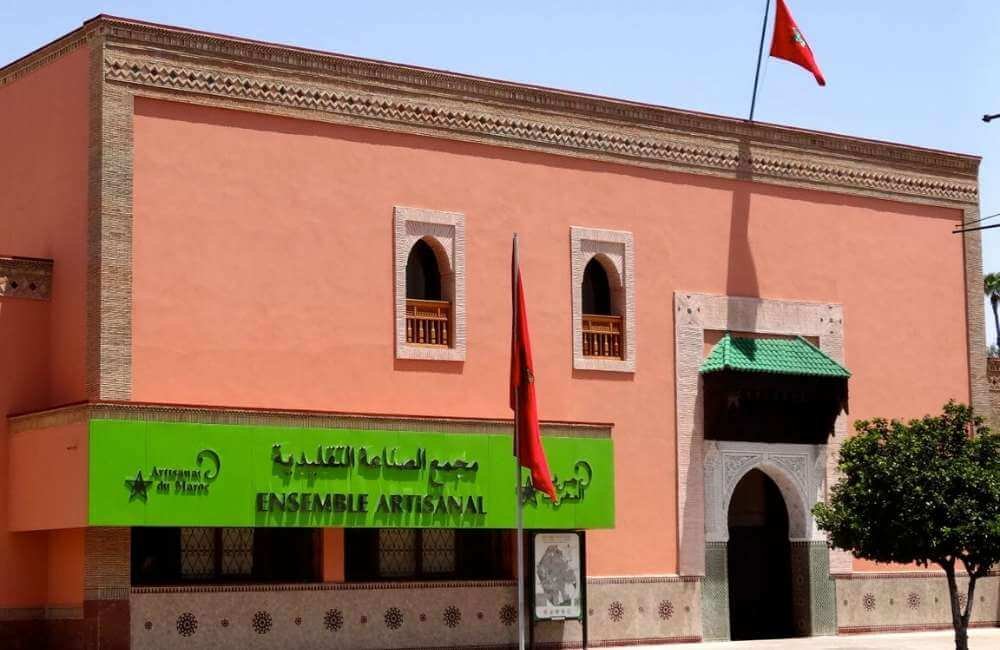
A government-run artisan complex a short walk from Jemaa el-Fna, designed to support traditional craft production and provide visitors with a fixed-price alternative to the souks. The range covers rugs, ceramics, leather goods, woodwork, and textiles — all made by artisans who work on-site and whose work is quality-controlled and priced fairly. The prices are higher than you’d pay after bargaining in the souks, but the quality is guaranteed and the experience is pressure-free. Useful as a calibration tool even if you don’t buy: seeing what pieces are worth at a transparent price point makes souk bargaining more informed.
Sidi Ghanem Design District
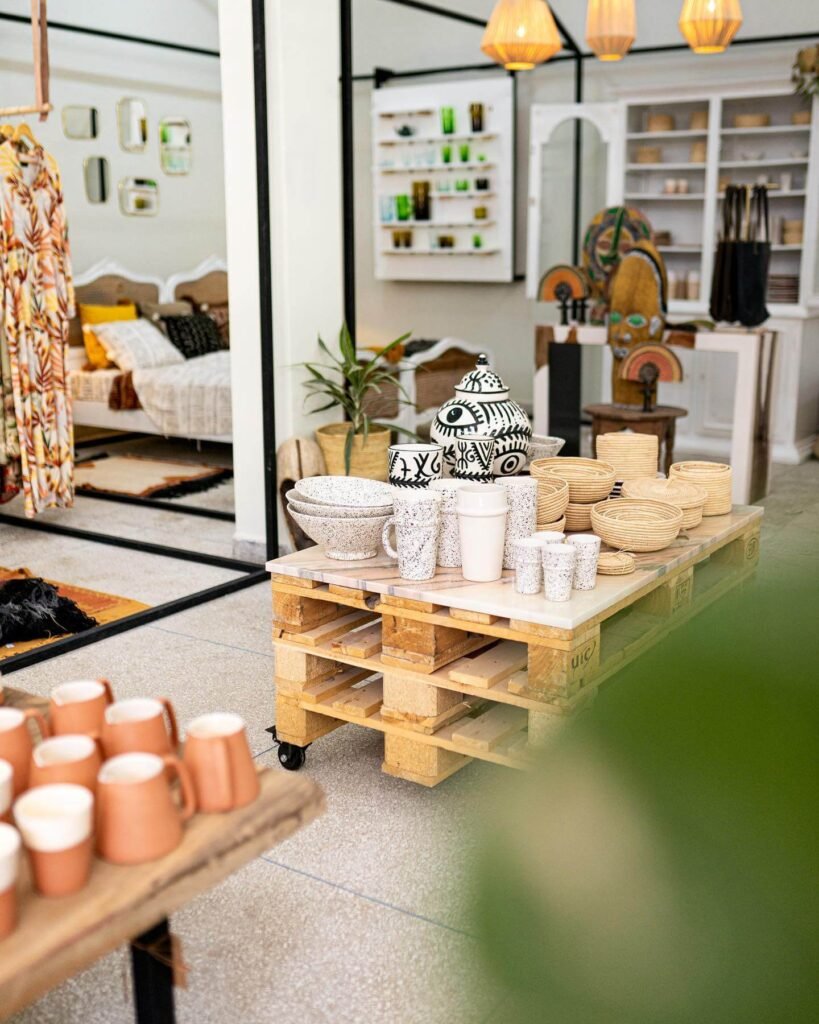
A light industrial district on the western outskirts of Marrakech that has become the center of Moroccan contemporary design. Studios and showrooms here produce high-end furniture, lighting, textiles, and ceramics for international clients — some of it exported globally, some available to buy in-situ. The work ranges from direct reinterpretations of traditional Moroccan motifs to more experimental contemporary design. Worth the taxi if you’re interested in Moroccan design beyond the souvenir category; less useful if you’re looking for traditional crafts.
Bargaining in Marrakech: How to Negotiate in the Souks
Bargaining in the souks is expected and is a genuine social interaction, not a confrontation. Most merchants open considerably above the price they’ll accept; negotiation is how both sides arrive at a number that feels fair. Approaching it as a performance to win rather than an exchange to reach agreement tends to produce bad results on both sides.
Is Bargaining Expected?
In the traditional souks, yes — the first price is almost always negotiable. In fixed-price environments (Ensemble Artisanal, Gueliz boutiques, shops with clearly displayed price tags) it isn’t. The distinction is usually obvious; when in doubt, simply asking “is this the fixed price?” is perfectly acceptable.
How Much Should You Negotiate?
Starting at 40–50% of the asking price is a reasonable approach for most items. From there, both sides move gradually. The final price is rarely below 60–70% of the opening ask unless the opening was particularly inflated. The negotiation typically ends when both parties feel the exchange was fair — when it ends with one party feeling cheated, everyone loses. A merchant who accepts a price has made a decision they were willing to make.
Practical Tips for Successful Bargaining
- Stay friendly throughout. The relationship is as important as the transaction. A merchant who likes you negotiates differently from one who doesn’t.
- Don’t ask the price unless you’re genuinely interested. Asking the price and then walking away without engagement is considered discourteous.
- Walking away is a legitimate tactic — and it works — but only if you’re actually prepared to leave without the item. Don’t threaten to leave and then come back immediately.
- Agree only when the price feels right to you. Once you’ve agreed, the transaction is done; trying to renegotiate afterward is not acceptable.
- The goal is a fair price, not the lowest possible price. The craftsmanship in many of these objects is real and the artisans working in the Medina are not wealthy. Negotiate firmly but with that in mind.
Shopping Tips for First-Time Visitors
Carry cash in Moroccan dirhams. Most stalls are cash only. ATMs are available near Jemaa el-Fna and in Gueliz; the ones inside the Medina walls are fewer and not always reliable.
Visit the Ensemble Artisanal before the souks. Seeing quality Moroccan crafts at transparent fixed prices calibrates your sense of value before you enter a negotiation environment. It takes an hour and saves money.
Walk deeper than your instinct tells you to. The best workshops and the most interesting shops are not on the main souk arteries — they’re in the alleys branching off them. The further from Jemaa el-Fna you go, the less tourist-oriented the merchandise becomes.
Compare before you buy. The same category of product — babouche slippers, lanterns, ceramics — is available from multiple vendors. Looking at several before committing reveals the quality range and gives you real reference points for negotiation.
Check construction carefully. Even stitching on leather goods, even glaze on ceramics, consistent pile depth on rugs. The best handmade objects have slight variation that is the signature of handwork; poor-quality pieces have careless construction that shows under examination.
Ask about shipping for large items. Reputable carpet dealers and furniture workshops in Sidi Ghanem are accustomed to international shipping. Get a quote and check reviews before committing.
Don’t feel obligated by the tea. Being offered mint tea in a shop is genuine Moroccan hospitality, not a commercial trap. Accepting it doesn’t obligate you to buy anything; decline politely if you prefer not to spend time in a sales conversation.
Best Time for Shopping in Marrakech
The souks operate roughly from 9am to 8pm with a midday slowdown on Fridays for prayers. The experience changes significantly by time of day.
Morning (9–11am) is the best time for serious shopping: stalls are freshly stocked, the alleys are less crowded, merchants are more relaxed and less fatigued by a day of negotiation, and the light in the covered sections of the souk is good. This is when you’ll have the most unhurried conversations and the best chance of genuine engagement.
Midday to mid-afternoon is the most crowded period and the least comfortable in summer. The enclosed alleys trap heat, the energy is highest, and negotiation can feel more pressured. Good for people-watching and getting a sense of the full scale of the souks; less good for careful shopping decisions.
Evening changes the character of the souks entirely — lanterns glow in the alleys, the light softens, and the atmosphere becomes genuinely atmospheric. Some workshops close early but the retail shops stay open late. A good time to browse rather than buy deliberately.
Seasonally, the souks are most comfortable in spring (March–May) and autumn (September–November). Summer afternoons in the enclosed alleys can reach temperatures that make extended shopping genuinely unpleasant; plan accordingly.
Explore More Things to Do in Marrakech
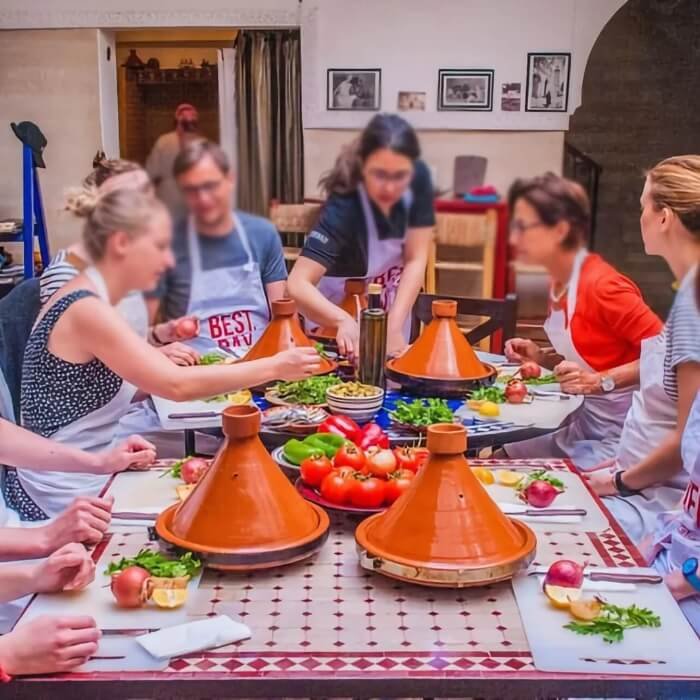
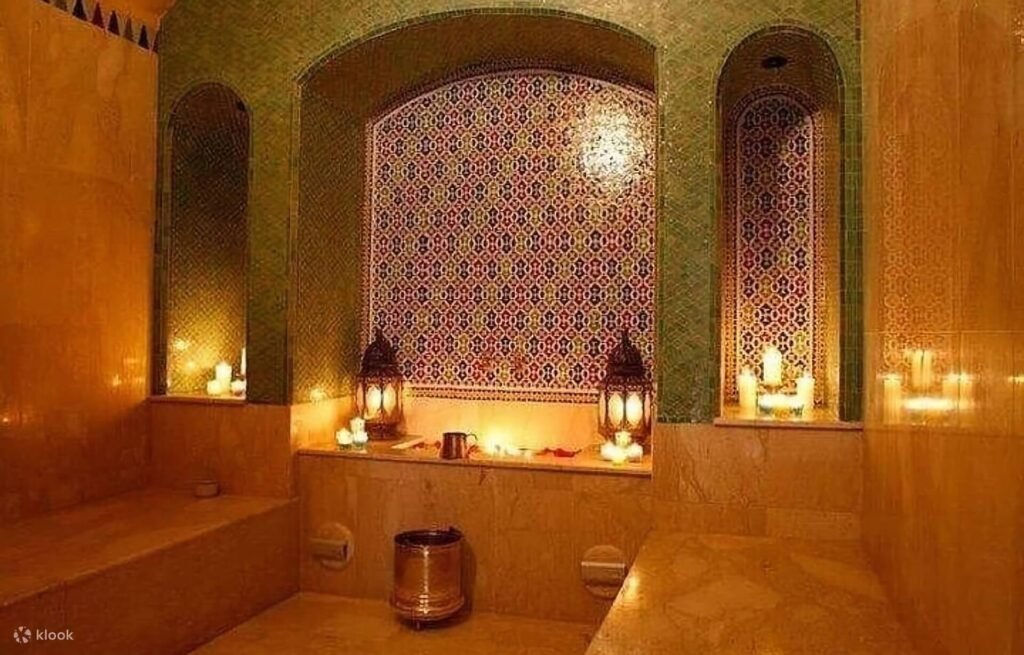
The souks are one of Marrakech’s great experiences, not a prelude to the real ones. The city’s other layers — the hammams, the cooking classes, the monuments, the quieter residential quarters — reward the same quality of attention that good souk navigation requires.

Discover the City's Iconic Attractions
Bahia Palace, the Saadian Tombs, Majorelle Garden, Ben Youssef Madrasa. The monument circuit, done well.
Experience Authentic Moroccan Activities
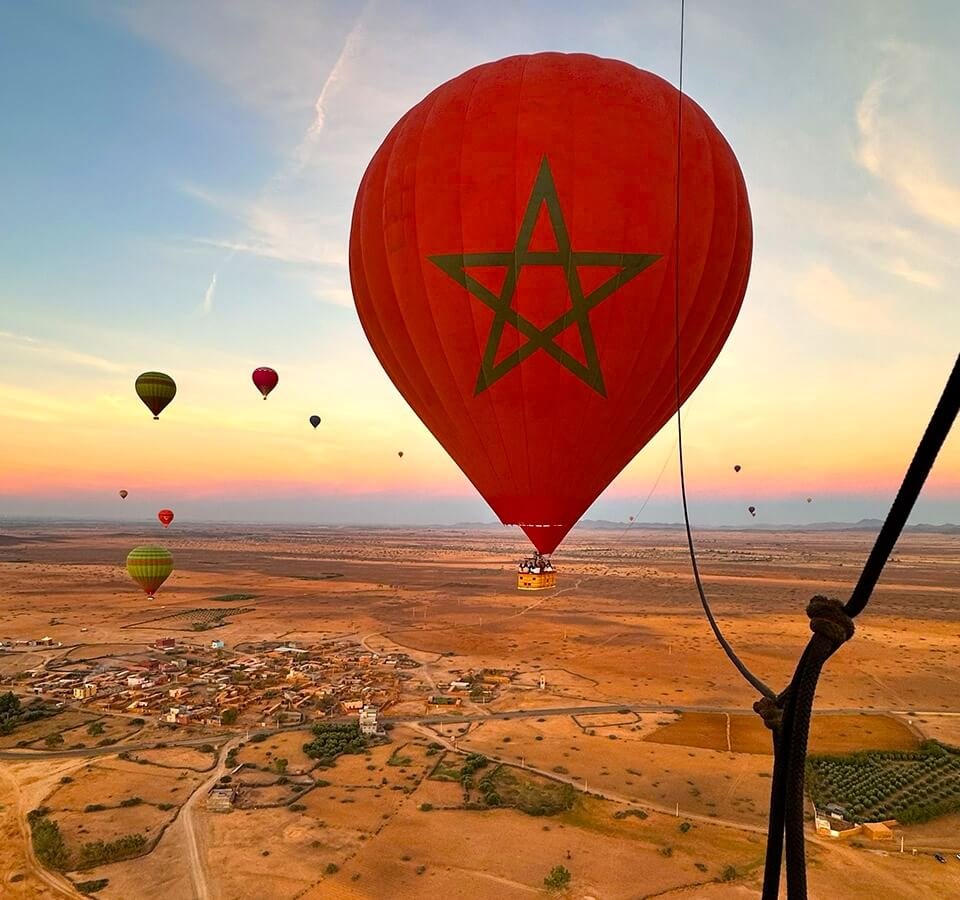
Hot air balloon, desert quad biking, camel rides. The experiences that take you beyond the Medina.
 Marrakist Concierge