Best Hammams & Spas in Marrakech

The hammam is not a spa in the Western sense. It’s a civic institution — the neighborhood bathhouse where Marrakech residents have gone weekly for generations, to wash, to talk, and to perform a ritual of purification that is genuinely woven into Moroccan daily life. Understanding this changes how you approach it.

The ritual itself is specific: warm rooms that open the pores, black olive-oil soap (savon noir) applied and left to work, then vigorous exfoliation with a kessa glove that removes more dead skin than seems possible. The result is a physical difference you feel immediately — softer, cleaner, more alive — and a relaxation that’s difficult to achieve any other way.

This guide covers the full range: three traditional neighborhood hammams in the Medina, four luxury spa options, and everything you need to know about the process, the pricing, and what to bring.

Traditional hammam entrance from €1 — full scrub well under €10
Luxury hammam €75 – €190+ at La Mamounia or Royal Mansour
Ritual duration 45 min to 1.5 hours — don't rush what comes after
Best season October – March — the steam room earns its place in cooler months
Marrakech hammam

Marrakech hammam — black olive soap, a kessa glove, centuries of ritual: the most honest hour you'll spend in the city

What Is a Moroccan Hammam?

A Moroccan hammam is a centuries-old cleansing ritual that predates Islam and has been refined through it. Influenced by Roman and Byzantine bathhouse traditions and carried through the Islamic world, the hammam arrived in Morocco with the first Arab dynasties and became a permanent fixture of urban life — present in every medina, every neighborhood, every generation.

In Marrakech, locals still use the neighborhood hammam weekly. It is not a tourist experience dressed up as a local one; it is a local experience that tourists are welcome to join.

The Traditional Hammam Ritual

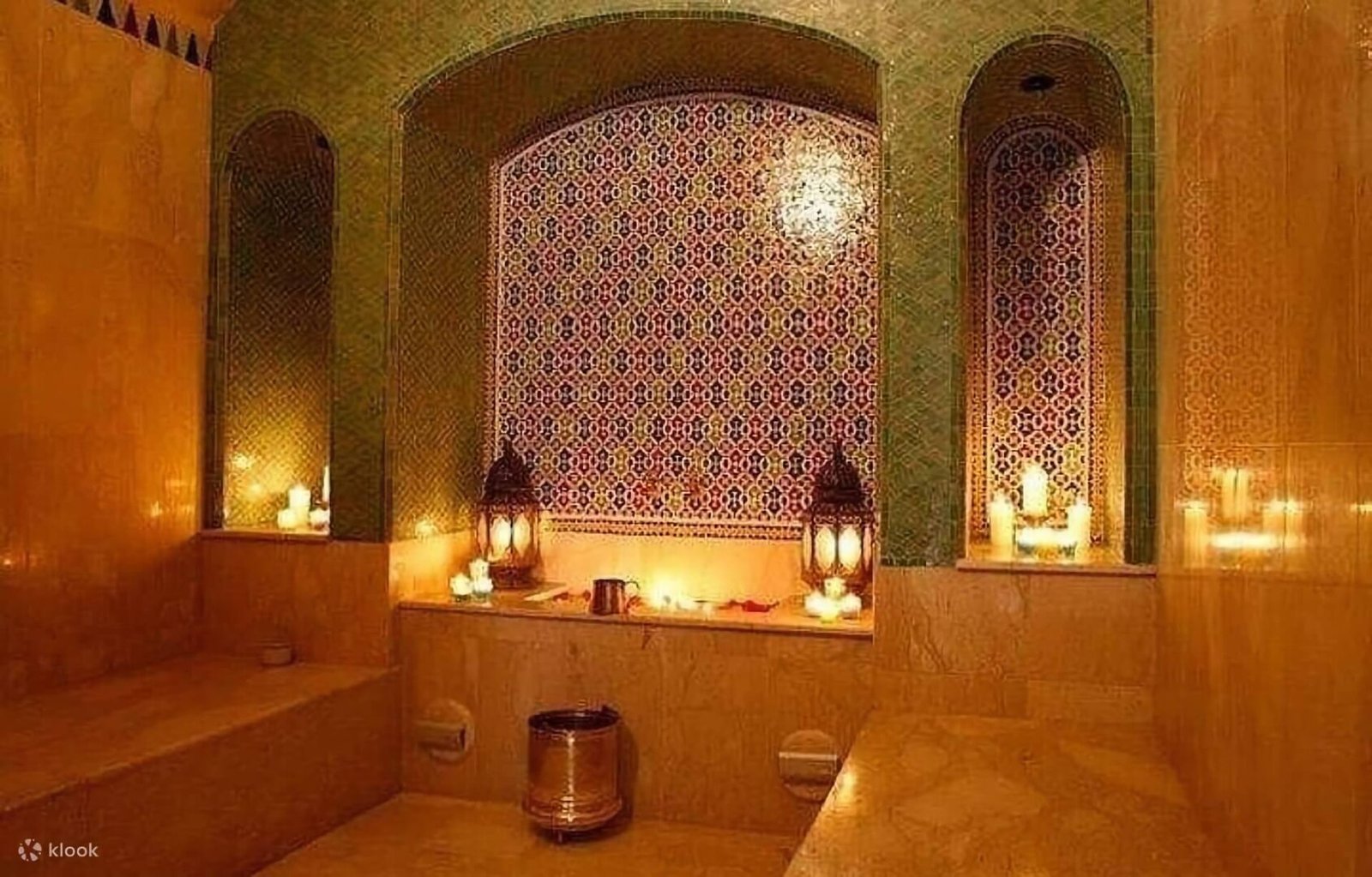
The sequence is consistent regardless of the type of hammam. It begins in a warm steam room — usually graduated from warm to hot — where the heat opens the pores and softens the skin over fifteen to twenty minutes. Savon noir, the dark olive-oil soap that is the distinctive ingredient of the Moroccan hammam, is then applied across the body and left to work. The exfoliation follows with the kessa glove — a vigorous, systematic scrub that removes dead skin in visible rolls. Warm water rinses everything away, and an argan oil massage closes the ritual in the better establishments. The whole sequence takes forty-five minutes to an hour and a half depending on the setting.

Traditional Hammams vs Luxury Spa Hammams

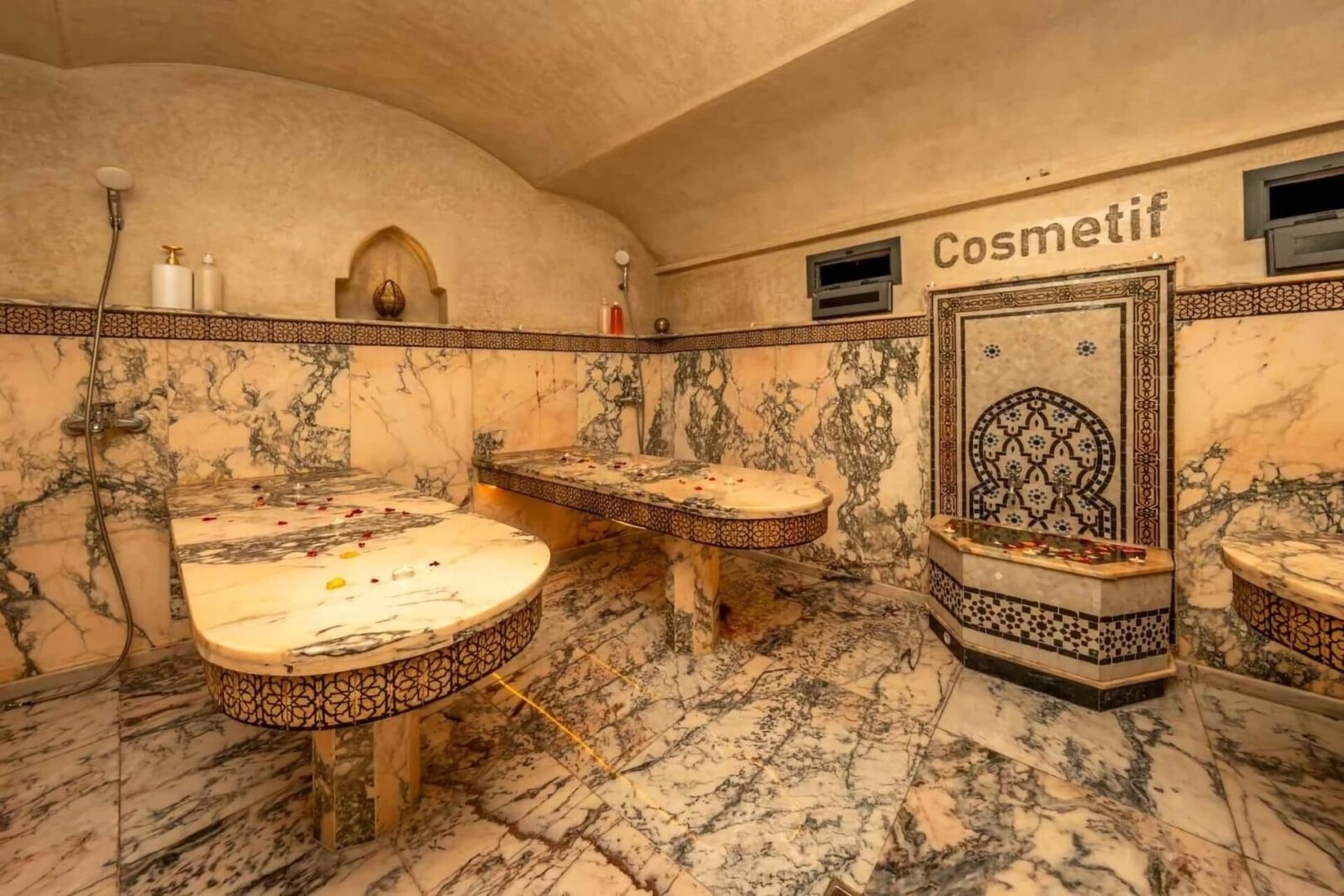
The difference is setting and service, not ritual. A traditional neighborhood hammam costs a few dirhams, operates in a simple tiled space shared with locals, and requires you to bring your own soap, towel, and kessa. The experience is authentically communal — men and women in separate sections, regulars who’ve been coming for decades, attendants who perform the scrub as a practiced professional service.

A luxury spa hammam at La Mamounia or Les Bains de Marrakech uses the same techniques in private rooms with professional therapists, premium products, and a level of calm that’s difficult to find in the Medina. The ritual is the same; the surroundings are not. For a first visit, the spa version removes logistical uncertainty and guides you through each step. For a subsequent visit, the neighborhood hammam is the more honest and often more memorable experience.

Moroccan Hammam

Best Traditional Hammams in Marrakech

These three hammams have served their neighborhoods for generations. They are not set up for tourists — there are no English-speaking attendants or printed price lists — but they are open to visitors who approach them with basic preparation and genuine curiosity. The experience of being in a space that functions exactly as it did a hundred years ago, surrounded by people for whom this is simply Tuesday, is one of the more grounding things Marrakech offers.

Hammam Dar El Bacha

The most visitor-accessible of Marrakech’s traditional neighborhood hammams, partly because of its proximity to the Dar El Bacha palace complex and the Musée de Marrakech. It operates separate sessions for men and women and has attendants who perform the kessa scrub as a paid service — which means you can get the full ritual without having to bring your own glove or navigate the process entirely alone. The architecture is authentic: vaulted ceilings, terracotta tiling, heated stone slabs, the low light that traditional hammams use deliberately to create calm.

Highlights:

  • Most accessible traditional hammam for first-time visitors
  • Attendants available for the kessa scrub service
  • Authentic architecture and atmosphere
  • Very affordable — entrance plus scrub well under €5
Hammam Dar El Bacha

Hammam Mouassine

In the Mouassine quarter of the northern Medina — one of the oldest and most architecturally intact neighborhoods in the city — this hammam is part of a historic complex that includes the Mouassine mosque, a fountain, and a Quranic school, all built together in the 16th century under the Saadian dynasty. The hammam has functioned continuously since. The architecture reflects that history: thick walls, narrow light shafts, a sequence of rooms that manage temperature through design rather than technology.

Highlights:

  • 16th-century Saadian-era hammam in continuous operation
  • Located in the most historic quarter of the northern Medina
  • Genuinely unchanged physical experience
  • One of the more beautiful traditional hammam interiors in the city
Hammam Mouassine

Hammam Bab Doukkala

Near the Bab Doukkala gate in the western Medina, this hammam serves a residential quarter rather than a tourist area, which makes it one of the least visitor-frequented traditional hammams in the city. The clientele is local to the point where a foreign visitor arriving with basic preparation — swimwear, towel, a few dirhams — will draw mild curiosity rather than any accommodation. That’s the experience. Facilities are functional rather than atmospheric; the value is in the genuine immersion.

Highlights:

  • Least tourist-frequented traditional hammam in the city
  • Genuinely local residential clientele
  • Most immersive cultural experience of the three
  • Modest facilities — bring everything you need
Hammam Bab Doukkala
Best Traditional Hammams in Marrakech

Best Luxury Hammams & Spas in Marrakech

These four establishments perform the same ritual as the neighborhood hammams but in settings that range from beautifully restored riad interiors to some of the most architecturally extraordinary spa spaces in the world. The techniques are traditional; the experience of getting there, undressing, being guided through each step, and emerging into a candlelit relaxation room is considerably more refined.

La Mamounia Spa

The most famous spa address in Marrakech, set within Morocco’s most celebrated hotel. The spa complex at La Mamounia is vast — twenty-seven treatment rooms, a hammam suite, a pool, a beauty salon — and the hammam rituals here are performed with a level of attentiveness that justifies the price. The design draws on traditional Moroccan craftsmanship — carved plaster, zellige tilework, cedar screens — executed at a scale and quality that the palaces themselves can only approximate. Worth the splurge at least once, and best booked well in advance.

Highlights:

  • Most iconic luxury spa in Marrakech
  • Private hammam suites with full ritual sequence
  • Design that references the Moroccan palace tradition authentically
  • World-class massage and skincare treatments
La Mamounia Spa

Royal Mansour Spa

The Royal Mansour is the most extraordinary hotel in Marrakech — a private medina of individual riads, commissioned by King Mohammed VI and staffed at a ratio that makes most luxury hotels look understaffed. The spa is housed in a purpose-built building whose centerpiece is a white latticed atrium flooding five stories with diffused natural light. The hammam suites are private, the therapists exceptional, and the treatments combine traditional Moroccan techniques with contemporary wellness approaches in a way that doesn’t feel like a compromise. The most expensive option on this list and the most exceptional.

Highlights:

  • The most architecturally extraordinary spa in Marrakech
  • Fully private hammam suites
  • Exceptional service — the Royal Mansour standard throughout
  • Tailored treatments combining traditional and contemporary techniques
Royal Mansour Spa

Les Bains de Marrakech

The most approachable of the luxury options — not because the experience is lesser, but because the scale is more human. Tucked into the southern Medina, Les Bains de Marrakech operates in a series of connected riad spaces with candlelit corridors, hand-painted ceilings, and treatment rooms that feel genuinely intimate rather than hotel-scaled. The hammam ritual here is classic and well-executed; the candlelit relaxation room afterward is one of the more pleasant places to spend an hour in the city. A good first luxury hammam for visitors who want something beyond the neighborhood option without the scale and price of La Mamounia.

Highlights:

  • Most intimate of the luxury spa options
  • Candlelit riad atmosphere throughout
  • Classic hammam ritual plus argan oil massage packages
  • Good evening option — atmosphere improves after dark
Les Bains de Marrakech

Heritage Spa

A boutique spa in the Medina that positions itself between the tourist-friendly riad spas and the full luxury options. Heritage Spa’s distinguishing feature is the emphasis on Moroccan organic skincare products — argan, ghassoul clay, rose water, prickly pear seed oil — integrated into the treatments rather than used as finishing touches. The hammam ritual is thorough and the staff attentive. A good option for travelers who want professional-quality treatment without the price point of La Mamounia or the Royal Mansour.

Highlights:

  • Emphasis on certified organic Moroccan skincare products
  • Boutique scale — genuinely personal service
  • Personalized hammam and massage combinations
  • Good mid-range luxury option in the Medina
Heritage Spa
Powered by GetYourGuide
Best Luxury Hammams & Spas in Marrakech

What to Expect During Your First Hammam

The hammam is genuinely different from anything in the Western spa tradition, and the difference catches people unprepared in ways that diminish the experience. The main things to know:

The Hammam Process

The sequence is warm steam room — savon noir application — kessa exfoliation — rinse — optional argan oil massage. The steam phase lasts fifteen to twenty minutes and is not optional; it’s what makes the exfoliation effective. The scrub itself is vigorous — the attendant uses systematic pressure across the whole body and the amount of dead skin that comes away in visible grey rolls is both startling and satisfying. The rinse clears everything; the massage, if you’ve booked it, is the conclusion.

The whole ritual takes forty-five minutes to ninety minutes. Don’t schedule anything immediately afterward — the combination of heat, exfoliation, and relaxation leaves most people wanting to sit still for a while.

What to Bring

For a traditional hammam: swimwear or underwear, a towel, flip-flops, savon noir (available at any souk pharmacy for a few dirhams), and a kessa glove if you want to do the scrub yourself rather than pay the attendant. Cash in small denominations.

For a luxury spa: nothing — everything is provided including robes, towels, products, and guidance through each step.

Hammam Etiquette

Traditional hammams have separate sessions or sections for men and women. The atmosphere is communal and matter-of-fact — people are there to get clean, not to perform a ritual for visitors. Follow the rhythm of the room, don’t rush, and tip the attendant who performs your scrub. Silence is the norm in the steam room; conversation happens in the changing area.

In luxury spas, the experience is guided from arrival to departure — follow the therapist’s instructions and don’t hesitate to say if the pressure of the scrub is too much or too little.

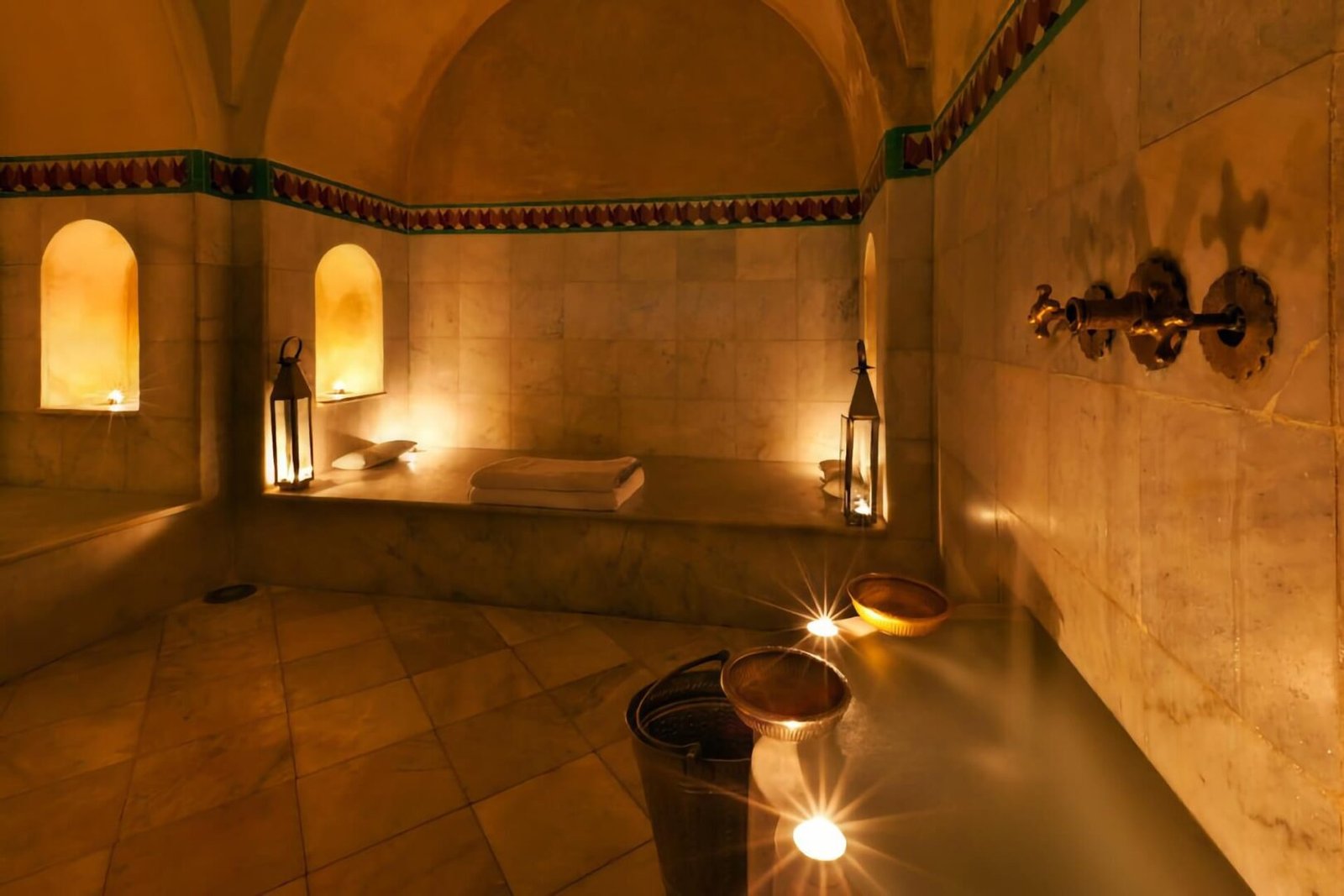
Spa and hammam area at Riad Melhoun with traditional Moroccan wellness design

Best Time to Visit a Hammam in Marrakech

The hammam works at any time of day, but the timing changes what it gives you.

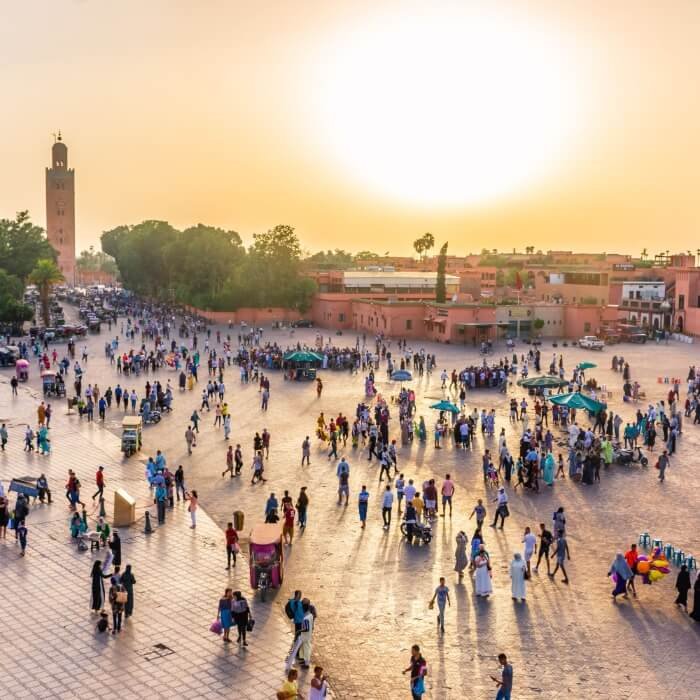
Late afternoon or evening is the most popular choice and the most logical: after a day of walking the Medina, the heat of the steam room and the physical shock of the scrub function as a reset. The candlelit luxury spas are at their best after 5pm. Traditional hammams are busiest in the early evening when local residents finish work — which is either appealing (maximum authenticity) or crowded, depending on your tolerance.

Morning sessions at luxury spas are quieter and can set the day up well — the physical clarity after a hammam translates into a different quality of energy for sightseeing. Traditional hammams often have dedicated morning sessions for women; check locally.

Seasonally, the hammam is most welcome in the cooler months — October through March — when the steam room’s warmth is a genuine comfort rather than an addition to ambient heat. In July and August, the steam can feel oppressive to anyone unaccustomed to Marrakech temperatures; schedule it early in the morning if visiting in summer.

What to Expect During Your First Hammam

Hammam Prices in Marrakech

Traditional Public Hammams

The most affordable option — these prices reflect what locals actually pay.

  • Entrance fee: 10–30 MAD (approx. €1–3)
  • Kessa scrub by an attendant: 20–50 MAD (approx. €2–5)
  • Bring your own savon noir, towel, and flip-flops

Total cost with attendant scrub: well under €10. The experience is worth significantly more.

Mid-Range Riad Spas

Riad-based spas and smaller established hammams catering to visitors — the right choice for a first hammam if the neighborhood option feels like too much of a step.

  • Basic hammam ritual: 200–400 MAD (approx. €18–38)
  • Hammam plus massage: 400–700 MAD (approx. €38–65)
  • Everything provided; no need to bring supplies

Luxury Spa Hammams (keep)

The La Mamounia, Royal Mansour, Les Bains de Marrakech tier — a full spa experience at international luxury prices.

  • Luxury hammam ritual: 800–1,200 MAD (approx. €75–115)
  • Hammam with full treatments: 1,200–2,000+ MAD (approx. €115–190+)
  • Private suites, premium products, exceptional service throughout
Hammam Prices in Marrakech

Tips for the Best Hammam Experience in Marrakech

Choose the right type for your first visit. If you’ve never been to a hammam, a mid-range riad spa or Les Bains de Marrakech removes the logistical uncertainty and guides you through each step. The neighborhood hammam is more authentic and considerably more memorable — but save it for a subsequent visit when you know what’s happening.

Allow time to do nothing afterward. The hammam’s effects accumulate — the heat, the exfoliation, the massage if you’ve booked it. Most people emerge feeling more relaxed than they expect and less ready to immediately return to the Medina than they planned. Build in thirty to sixty minutes of stillness.

Drink water beforehand. The steam room causes significant perspiration. Arriving well-hydrated makes the experience more comfortable and the effects more pronounced. Most luxury spas offer water or mint tea on arrival; traditional hammams don’t.

The scrub will feel intense. This is especially true if your skin is not used to it. The kessa glove exfoliates aggressively by design — the visible result (rolls of dead skin) is alarming the first time and satisfying every time after. Tell the attendant if the pressure is too much; they’ll adjust.

Book luxury spas a day or two ahead. La Mamounia and Royal Mansour book out quickly, especially in spring and autumn. Les Bains de Marrakech and Heritage Spa are easier to book on shorter notice. Traditional hammams need no booking — just arrive.

Tip the attendant. In traditional hammams, the attendant who performs your scrub works for tips rather than a salary. Ten to twenty dirhams is appropriate; more if the service was good.

💬
Marrakist Marrakist Concierge