
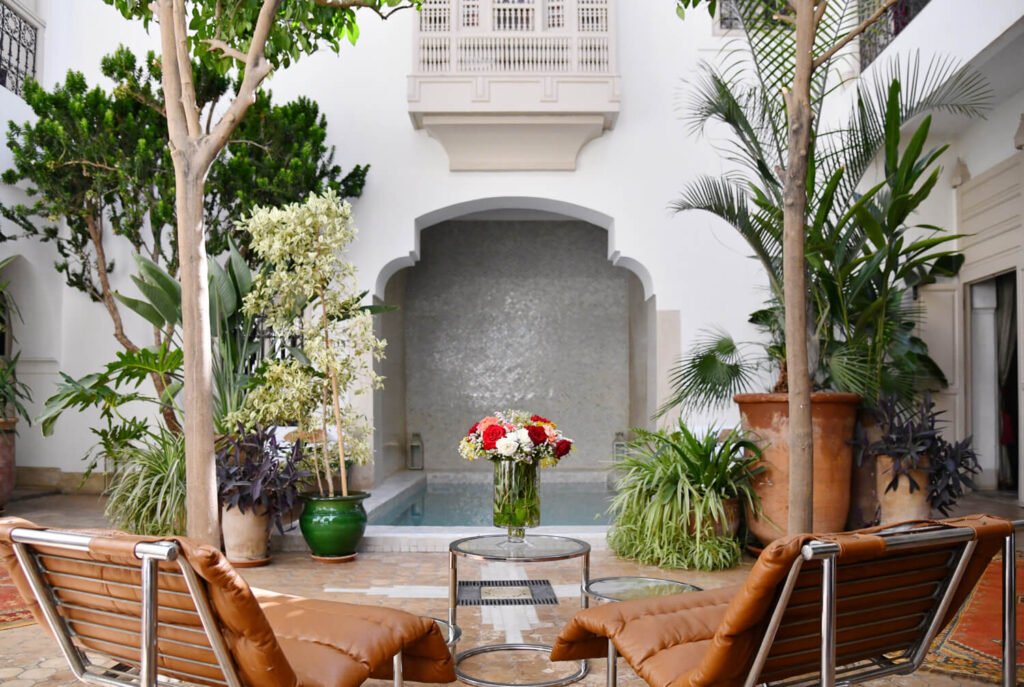
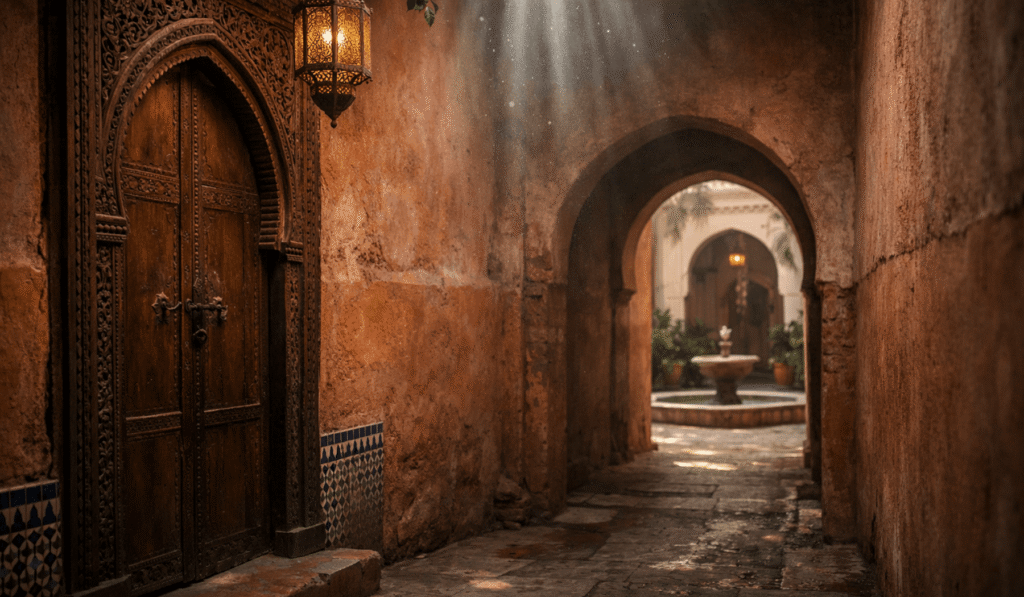
Most flights into Marrakech Menara Airport arrive in the morning or early afternoon. The airport is 6km from the Medina — 15–20 minutes by taxi (70–100 dirhams fixed rate) or by pre-arranged transfer from your riad. Checking into a Medina riad for the first time has a specific practical requirement: the GPS address and the actual entrance are frequently different points. Confirm the approach with your riad before arriving, or arrange pickup at the nearest accessible point. Once inside the riad, the contrast between the street noise outside and the courtyard calm within is immediate and worth a few minutes of undistracted attention.
5 Days in Marrakech + Desert: The Perfect Morocco Itinerary
Five days is the format that makes the Marrakech-to-desert combination work properly. Three days in the city is enough to cover the Medina’s key monuments, the souk circuit, Majorelle Garden, and a hammam without rushing any of them. The fourth day is the pivot — the shift from the city’s density to the desert’s openness. The fifth day is the return: a slow re-entry into Marrakech, a final meal, a last walk.
The two desert options operate on fundamentally different scales. The Agafay plateau (40 minutes from Marrakech) is a same-day or overnight experience that fits cleanly into a five-day itinerary with no disruption to the Marrakech days. The Sahara at Merzouga (9–10 hours from Marrakech) is a two-day overland journey — it fits into this itinerary but requires Days 4 and 5 to be the desert circuit, leaving three days for the city. Both are correctly described here; the choice is yours to make before departure.
- Explore Marrakech’s Medina, monuments, gardens, and souks properly across three days
- Experience a desert overnight — Agafay (close, rocky plateau) or Sahara (remote, sand dunes)
- Balanced pacing across all five days — including a rest day before the desert
- The most requested Morocco combination for first-time visitors
- Sahara organised tour
- €80–200 per person — transport, guide, camel & dinner included
- Desert temperature drop
- 10–20°C between afternoon and night — pack layers
- Sahara departure
- 6am // Agafay departure: mid-morning — choose accordingly
- Tizi n'Tichka mountain pass
- 2,260m — one of North Africa's great mountain roads
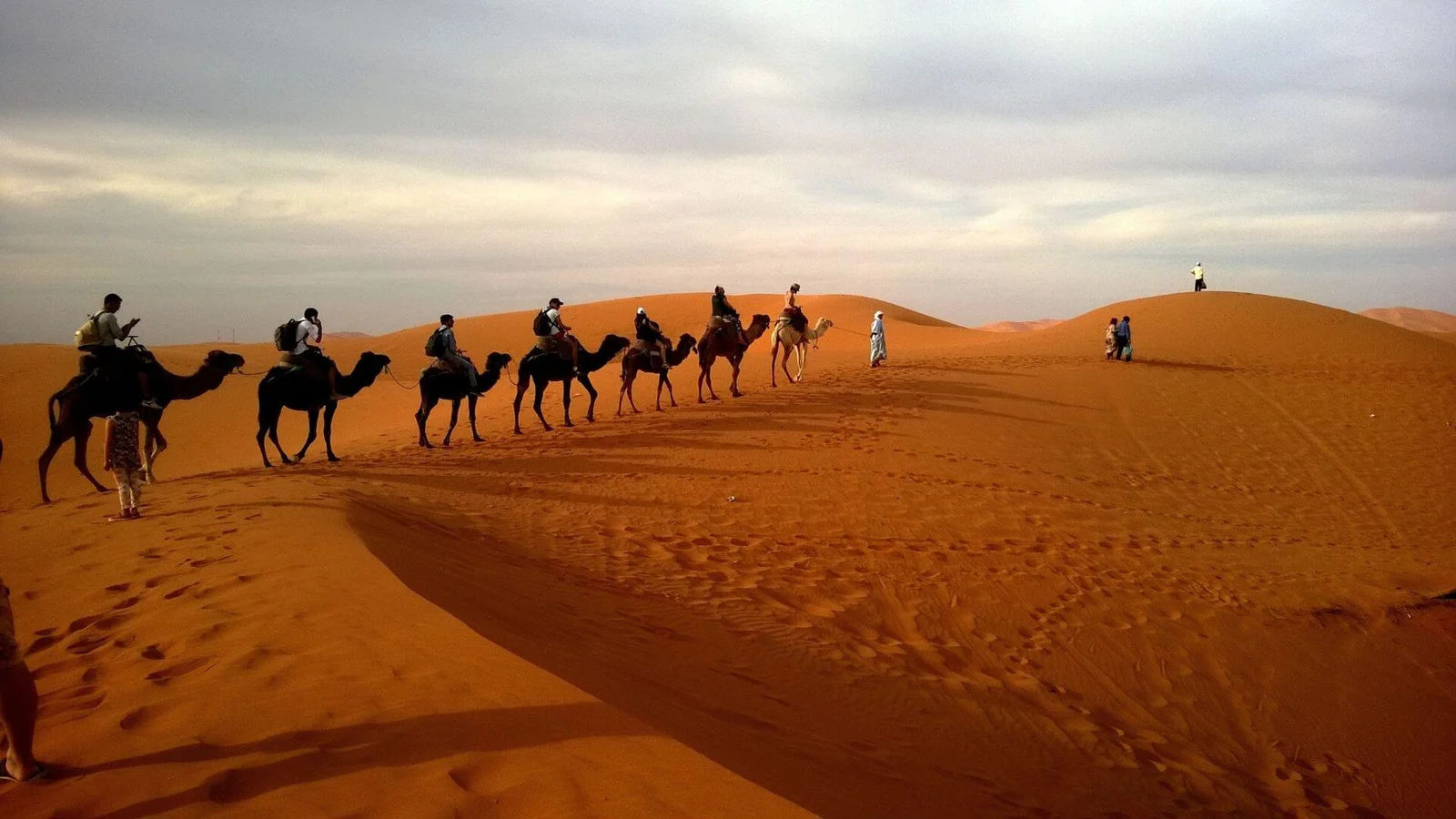
5 days: Marrakech + Desert — three days in the city, one night under desert stars, one day to return: the most requested Morocco combination, and for good reason
Day 1: Arrival & First Immersion in the Medina
Day 1 is the arrival day, and the itinerary is intentionally light — not because there isn’t time, but because first encounters with Marrakech work better when approached without an agenda. The Medina at first contact is genuinely disorienting; the correct response is orientation rather than sightseeing.
Arrival & Check-in
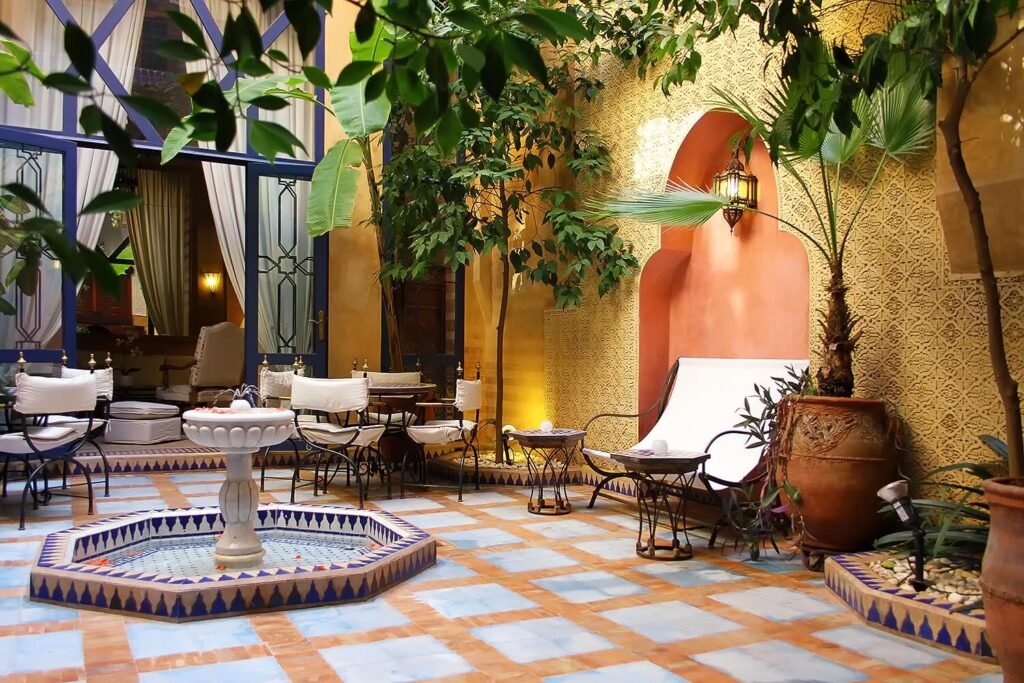
Afternoon: First Walk Through the Medina
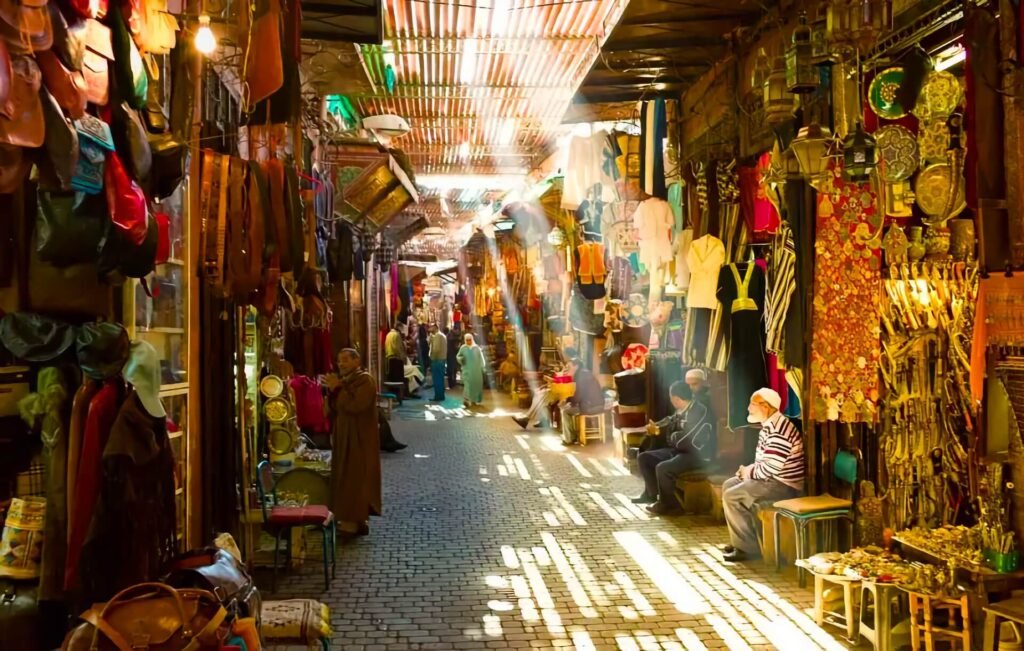
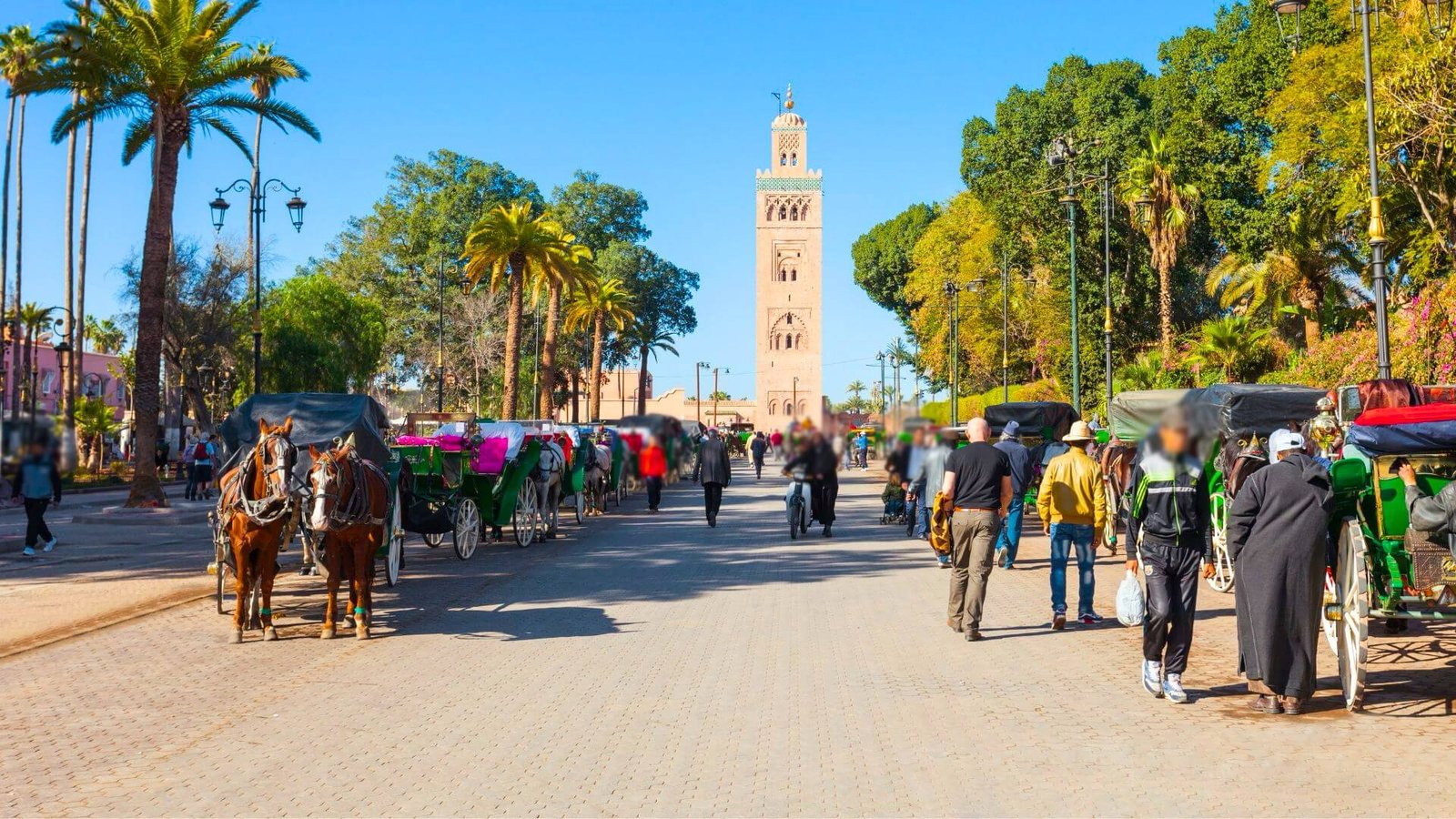
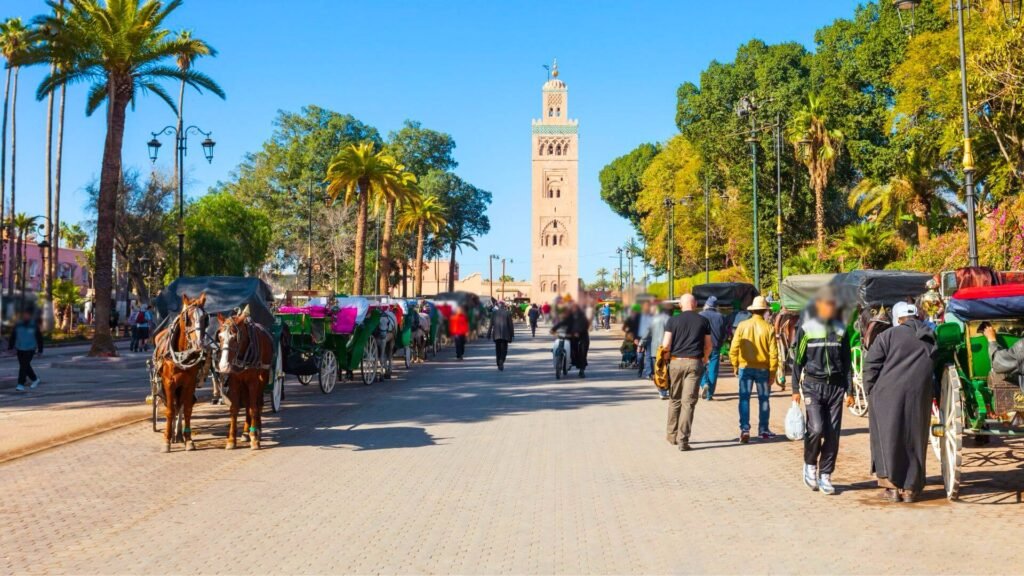
Leave the riad in the early afternoon without a fixed destination. The goal is spatial orientation rather than sightseeing — understanding roughly where the Jemaa el-Fna is, which direction the souks run, what the Koutoubia minaret looks like against the sky. Walk toward the square, circle back, take note of a café or alley for tomorrow. The Medina’s maze quality is less threatening once you’ve navigated it once without consequence.
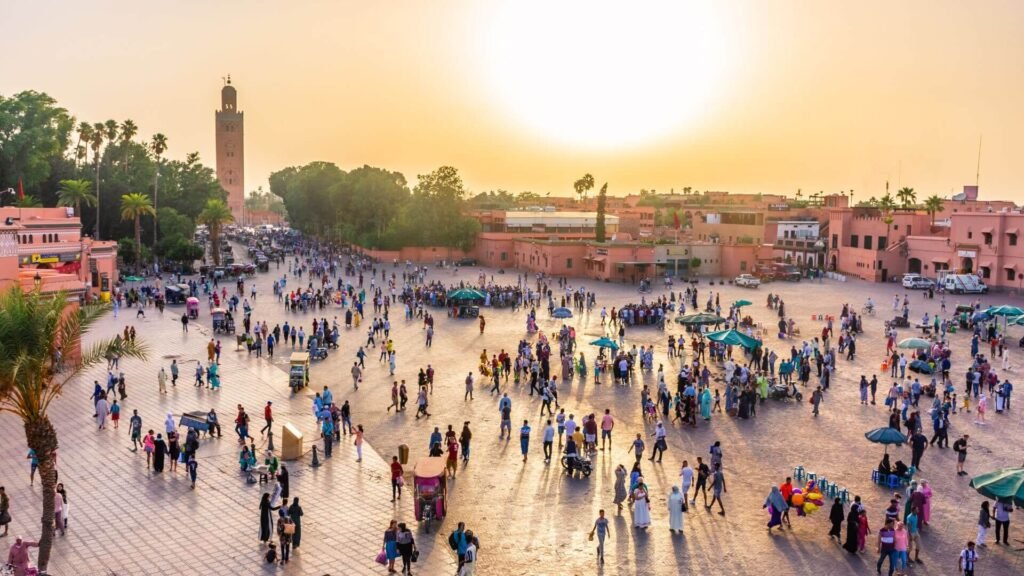
Sunset at Jemaa el-Fna
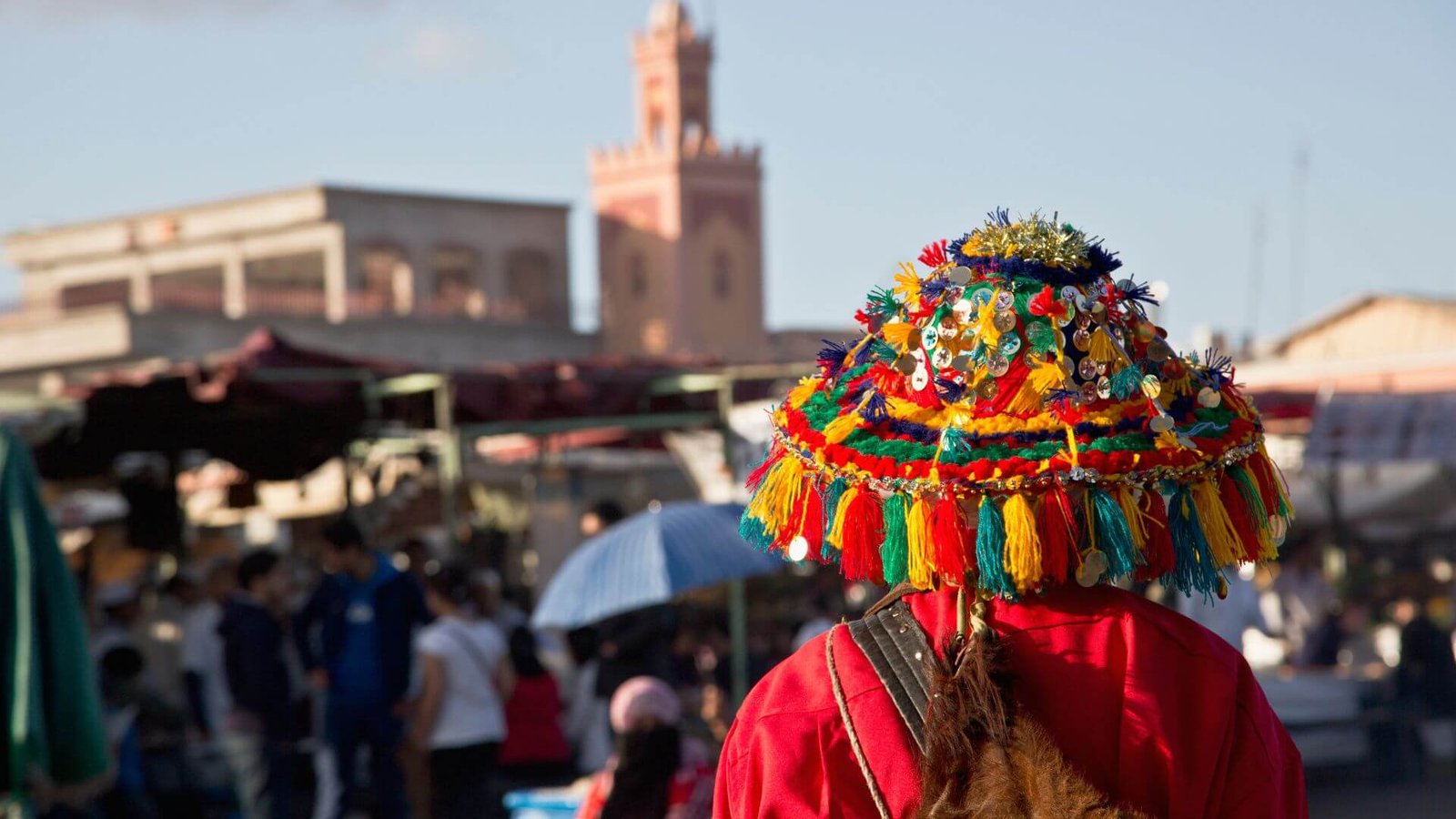
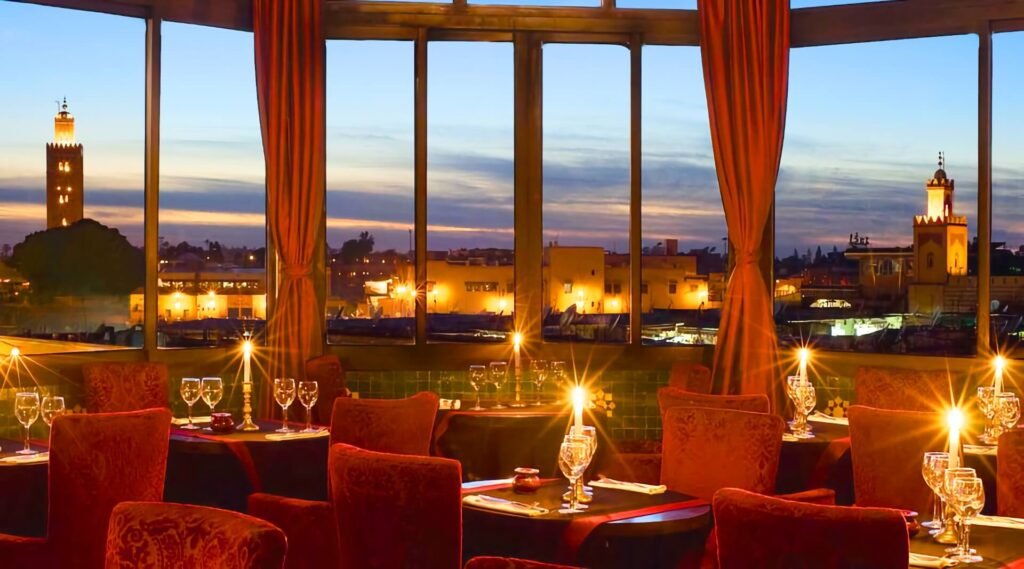
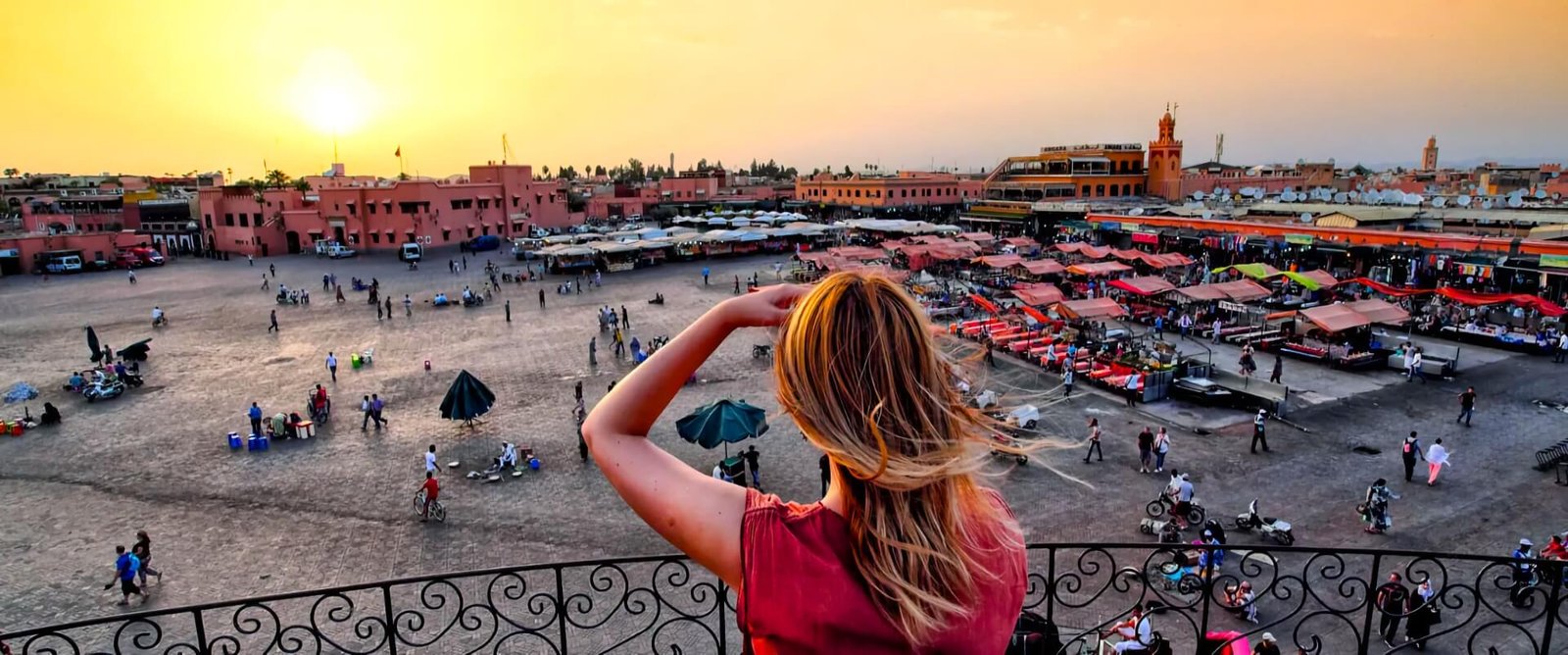
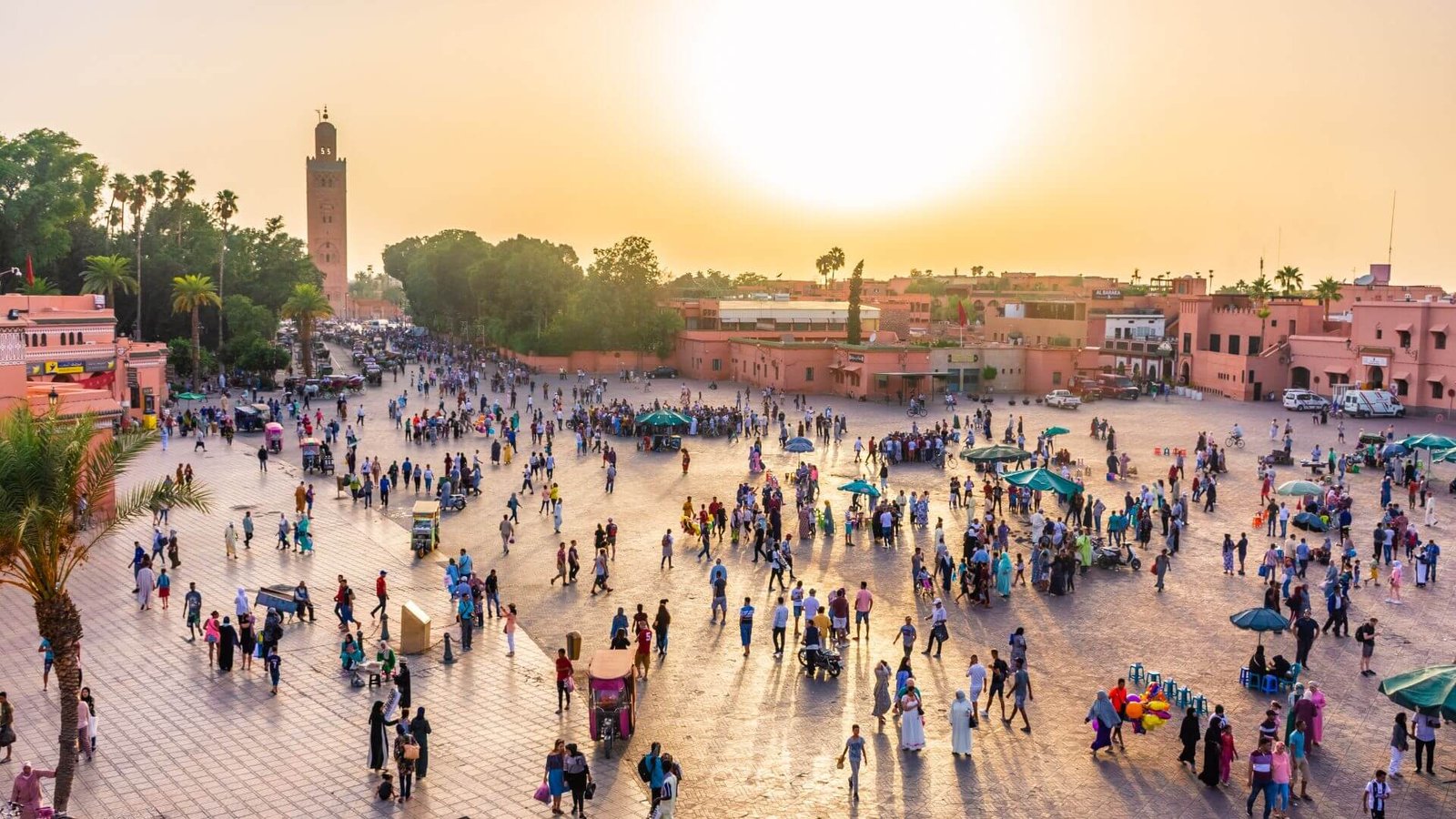
The square between 5 and 7pm is the specific Marrakech moment this page exists for. The food stalls begin setting up from 5pm; by 6pm the atmosphere is building. Find a rooftop terrace on the northern side of the square — Café de France or the hotel terraces — and watch the transition from afternoon market to evening theatre. The square at this hour, seen from above before descending into it, is one of the more specific urban experiences available in Morocco.
Dinner: Keep It Simple
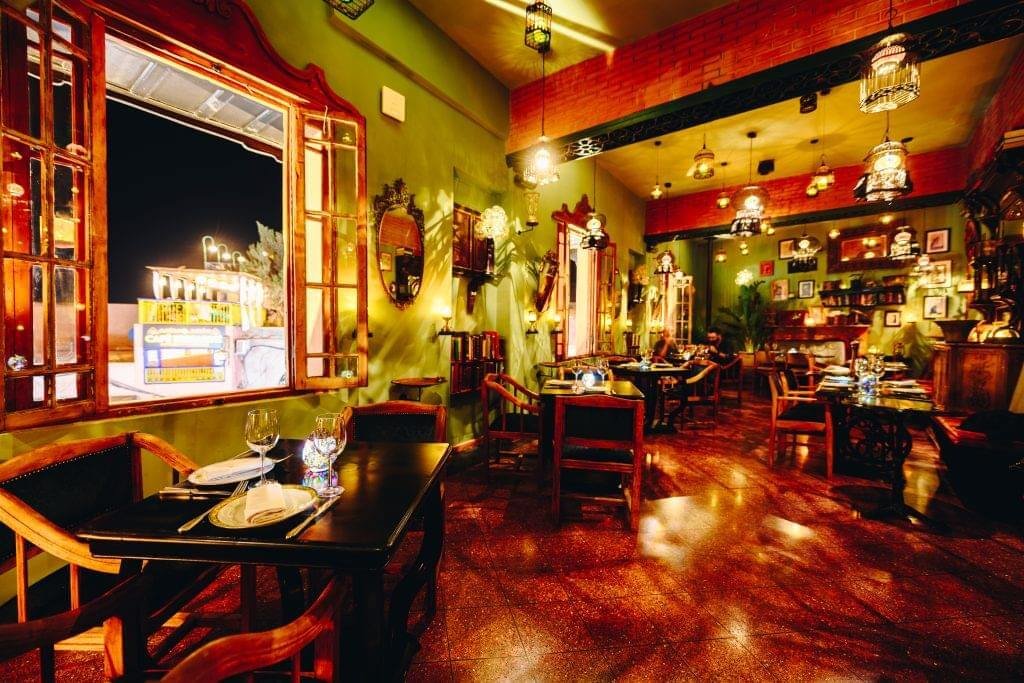
After the square, a dinner nearby rather than an elaborate reservation. The riad dinner (if your accommodation offers it) is the simplest option — it removes the navigation decision at the end of a travel day. Alternatively, the rooftop restaurants on the northern side of the Jemaa el-Fna (Le Marrakchi, Le Grand Bazar) are walk-in friendly in the evening and have direct views over the square at night.
Local Tip: The first navigational failure in the Medina is not a problem — it’s a calibration. The two reliable reorientation points are the Koutoubia minaret (visible above the roofline from most of the western Medina) and the sound of the Jemaa el-Fna (audible from several hundred metres). Head toward either of those when uncertain, and the position problem resolves within five minutes.
Day 2: Marrakech Highlights & Cultural Immersion
Day 2 is the full Medina day — the main monuments, the souk circuit, Majorelle Garden in the afternoon. With five days, the pressure to fit everything into one day doesn’t exist, and Day 2 benefits from that: the monuments can be visited properly rather than photographed quickly, and the afternoon garden visit provides the contrast that makes Day 2 feel complete rather than exhausting.
Morning: Historic Landmarks
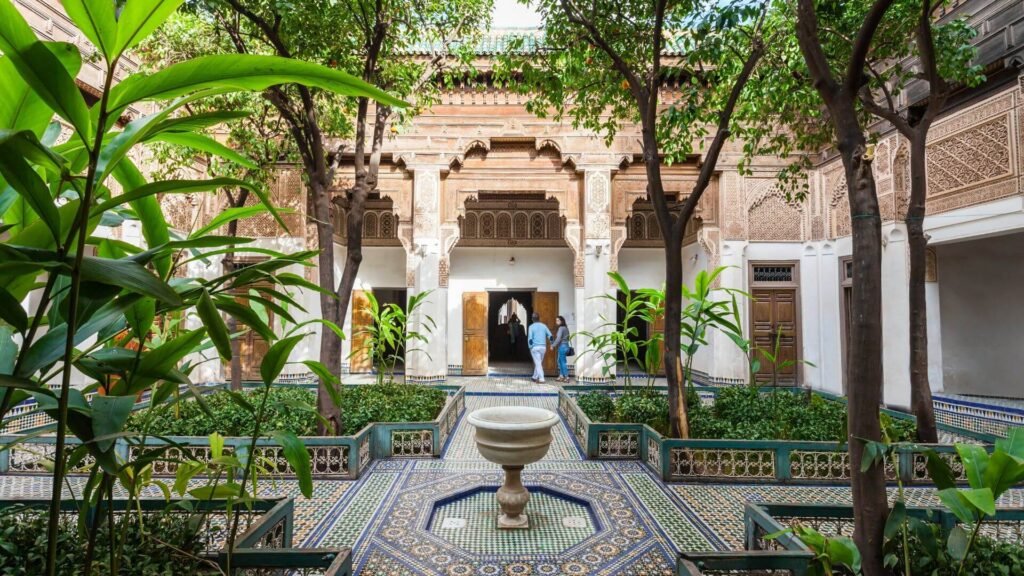
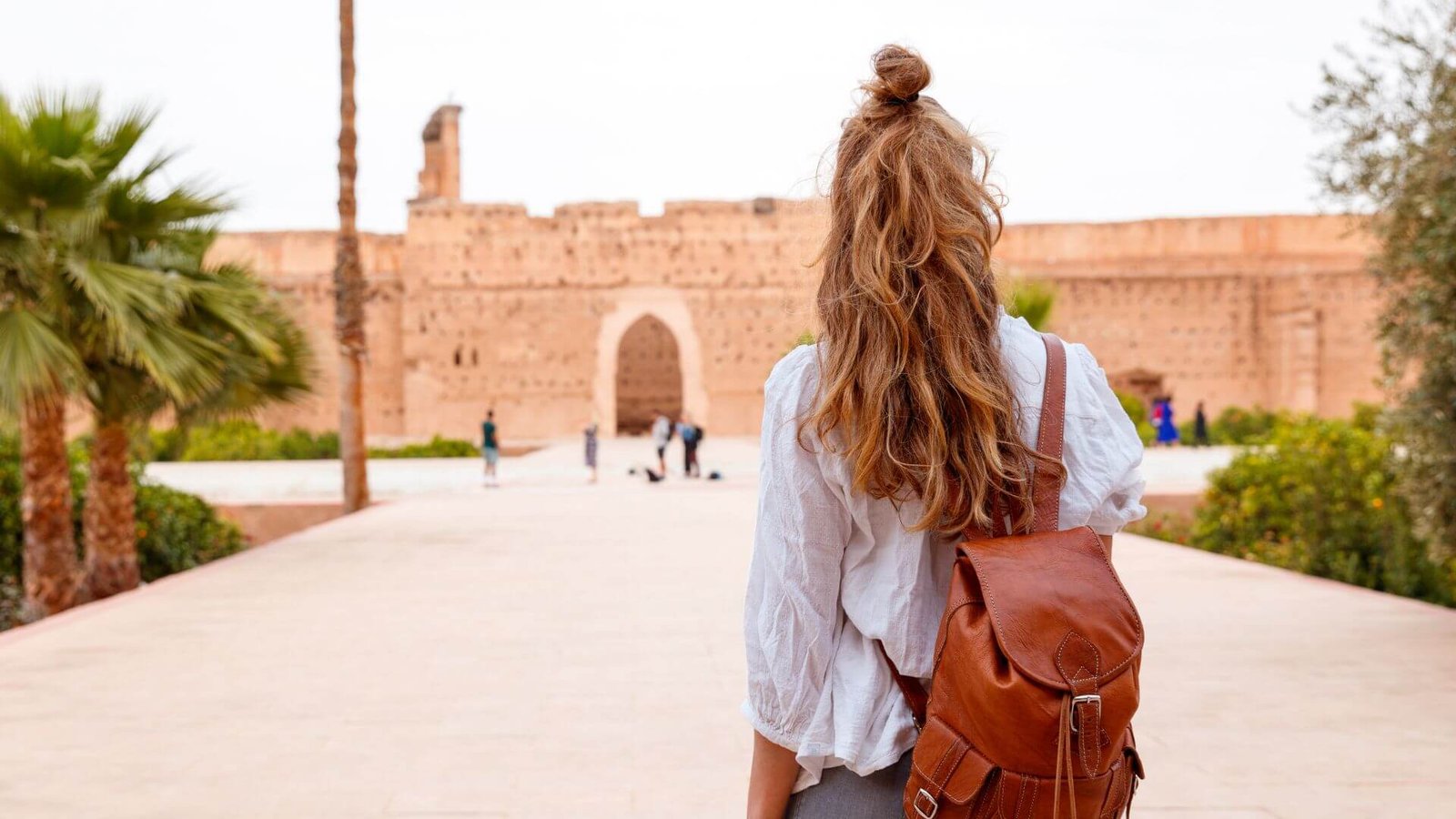
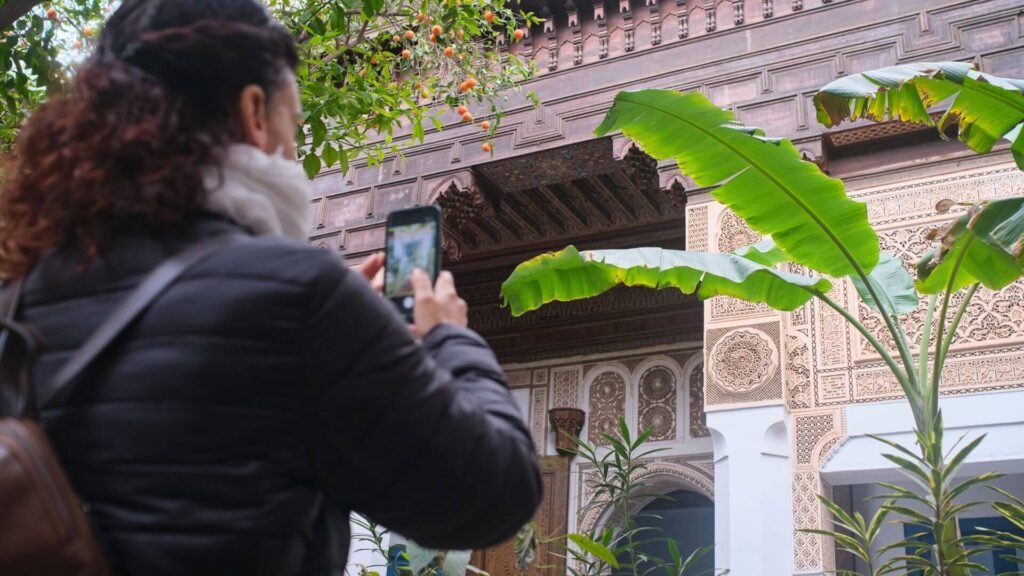
Start between 8:30 and 9am. The Koutoubia Mosque exterior is the correct first stop — the 12th-century minaret is the city’s orientation point and is best seen in the morning before the Medina fills. From the Koutoubia, proceed through the Jemaa el-Fna (quiet at this hour) to Bahia Palace in the southern Medina. Allow 45–60 minutes at Bahia Palace — the 19th-century palace covers 8,000 square metres across a sequence of courtyards with cedar ceilings, zellige floors, and carved stucco. Continue to the Saadian Tombs (5 minutes from Bahia Palace) — the ornate Saadian dynasty mausoleum, sealed after the dynasty’s fall and not rediscovered until 1917. Allow 30–45 minutes.
Powered by GetYourGuide
Late Morning: Souks & Artisan Discovery
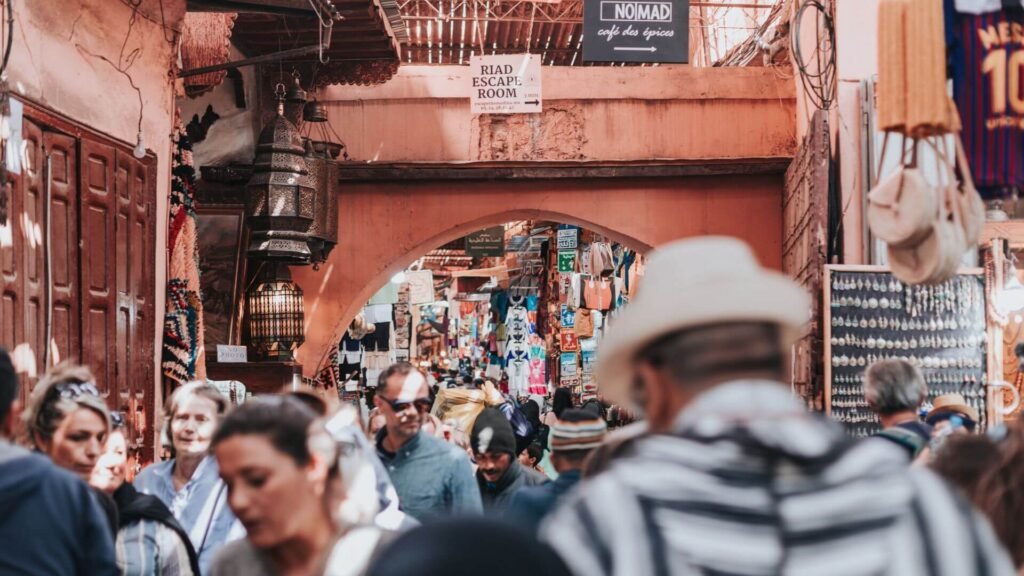
From the southern Medina monuments, move north through the souk circuit. The route from the Bahia Palace area through the Rahba Kedima and northwest along Souk Semmarine covers the main souk geography. The artisan sections of specific interest: the spice market at the Rahba Kedima, the leather goods and textile souks along Semmarine, the dyers’ quarter accessible via the alleys north of the central souk spine. By the late morning (10:30–11am), the souk is at full activity — the right time for this section of the itinerary rather than the morning calm, which was better used for the monuments.
Lunch: A Break in a Riad or Rooftop
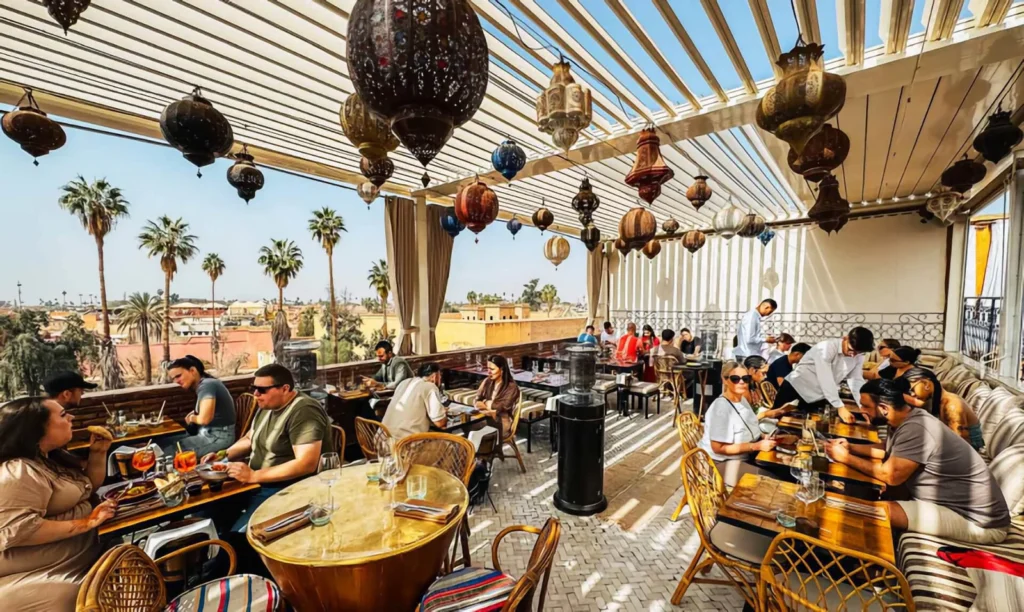
Nomad and Café des Épices are the two reference addresses for a rooftop lunch near the souks — both are within 5 minutes of the Rahba Kedima, both have terrace views over the souk roofscape, both serve Moroccan food at a reliable standard. The function of the rooftop lunch is recovery and spatial perspective: 45 minutes above the souk noise, with the Koutoubia visible from the terrace, before the afternoon shift to Gueliz.
Afternoon: Gardens & Calm Moments
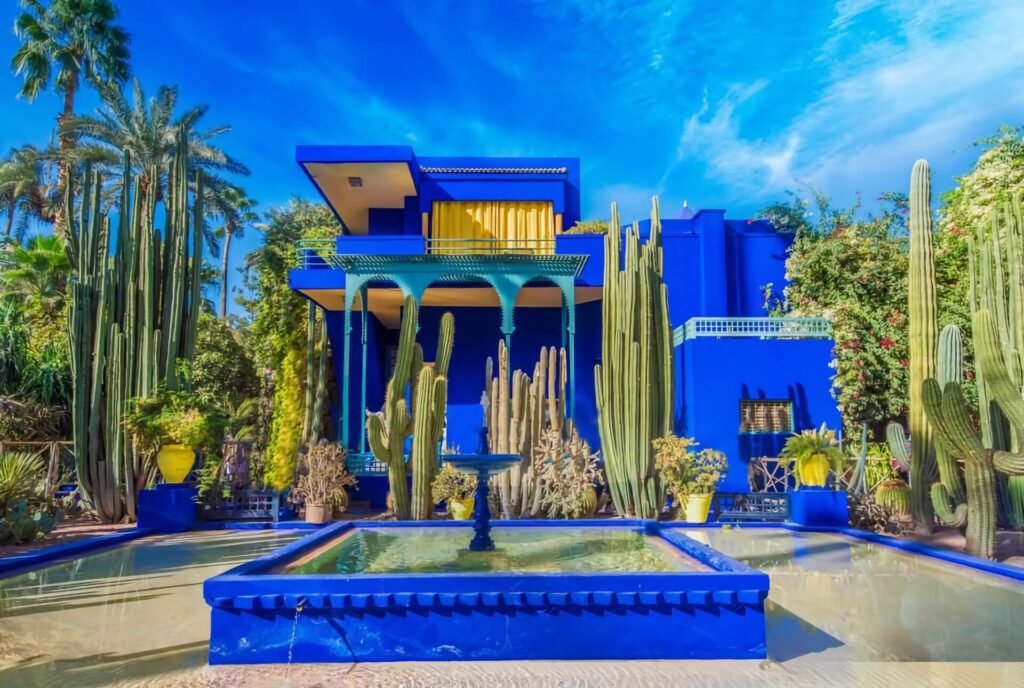
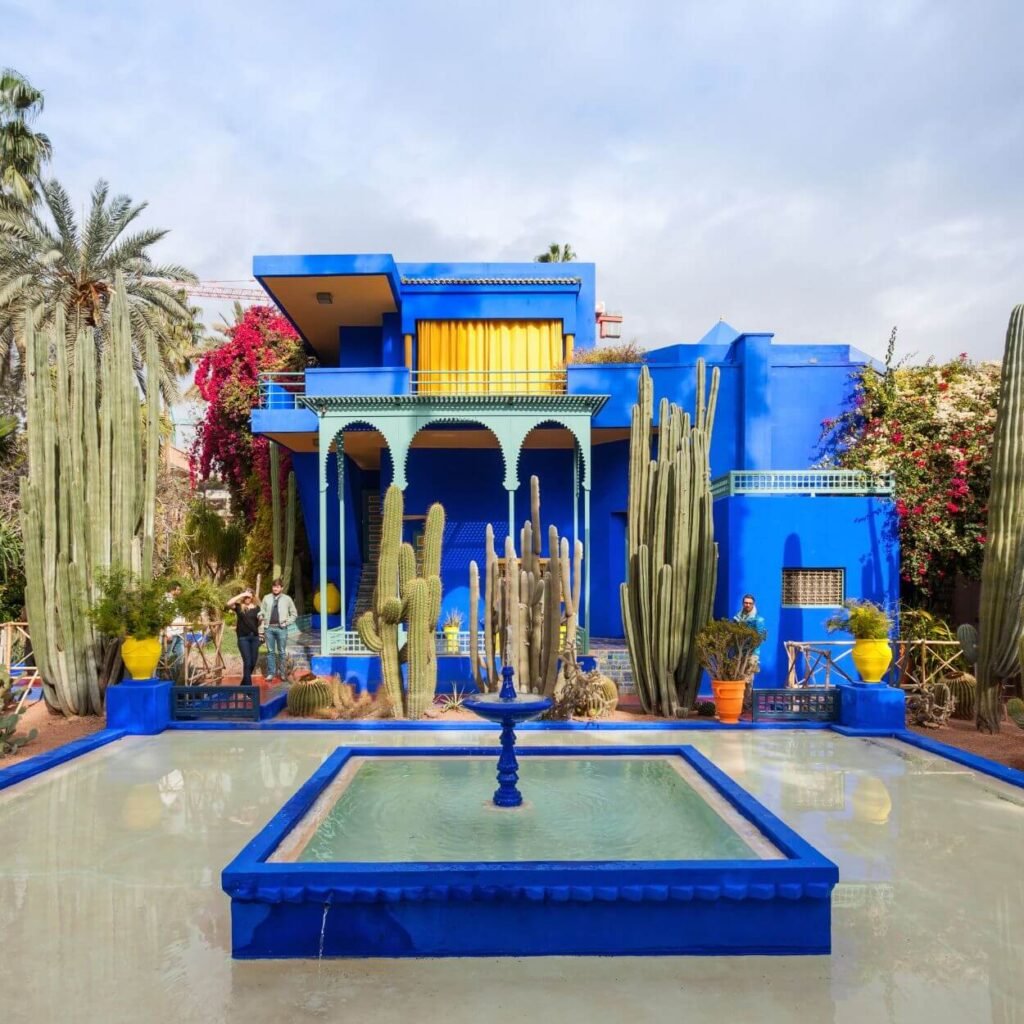
Jardin Majorelle is a 15-minute taxi ride from the Medina. Arriving in the mid-afternoon (2–3pm) means the morning rush has passed and the late-afternoon crowds haven’t yet built. The garden covers 1.2 hectares — the Majorelle blue pavilion, bamboo groves, cactus collection, and Berbère Museum inside. If the YSL Museum is a priority, it’s immediately adjacent; the permanent collection covers the designer’s Moroccan period and is specifically relevant to Marrakech rather than fashion generically.
Powered by GetYourGuide
Evening: Rooftop Dinner or Medina Atmosphere
By evening, both options work. A rooftop dinner reservation (Terrasse des Épices in the northern Medina, or Nomad’s upper terrace) gives the structured end to a full day. A return to the Jemaa el-Fna for a food stall dinner is more spontaneous — the square at 8pm, two days in, is more readable and less overwhelming than it was on Day 1.
Local Tip: Day 2 is intentionally denser than any other day in this itinerary. The five-day format allows Days 3 and 5 to be lighter, which means Day 2 can absorb the main Medina circuit without that density carrying into the rest of the trip. If the afternoon feels like too much, drop Majorelle Garden to Day 3 morning instead.
Day 3: Slow Down, Explore & Prepare for the Desert
Day 3 is deliberately lighter than Day 2. Its function is twofold: to decompress after the intensity of the full Medina day, and to be rested for the desert departure on Day 4. A visitor who overloads Day 3 and arrives at the Day 4 desert experience already tired gets less from both. The structure below gives the day enough content to feel worthwhile while protecting the energy reserve.
Morning: A Different Side of Marrakech
Gueliz is a 10–15 minute taxi ride from the Medina — the French-colonial modern quarter, with wide boulevards, planted pavements, and a different register entirely from the Medina’s compressed medieval streets. Avenue Mohammed V and the streets around it have the city’s best specialty coffee shops and contemporary cafés. The Grand Café de la Poste (avenue Imam Malik, 1920s colonial building) is the reference address. Walk the blocks around Carré Eden for the highest density of new Gueliz restaurants and boutiques. The contrast with the Medina — the same city, a century of different building logic — is the point of the detour and worth noting while you’re in it.
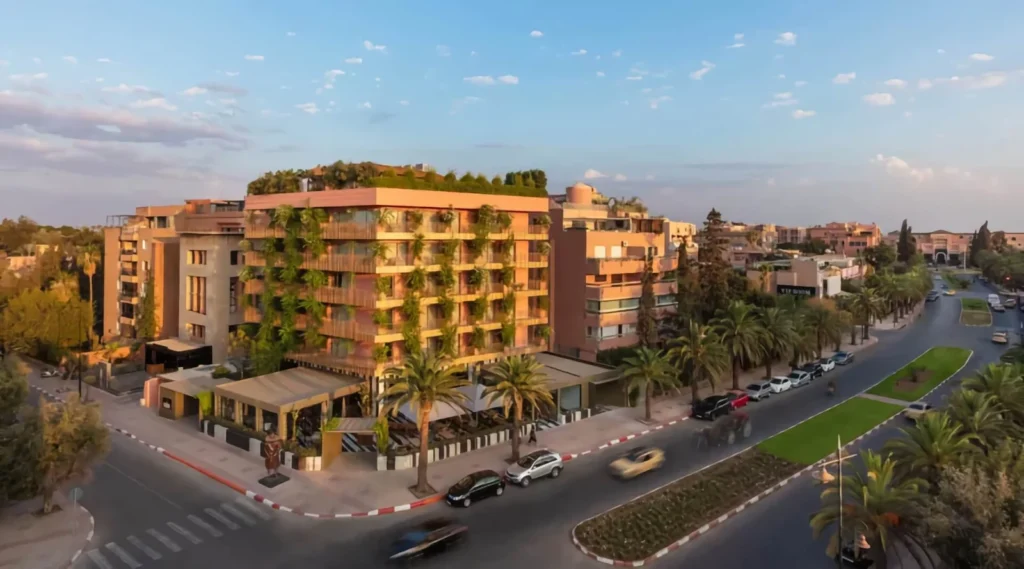
Late Morning: Café Time or Light Exploration
By late morning, a café rather than another monument. The Gueliz café circuit (specialty coffee, pastry, a table outside on the pavement) is a genuinely different Marrakech experience from anything in the Medina. If the northern Medina is more appealing, Le Jardin Secret (rue Mouassine, 16th-century private garden, opened 2016) is the alternative — calm, rarely crowded, and specifically good for late morning before the afternoon hammam.
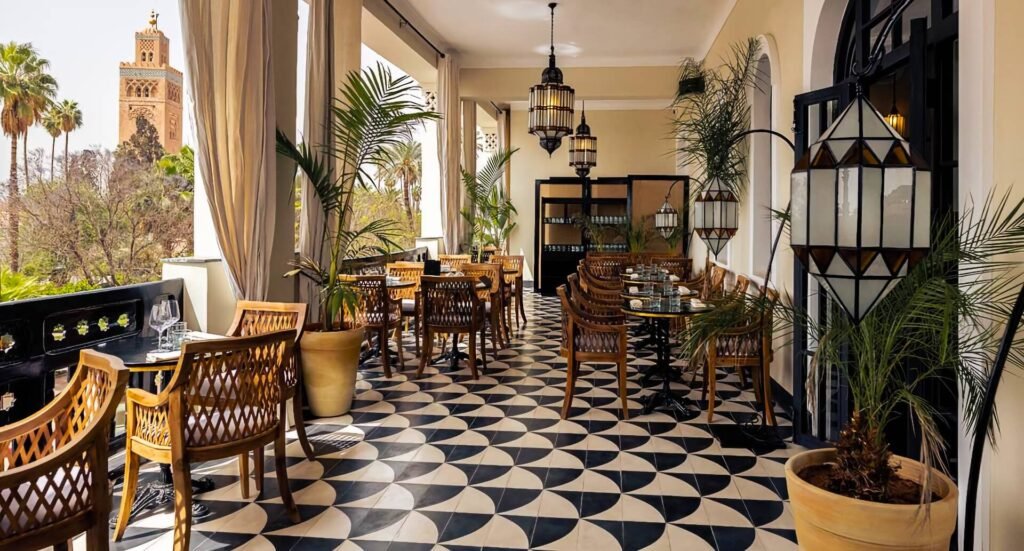
Afternoon: Hammam or Relaxation
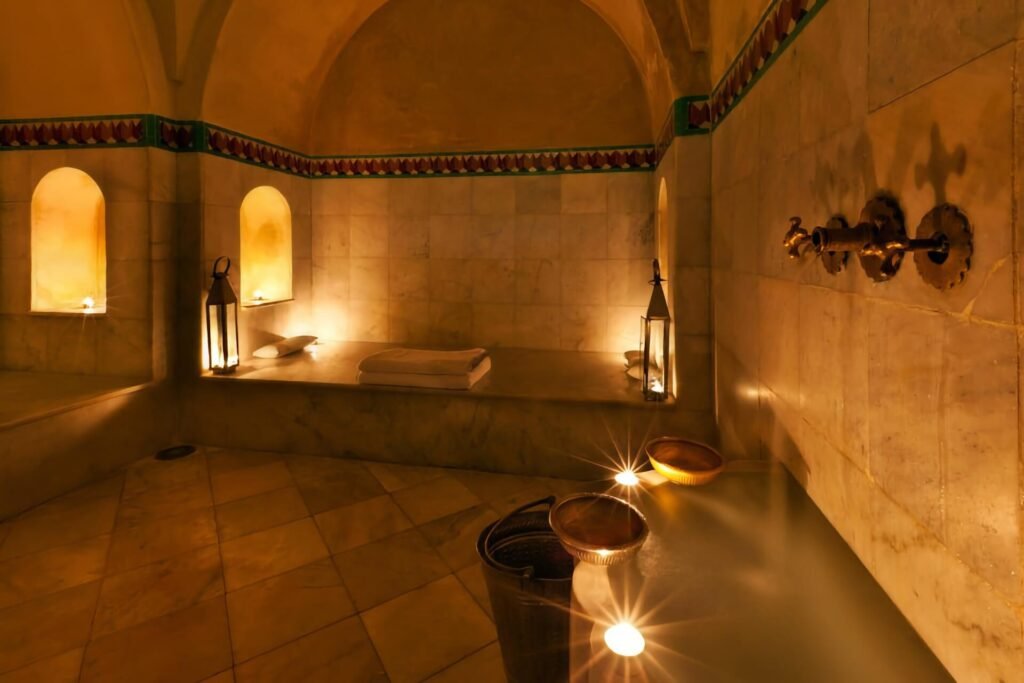
The hammam is the correct Day 3 afternoon activity for a specific logistical reason: it produces a level of physical recovery that makes the Day 4 desert travel substantially more comfortable. A traditional Moroccan hammam follows a fixed sequence — steam, black soap kessa scrub, rinse, optional massage — and takes 60–90 minutes. Choose a designed hammam (Hammam de la Rose near Mouassine, Les Bains de Marrakech, or a riad-based hammam) rather than a neighbourhood hammam for a first visit. Book the afternoon slot in advance.
Powered by GetYourGuide
Evening: Easy Dinner & Early Night
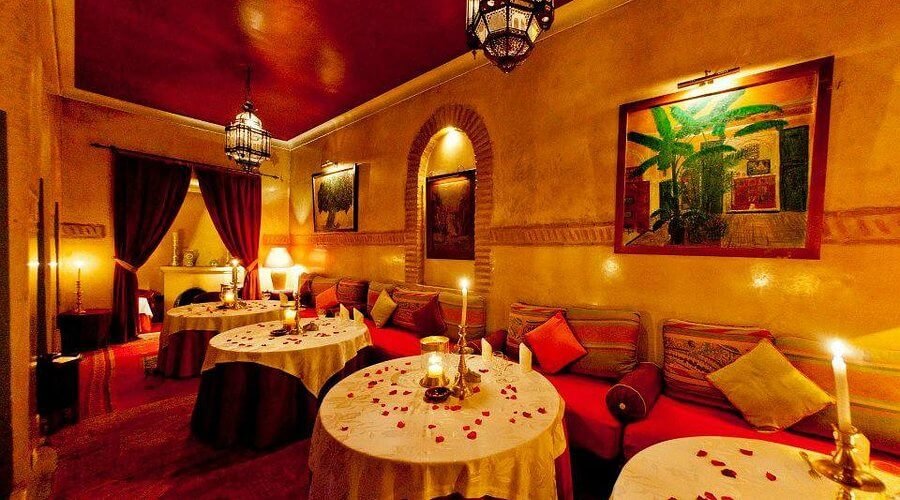
A riad dinner or a simple restaurant nearby rather than an elaborate evening. The desert departure on Day 4 is typically 7–8am (for Agafay) or 6am (for the Sahara). The practical requirement: be in bed at a reasonable hour rather than at Jemaa el-Fna at 11pm. Tobsil (rue Ahl Fès, candlelit, no menu — fixed traditional feast) is the most atmospheric option if a final Medina dinner feels right. Otherwise, the riad is correct.
Local Tip: The Day 3 hammam is not optional if you’re doing the Sahara — the 9-hour drive on Day 4 is significantly more comfortable when your body is physically rested rather than carrying two days of Medina walking tension. The Agafay version is 40 minutes each way; the hammam matters less but is still the right way to spend the afternoon.
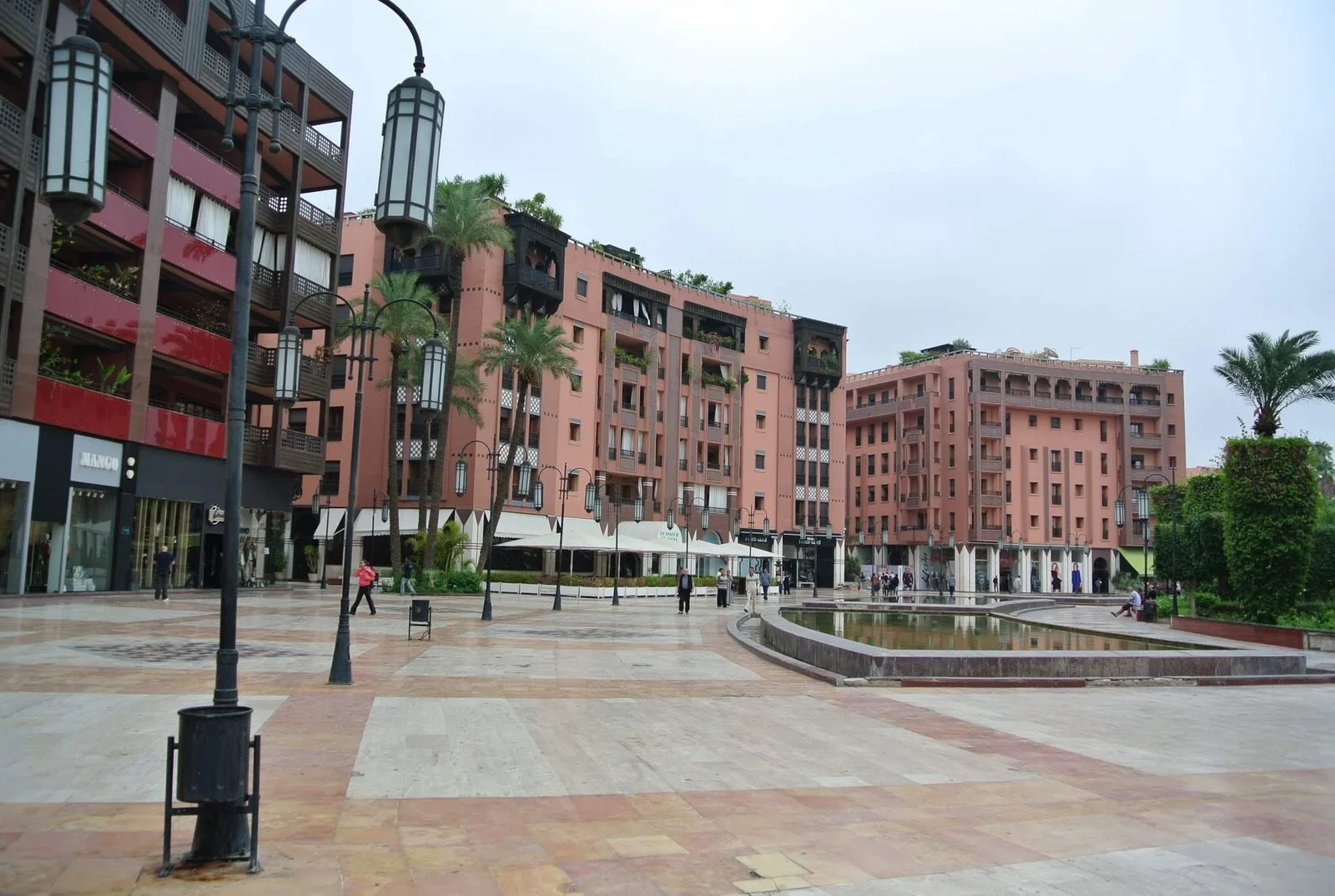
Day 4: Desert Adventure & Unforgettable Landscapes
Day 4 is the trip’s structural pivot — the point where the register changes entirely. Marrakech is compressed, layered, loud. The desert is open, silent, and spatially simple. The contrast is not incidental; it’s the reason this itinerary is the most requested Morocco combination.
The two options below are not equivalent alternatives in terms of time commitment — they require different planning decisions and produce different experiences. Both are worth taking seriously before booking.
Option 1: Agafay Desert (Closer & Easier)
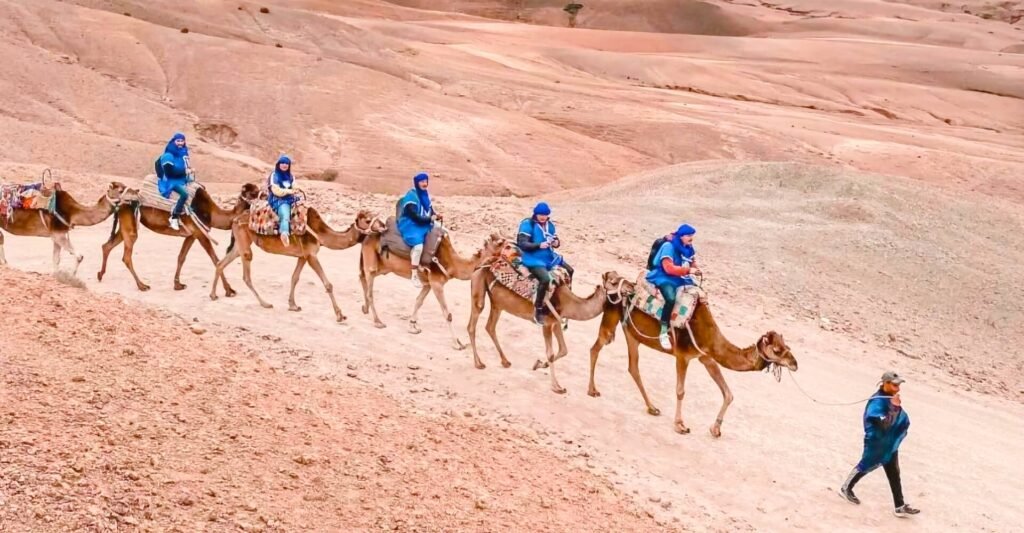
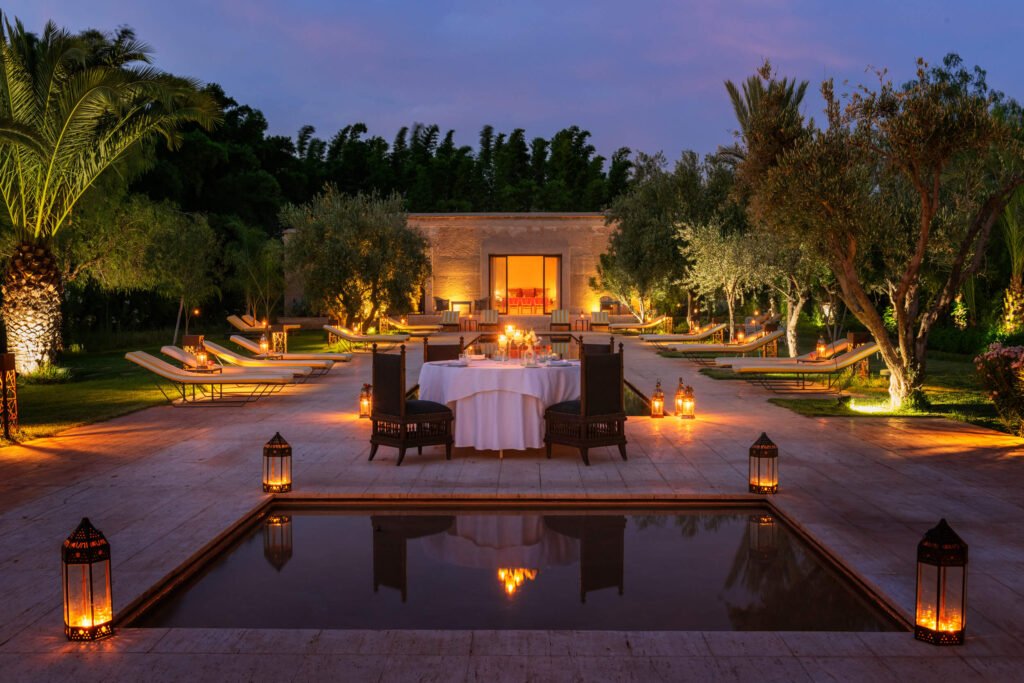
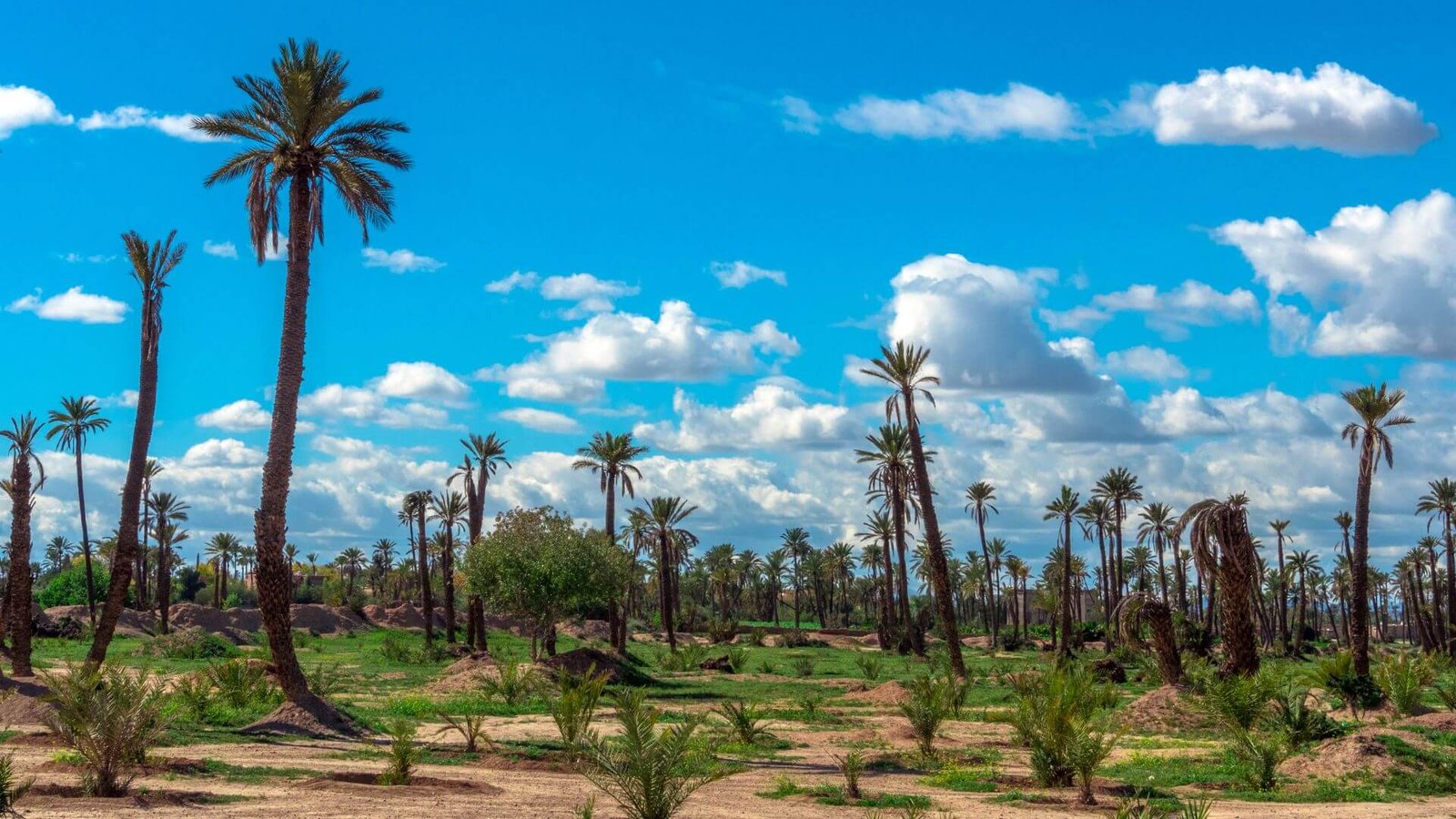
The Agafay plateau is 40 minutes southwest of Marrakech — a rocky lunar desert rather than a sand dune landscape. The scale is intimate rather than vast; the Atlas Mountains are visible on the northern horizon. Luxury desert camps in the Agafay offer camel rides, quad bikes, afternoon tea in a Bedouin tent, sunset on the plateau, and dinner under a sky that is darker than anything visible from Marrakech’s Medina.
For a five-day itinerary, the Agafay works as a one-night stay departing Day 4 morning and returning Day 5 morning — no disruption to the Day 1–3 Marrakech programme and no requirement to sacrifice a Marrakech day for the return journey. Organised tours include transport, the camp experience, dinner, and return transfer. Book in advance; the better Agafay camps fill up significantly during peak season.
Powered by GetYourGuide
Option 2: Sahara Desert (For a Deeper Experience)
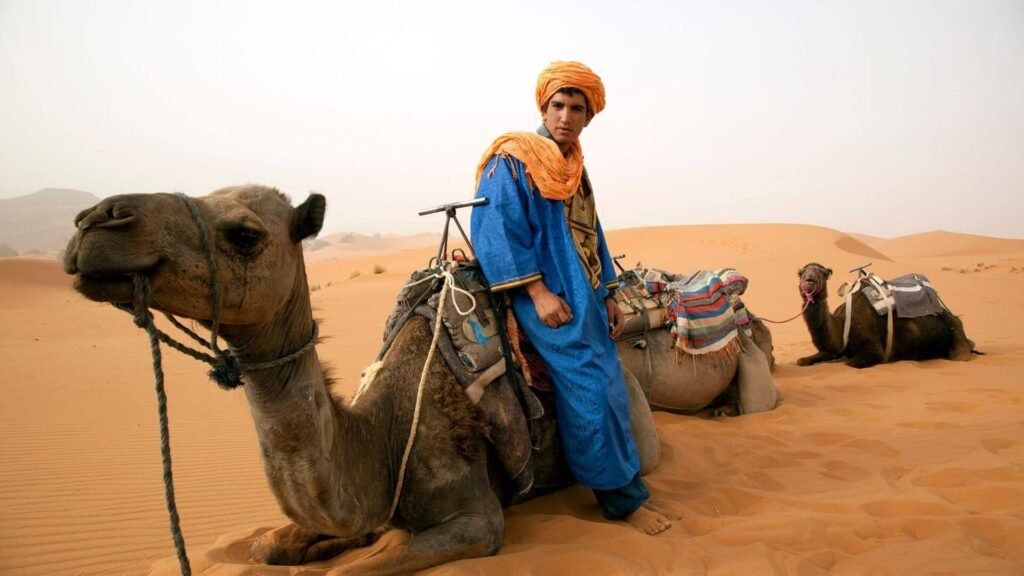
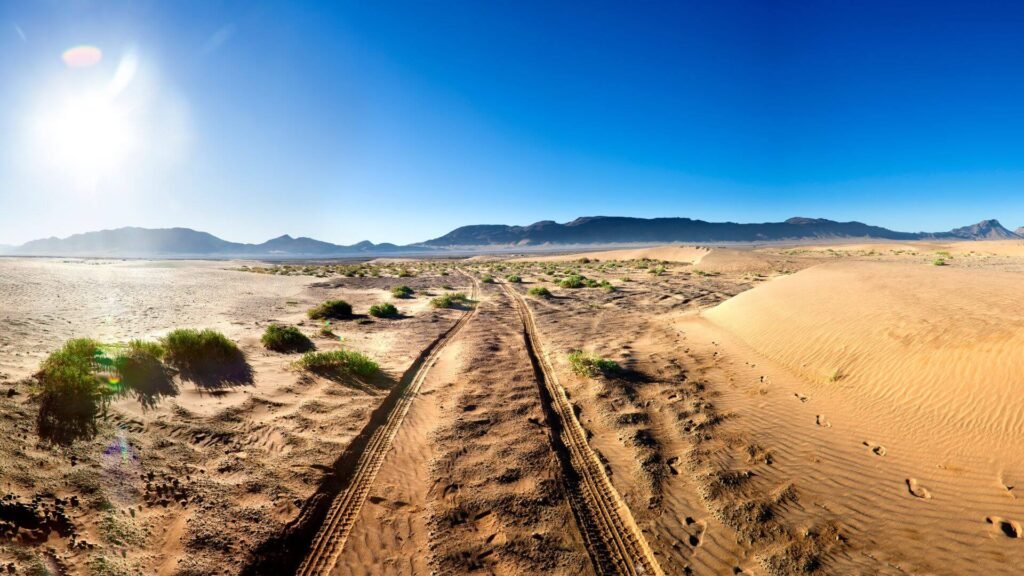
The Sahara at Merzouga — sand dunes, camel sunrise, camp under the stars — is 9–10 hours from Marrakech by road. The route passes through the High Atlas (Tizi n’Tichka pass, 2,260 metres), the Drâa Valley, Ouarzazate, and the pre-Saharan landscape before reaching the Erg Chebbi dunes at Merzouga.
In a five-day itinerary, the Sahara option works as follows: Day 4 is the outward journey (6am departure, arrival at Merzouga by late afternoon, sunset camel ride, night in a desert camp). Day 5 is the return (sunrise on the dunes, return journey to Marrakech, arriving late afternoon). This compresses the Marrakech return day significantly — a brief final meal and early departure rather than a leisurely last day. For visitors for whom the Sahara is the primary reason for the trip, this is the correct trade-off. For visitors who want a more relaxed experience and simply a taste of desert landscape, the Agafay is the more sensible choice.
Evening: Desert Camp Experience
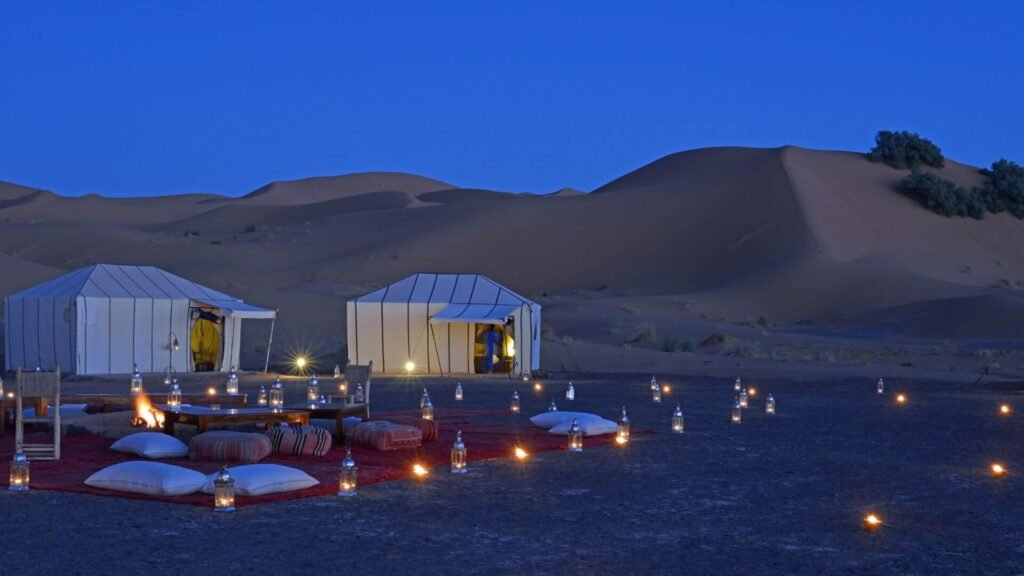
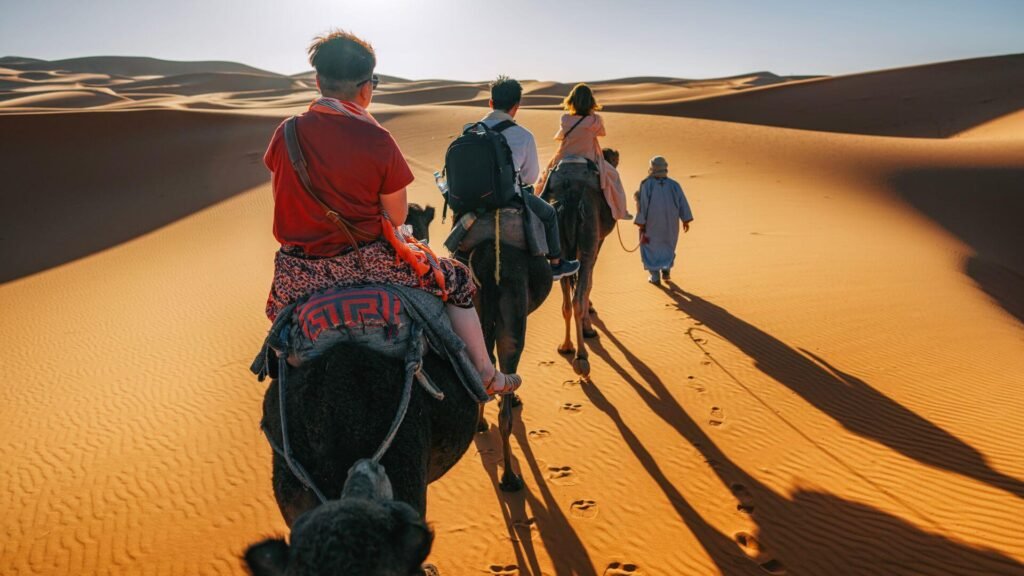
Whether in the Agafay or the Sahara, the desert evening has a consistent character: a silence that is genuinely different from urban silence, a temperature drop that begins at sunset (5–15°C depending on season), a sky unimpeded by light pollution, and food around a fire. The Sahara camp experience typically includes a camel ride to the camp at sunset, a tagine dinner, and Gnawa music. The Agafay version is more immediately accessible but no less atmospheric.
One practical note: bring more layers than you think necessary. The desert temperature difference between 4pm (warm, comfortable) and 10pm (cold, requiring a jacket and potentially a blanket) is more extreme than most visitors expect, regardless of time of year.
Powered by GetYourGuide
Local Tip: The temperature drop after sunset in the desert is not seasonal — it happens in summer as well as winter. A light down jacket or a fleece layer is the single most useful thing to pack specifically for the desert night, regardless of what the daytime forecast says.
Day 5: Return to Marrakech & A Smooth Ending
The return to Marrakech on Day 5 produces a specific perceptual effect: the city reads differently after the desert. The density, noise, and colour of the Medina — which felt overwhelming on Day 1 — feel vivid and specific rather than chaotic. The Day 5 programme takes advantage of this perspective by keeping the structure light enough to allow the city to be experienced in this different register.
Morning: Return Journey
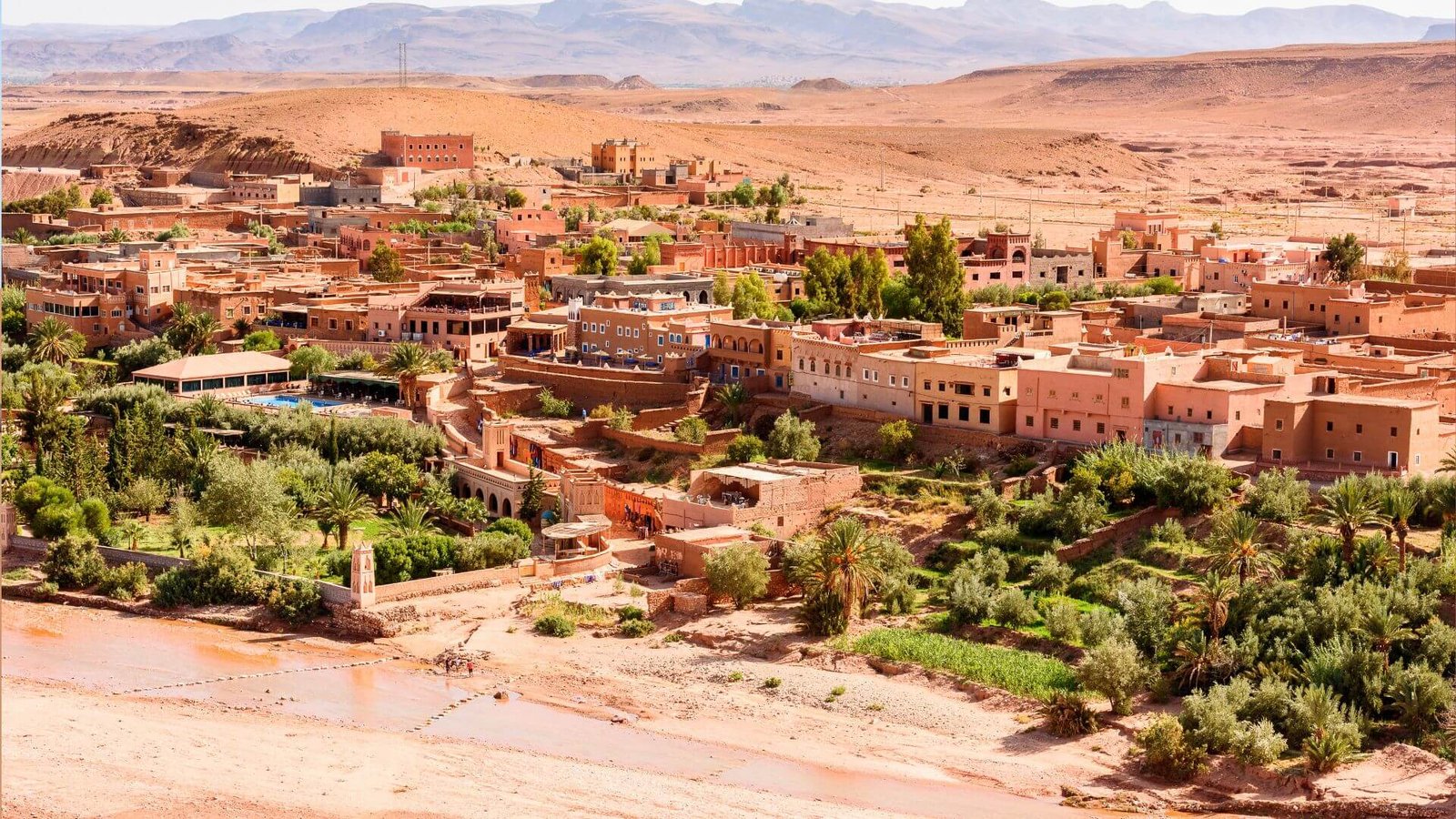
The Agafay return is 40 minutes by organised transfer — arriving back in Marrakech by late morning with the full afternoon free. The Sahara return is a full day: departing Merzouga at sunrise, arriving Marrakech in the late afternoon (4–6pm depending on stops). If the Sahara option was chosen, the morning is the journey itself — the reverse of the outward route, which provides a different light on the same landscape, and which passes through Ouarzazate and the Drâa Valley date palm groves.
Afternoon: Light Exploration or Relaxation
For the Agafay returnee: a final afternoon in the Medina or Gueliz with no fixed agenda. Revisit the souks without pressure, stop at a café in a part of the Medina not yet explored, or return to Majorelle Garden if yesterday’s afternoon Gueliz detour left it out. For the Sahara returnee: a riad rest before dinner is the practical choice — 9 hours in a vehicle requires recovery.
Last Meal in Marrakech
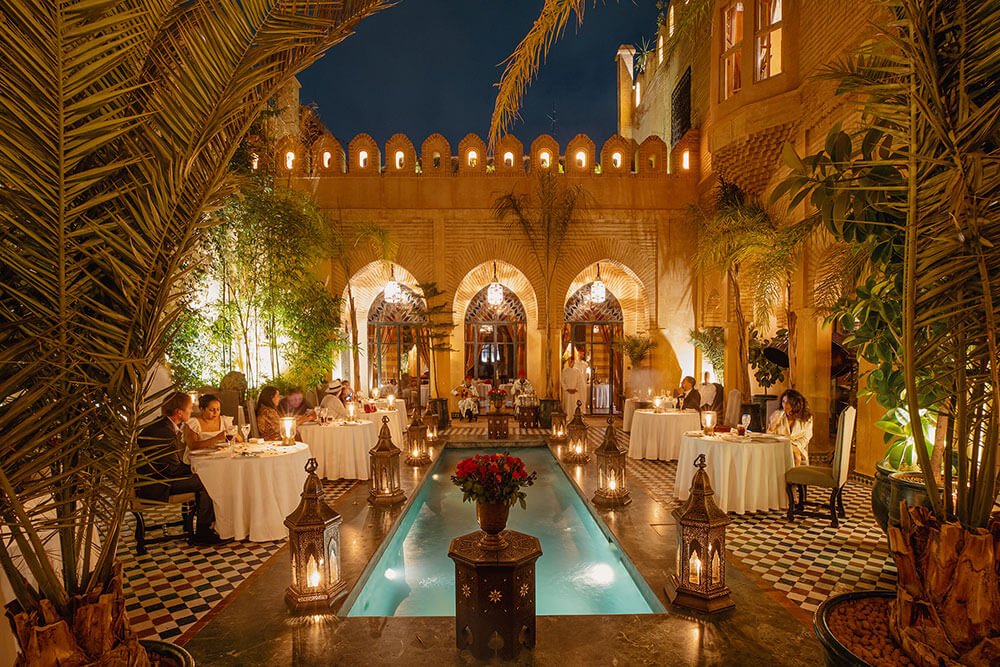
A pre-chosen dinner rather than an improvised one. Dar Yacout (rue Ahmed Soussi, elaborate traditional Moroccan evening of multiple rooms and courses, requires advance booking and is a specific occasion rather than a casual meal) is the highest-register option for a farewell. Café Arabe (rue Mouassine, rooftop terrace, Moroccan and Italian menu, wine available) is more accessible and reliably good. For a last taste of street food rather than a restaurant: the food stall circuit at the Jemaa el-Fna at 8pm — the numbered stands, the grill smoke, the square at full evening operation.
Evening: A Quiet Goodbye
The final evening works best without a plan. A 20-minute walk from the riad through the Medina — the souks at 9pm are quieter, the light is different, the vendors have packed up — gives a view of the city in its end-of-day register that is different from anything seen in the first four days. The Koutoubia lit against the sky from the Jemaa el-Fna at night is the correct final image. Or simply the riad courtyard, a mint tea, and the sound of the city coming through the wall.
Local Tip: Day 5 specifically benefits from not being planned. The visitors who leave the largest space in the final afternoon are the ones who tend to find the most memorable moments — a shop they had passed three times and finally stopped at, a conversation with the riad staff, a café discovered by the route back from somewhere else. The five-day format earns this freedom; use it.
Where to Stay for This 5-Day Marrakech + Desert Itinerary
The five-day itinerary requires accommodation planning in two parts: where to stay in Marrakech (Days 1–3 and Day 5), and where to stay in the desert (Day 4). The desert stay is included in the organised tour for both Agafay and Sahara options. The Marrakech nights are the planning decision.
Stay in the Medina (Best Overall Choice)
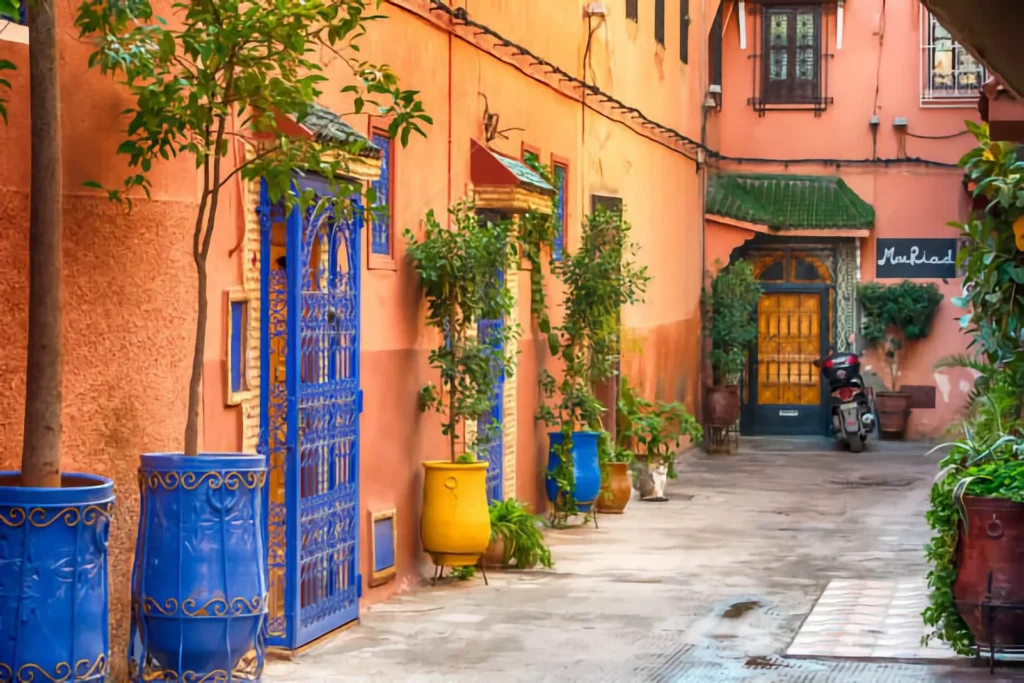
For Days 1–3, a Medina riad is the correct base. All of Day 2’s Medina activities are within walking distance; Day 1’s arrival and first orientation are simpler; Day 3’s hammam and final Medina evening are easier. By the end of Day 3, the riad has become familiar — the breakfast courtyard, the rooftop at dusk, the entrance route — which makes the Day 4 departure feel like leaving somewhere known rather than somewhere logistically complex.
- Easy access to Day 1, Day 2, and all Day 5 activities
- Authentic riad experience that deepens over multiple nights
- Ideal for first-time visitors who want the full Marrakech immersion
Best for: travellers who want to fully experience Marrakech on both sides of the desert.
Split Your Stay (Smart & Comfortable)
One practical configuration: three nights in a Medina riad (Days 1–3), one night in the desert (Day 4), and one night in Gueliz or Hivernage (Day 5). The Gueliz or Hivernage hotel on Day 5 provides the physical comfort infrastructure — reliable air conditioning, lift access, easier luggage logistics — that is welcome after the desert travel, and puts you closer to the airport for an early Day 6 departure.
- Experience both traditional and modern Marrakech at close range
- A Gueliz or Hivernage hotel on the final night requires less logistical navigation after a long return journey
- Feels like a natural progression: city immersion → desert → calm modern base
Best for: travellers who want a smoother, more comfortable ending to the trip.
Stay Near Pickup Points (For Convenience)
Most Medina riads are accessible for organised tour pickups — the driver meets you at the nearest vehicle-accessible point, typically at the Medina gate or the Jemaa el-Fna perimeter. For early departures (Sahara tours typically leave at 6am), confirm the pickup arrangement with both the riad and the tour operator at least the day before. Some riads can arrange a transfer to the pickup point for early morning departures; ask in advance.
- Easier logistics for the Day 4 departure, particularly for Sahara tours with early start times
- Less stress on the day that requires the most preparation
- Useful if travelling with luggage that needs to be stored while in the desert
Tip: confirm with your riad whether they can store luggage during the desert night — most can, which means you travel to the desert with a small bag only.
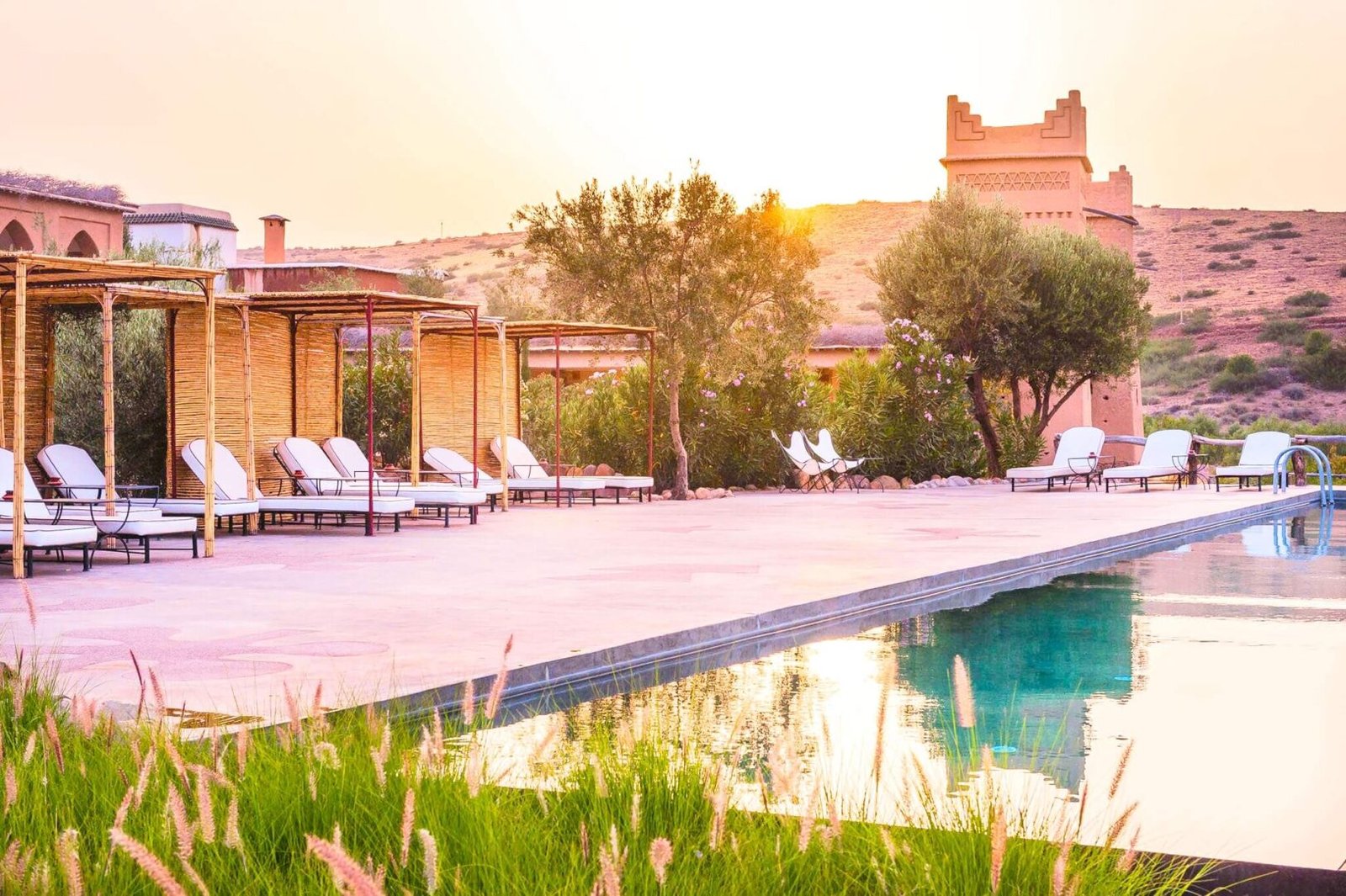
Closing note: A riad in the Medina before the desert, a slightly more comfortable base after: this sequence consistently produces a better overall experience than either option alone for the full five days. The Medina riad earns its place in the first three nights; the Gueliz or Hivernage hotel earns its place after the return journey.
Not sure yet? If you want a curated selection based on different budgets and travel styles, you can explore our full guide here: Where to Stay in Marrakech (Best Areas & Stays)
Getting Around Marrakech & Reaching the Desert
The five-day itinerary uses three transport modes. The Marrakech days follow the same pattern as the shorter itineraries — walking inside the Medina, petit taxis outside. The desert day adds a fourth mode: organised tour transport.
Walking (Best for the Medina)
Days 1 and 2 are primarily walking days inside the Medina; Day 5’s return afternoon may also be largely on foot. The Medina cannot be navigated by car in most of its interior, and walking is the only way to experience the souk circuit, the monument route, and the residential alleys properly.
- Ideal for Day 1’s orientation walk and Day 2’s full monument and souk circuit
- Distances between Day 2’s main monuments are 25–35 minutes total on foot
- Day 5 afternoon’s light exploration is best done on foot rather than by taxi
Use Google Maps for general direction inside the Medina rather than turn-by-turn navigation — the routing is crow-flies rather than by navigable street, which causes confusion.
Petit Taxis (Fast & Practical)
All movement between the Medina and Gueliz, Majorelle Garden, and the desert tour pickup points uses petit taxis.
- Day 3’s Gueliz morning requires one taxi from the Medina (10–15 minutes, 20–30 dirhams)
- Majorelle Garden on Day 2 afternoon is a 15-minute taxi from the Medina (30–40 dirhams)
- Airport taxi (Day 6 departure): 70–100 dirhams fixed rate, 15–20 minutes
Always agree the price before starting or confirm the meter is running.
Desert Trip (Organised Transport is Essential)
The Agafay and Sahara organised tours include transport as standard. This is not a convenience option but a practical necessity.
- Agafay: 40 minutes each way, typically including pickup from riad or Medina gate, full day or overnight
- Sahara: 9–10 hours each way via the High Atlas, Drâa Valley, and Ouarzazate; organised tour transport is the only practical option
- Both options include return transfer to Marrakech as part of the tour
Simple rule: Walk inside the Medina, take petit taxis outside it, and use organised tour transport for the desert. This applies for all five days without exception.
Tips to Make the Most of Your 5 Days in Marrakech + Desert
Six notes specific to the five-day Marrakech-plus-desert format — the things that determine whether this particular trip combination works smoothly or produces the friction points that organised desert tours consistently warn about.
Choose the Right Desert Experience for You
The decision between Agafay and Sahara is the most consequential planning choice in this itinerary. Agafay: 40 minutes from Marrakech, rocky plateau, same-day or overnight, intimate scale, Atlas views. Sahara: 9–10 hours from Marrakech, sand dunes at Merzouga, two travel days, remote and vast. If the primary motivation is a desert night under stars and camel ride, both deliver. If the primary motivation is the iconic Saharan sand dune landscape, only Merzouga delivers. If the primary motivation is not disrupting the Marrakech programme significantly, Agafay is the correct choice.
Don’t Overload the Days Before the Desert
Day 3 is specifically lighter than Day 2 for a structural reason. The Day 4 desert departure for the Sahara option is at 6am — arriving at that departure exhausted from a heavy Day 3 produces a difficult experience on what should be the most memorable day of the trip. The hammam in the afternoon and the early night in the evening are not optional components of Day 3 for the Sahara traveller; they’re prerequisites.
Pack Smart for the Desert
A small separate bag for the desert night: comfortable clothes, two additional layers (one fleece, one wind layer), sunscreen, sunglasses, and a headlamp. The organised tour provides basic bedding; your riad can store your main luggage. Desert sand is fine and pervasive — a sealed bag for electronics and documents is worth the inconvenience.
Expect Long Travel Times (and Embrace Them)
The Sahara option’s 9-hour drive is not incidental to the experience — the road itself is the traverse of southern Morocco’s landscape. The Tizi n’Tichka pass provides one of the most dramatic mountain road sequences in North Africa. The Drâa Valley date palm oasis road is a specific landscape type that exists nowhere else in the itinerary. The towns of Ouarzazate and Agdz are worth stopping at. Treating the drive as a destination rather than a transit produces a genuinely different experience from treating it as a necessary inconvenience.
Keep Your Last Day Flexible
Day 5 specifically benefits from an absence of plans. The Agafay returnee has a full afternoon; the Sahara returnee has a few hours at most. Both groups benefit from not having committed to specific activities on return — the correct Day 5 is the one that emerges from what the first four days have left open, not the one planned in advance.
Book Key Experiences in Advance
The desert tour (both options, particularly peak season — October/November and March/April weekends), the Majorelle Garden tickets, the hammam (evening slot), and any riad dinner reservation all require advance booking. With a fixed five-day schedule, a sold-out desert tour or hammam cannot simply be rescheduled.
Alternative Ways to Experience Marrakech & the Desert in 5 Days
Four variations on the standard five-day structure for different priorities or travel styles.
If You Prefer a Shorter, Easier Desert Experience
Choose the Agafay over the Sahara. The Agafay delivers the desert overnight experience — camp, camel, stars, sunset, Atlas views — without the 18-hour round-trip commitment of the Sahara. Days 1–3 stay exactly as described above. Day 4 departs for the Agafay mid-morning rather than at dawn, and Day 5 returns to Marrakech by mid-morning with a full afternoon free. The Agafay version of this itinerary is significantly less logistically demanding and produces a more relaxed overall experience.
If You Want the Full Sahara Experience
The full Sahara option (Merzouga dunes, overnight camp, sunrise camel ride) requires accepting that Day 5 is primarily a travel day. The outward journey on Day 4 passes through some of Morocco’s most dramatic landscapes — Tizi n’Tichka pass, Ouarzazate, Drâa Valley — which are themselves destinations. If the Saharan sand dune landscape is specifically what you came for, this is not a compromise but the correct trip structure. Plan Day 5 as a travel day with minimal Marrakech expectations on return.
If You’d Rather Spend More Time in Marrakech
Replace Day 4’s desert trip entirely with a deeper Marrakech day — the northern Medina cultural circuit (Medersa Ben Youssef, Maison de la Photographie, Le Jardin Secret), or a full-day Atlas Mountains excursion via Imlil. This produces a five-day Marrakech-only itinerary with richer city coverage and a day-trip for landscape context. The Medersa Ben Youssef is specifically worth adding if not covered on Day 2 or 3.
If You Want a More Experience-Focused Trip
Add a morning cooking class (a 3-hour riad class on Day 3 morning before the afternoon hammam), a guided souk walk on Day 2 late morning for the artisan quarter context, or a visit to the Maison de la Photographie on the Day 5 afternoon. These don’t change the trip structure — they replace unstructured time with specific experiences that produce a different kind of memory from monument visits.
Frequently Asked Questions About 5 Days in Marrakech & the Desert
Is 5 days enough for Marrakech and the desert?
Yes, and it’s the correct format for the combination. Three days in the city covers the full Medina circuit, Majorelle Garden, and a hammam without rushing any of them. One night in the desert (Agafay or Sahara) provides the contrast. One day for the return. The five-day format works for the Agafay option cleanly; for the Sahara at Merzouga, Days 4 and 5 are both desert-travel days, which leaves three full Marrakech days — still sufficient for the main programme.
Should I choose Agafay or the Sahara Desert?
The choice comes down to what the desert is for in your trip. If the desert is a complement to the Marrakech experience — an overnight contrast, a different landscape, a night under stars — the Agafay provides all of this with 40 minutes of travel each way. If the desert is a primary destination — the iconic Saharan dunes, the remoteness, the scale of the Erg Chebbi landscape — then Merzouga is the correct choice and the 9-hour drive is part of the experience rather than an inconvenience. Both are worth doing; they are different experiences, not better and worse versions of the same thing.
How many nights should I spend in the desert?
One night is the correct format for a five-day itinerary. One night covers the sunset, the evening camp atmosphere (food, music, temperature drop, stars), and the sunrise — which is the sequence that produces the experience. A second desert night requires a seven-day itinerary minimum to avoid significantly compressing the Marrakech programme.
Are desert tours worth it?
Yes, with a qualification: the quality of the experience depends heavily on the operator and the camp. Budget camp tours and luxury camp tours use the same desert landscape but produce different experiences in terms of food quality, accommodation comfort, guide quality, and crowd density at the camp. For the Sahara specifically, the mid-range to luxury camp options (those with individual tents rather than shared dormitory canvas) are worth the additional cost for the privacy and the atmosphere.
Is the desert trip tiring?
The Agafay version is not tiring — it’s 40 minutes from Marrakech and the camp itself is designed for relaxation. The Sahara version is a full day of vehicle travel each way — genuinely tiring, and more so if the previous days have been active. The Day 3 hammam and early night specifically address this by ensuring Day 4 departs from a rested state. If the Sahara option is chosen and Day 3 is instead used for more Medina activity, the Day 4 experience suffers.
What should I pack for the desert?
The essentials specific to the desert (as opposed to the city): two additional layers (the temperature drop between day and night in the desert is 10–20°C depending on season and location), a scarf or buff for wind and dust, comfortable sandals or slip-on shoes for sand (shoes with laces trap sand), sunscreen rated SPF50 or higher (the desert UV exposure is more intense than the city), and a headlamp for navigating between tents after dark. Your riad can store the rest of your luggage while you’re in the desert.
Can I organise the desert trip myself?
Technically yes; practically not recommended. The Sahara at Merzouga requires navigating the Tizi n’Tichka mountain road, finding a camel guide at Merzouga, arranging the camp independently, and returning on the same complex route. For experienced Morocco travellers with a hire car and prior Sahara experience, this is manageable. For first-time visitors to Morocco on a five-day trip, an organised tour removes all of these friction points and typically costs €80–200 per person including transport, guide, camel ride, and camp dinner.
Ready to Experience Marrakech & the Desert?
The five-day itinerary above is the most complete version of the Marrakech-plus-desert combination on this site. The three links below cover the remaining decisions: where to stay in Marrakech (with specific riad recommendations by neighbourhood), the desert quad biking and activity experiences, and the top 20 things to do in the city (for context on what the Marrakech days include and what’s available beyond them).
The two advance bookings that matter most: the desert tour (both Agafay and Sahara fill up in peak season, particularly October–November) and the Majorelle Garden tickets (sells out on peak days). Book both before departure; everything else in this itinerary is walk-in or same-day.
Related Itineraries You Might Like
The plans below cover the other trip lengths available from Marrakech — shorter city-only formats and the full seven-day Morocco circuit.
-
2 Days in Marrakech
The compact Medina-only format: Koutoubia, Bahia Palace, souk circuit, Jemaa el-Fna — the core of what Days 1 and 2 of this itinerary cover
-
3 Days in Marrakech
City-only with a flexible third day — the right format if the desert is not part of the plan
-
4 Days in Marrakech
The city covered fully with a dedicated day-trip slot — Atlas Mountains or Agafay without the overnight camp
-
7 Days Morocco Trip
Full southern Morocco circuit: Marrakech, High Atlas, Drâa Valley, Sahara, Todra Gorge, Essaouira — the complete version of what this five-day itinerary starts
 Marrakist Concierge