
Five categories, each with its own character and price range. Most visitors move between at least three of them over the course of a stay.
Restaurants in Marrakech: From Street Food to Fine Dining
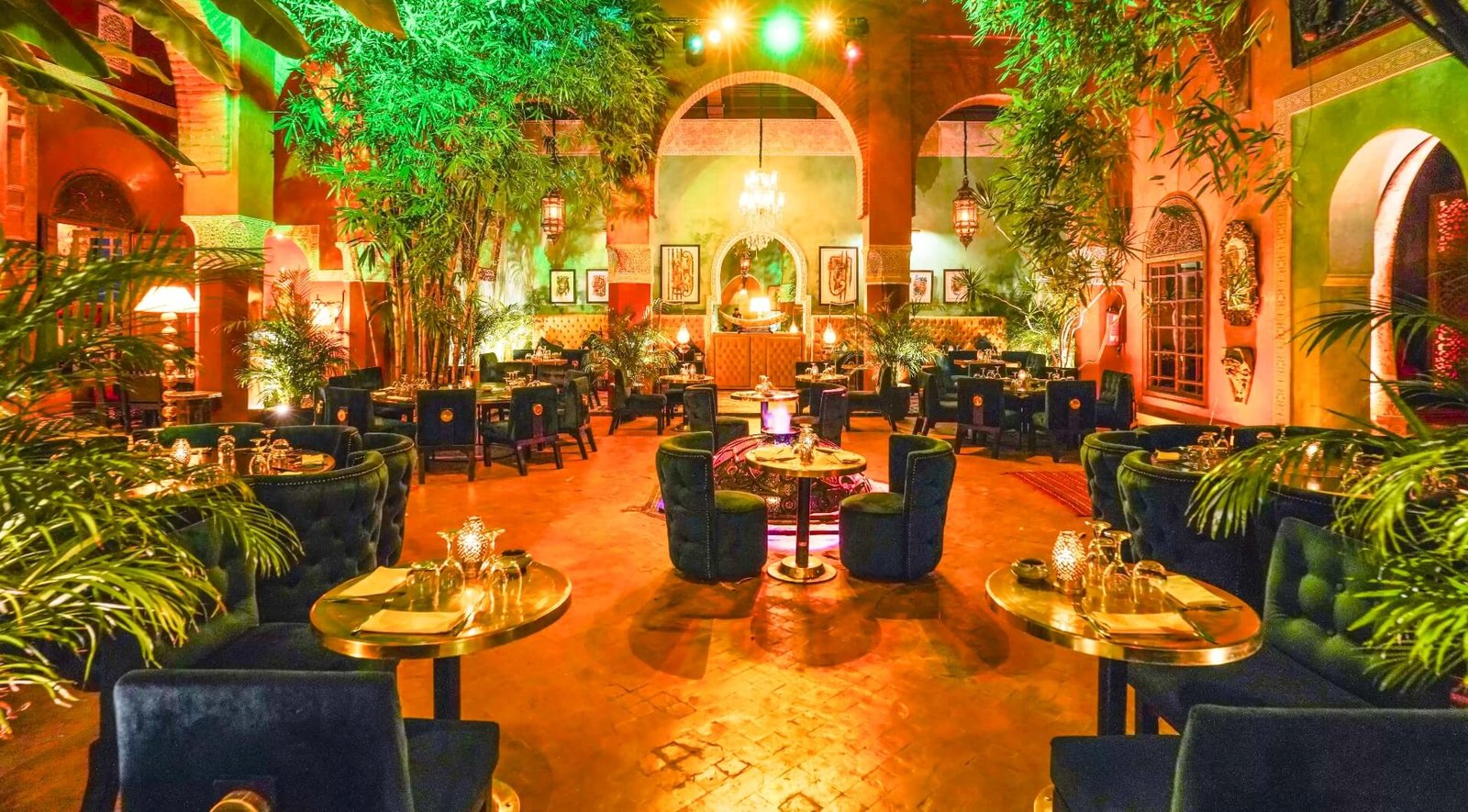
Marrakech has one of the most varied restaurant scenes of any North African city — street food at Jemaa el-Fna that has operated the same way for centuries, traditional Moroccan restaurants in riad courtyards serving the full sequence of a Moroccan feast, rooftop dining above the Medina with Atlas views, and a modern Gueliz café and bistro circuit that competes with any European equivalent. The five categories below cover the full range, from a 30-dirham harira at a souk stall to a set menu at La Mamounia.
Find Your Perfect Meal in Marrakech
-
Fine Dining
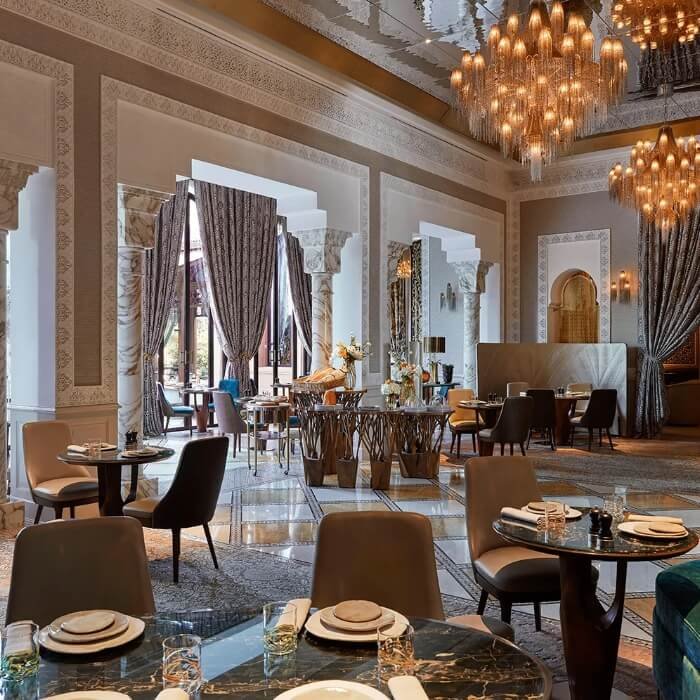
Multi-course Moroccan cuisine in riad settings and luxury hotel restaurants: La Mamounia, Royal Mansour, Dar Yacout
-
Traditional Moroccan
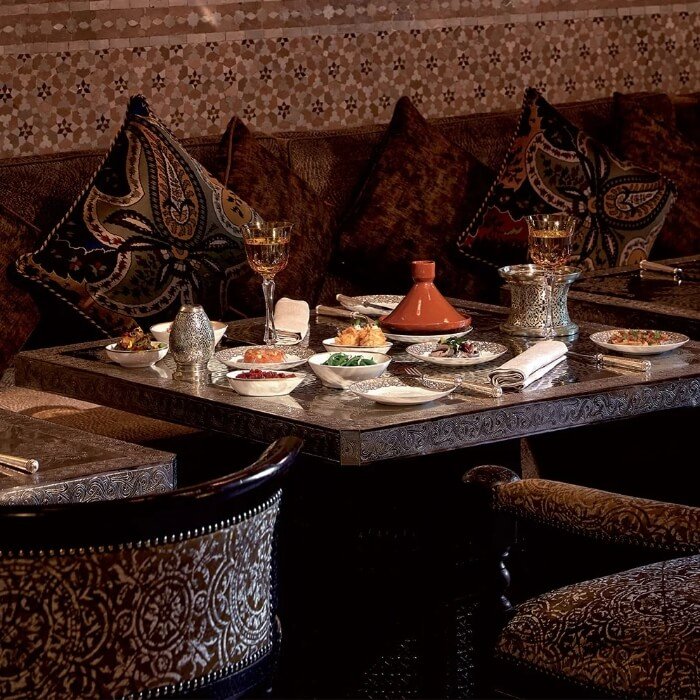
Tagine, couscous, pastilla, and the full Moroccan meal in the settings built for it
-
Rooftop Restaurants
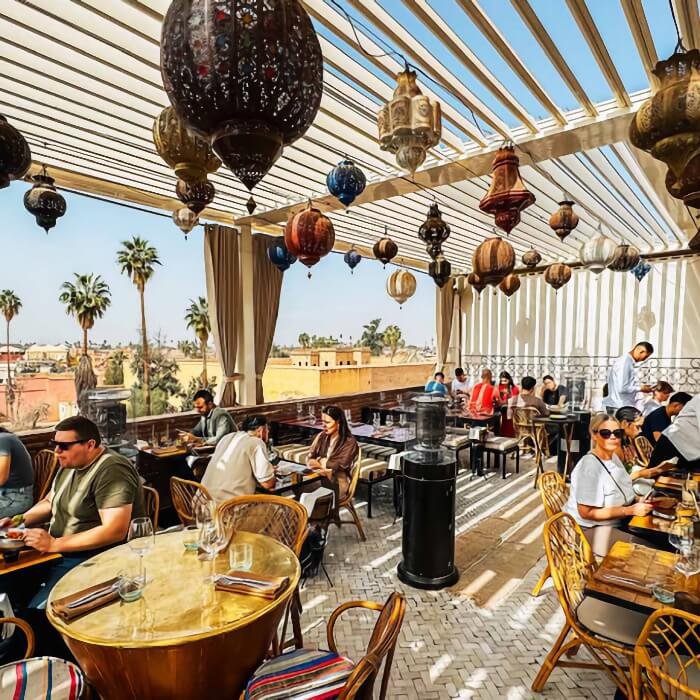
Dining above the Medina with Koutoubia views — best for sunset and early evening
-
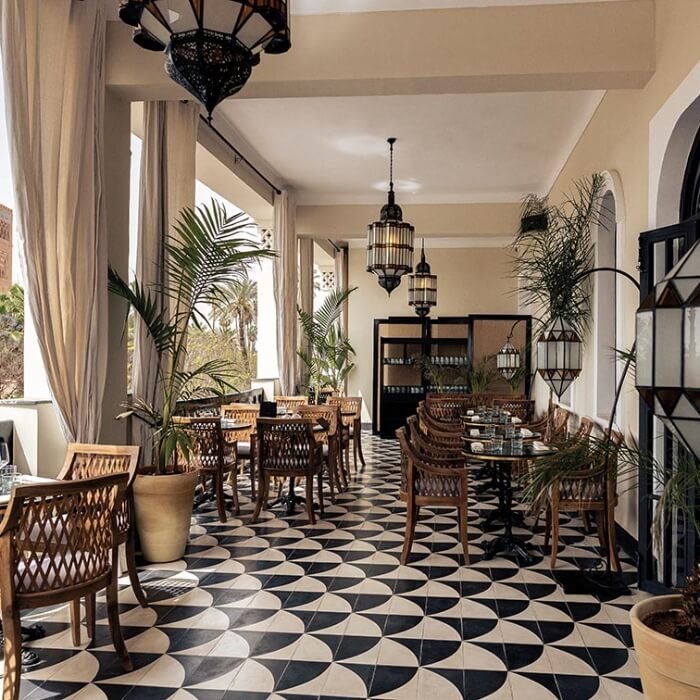
Cafés
From the old French-style terrasse cafés of Gueliz to the riad garden cafés of the Medina
-
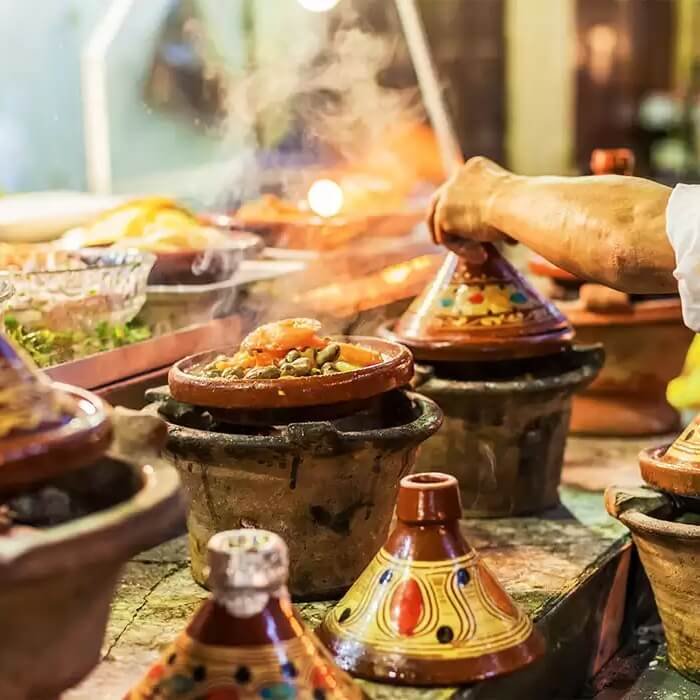
Street Food
Jemaa el-Fna after dark, souk snacking, and the best individual street food items to find
Signature Dishes & Culinary Experiences of Marrakech
Four dishes and drinks that define the Marrakech table. Each has its own etiquette, season, and correct setting.
-
Tajine
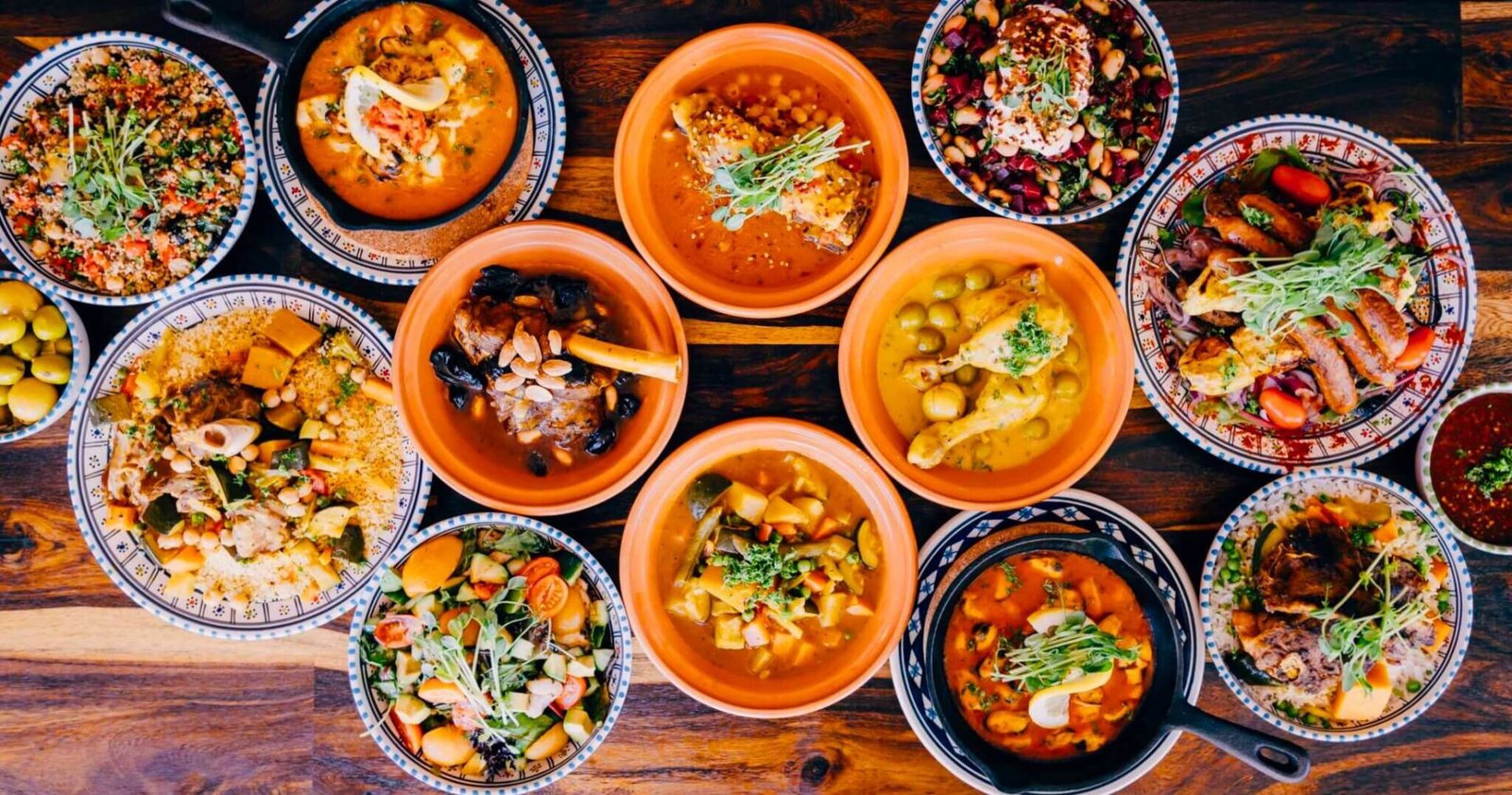
Morocco's primary slow-cooked dish — meat or fish with vegetables and preserved ingredients, cooked in a conical clay vessel over a low charcoal brazier. The clay retains heat and moisture; the result is tender and aromatic rather than heavily spiced. The classic versions in Marrakech are chicken with preserved lemon and olives, and lamb with prunes and almonds. The correct way to eat it is directly from the pot with bread. Quality varies enormously — the best tajines take two to three hours to cook and are not available at tourist-speed restaurants.
-
Pastilla
Marrakech's most distinctive dish and one of the most technically demanding in Moroccan cuisine. Traditionally pigeon (now often chicken or seafood) with almonds, eggs, and cinnamon, enclosed in paper-thin warqa pastry and dusted with powdered sugar and cinnamon. The combination of savoury, sweet, and flaky is genuinely unusual. It appears as a starter in traditional restaurant menus and is worth ordering specifically wherever it's listed — it's a reliable indicator of kitchen quality.
-
Harira
The standard Moroccan soup — tomato, lentils, chickpeas, coriander, and vermicelli, thickened with flour and given acidity with lemon. Eaten at breakfast and as the dish that breaks the Ramadan fast. At street level it costs 5–10 dirhams a bowl and is one of the best-value eating experiences in the city. Served with dates and chebakia (honey-sesame pastry) in the traditional combination. Available at souk stalls throughout the day.
-
Moroccan Mint Tea
Green tea (gunpowder variety) steeped with fresh spearmint and a significant quantity of sugar — served in small glasses poured from height to create foam. The pouring ritual is intentional and social: the height aerates the tea and the process signals hospitality. It's not optional to skip the sugar in traditional settings. Served at every café, riad, and restaurant and at the beginning of most meals as a welcome gesture.

These four are the baseline. Beyond them: bissara (fava bean soup with cumin and olive oil, a Medina breakfast staple), mechoui (whole slow-roasted lamb, available at specific souk stalls in the Medina from mid-morning), and msemen (layered flat bread served with honey and argan oil, the correct Marrakech breakfast).
Why Marrakech Is Worth Eating Seriously
Marrakech’s food reputation is built on specific things rather than general excellence. The traditional Moroccan kitchen — tajine, couscous, pastilla, preserved lemons, argan oil — is genuinely one of the world’s great culinary traditions, and Marrakech is one of the two or three cities where it’s most fully expressed. A proper Moroccan meal at a good traditional restaurant runs through five or six courses: harira or soup, briouates (small filled pastries), tagine or mechoui, couscous, pastilla, fruit, mint tea. The sequence takes two hours and is among the most complete dining experiences available in North Africa.
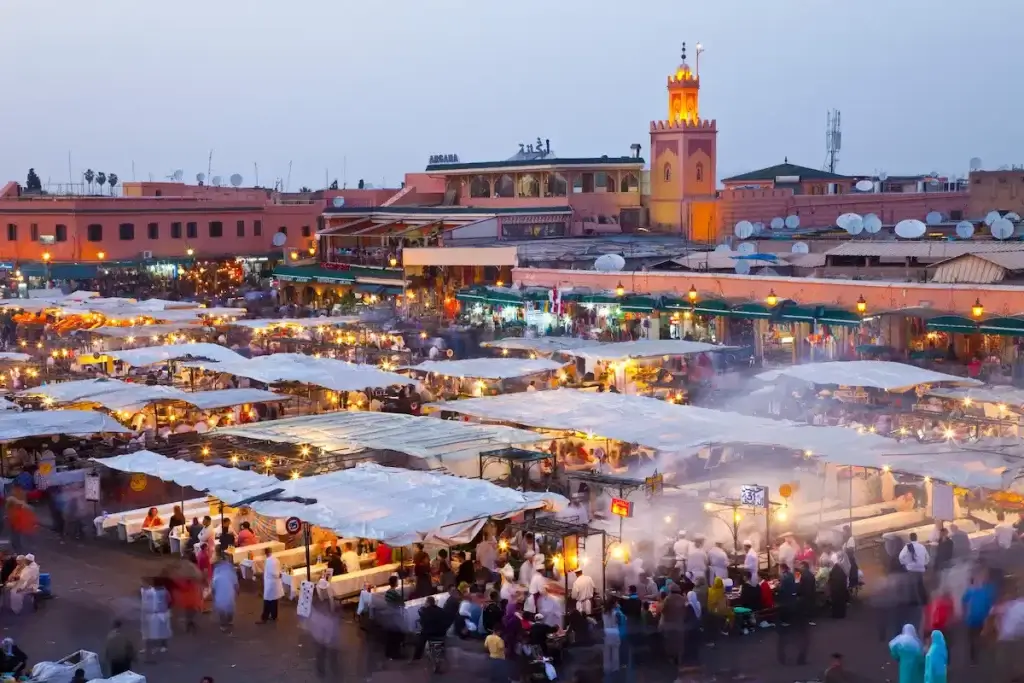
The street food scene at Jemaa el-Fna is separately significant. The evening food stalls — numbered and operating from around 6pm — serve snail soup, grilled merguez, fried fish, sheep’s head, harira, and fresh-squeezed orange juice. The stall operators are aggressive with tourist recruitment, which puts some visitors off, but the food itself is legitimate and the atmosphere after dark is unlike anywhere else in the country.
The modern restaurant scene in Gueliz and Hivernage has developed significantly since the 2000s and now covers French bistros, Italian restaurants, Japanese, Lebanese, and a Moroccan-European fusion category that ranges from excellent to tourist-grade. It’s a fully functional international dining scene within twenty minutes of the Medina.
The weakest category is mid-range restaurants in the Medina aimed primarily at tourists — reliable in terms of safety but often serving competent rather than distinctive food at prices that don’t reflect quality. The best eating in Marrakech is at the extremes: very cheap street food and very good traditional restaurants.
Where to Eat in Marrakech by Neighborhood
Four neighborhoods, four different dining registers. The choice of where to eat is often a choice of what kind of evening to have.
Medina
The Medina contains the full spectrum from 5-dirham street food to €100-per-head set menus at destination restaurants. The main food geography: Jemaa el-Fna and its surrounding streets for street food and budget restaurants; the northern Medina around Mouassine and Dar el-Bacha for mid-range and upscale traditional Moroccan; the area around the Bab Doukkala for local-facing restaurants and breakfast spots. The landmark high-end addresses — Dar Yacout (rue Sidi Ahmed Soussi), Dar Moha (rue Dar el-Bacha), and the riad restaurants that require advance booking — are all in the Medina. For street food specifically: the Jemaa el-Fna stalls from 6pm, the snail soup vendors on the square itself from mid-afternoon, and the mechoui stalls in the souk around Rahba Kedima for slow-roasted lamb from mid-morning.
Hivernage
The hotel district south of the Medina, where the highest concentration of luxury hotel restaurants is found. La Mamounia’s restaurant circuit (Le Français brasserie, L’Italien, the Moroccan restaurant) is the most prestigious address in the city. The neighbourhood also has several standalone upscale restaurants and is where most formal dinner reservations in Marrakech are made. Less interesting for casual eating than the Medina or Gueliz — the street-level options are limited and aimed at hotel guests.
Gueliz
The modern city north of the Medina is where Marrakech’s local dining scene operates most independently of tourism. The main axis is Avenue Mohammed V and the streets parallel to it: French-style brasseries, Italian restaurants, wine bars, good quality cafés with terrace seating. This is where Marrakech residents eat out. The quality-to-price ratio is better here than in the tourist-facing Medina restaurants, and the atmosphere is more relaxed. Worth a specific evening rather than treating as a fallback.
Palmeraie
The palm grove north-east of the city is resort territory — most eating here is at the luxury hotel restaurants within the large properties (Amanjena, Mandarin Oriental, Four Seasons). These are among the most expensive restaurants in Morocco and serve international menus alongside Moroccan options. Not worth a specific trip for food; worth knowing if staying in the area.
Explore Restaurants by Category
Five categories, each linked to its own guide. The image-text cards below describe what each section covers and who it’s best suited for.
Fine Dining → Evenings of Elegance
The Marrakech fine dining circuit centres on riad restaurants in the Medina and the major luxury hotel properties. The best addresses — Dar Yacout, Dar Moha, La Mamounia’s Moroccan restaurant, and the Royal Mansour’s Le Marocain — serve elaborate traditional Moroccan menus in settings that represent the formal expression of Moroccan hospitality: lantern-lit courtyards, zellige tile floors, live gnawa music. Advance reservation is required at all of them. Expect to spend €60–150 per person including drinks.
Traditional Moroccan → Flavors of Tradition
The category that most visitors come for and most get wrong by eating at tourist-facing Medina restaurants rather than the places Moroccan families actually use. The guide covers the restaurants that serve the full traditional meal sequence properly — tagine cooked to order rather than reheated, pastilla made in-house, couscous served on Fridays as tradition dictates. Price range: €15–40 per person.
Rooftop Restaurants → Dine Above the City
Marrakech has one of the highest concentrations of rooftop dining in North Africa. The best rooftop restaurants sit above the Medina with direct sightlines to the Koutoubia minaret and, on clear days, the Atlas. Most function as cafés by day and restaurants from sunset. The guide covers the ones worth the premium over street-level eating and the ones to avoid despite good views.
Cafés → Moments of Pause
Two distinct café cultures in Marrakech: the French-influenced terrasse cafés of Gueliz (Café du Livre, Grand Café de la Poste, and their successors), and the riad garden cafés inside the Medina that have developed since the 2000s. Both serve coffee, mint tea, and light food; the character is entirely different. The guide covers both and includes the best spots for a working morning, a slow afternoon, or a mid-sightseeing break.
Street Food → Streets Alive with Flavor
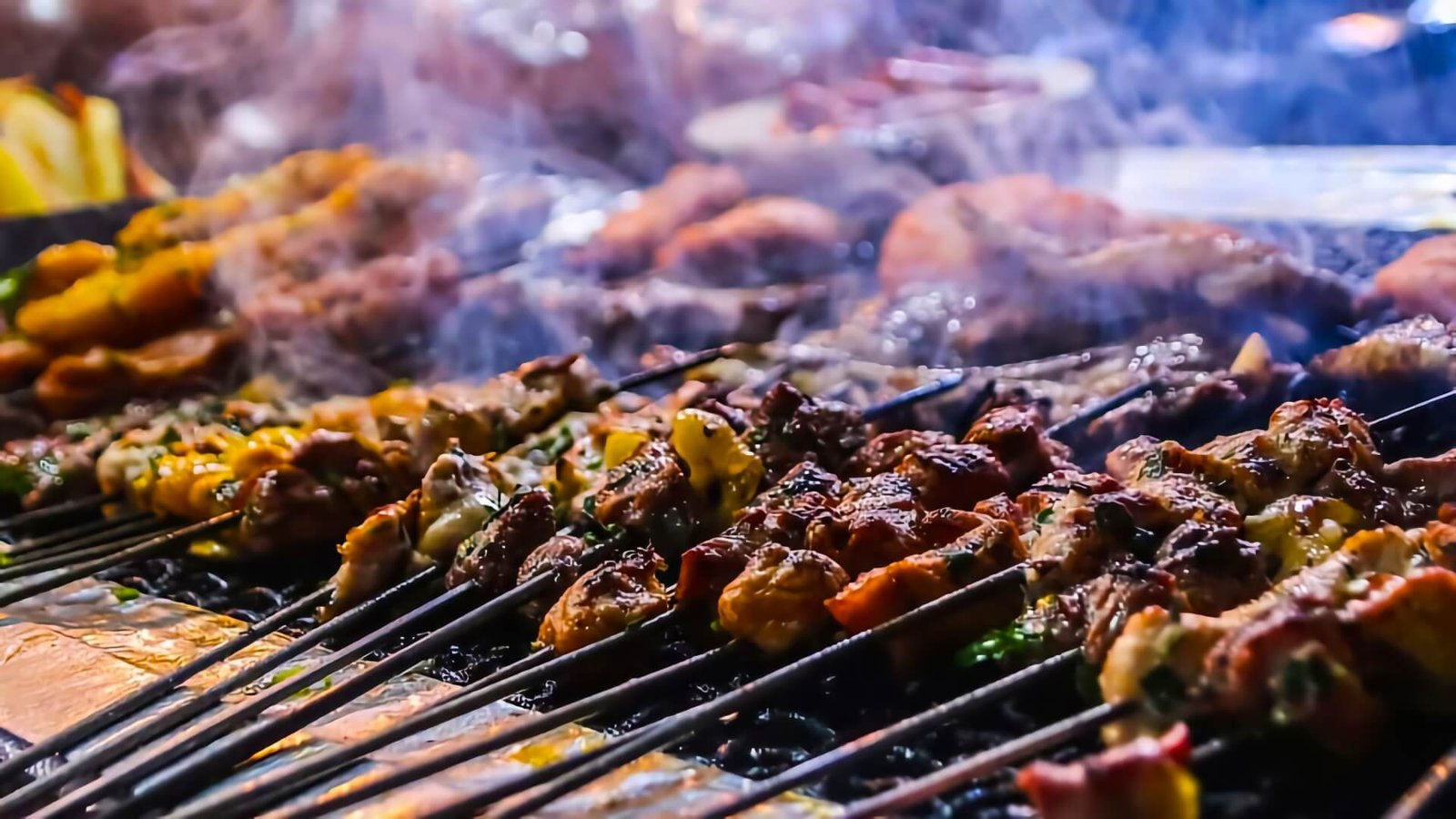
The Jemaa el-Fna evening stalls are the most famous street food experience in Morocco and worth doing once with clear expectations: the food is legitimate, the prices require negotiation, and the recruitment by stall operators is part of the experience rather than a problem to solve. Beyond the square: the souk food circuit (msemen at the Mellah market, bissara at the stalls near Bab Doukkala, mechoui from the Rahba Kedima vendors), and the specific items worth tracking down by name.
Essential Dining Tips for Marrakech
Eight practical notes that apply across all categories.
- Couscous is a Friday dish. Traditional Moroccan households eat couscous on Fridays after the midday prayer. Good traditional restaurants follow this — if you want the real thing, visit on a Friday. Couscous served every day of the week at a tourist restaurant is rarely made fresh.
- The best tajines take two to three hours. A properly slow-cooked tajine cannot be produced in twenty minutes. Restaurants with rapid service are reheating or using a pressure cooker. If you want the real thing, choose a restaurant that requires advance booking or go at off-peak hours.
- Jemaa el-Fna stall prices are negotiated, not fixed. Agree on the price of everything before sitting down at any evening food stall on the square. The posted menus are a starting point for visitors; locals pay less. This is normal and not a scam — it is how the market functions.
- Alcohol is available in Marrakech but not everywhere. Licensed hotels, upscale restaurants in Hivernage and Gueliz, and some Gueliz wine bars serve alcohol. Most Medina restaurants and all street food venues are alcohol-free. The best Moroccan wine is French-influenced — Gris de Guerrouane is the standard local rosé.
- Breakfast in a riad is one of the best meals in Marrakech. A proper Moroccan breakfast — msemen or beghrir (spongy semolina pancake), argan oil and honey, fresh orange juice, coffee, mint tea, and seasonal fruit — is worth more than it costs and sets the standard for the day. Most riads include it.
- Tipping is 10–15% at restaurants. At street stalls, rounding up or leaving small change is appropriate. At cafés, 5–10 dirhams is sufficient. Tipping is expected at all levels; it is not optional at restaurants that have served you attentively.
- Reserve ahead for fine dining and rooftop restaurants. Dar Yacout, Dar Moha, La Mamounia’s Moroccan restaurant, and the better rooftop addresses are fully booked on weekend evenings. Booking forty-eight hours ahead is the minimum; a week ahead for high season (October–November, March–April).
- Lunch at a Medina restaurant between 1pm and 3pm is the best-value meal of the day. Most traditional restaurants offer a fixed lunch menu at prices significantly below dinner. The kitchen is at its freshest and the courtyards are quieter than in the evening.
For the full guide to where to stay while eating your way through these categories, the Marrakech travel guide covers the neighbourhoods and accommodation options that put you closest to the food.
 Marrakist Concierge