
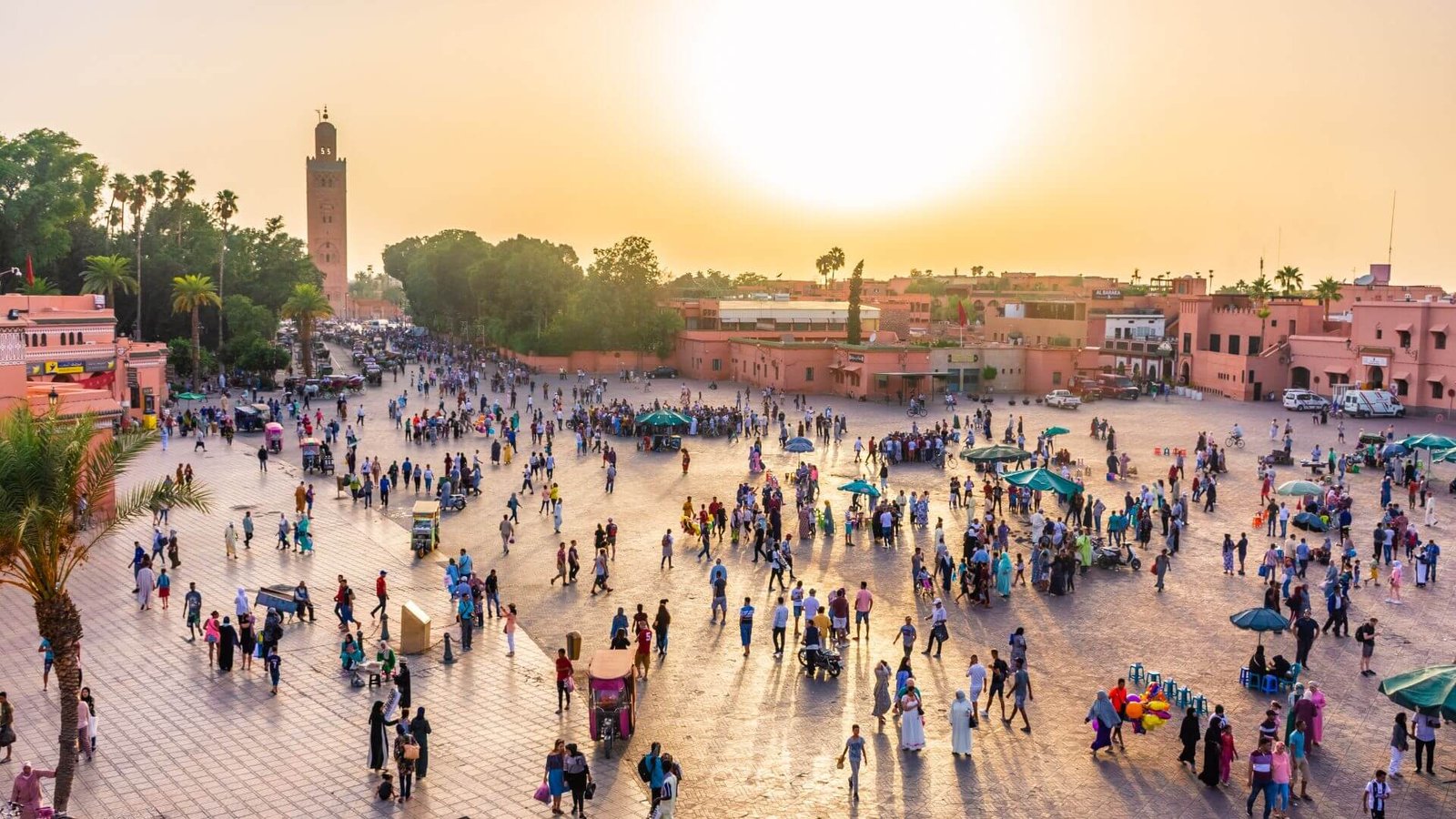
The Koutoubia to Bahia Palace to souk circuit to Jemaa el-Fna sequence is the standard first-day architecture for a reason — it follows the Medina’s geographic logic from west to east, builds intensity gradually, and ends at the square at the right time.
3 Days in Marrakech: The Perfect Itinerary for a Complete Experience
Three days is the correct baseline for a first visit to Marrakech. It covers the Medina’s essential monuments and souk circuit without rushing them, adds Majorelle Garden and Gueliz on Day 2, and leaves Day 3 genuinely flexible — for deeper cultural exploration, a hammam and rest, or a half-day escape to the Atlas Mountains or Agafay desert. The two-day itinerary requires choosing what to leave out; the three-day itinerary doesn’t.
What this plan covers:
- Day 1: Koutoubia, Bahia Palace, the souk circuit, and Jemaa el-Fna after dark
- Day 2: Majorelle Garden, the YSL Museum (optional), Gueliz lunch, Le Jardin Secret, and a traditional hammam
- Day 3: Three options — deeper Medina exploration, rest and riad time, or a half-day outside the city
- Practical sections on where to stay, how to get around, and what the city actually requires
- Bahia Palace
- 8,000 m² — allow 45–60 min, not a rushed circuit
- Le Jardin Secret
- 3,000 m², private until 2016 — still one of the calmest spots in the Medina
- Licensed guide
- ~200–350 dirhams for a 3-hour morning — worth it for the monuments
- Day 3 half-day escape
- back in the city by 1–3pm — afternoon still yours
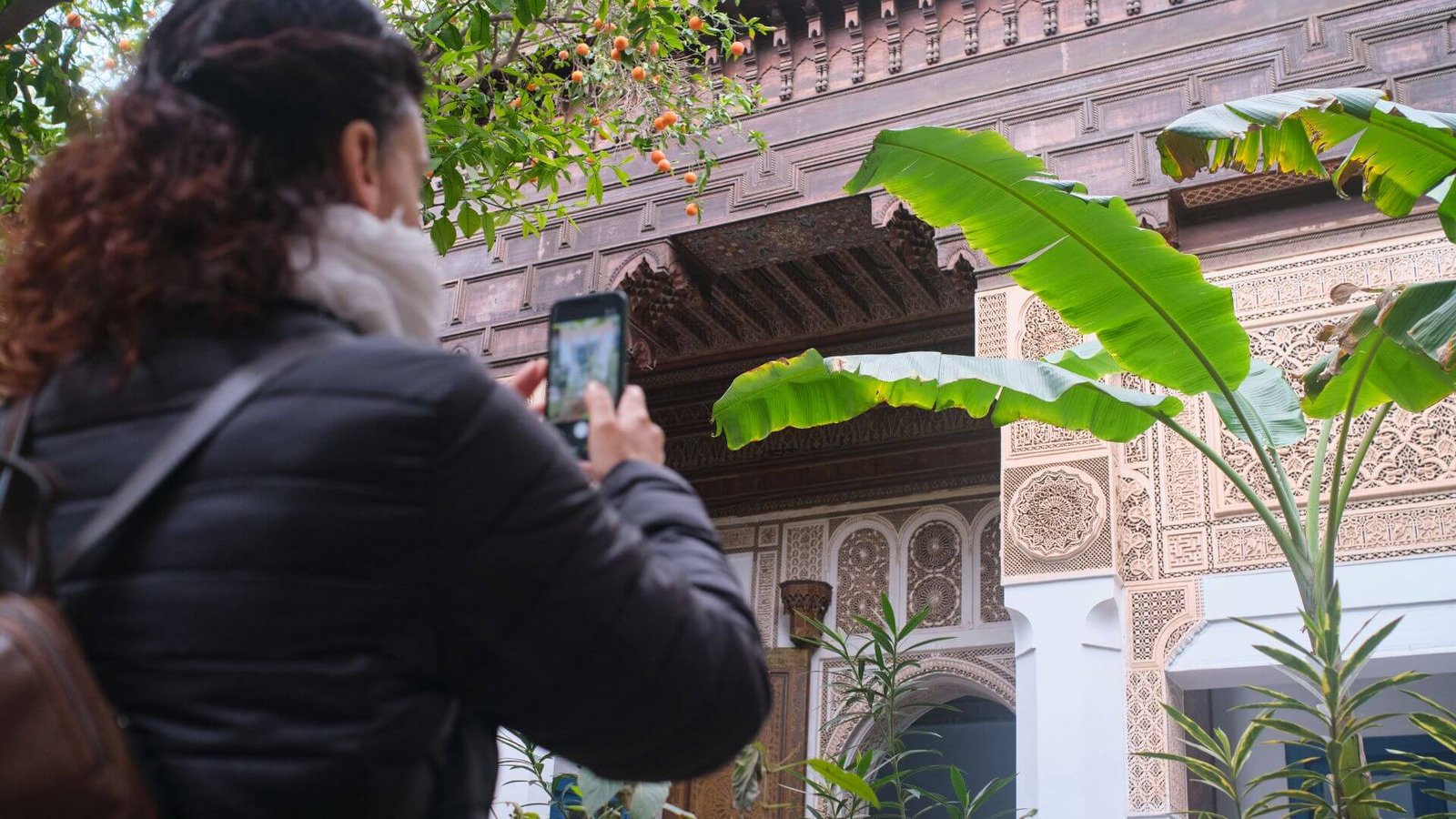
3 days in Marrakech — monuments, souks, a hidden garden, a hammam, and one day to decide what you want more of: the format that fits the city
Your 3-Day Marrakech Itinerary at a Glance
Three days structures into a logical progression: the first day establishes the Medina — its landmarks, its souk geography, its evening character at the Jemaa el-Fna. The second day provides contrast — the garden quarter, Gueliz, a hidden garden inside the Medina, the hammam. The third day is intentionally open because by the end of Day 2, most visitors have a clear sense of what they want more of.
Day 1: The Heart of Marrakech (Medina & First Impressions)
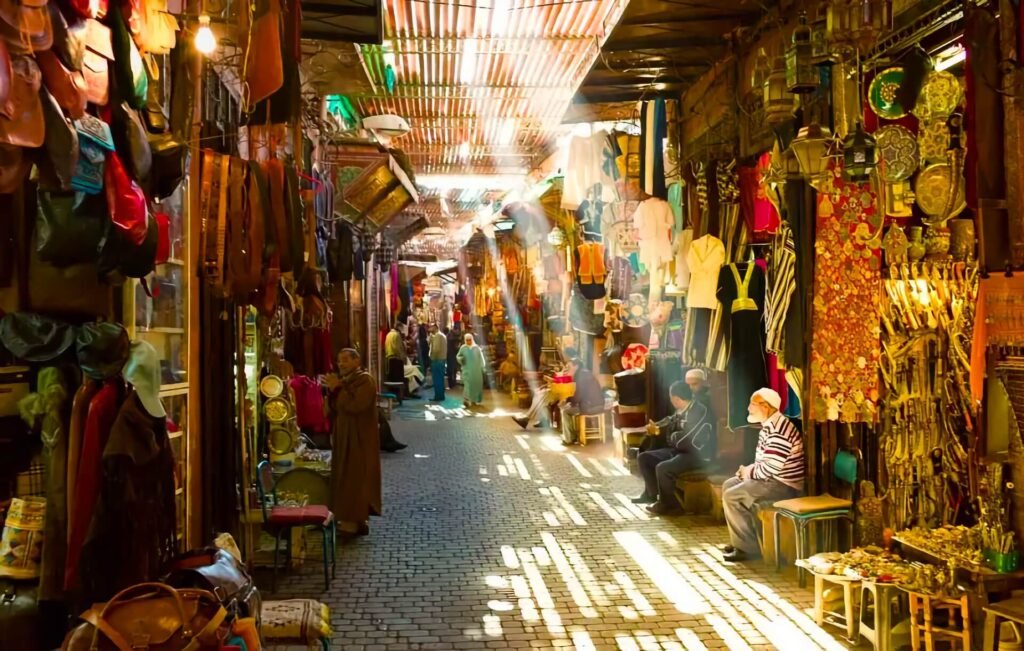
Day 2: Culture, Gardens & Refined Marrakech
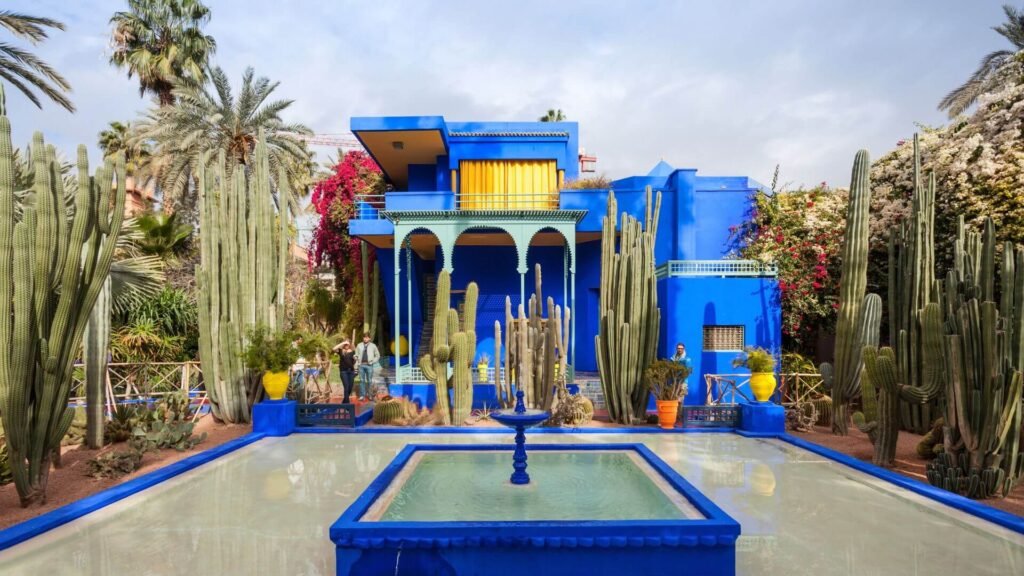
Majorelle Garden before the crowds arrive, a midday shift to Gueliz, Le Jardin Secret in the northern Medina as a peaceful afternoon option, and a hammam to close the day. The complete counterweight to Day 1.
Day 3: Choose Your Experience (Relax, Explore or Escape)
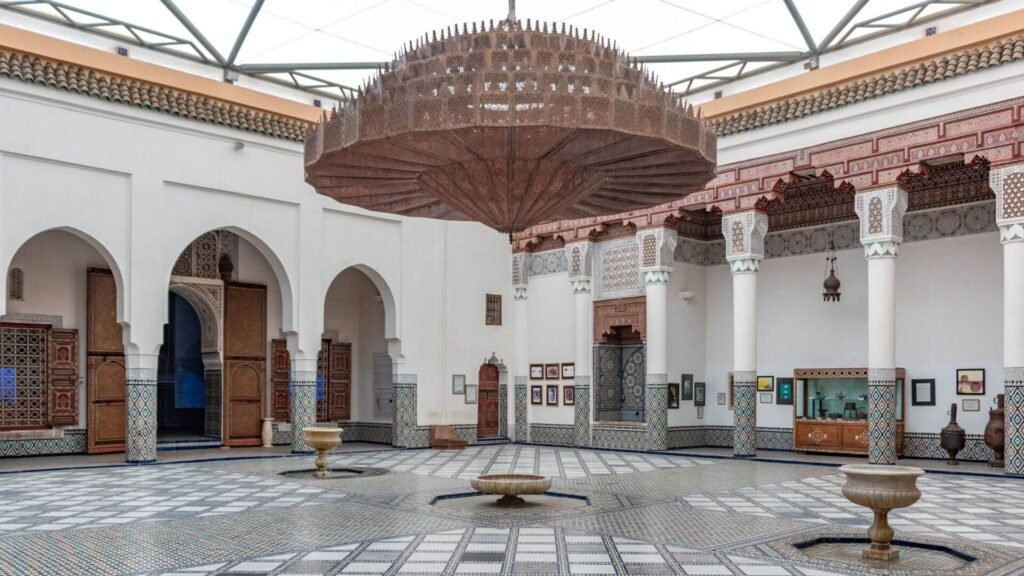
The three options are genuine alternatives, not a ranked list. Cultural depth (Medersa Ben Youssef, Maison de la Photographie), rest and riad time, or a half-day outside the city — each is the right choice for a different kind of traveller.
Local tip: Three days allows for the one thing two days doesn’t: the ability to revisit. A street in the souks you walked past on Day 1 and wanted to explore, a café you noted but didn’t stop at, a section of the Medina that looked interesting from the rooftop at lunch. The third day is where those revisits happen.
Map of Your 3-Day Marrakech Itinerary
The map shows all three days. Day 1 is contained within the Medina — Koutoubia at the western edge, Bahia Palace at the southeastern end, the souk circuit in the centre, Jemaa el-Fna at the heart. Day 2 starts outside the Medina at Majorelle Garden (Gueliz, 15 minutes by taxi), returns to Gueliz for lunch, then moves back into the northern Medina for Le Jardin Secret. Day 3’s options are in different directions: the Medersa Ben Youssef option stays in the northern Medina; the rest option stays at your accommodation; the escape option leaves the city entirely.
Save the map offline before arriving. The three-day itinerary crosses in and out of the Medina multiple times, and having a reference point for where the day's activities sit in relation to each other is more useful than turn-by-turn navigation.
Day 1: First Contact with Marrakech (Medina, Souks & Sunset Magic)
Day 1 uses the Medina’s geography in the sequence that makes the most sense: landmarks first (when your capacity for absorption is highest), souks after lunch (when the energy of browsing and getting lost suits the mid-afternoon), and the Jemaa el-Fna in the evening (when the square is worth being at). Reversing this order — souks in the morning, monuments in the afternoon — produces a more exhausting day.
Morning: Ease Into the Medina
Start between 8:30 and 9:00am. The Medina at this hour has a different character from any other time — quieter, the vendors setting up rather than in selling mode, the morning light directional on the ochre walls.
- Koutoubia Mosque (Exterior): 70 metres, the tallest structure in the Medina, visible from most of the old city. Walk the garden perimeter rather than photographing from one angle — the full tower reads best from the western garden.
- Walk toward the Medina: The approach from the Koutoubia through the Jemaa el-Fna gives you a first view of the square before it’s busy — useful orientation for the evening return.
- Bahia Palace: Allow 45–60 minutes. The 19th-century palace covers 8,000 square metres across a series of courtyards; the cedar ceilings and carved stucco require time rather than a hurried circuit.
Why this works: monuments in the morning means your first experience of the Medina is spatial and architectural rather than commercial. The contrast when you enter the souk circuit after lunch is part of what makes the afternoon memorable.
Lunch: Pause Above the Chaos
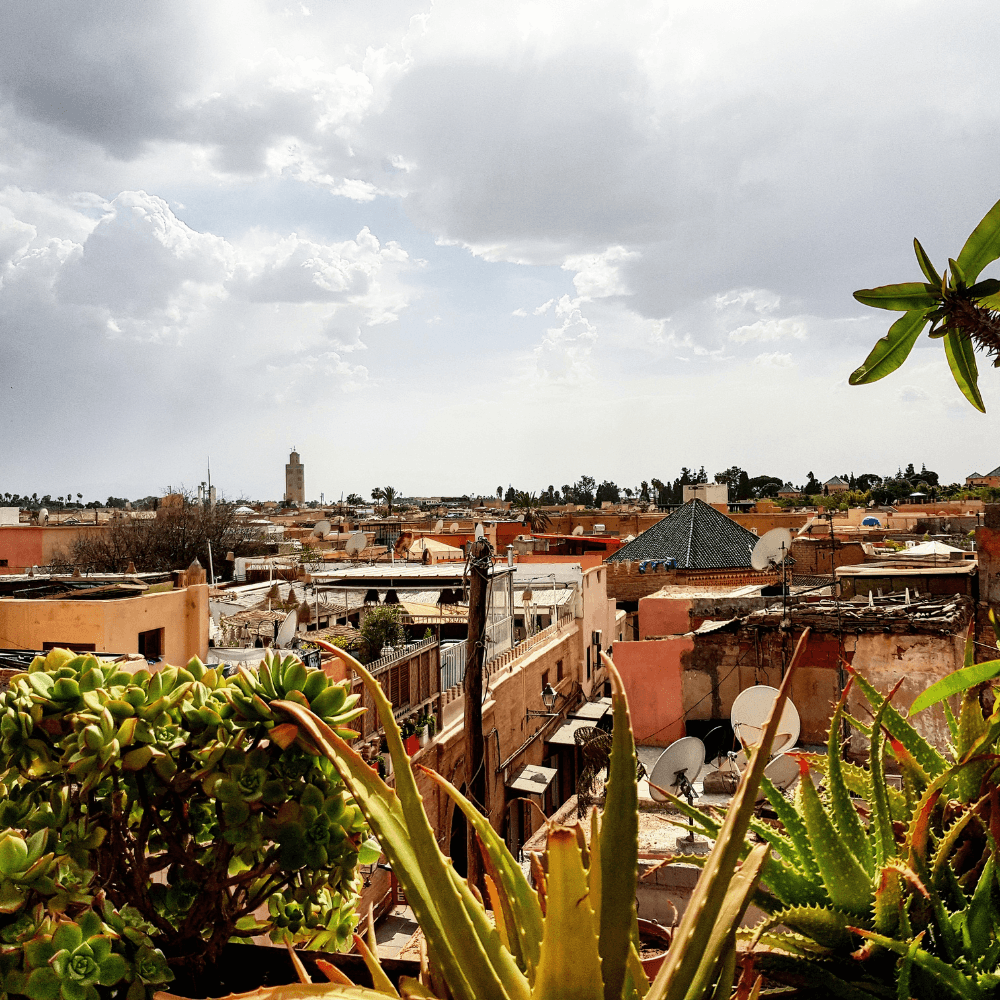
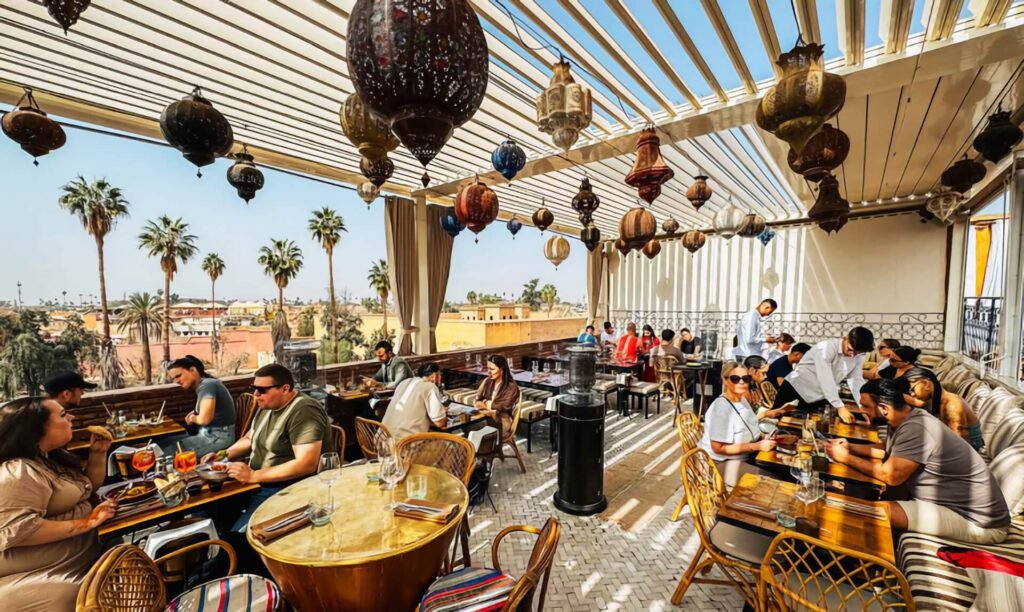
By midday the Medina is operating at full intensity. A rooftop lunch is the correct response — it gets you above the street-level pressure without leaving the Medina.
- Rooftop Lunch (Nomad or Café des Épices): Nomad is two floors above Café des Épices and has a better Koutoubia sightline. Café des Épices overlooks the Rahba Kedima spice square directly. Both are within five minutes of each other near the Rahba Kedima. The choice is the view rather than the food.
Allow 45–60 minutes here. The function of this break is recovery as much as eating — the afternoon souk circuit is more enjoyable if entered rested rather than already at capacity.
Afternoon: The Souks Experience
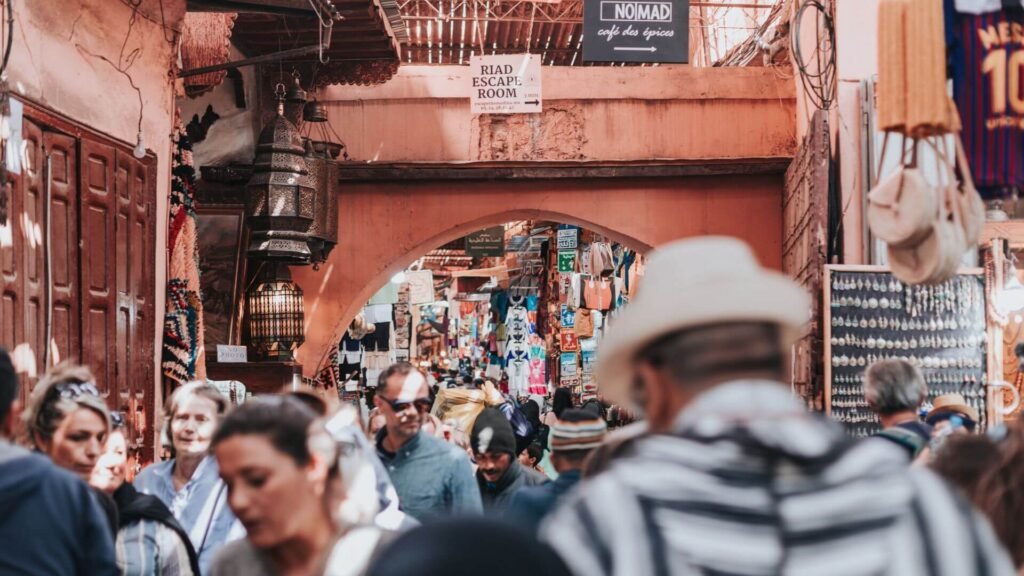
The souk circuit from the Rahba Kedima northwest through Souk Semmarine toward the central souk spine takes 60–90 minutes at a walking pace with stops.
- Wander through Souk Semmarine — the main commercial artery, wider than the side alleys, good for orientation
- Pass by Rahba Kedima (spice square) — already visited at lunch but worth a second pass in the afternoon light
- Explore smaller alleys and artisan areas — the tannery quarter (north of the Rahba Kedima), the metalworkers, the woodworkers’ section
The souk circuit is not a grid. The productive approach is to pick a direction and walk it, using the Koutoubia minaret (visible above the roofline from higher ground) as a reorientation point when the position becomes unclear.
Evening: Sunset & Jemaa el-Fna Transformation
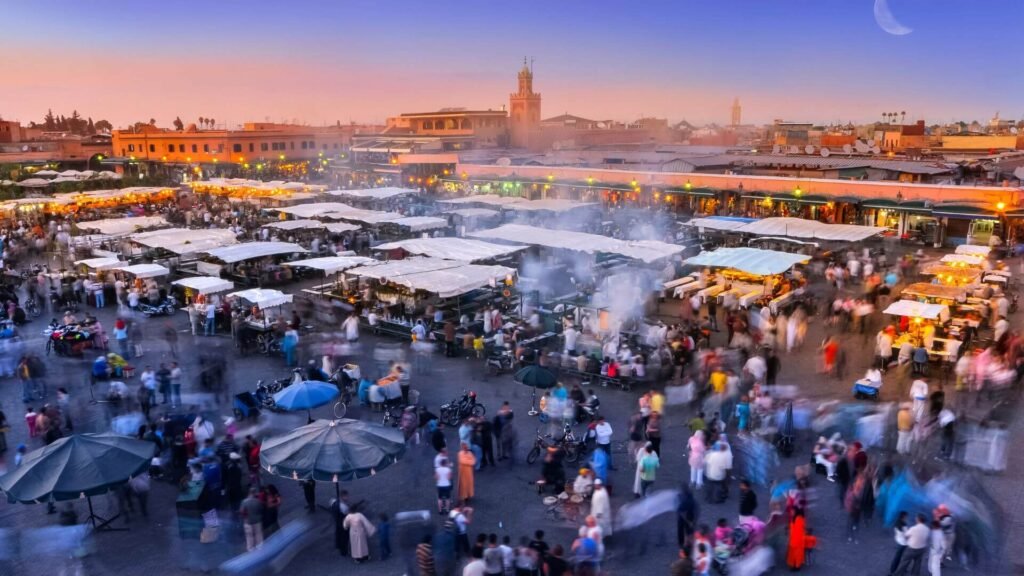
The square changes character between 6 and 9pm. The food stalls set up from 5pm; the musicians and performers begin from around 7pm; the full evening programme is in place by 8pm.
- Sunset Rooftop: The terraces on the northern side of the Jemaa el-Fna — Café de France and the hotel terraces — give the best direct view over the stall setup below. Arrive 30–45 minutes before sunset for the best seat.
- Night Atmosphere: The numbered food stalls, the street performers, the musicians — the square at full operation. Walk the perimeter first, choose a stall by which grill looks most active, sit down. The vendor engagement stops once you’re seated.
Stay a while. The square between 8 and 9:30pm, when the energy is at its peak and the smoke from a hundred grills rises into the lit sky, is one of the specific experiences that makes Marrakech different from anywhere else.
Day 2: Gardens, Culture & the Elegant Side of Marrakech
Day 2 is built around contrast. Majorelle Garden after opening time — before the crowds — gives a completely different register from the Medina souk experience of Day 1. The shift to Gueliz for lunch introduces the French-colonial modern city. Le Jardin Secret in the northern Medina is a rare quiet courtyard inside the Medina itself. The hammam in the evening closes a day that has covered more geographic and atmospheric ground than Day 1.
Morning: Gardens & Design (Start Early Again)
Morning: Gardens & Design (Start Early Again)
Majorelle Garden opens at 8am and is at its best in the first 30–45 minutes before group arrivals begin.
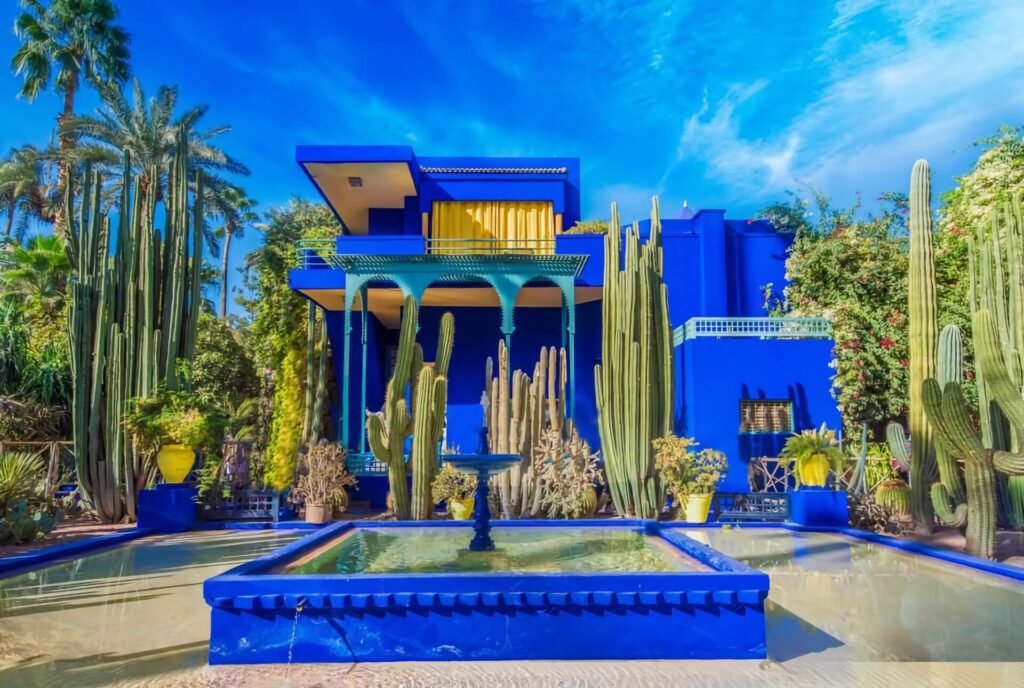
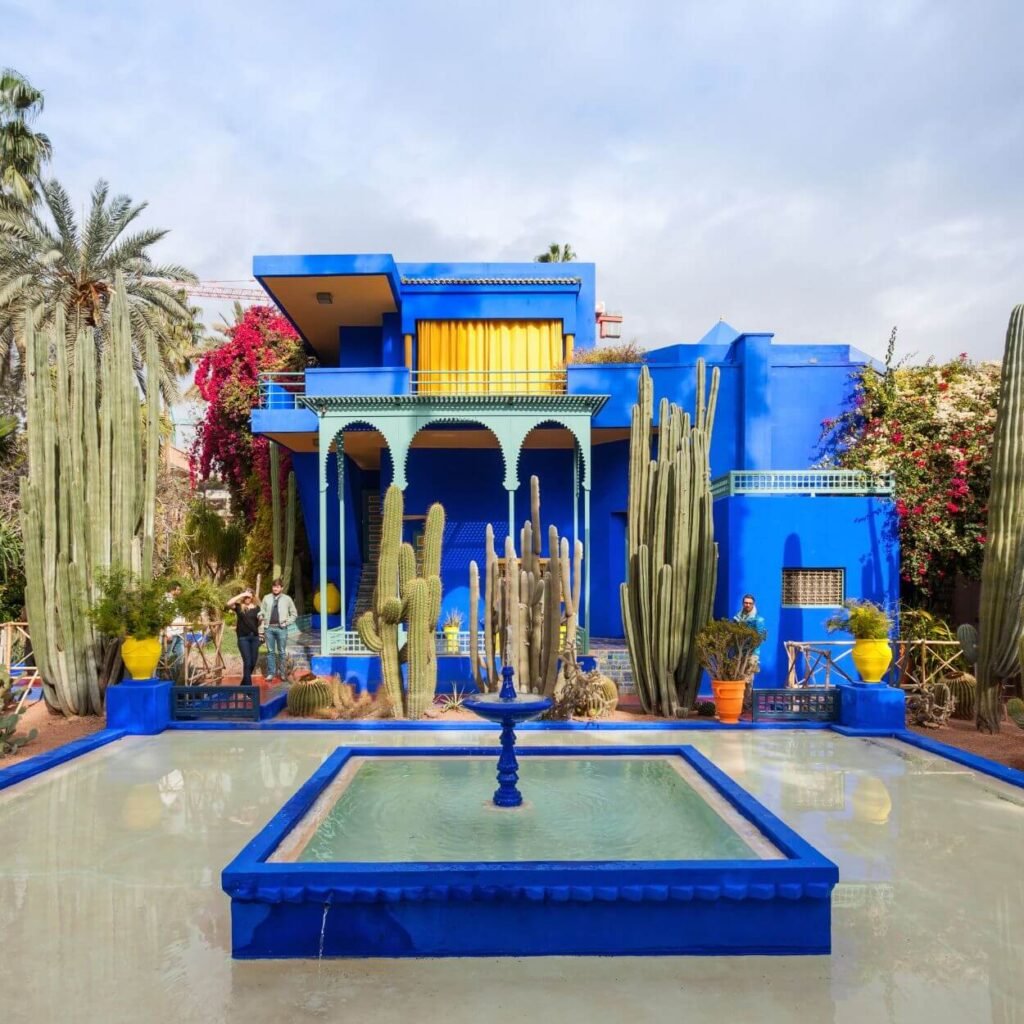
- Jardin Majorelle: Created by Jacques Majorelle from 1924 and restored by Yves Saint Laurent and Pierre Bergé from 1980. The garden covers 1.2 hectares; the Majorelle blue of the pavilion and plant containers is a specific colour formulated by Majorelle himself and not precisely replicable elsewhere. Allow 30–45 minutes for the garden and an additional 20–30 minutes for the Berbère Museum inside the pavilion if the collection interests you.
- Yves Saint Laurent Museum (Optional): Immediately adjacent. The permanent collection documents YSL’s Moroccan period (1966–2008) — relevant specifically to Marrakech, since the city’s colour palette and architectural vocabulary directly influenced his work. If fashion or design history is not a priority, use the time for a longer breakfast in Gueliz instead.
Book both tickets in advance — the garden sells out on peak days (October–November, March–April weekends).
Powered by GetYourGuide
Midday: Slow Lunch & a Different Vibe
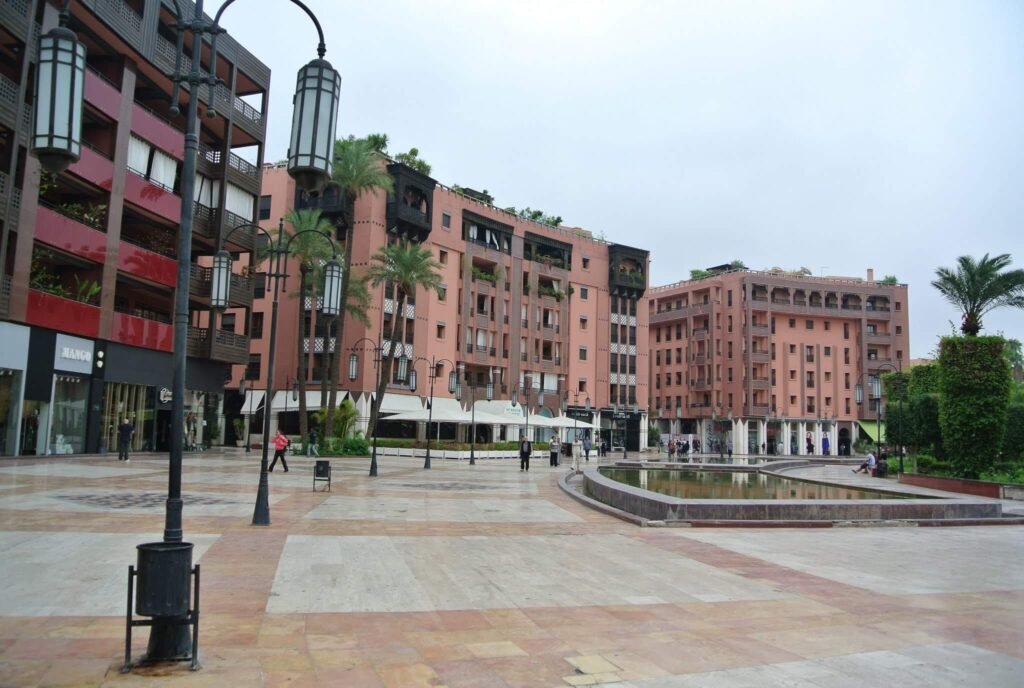
The 15-minute taxi ride from Majorelle Garden to Gueliz is a transition between two versions of Marrakech. The Medina’s compressed medieval streetscape gives way to avenue Mohammed V’s planted median strips, café terraces, and colonial-era buildings.
- Lunch in Gueliz: Grand Café de la Poste (avenue Imam Malik) is the reference address — 1920s colonial architecture, terrace, reliable French-influenced menu. Café du Livre (rue Tariq ibn Ziad) is quieter, better for working. Both are within five minutes of each other.
- Optional stroll: The blocks around Carré Eden mall have the highest density of specialty coffee shops and newer restaurants in Gueliz. Worth noting for an afternoon coffee if Day 3 brings you back to this area.
Afternoon: Cultural Depth or Hidden Gem
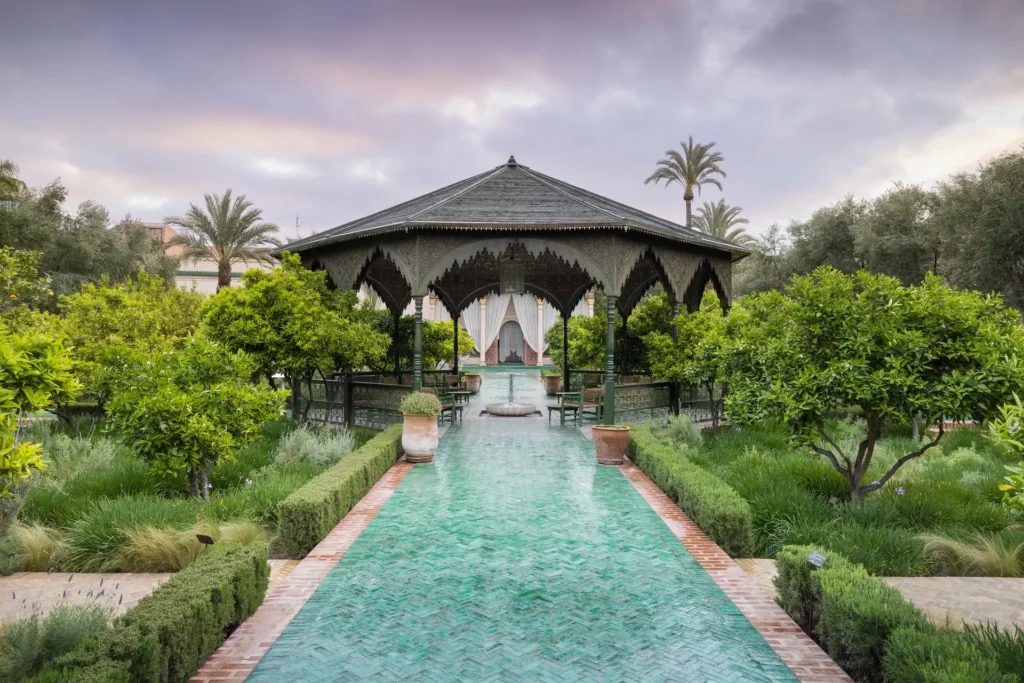
Le Jardin Secret is in the northern Medina near the Mouassine fountain — a 16th-century riad garden that was private until 2016, covering 3,000 square metres with two distinct garden sections (Islamic and exotic). It is genuinely calm, rarely crowded compared to the major monuments, and one of the few places inside the Medina that provides the stillness the riad architecture was designed for.
- Le Jardin Secret: Allow 45–60 minutes. The rooftop terrace has views over the northern Medina roofscape. Book tickets at the entrance; advance booking is rarely necessary.
- OR Relax at your riad: A genuine alternative for travellers who have found the Medina intensity higher than expected. A riad with a courtyard and a shaded seating area in the afternoon is the correct environment for recovery before the hammam.
Powered by GetYourGuide
Evening: Hammam & Relaxation
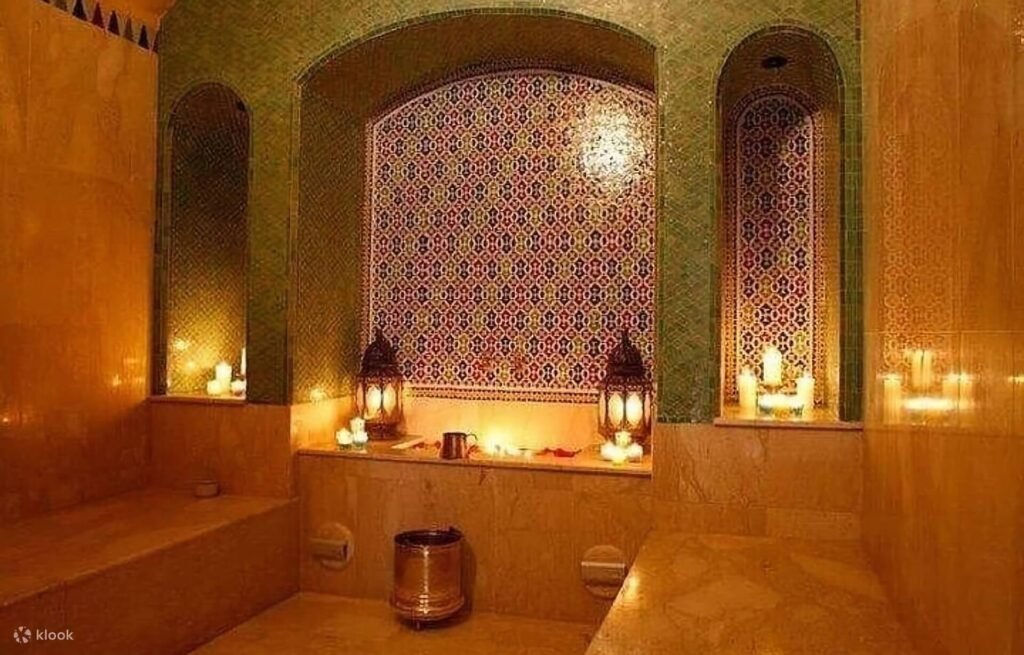
A traditional Moroccan hammam follows a fixed sequence: steam room, black soap kessa scrub, rinse, optional massage. The experience takes 60–90 minutes and produces a level of physical reset that two days of Medina walking specifically requires.
- Hammam Experience: For a first visit, choose a designed hammam (Hammam de la Rose near Mouassine, Les Bains de Marrakech, or a riad-based hammam) rather than a neighbourhood hammam. The sequence is the same but the communication and infrastructure are more accessible.
Book the evening slot in advance, especially on weekends. The 7–9pm slot is the busiest; 5–7pm is quieter and still leaves the evening free for dinner.
Powered by GetYourGuide
Day 3: Your Marrakech, Your Way (Relax, Explore Deeper or Escape)
By Day 3 the Medina’s navigation is familiar and the daily rhythm is established. This is the day when the itinerary becomes genuinely personal — the three options below are based on what the first two days have revealed about what the visit is for.
Option 1: Go Deeper Into the Medina (Culture & Hidden Gems)
The two-day itinerary covered Bahia Palace and the souk circuit. This option adds the Medina’s architectural and cultural depth — the monuments that require context to appreciate fully.
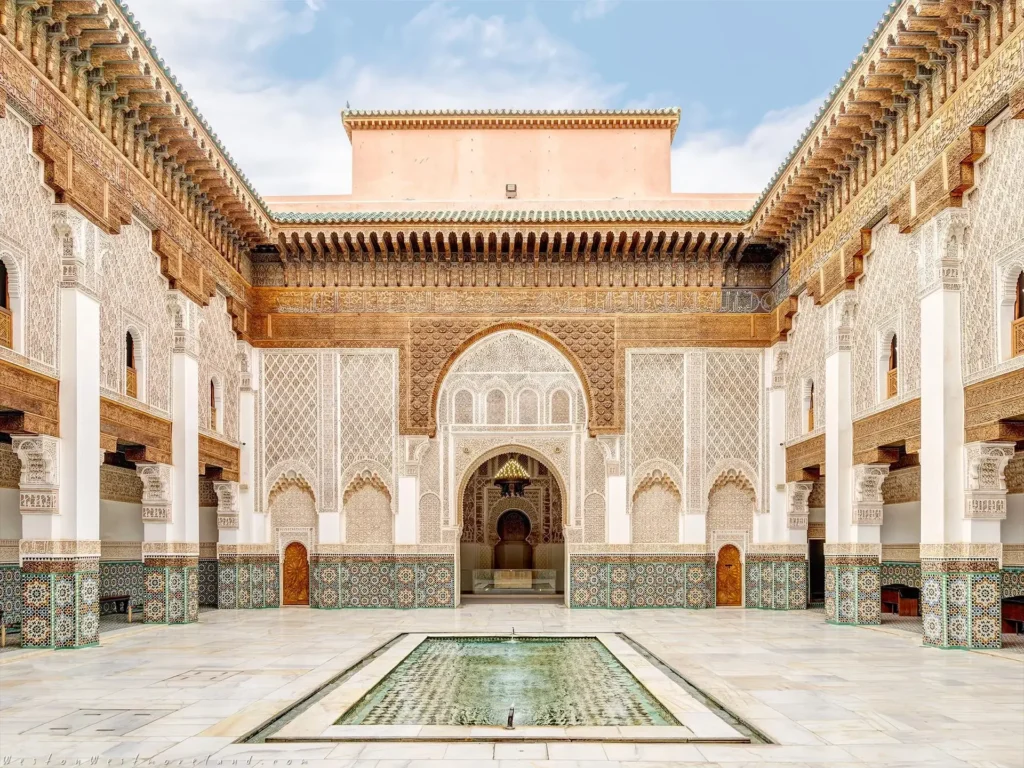
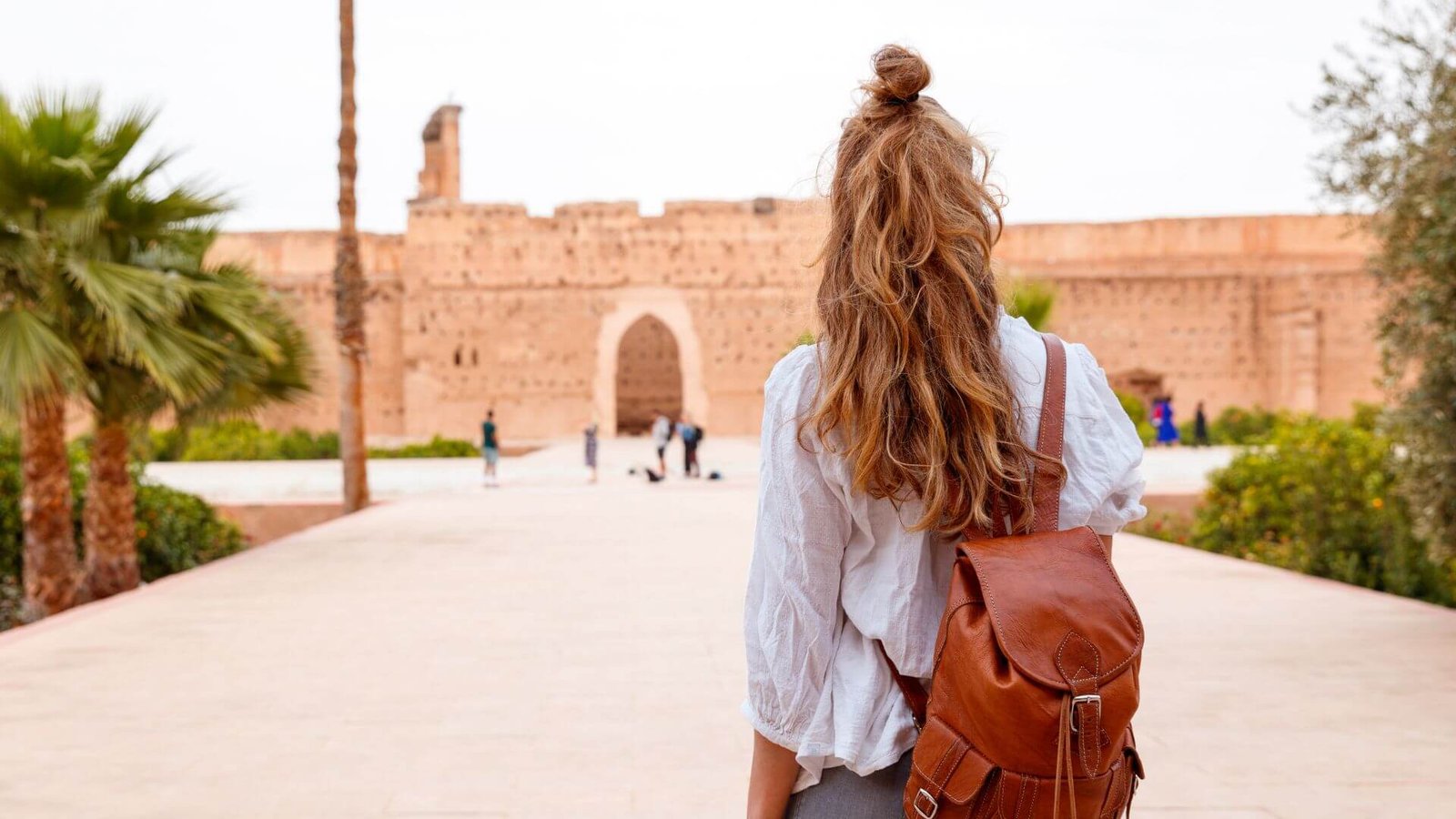
- Ben Youssef Madrasa: 14th-century Quranic school, the largest in North Africa at its height. The interior courtyard — carved stucco, cedar screens, mosaic zellige at the base — is architecturally among the most refined spaces in the Medina. Allow 45–60 minutes. Arrives crowds quickly after 10am; go early.
- Maison de la Photographie: rue Ahl Fès, northern Medina. Four floors of photographic archives documenting Morocco from the 1870s through the mid-20th century. The rooftop terrace has views over the northern Medina roofscape and serves mint tea. Allow 45–60 minutes.
- Slow exploration: The northern Medina around Mouassine and Dar el-Bacha is less visited than the central souk circuit and significantly quieter. The tanneries at the Chouara are in this area — the viewing terraces above them are free to access through the leather shops on the surrounding streets.
Why choose this: The first two days gave you the sensory experience of the Medina. This option adds the historical and architectural layers that make the experience complete.
Option 2: Relax & Enjoy the Moment
Two full days of Medina navigation is genuinely tiring for most visitors. This option is not a compromise — it’s a legitimate use of the third day for travellers whose energy levels call for it.
- Late breakfast at your riad — the riad breakfast (msemen, honey, argan oil, fresh orange juice, coffee, mint tea) is one of the best meals of any Marrakech trip and worth eating slowly rather than rushing through
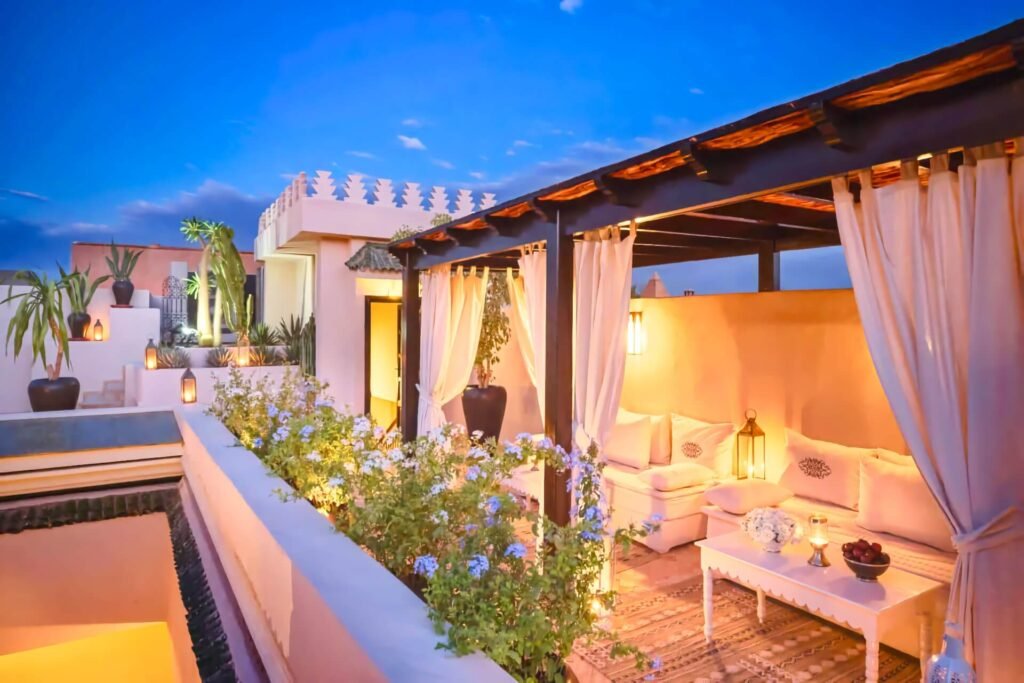
- Pool time or terrace relaxation — most Medina riads have a courtyard or rooftop; mid-morning before checkout time is when these spaces are quietest
- Casual café or light shopping — a morning in the northern Medina’s quieter streets with no fixed agenda, a stop at a neighbourhood café, possibly returning to the souks to complete a purchase from Day 1
The best travel memories are not always from the most active days. A morning of unhurried riad time and a slow walk through a familiar part of the Medina can consolidate the experience of the first two days in a way that another monument visit doesn’t.
Option 3: A Short Escape Outside Marrakech
Both options below are accessible by organised tour from Marrakech with transport included. Neither requires a hire car or independent planning.
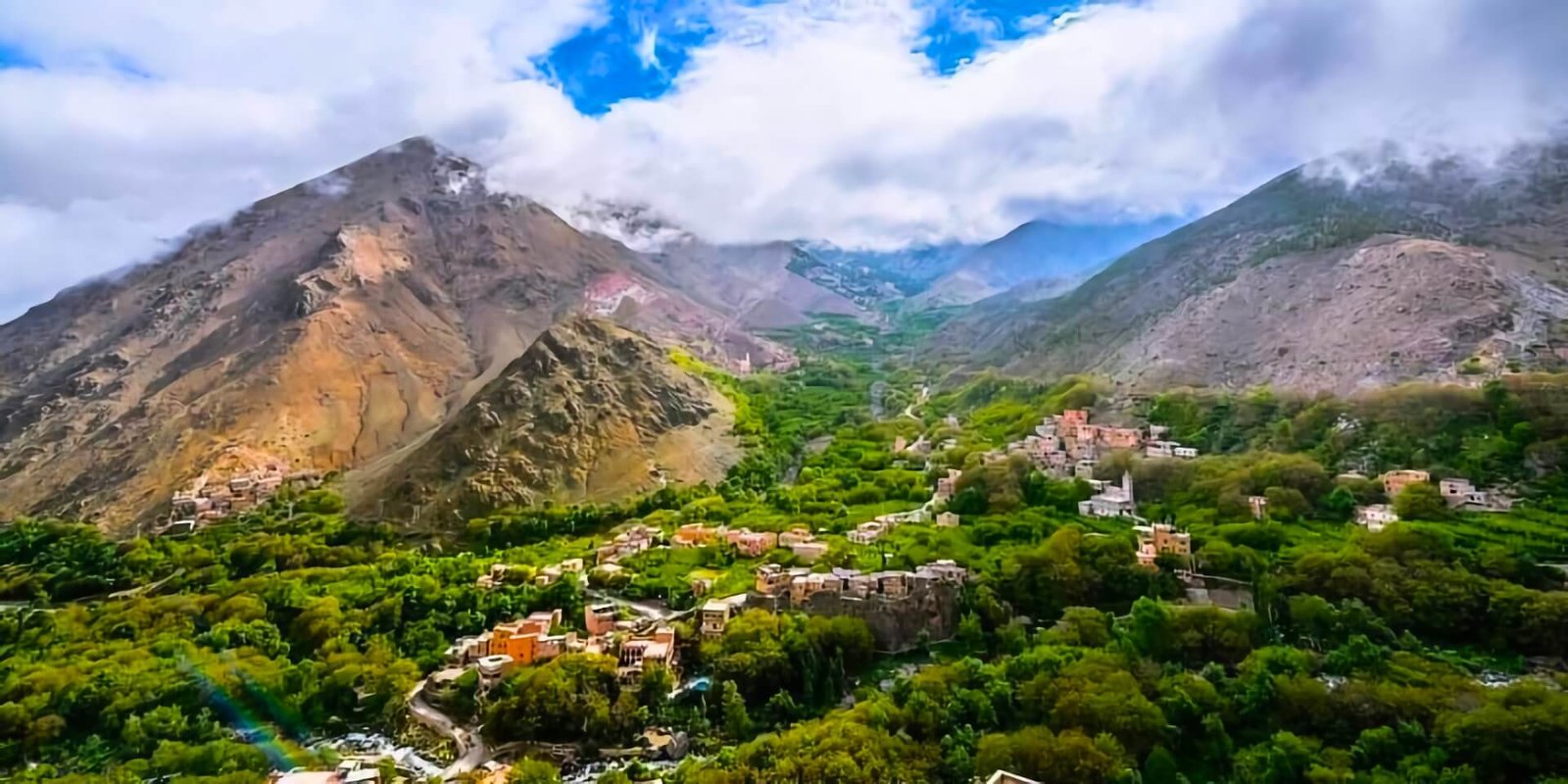
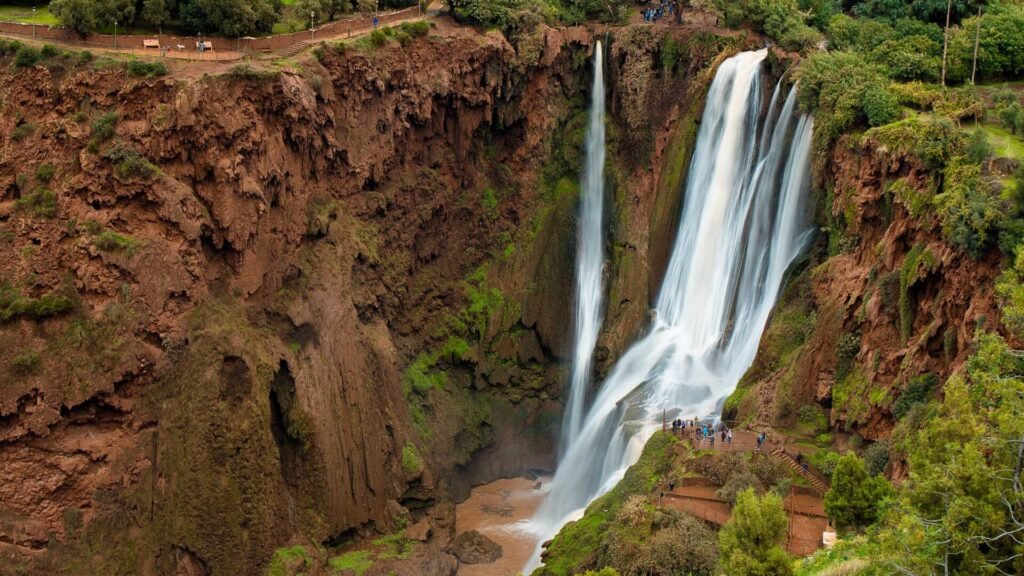
- Atlas Mountains: The Ourika Valley (30km south) or the Asni valley road (55km south via the P2017) offer the most accessible Atlas experience from Marrakech — Berber villages, mountain landscape, fresh air, and the visual scale of the High Atlas at close range. Ourika Valley half-day tours take approximately 5–6 hours door-to-door. Full-day tours include Asni, the Imlil trailhead, and lunch in a mountain village.
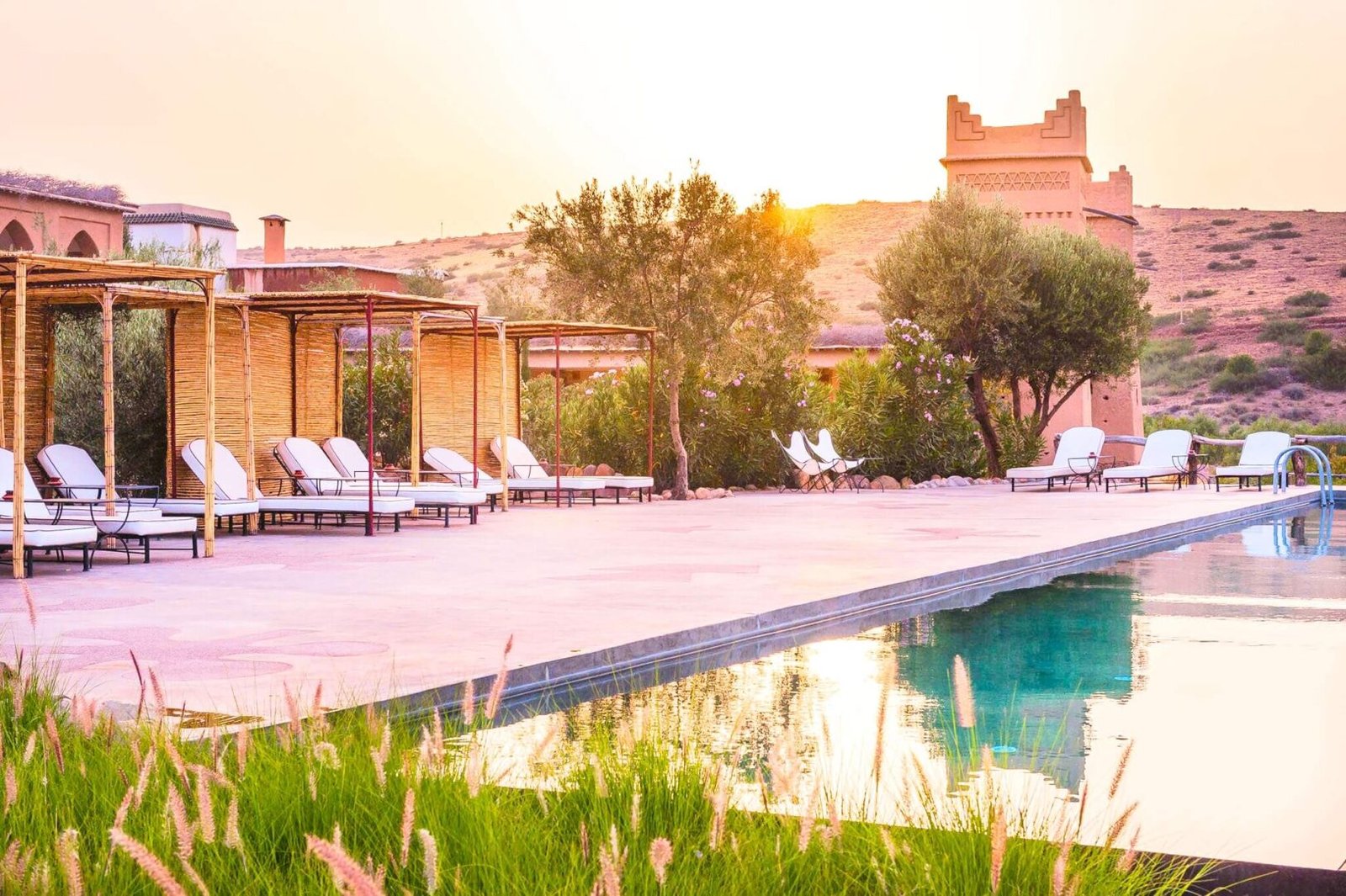
- Agafay Desert: 40 minutes from Marrakech, the Agafay is a rocky desert plateau — not the Saharan sand dunes, but a genuine desert landscape with Atlas views. Several camps offer half-day and sunset experiences with camel rides, quad bikes, and lunch. The contrast with the Medina is immediate and complete.
Choose one, book in advance, and commit to the full experience rather than combining both.
Evening: A Thoughtful Farewell
The final evening works best as a single pre-chosen experience rather than an improvised decision at the end of a full day.
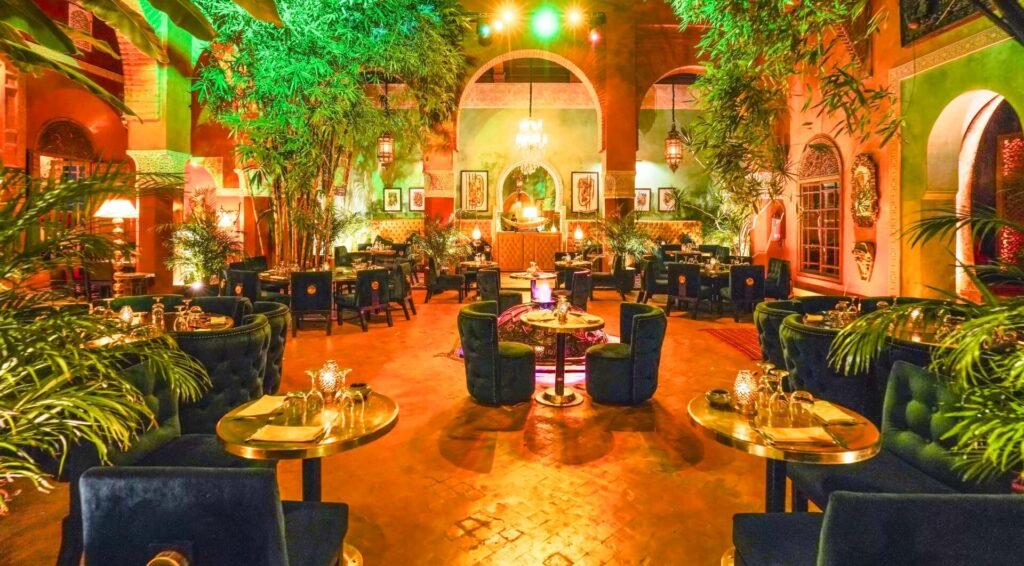
For a rooftop option: Terrasse des Épices in the northern Medina has the most consistent views and a full dinner menu. For a riad dinner: Dar Moha (rue Dar el-Bacha) requires a reservation but is the most complete traditional Moroccan dinner experience available at a mid-range price point.
After dinner, a 20-minute walk back through the Medina toward the riad gives one final view of the city at its late-evening register — the souks quiet, the square down to its last musicians and food stall stragglers, the Koutoubia lit against the sky.
Where to Stay for This 3-Day Marrakech Itinerary
Three days gives accommodation choice more weight than two: you’ll return to your base multiple times and the quality of the space — its courtyard, its breakfast, its rooftop — becomes part of the trip rather than just a place to sleep. The three options below cover the main configurations.
Stay in the Medina (Best for Atmosphere & Convenience)
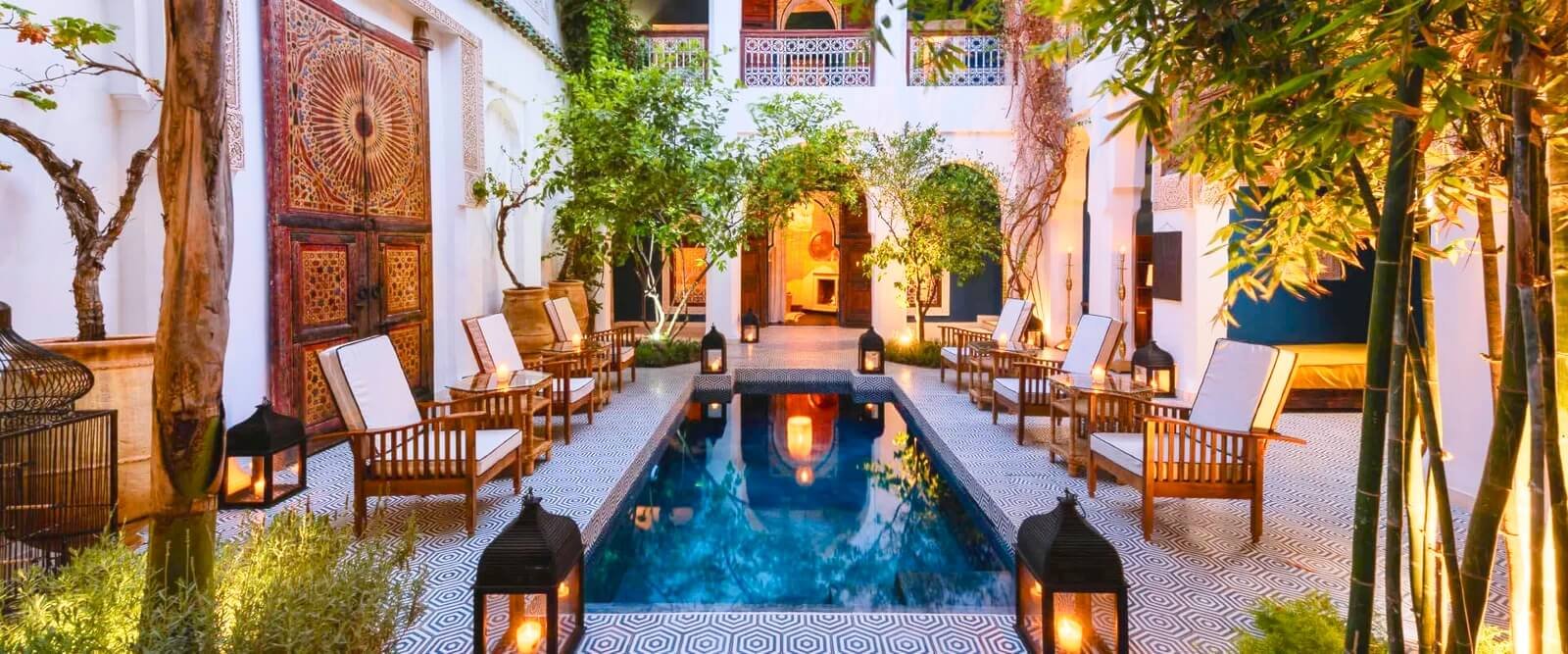
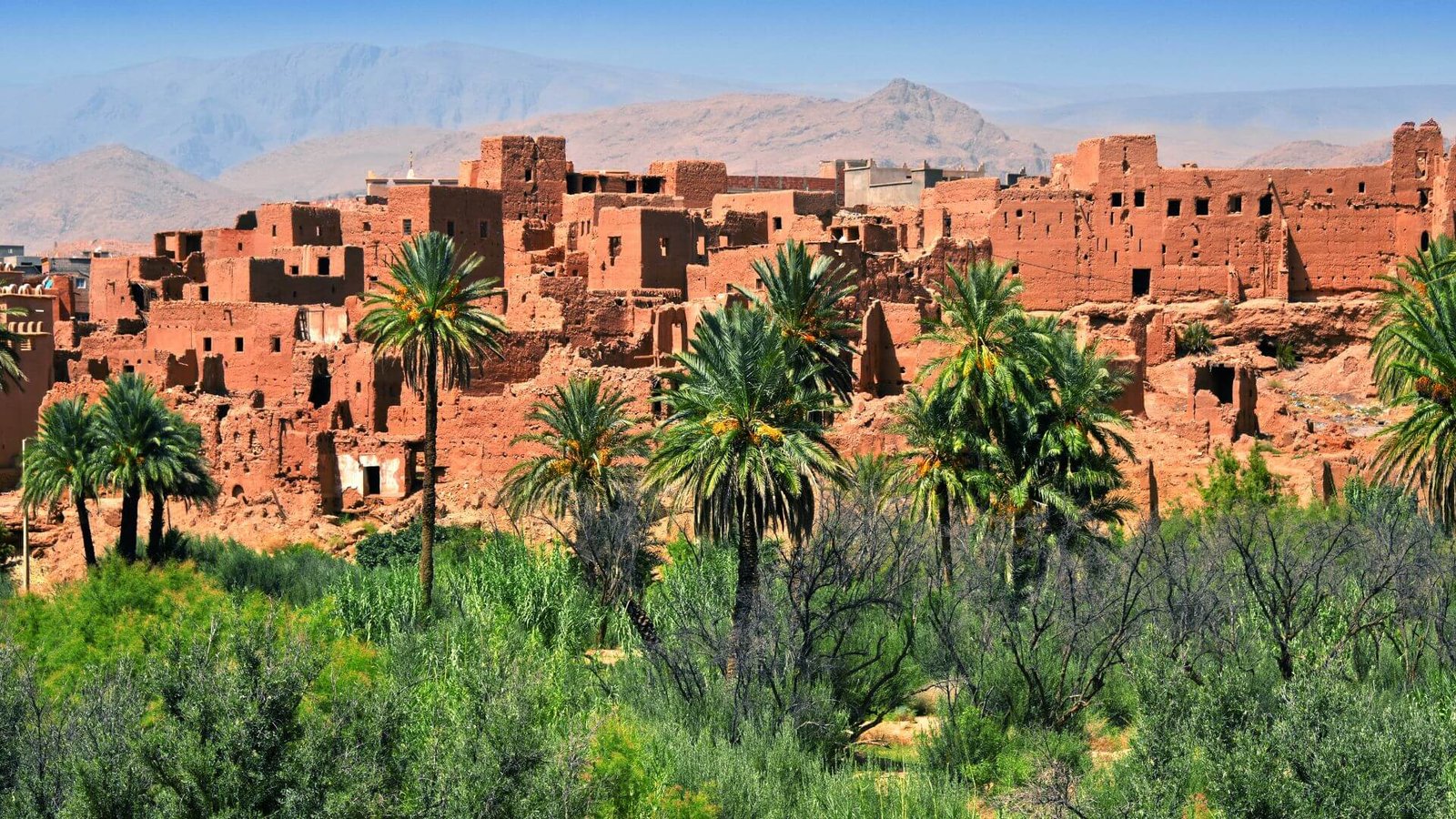
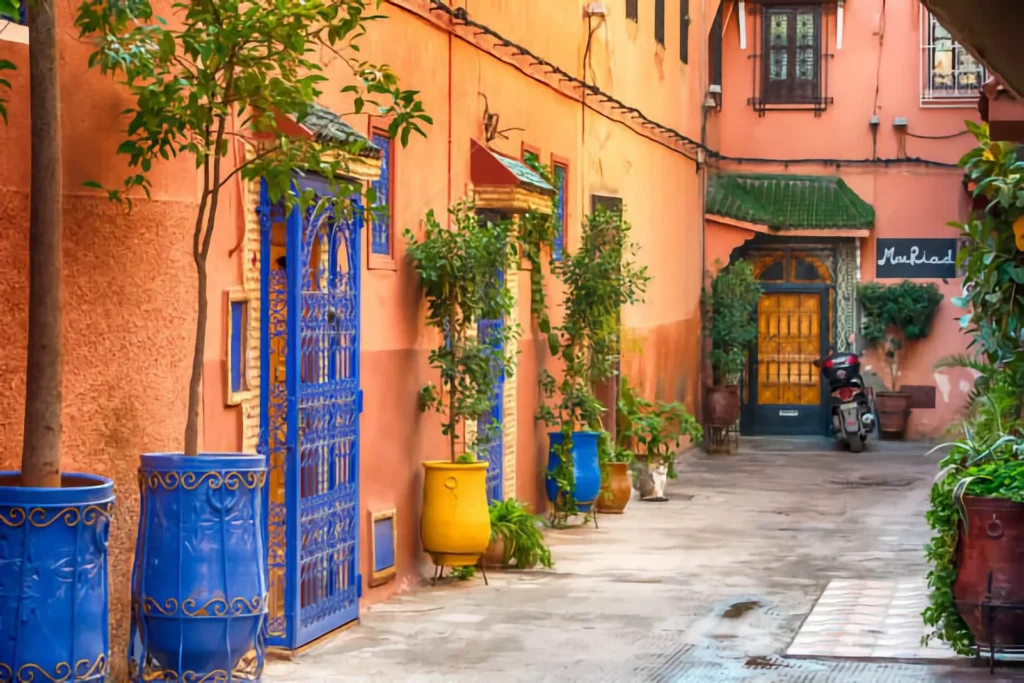
A Medina riad puts the Day 1 and Day 2 Medina activities at walking distance and gives you a base to return to between activities. Over three days, the riad becomes familiar — the way to the entrance, the breakfast table in the courtyard, the staff who know your coffee preference by Day 2. This familiarity is part of the Marrakech riad experience and is worth seeking.
- Immersive riad experience — the architecture is part of the visit
- Walk to major landmarks and souks for both Day 1 and Day 2 Medina sections
- Perfect base for exploring at your own pace
Best for: first-time visitors, couples, anyone who wants the complete Marrakech experience.
Split Stay (Best of Both Worlds)
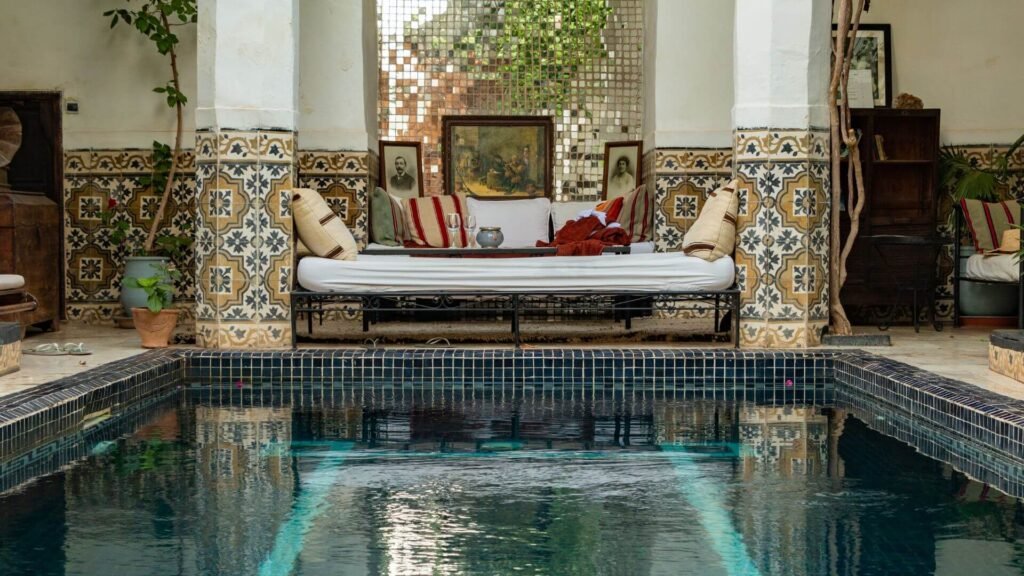
Two nights in the Medina followed by one night in Gueliz or Hivernage — or the reverse — gives a direct experiential comparison between the two cities that make up Marrakech. The logistics of changing accommodation on Day 2 or 3 are manageable; most Medina riads store luggage on checkout day.
- Experience both traditional and modern Marrakech at close range
- A Gueliz or Hivernage hotel on the final night puts you closer to Day 2’s Majorelle Garden and makes airport departure smoother
- Practical for travellers doing Day 3 as an Atlas or Agafay escape, since Gueliz accommodation is closer to the departure points
Best for: travellers who want to experience the contrast between the two cities as part of the trip.
Stay in Hivernage or Gueliz (Comfort & Ease)
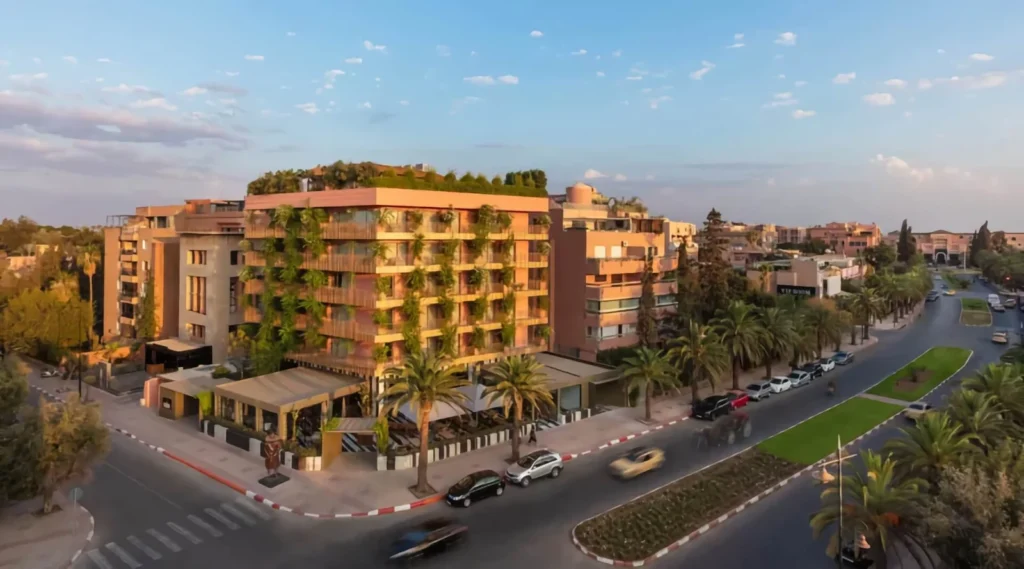
Hivernage and Gueliz hotels offer a level of physical comfort — air conditioning, lift access, consistent plumbing — that is not guaranteed in Medina riads. The trade-off is the daily taxi to and from the Medina. Over three days this adds up to six Medina round-trips; at 25–40 dirhams each way the cost is minor, but the time and friction are real.
- Easy access to restaurants and cafés in Gueliz
- Quieter surroundings at night
- 10–15 minute taxi to the Medina for each day’s activities
Best for: comfort-focused travellers; those who have done the Medina riad experience on a previous visit; travellers for whom reliable air conditioning is non-negotiable.
For the split stay option: check out from the Medina riad on the morning of Day 3 and leave luggage with the riad staff. Do the Day 3 activity, collect luggage after, and check into the Gueliz or Hivernage hotel in the evening. This works cleanly with the Day 3 escape option in particular.
Not sure yet? If you want a curated selection based on different budgets and travel styles, you can explore our full guide here: Where to Stay in Marrakech (Best Areas & Stays)
Getting Around Marrakech (Simple & Stress-Free)
The three-day itinerary uses three transport modes across specific situations. The rule is simple and doesn’t change across the three days.
Walking (Best Way to Experience the Medina)
All Medina activity on Day 1, the afternoon Le Jardin Secret visit on Day 2, and the Day 3 cultural option all involve walking inside the Medina. The distances between Day 1’s monuments are 10–25 minutes on foot between each stop. The souk circuit adds 60–90 minutes of walking. The total Day 1 walking distance is 10–14 km.
- Ideal for all Medina activity — the only practical way to navigate inside the old city
- Distances between monuments are shorter than they look on a map
- The souk circuit specifically rewards wandering rather than direct routing
Google Maps works in the Medina but gives crow-flies routes rather than navigable street paths. Use it for general direction rather than turn-by-turn.
Petit Taxis (Quick & Practical)
Every journey between the Medina and Gueliz, Majorelle Garden, or Hivernage uses a petit taxi. The specific Day 2 taxi movements are: accommodation to Majorelle Garden (15 minutes), Majorelle Garden to Gueliz (5 minutes), Gueliz to northern Medina for Le Jardin Secret (10 minutes). Total taxi cost for Day 2: approximately 80–120 dirhams.
- Affordable and available at all Medina gates and throughout Gueliz
- Perfect for all inter-district movement on Days 2 and 3
- Agree price before starting or confirm the meter is running
Day 3 Experiences (Organised Transport)
Atlas Mountains and Agafay Desert excursions include transport as standard. This is not a convenience feature but a practical necessity — the Ourika Valley road and the Agafay plateau road require navigation knowledge that adds significant stress to an independent visit.
- Transport included in the tour price — no separate logistics required
- Typical departure time 8–9am from your accommodation or a central meeting point
- Return by 2–3pm for a half-day tour; 5–6pm for a full day
Simple rule: Walk inside the Medina, take a petit taxi outside it, book organised transport for anything beyond the city. This applies to all three days without exception.
Tips to Make the Most of Your 3 Days in Marrakech
Six notes that specifically apply to a three-day visit — not general travel advice but the specific things that determine whether three days in Marrakech feels like enough or leaves you wishing you’d managed it differently.
Think in “Zones,” Not Distances
The Medina is not navigable by distance logic. A 500-metre straight-line distance in the souk alleys can take 15 minutes to walk; the same distance on a clear path takes 5. Organise each day by area rather than by a list of sites, and the routing becomes self-evident: Day 1 stays in the central and eastern Medina, Day 2 starts in Gueliz and moves to the northern Medina, Day 3 goes deeper into the northern Medina or leaves the city entirely.
Use Your Third Day Wisely
The advantage of three days over two is not more sightseeing — it’s the ability to consolidate and go deeper. Day 3 is the day that most determines whether the trip was satisfying or merely adequate. The three options in the Day 3 section are based on three different readings of what Day 3 is for: cultural depth, rest, or context beyond the city. All three are valid; choose based on what the first two days have revealed about what you actually want.
Book Key Experiences in Advance
Majorelle Garden (peak days), the YSL Museum (peak days), and the hammam (evening slots) all benefit from advance booking. The Ben Youssef Madrasa and Le Jardin Secret don’t require advance booking but benefit from early arrival. The Day 3 excursion options should be booked at minimum the day before; same-day booking is sometimes possible but risky in high season.
Balance Intensity with Calm
Day 1 is genuinely intense — a full day in the Medina at first encounter. Day 2’s structure (Gueliz in the morning, Le Jardin Secret in the afternoon) is specifically designed to provide calmer environments between the more demanding Medina sections. If Day 1 was more tiring than expected, reduce the Day 2 afternoon to riad rest time rather than pushing through.
Don’t Underestimate Evenings
The three evenings in this itinerary are as important as the days. Day 1’s Jemaa el-Fna at night is the signature Marrakech experience and worth staying for properly (not leaving at 8pm). Day 2’s hammam sets the tone for the final evening. Day 3’s farewell dinner — wherever it is — is worth planning rather than leaving to chance.
Stay Flexible
The three-day format allows for the one adjustment the two-day format doesn’t: the ability to revisit something you liked on Day 1 during Day 3’s unstructured time. A souk alley you wanted to explore further, a café you passed but didn’t stop at, a section of the Medina that looked interesting from the rooftop. Leave space for this.
Alternative Ways to Shape Your 3-Day Marrakech Trip
Four ways to adjust the standard three-day plan without losing its structural logic.
Extend Your Cultural Exploration
Replace the Day 2 afternoon Le Jardin Secret option with the Musée de Marrakech (place Ben Youssef, housed in a 19th-century palace, the collection covers Moroccan ceramics, textiles, and historical documents) and add the Medersa Ben Youssef immediately adjacent. This creates a half-day northern Medina cultural circuit on Day 2 afternoon and removes the need to return on Day 3. The result is a more museum-dense trip; appropriate for travellers whose primary interest is architectural and cultural history rather than sensory immersion.
Discover the City’s Modern Side
Extend the Day 2 Gueliz section from lunch to a half-day. The Marrakech contemporary art gallery circuit — Galerie 127 (avenue Mohammed V), La Qoubba Galerie (place Ben Youssef) — is accessible by petit taxi between the two. Combined with a longer Gueliz lunch and the specialty coffee circuit, this creates a full day in modern Marrakech and compresses the Medina activity into Days 1 and 3 only. Worth considering for travellers who have found the Medina intensity higher than expected or who have specific interest in contemporary Moroccan art.
Add a Half-Day Escape
Move the Day 3 Atlas or Agafay escape to Day 2, taking advantage of a shorter travel window (half-day) and keeping Day 3 for the northern Medina cultural option or rest. This sequence — Medina Day 1, escape Day 2, deeper Medina Day 3 — works logistically and avoids the common experience of leaving the city on the final day when energy is lowest. The practical adjustment: book the Day 2 escape as an early-morning half-day tour returning by 1pm, then do Le Jardin Secret in the afternoon.
Focus on Your Favourite Experiences
By the end of Day 2, most visitors have identified what they want more of. The standard three-day itinerary is a framework, not a fixed programme — if the souks on Day 1 were the highlight, Day 3 can be entirely souk-based (different sections of the circuit, the leather-tanning quarter, the Mouassine area). If the rooftop lunches were the highlight, Day 3 can be structured around three or four different rooftop cafés visited in sequence, with the northern Medina as the geography. The city supports this kind of thematic revisiting across a three-day stay in a way that a two-day stay doesn’t.
Frequently Asked Questions About a 3-Day Marrakech Trip
Is 3 days enough to see Marrakech?
Yes — three days covers the city properly. The two-day itinerary requires choosing what to leave out; three days doesn’t. The Koutoubia, Bahia Palace, the souk circuit, Jemaa el-Fna, Majorelle Garden, Le Jardin Secret, and a hammam all fit comfortably across three days with time remaining for a Day 3 option. What three days doesn’t cover: the Saadian Tombs (add these to Day 1 morning if they’re a priority — 30 minutes, adjacent to Bahia Palace), the Musée de Marrakech, and a day trip outside the city that also includes full city coverage. For those additions, four days is the correct baseline.
What's the best area to stay for a 3-day trip?
A Medina riad is the best single choice — it puts Days 1 and 2’s Medina activities at walking distance and gives the riad experience time to become familiar rather than just novel. The split stay option (2 nights Medina, 1 night Gueliz or Hivernage) is worth considering if the Day 3 activity is an Atlas or Agafay escape, since Gueliz accommodation is closer to the departure points and airport. If comfort infrastructure (guaranteed air conditioning, lift access) is a priority, Hivernage or Gueliz for all three nights with daily taxis to the Medina is the practical choice.
Can I do a day trip outside Marrakech with only 3 days?
Yes, and the three-day format is better suited to it than the two-day format. The Day 3 option specifically accounts for this: a half-day Ourika Valley tour (5–6 hours round trip) or an Agafay desert half-day (4–5 hours) can be completed on Day 3 morning, leaving the afternoon for the final Medina walk and a farewell dinner. Book organised transport rather than trying to arrange independent travel — both destinations require road navigation that adds complexity and time to what should be a relaxed final day.
Should I hire a guide in Marrakech?
A guide adds specific value for the monument section — Bahia Palace, Medersa Ben Youssef, the Musée de Marrakech — where the architectural and historical context transforms the visit from aesthetically pleasing to genuinely informative. A licensed guide for a 3-hour morning on Day 1 or the Day 3 cultural option costs approximately 200–350 dirhams and is worth it for first-time visitors with a strong interest in Moroccan history and architecture. For the souk circuit and Jemaa el-Fna, a guide is not necessary — the experience is sensory and spatial rather than knowledge-dependent.
How do I avoid feeling overwhelmed in Marrakech?
The three-day structure is specifically designed to prevent this: Day 1 builds from calm to intense (monuments before souks, souks before the evening square), Day 2 provides a deliberate contrast with quieter environments (garden, Gueliz, Le Jardin Secret), and Day 3 is genuinely optional. The practical adjustments: start earlier (8:30am rather than 10am avoids the worst Medina crowds at the major monuments), use rooftop lunches as resets rather than rushing through them, and treat the hammam as a functional recovery rather than an optional extra.
Ready to Make the Most of Your 3 Days in Marrakech?
The three-day itinerary above is the most complete city-only plan on the site. The three links below cover the planning decisions that sit alongside the itinerary: where to stay in the Medina specifically, the full list of things to do (for context on what’s been included and what hasn’t), and the restaurant guide for every category from street food to fine dining.
One advance booking note: Majorelle Garden tickets, the hammam, and the Day 3 excursion (if relevant) should be booked before departure. Everything else in this itinerary is walk-in or same-day.
Other Marrakech & Morocco Itineraries You Might Enjoy
The four plans below cover the full range of trip lengths available from Marrakech.
-
2 Days in Marrakech
The same Medina circuit in a tighter format — useful if you're extending this trip and want to know what the baseline covered
-
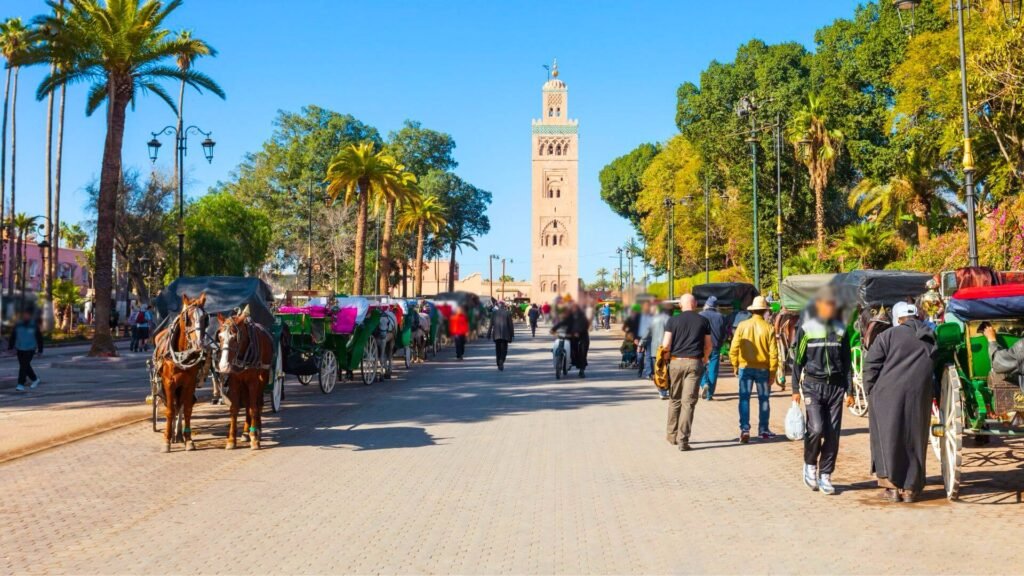
4 Days in Marrakech
Adds a full day trip to the Ourika Valley or Atlas foothills — the city at a slower pace with geographic context
-
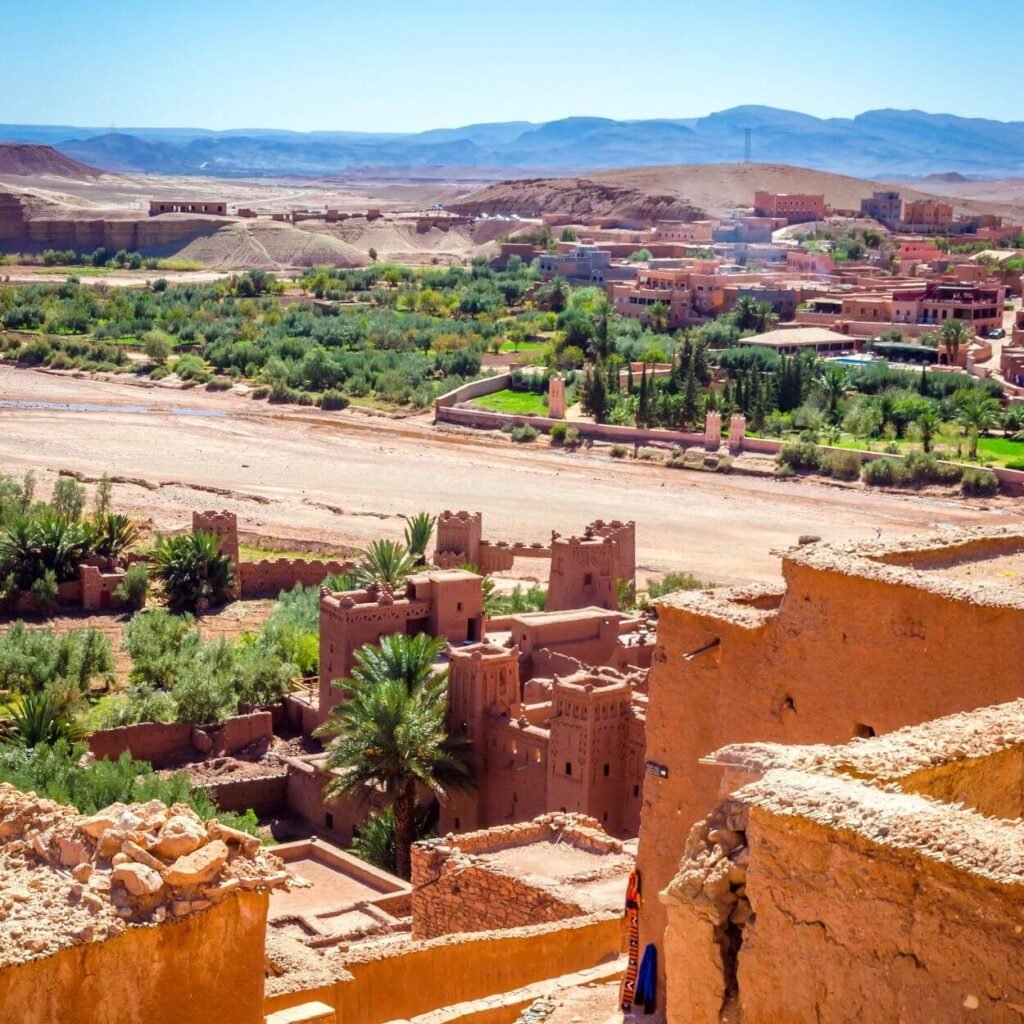
5 Days: Marrakech + Desert
Three days in the city followed by a two-day Sahara circuit via Ouarzazate — the most requested Morocco combination
-
7 Days Morocco from Marrakech
Full circuit: Marrakech, High Atlas, Drâa Valley, Sahara, Todra Gorge, and Essaouira — the complete southern Morocco route
 Marrakist Concierge