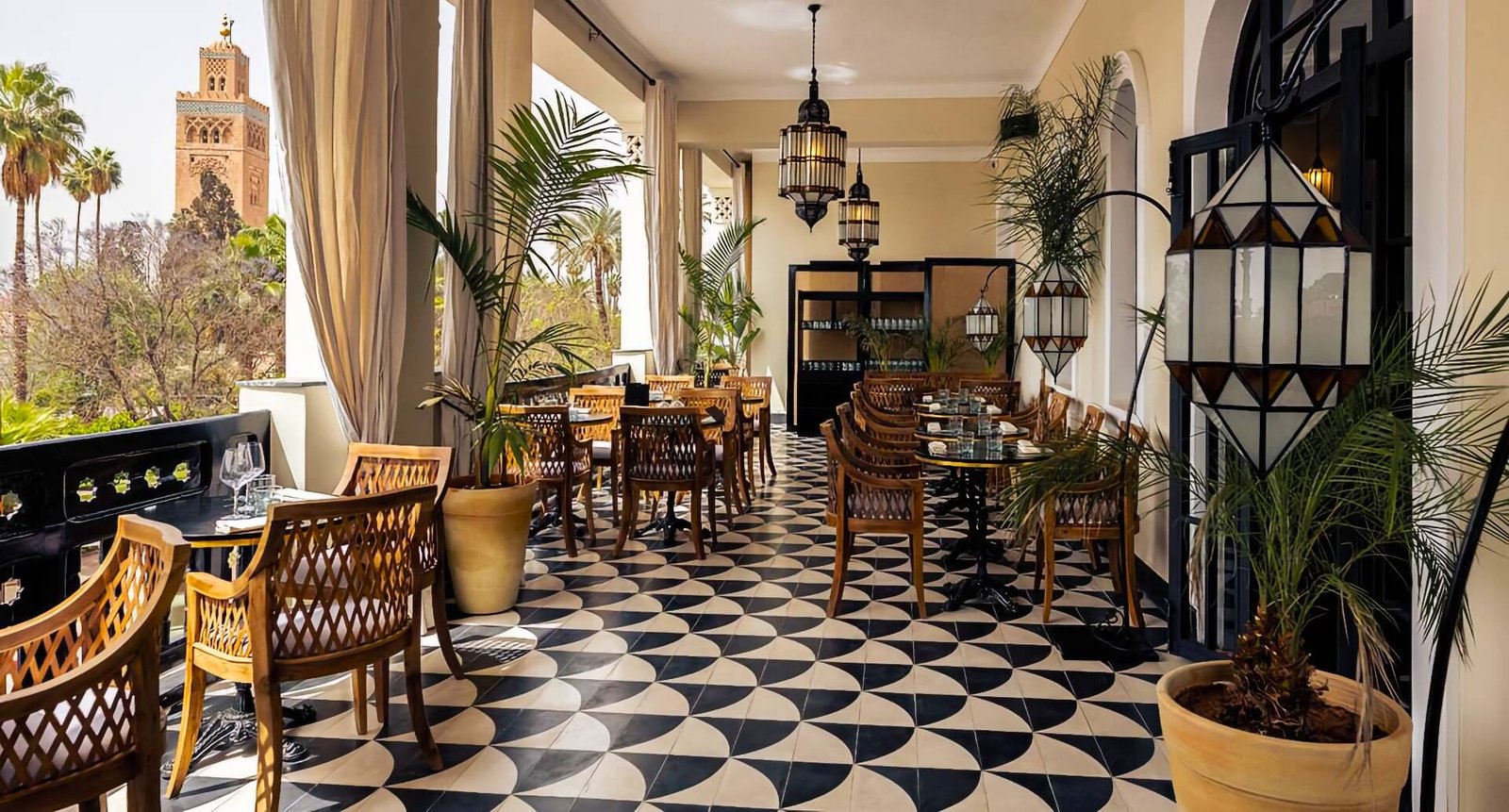
cafes in marrakech

Best Cafés in Marrakech

Marrakech has two distinct café cultures that operate almost independently of each other. In Gueliz, the French-influenced terrasse cafés — Grand Café de la Poste, Café du Livre, and their successors — serve espresso, fresh-squeezed orange juice, croissants, and eggs on street-facing terraces. In the Medina, riad garden cafés have developed since the early 2000s offering the same drinks in courtyard settings. The two registers are different in atmosphere and purpose; both are worth knowing.

Carefully Selected • Authentic Experiences • Updated 2026

Slow Down and Experience Marrakech Café Culture

The café stop is the most practical tool in the Marrakech visitor’s day. After two hours in the souks, a terrace café at mid-morning — fresh orange juice, mint tea, a pastry, thirty minutes of sitting still — resets the day’s energy more effectively than any other single intervention. The Medina cafés are best for this recovery function: Café des Épices on the Rahba Kedima spice square, the terrace of the Maison de la Photographie on rue Ahl Fès, the riad gardens behind the Mouassine fountain. All of these put you physically inside the Medina while removing you from its street-level intensity.

The Gueliz cafés serve a different purpose. Grand Café de la Poste (avenue Imam Malik, a 1920s French colonial building) and Café du Livre (rue Tariq ibn Ziad, the nearest thing Marrakech has to a bookshop café) are where Marrakech’s European and international residents work, meet, and read. Wi-Fi is reliable, the coffee is good, the croissants are genuine, and no one will rush you out after one order. If you need a working morning or a meeting with a fixed address, these are the right locations.

The traditional Moroccan café — the kind found in every neighbourhood, serving mint tea, café noir, and msemen for 10–20 dirhams — is a third register entirely, more local and less designed for visitors, but accessible and worth sitting in at least once.
Top Cafés in Marrakech

Cafe des Epices Marrakech rooftop terrace overlooking spice square in the Medina

Café des Épices

Medina, Marrakech

An iconic Medina café overlooking the spice square, perfect for a relaxed break with Moroccan classics, fresh juices, and one of the best rooftop views in the souks.

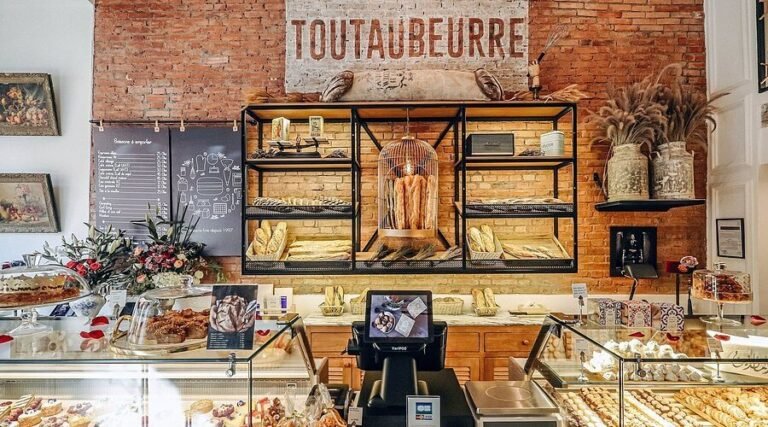
Patisserie Amandine Marrakech bakery with French pastries and casual cafe seating in Gueliz

Patisserie Amandine

Gueliz, Marrakech

A beloved spot in Gueliz for freshly baked pastries, cakes, and quick bites, offering a casual and affordable experience perfect for breakfast, coffee breaks, or takeaway treats.

Cafe Clock Marrakech terrace with casual dining and cultural atmosphere in the Kasbah

Café Clock

Kasbah, Marrakech

A cultural hotspot in the Kasbah known for its relaxed vibe, creative menu, and famous camel burger, Café Clock blends Moroccan and international flavors with live events and a welcoming atmosphere.

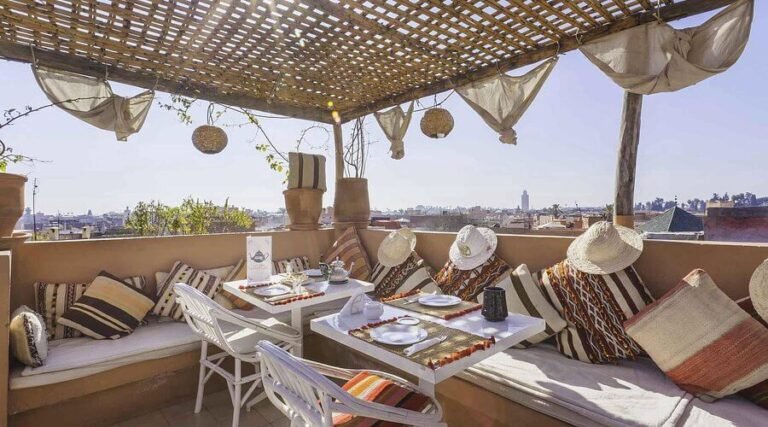
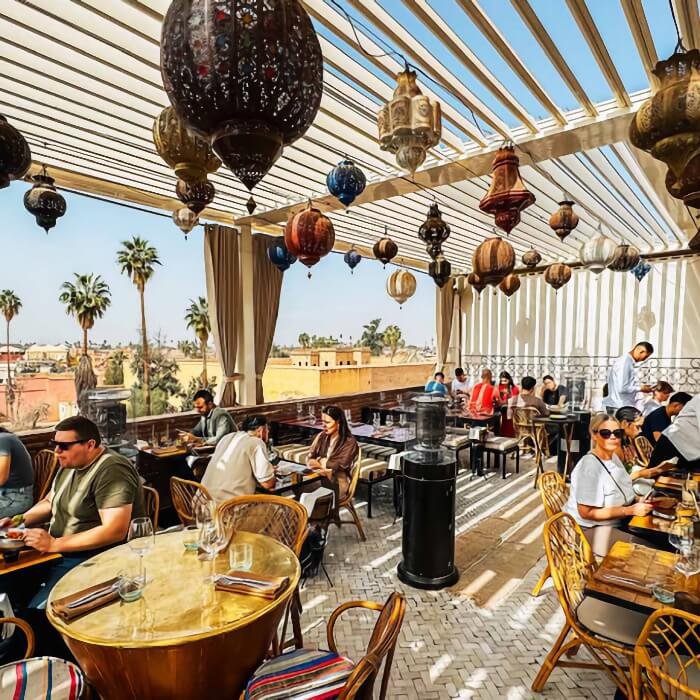
Atay Cafe Marrakech rooftop terrace with Moroccan tea and views over the Medina

Atay Café

Medina, Marrakech

A cozy and colorful rooftop café in the Medina, Atay Café is loved for its relaxed vibe, Moroccan tea, light bites, and stunning views over the rooftops of Marrakech.

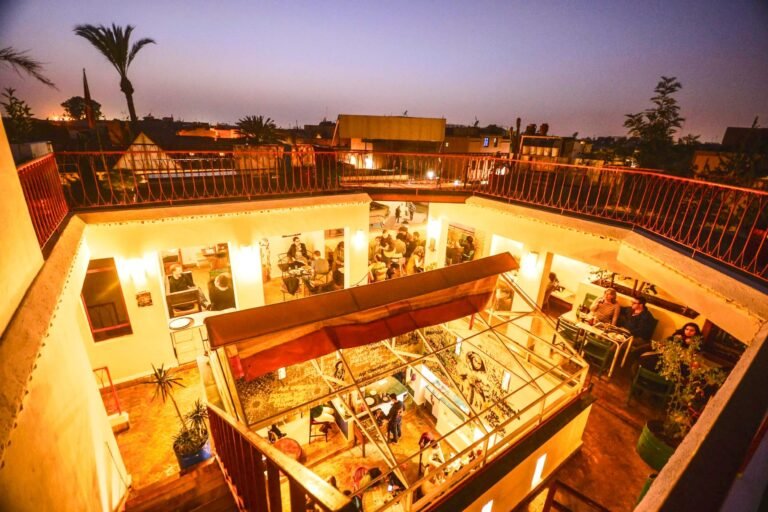
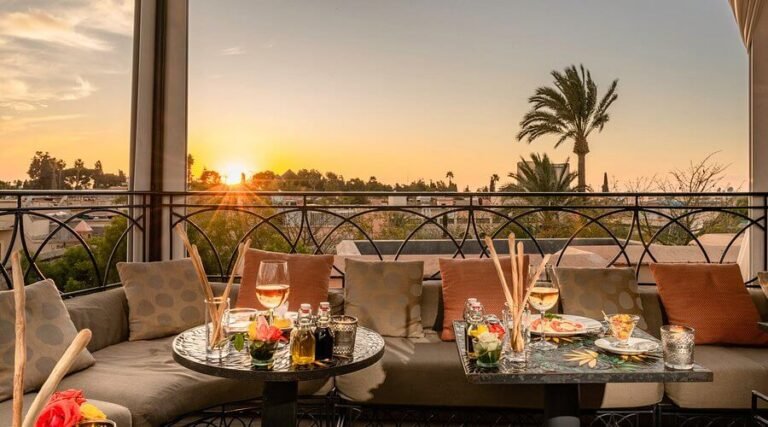
Cafe Arabe Marrakech rooftop terrace with Moroccan and Italian cuisine in the Medina

Café Arabe

Medina, Marrakech

A stylish rooftop café and restaurant offering a mix of Moroccan and Italian cuisine, known for its relaxed atmosphere, beautiful terrace, and great views over the Medina.

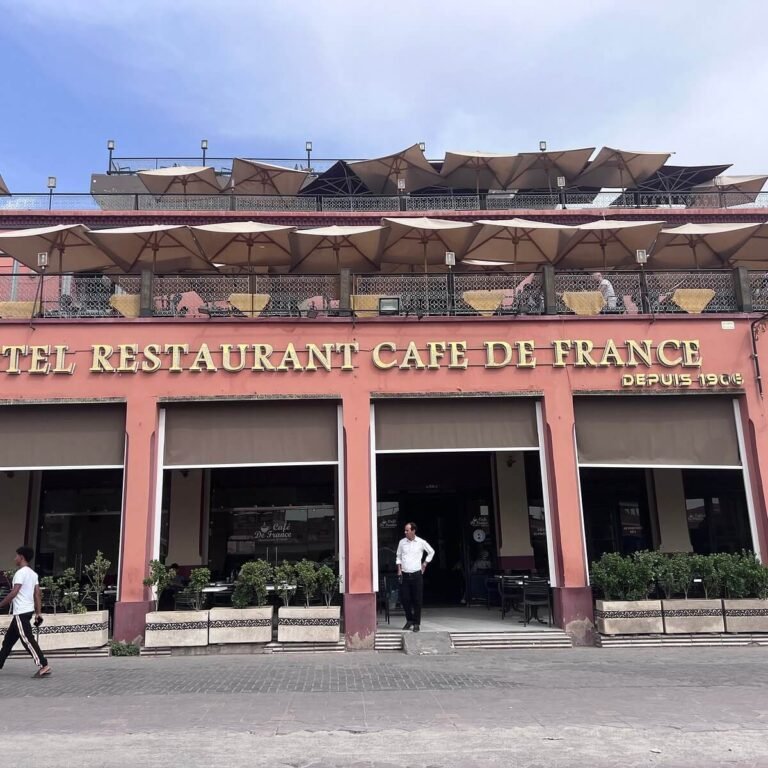
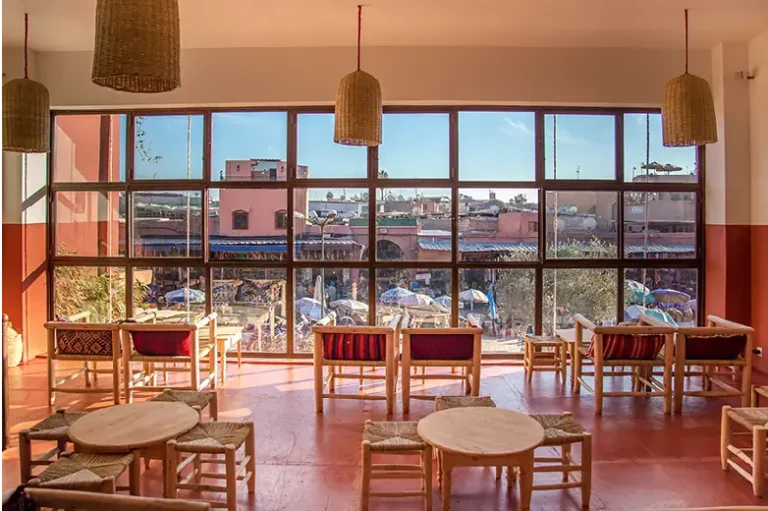
Cafe de France Marrakech rooftop terrace overlooking Jemaa el Fna square

Café de France

Medina, Marrakech

An iconic café overlooking Jemaa el-Fna, Café de France is the perfect spot to enjoy a coffee or casual meal while watching the lively atmosphere of Marrakech’s main square from above.

Own a café in Marrakech? Get featured on our guide and reach travelers looking for the best coffee spots in the city.

Where to Find the Best Cafés in Marrakech

The Medina cafés with terrace or rooftop seating are concentrated in two areas: the Rahba Kedima (spice square) and its surrounding streets in the central Medina, and the Mouassine quarter in the western Medina. The riad garden cafés are throughout the Medina, usually unmarked from the street. In Gueliz, the main café circuit runs along avenue Mohammed V and the streets around it — Grand Café de la Poste, Café du Livre, and the newer specialty coffee shops that have opened since 2015. In Hivernage, café culture is primarily hotel-based.

Medina cafés with rooftop terraces are almost never visible or accessible from the street. Save addresses with location pins before entering the Medina. The transition from street-level navigation to finding a first-floor terrace entrance is where most visitors lose time.

Why Visit Cafés in Marrakech?

Six specific reasons the café stop earns its place in a Marrakech itinerary.

Perfect for Slowing Down

The Medina's café terraces and riad garden cafés are the most effective way to experience the city at a different speed. From a terrace overlooking a souk square, the activity below is observable rather than participatory — the same density and noise, but at a remove that makes it pleasurable rather than overwhelming. An hour on the Café des Épices terrace looking over the Rahba Kedima gives more sense of the Medina's daily rhythm than an hour walking through it.

Great for Coffee and Breakfast

The Gueliz café breakfast is one of the better starting points for a Marrakech day: fresh-squeezed orange juice, café au lait or espresso, croissant or pain au chocolat, sometimes eggs. This is the French colonial legacy at its most functional. The equivalent in the Medina is the Moroccan breakfast: msemen (layered flatbread) with argan oil and honey, café noir, and fresh orange juice. Both are worth trying at least once.

Ideal for People-Watching

The street-facing terraces of Gueliz cafés on avenue Mohammed V and the surrounding streets are among the best positions in Marrakech for watching the mix of Moroccan daily life and international tourism that defines the modern city. The Medina terrace cafés overlooking souk squares offer a different version — more concentrated, louder, the spice market or the tanneries in the background.

Work-Friendly Spaces

Gueliz cafés with Wi-Fi — Café du Livre specifically, and several newer specialty coffee shops on the side streets off avenue Mohammed V — are genuinely functional working spaces. The Wi-Fi is reliable, the coffee is good across multiple orders, and the staff are accustomed to people working for extended periods. The Medina cafés are less suitable for working: the Wi-Fi is typically weaker, the seating less ergonomic, and the atmosphere more ambient than focused.

Unique Atmosphere and Design

The two café formats produce genuinely different atmospheres that are worth distinguishing. The Gueliz terrasse café is Mediterranean in feel: warm stone, ceiling fans, pressed linens, newspapers and magazines available. The Medina riad café is Moroccan: zelliges, carved cedar, interior courtyard, the sound of a fountain. Neither is better; they offer different things and a complete Marrakech café experience involves both.

A Part of Everyday Marrakech Life

The traditional neighbourhood café — wooden tables, plastic chairs, a television showing Al Jazeera, tea at 10 dirhams, the same three men at the corner table every morning — is one of the most stable institutions in Moroccan daily life. It requires no guidebook entry to find: every neighbourhood in the Medina and Gueliz has several. Sitting in one for an hour is a more accurate window into ordinary Moroccan urban life than any designed tourist experience.

Tips for Visiting Cafés in Marrakech

Eight practical notes for getting the most from Marrakech’s café culture.

Visit in the Morning for a Relaxed Start

Gueliz cafés open from 7:30–8am and are at their quietest from opening until about 10am — the best window for a working breakfast or a slow start before the day's activities. Medina rooftop cafés typically open from 9 or 9:30am. Traditional neighbourhood cafés open earlier, from 6am in some cases, serving the pre-work crowd.

Take Your Time — There's No Rush

Moroccan café culture is explicitly unhurried. Ordering a single mint tea and sitting for ninety minutes is normal practice at a traditional café. At Gueliz terrasse cafés, a coffee and croissant for two hours is not unusual. No one will clear your table, ask if you're done, or bring a bill unrequested. This is the most direct way in which café culture here differs from northern European equivalents.

Try Moroccan Mint Tea

The ritual of Moroccan mint tea — gunpowder green tea steeped with fresh spearmint, heavy with sugar, poured from height into small glasses — is as much performance as drink. The pouring creates foam; the height aerates the tea. It is sweet, hot, and fragrant. The version served at traditional neighbourhood cafés (3–5 dirhams per glass) is the most authentic; the version served at tourist-facing rooftop cafés is usually the same but costs 25–40 dirhams. Both are correct; the difference is setting and price.

Choose Terrace Seating When Possible

The terrace or rooftop is the purpose of a Medina café visit. Ground-floor seating in the Medina cafés is typically internal and lacks the view that justifies the premium over a neighbourhood café. Ask specifically for terrace or rooftop seating when you arrive — it's usually upstairs and may require asking to be shown the way.

Look for Wi-Fi-Friendly Cafés in Gueliz

Café du Livre (rue Tariq ibn Ziad) is the most established working café in Marrakech — bookshop-café hybrid, reliable Wi-Fi, good food menu, English-speaking staff. Grand Café de la Poste (avenue Imam Malik) has Wi-Fi but is better as a social or leisure café than a working one. The newer specialty coffee shops on the streets around Carré Eden mall offer third-wave coffee and working-café infrastructure. In the Medina, expect variable Wi-Fi at best.

Bring Cash for Smaller Cafés

Traditional neighbourhood cafés are cash only. The Medina rooftop and riad garden cafés are typically cash only or accept cards inconsistently. Gueliz terrasse cafés generally accept cards. The amounts involved are small enough that carrying 100–150 dirhams covers a full morning of café stops without needing a card.

Explore Beyond the Main Streets

The best Medina café spots are not on the main tourist routes. The riad garden cafés in the Mouassine and Dar el-Bacha areas are quieter and more atmospheric than the cafés immediately around Jemaa el-Fna. In Gueliz, the side streets off avenue Mohammed V have a growing cluster of specialty coffee shops that are better than the cafés on the main boulevard itself.

Use Cafés as Break Points During Your Day

Three café stops distributed through a Marrakech day — mid-morning after the early Medina visit, early afternoon before the heat peaks, late afternoon before dinner — break the day into manageable sections and prevent the fatigue that comes from continuous active exploration. Each café stop takes thirty to sixty minutes; built into a day's itinerary they prevent rather than cause delays.

FAQs About Cafés in Marrakech

What are the best cafés in Marrakech?

For working and extended stays: Café du Livre (Gueliz, rue Tariq ibn Ziad) and Grand Café de la Poste (Gueliz, avenue Imam Malik). For Medina atmosphere and terrace views: Café des Épices (Rahba Kedima), Nomad (adjacent to Café des Épices, higher terrace), and the terrace café at the Maison de la Photographie (rue Ahl Fès). For traditional Moroccan café experience: the neighbourhood cafés around Bab Doukkala and in the Mellah. The listing section above covers the current top options.

Are cafés in Marrakech good for working?

Yes, specifically in Gueliz. Café du Livre has the most established reputation as a working café — reliable Wi-Fi, food menu, comfortable seats, English-speaking staff, and a culture of people staying for extended periods. The specialty coffee shops near Carré Eden mall offer similar infrastructure. In the Medina, working in a café is possible but the Wi-Fi is less reliable and the environment is more ambient.

Do cafés in Marrakech serve breakfast and brunch?

Yes. Gueliz cafés — Grand Café de la Poste, Café du Livre — serve a French-influenced breakfast from opening: orange juice, coffee, croissants, eggs, toast. Some have full brunch menus on weekends. Medina riad cafés serve lighter breakfasts, often Moroccan in style: msemen, honey, argan oil, mint tea. Traditional neighbourhood cafés serve café noir, mint tea, and msemen or khobz (flat bread) from early morning.

How much does coffee cost in Marrakech?

Traditional neighbourhood café: café noir or mint tea 5–15 dirhams (€0.50–1.50). Medina rooftop or riad garden café: mint tea or coffee 25–45 dirhams (€2.50–4.50). Gueliz terrasse café: espresso 20–35 dirhams (€2–3.50), fresh orange juice 25–40 dirhams. Specialty coffee shops in Gueliz: specialty espresso drinks 35–55 dirhams (€3.50–5.50).

Is it common to sit for a long time in cafés?

Yes — this is standard café culture in Morocco. A single glass of mint tea can anchor a two-hour stay at a traditional café. No one will pressure you to leave or order more. The practice of sitting, watching, and talking without urgency is the purpose of the café, not an inconvenience to be managed.

Do cafés in Marrakech serve alcohol?

Most do not. Traditional Moroccan cafés never do. Riad garden cafés and Medina rooftop cafés are typically alcohol-free. A small number of Gueliz café-restaurant hybrids serve wine and beer. Grand Café de la Poste has a bar as well as a café. If alcohol is part of the plan, confirm when choosing.

What is the best time to visit cafés in Marrakech?

For the quietest experience: 8–10am at Gueliz cafés, 9–11am at Medina terraces. For people-watching: 10am–12pm when foot traffic peaks. For a natural break from the heat: 1–3pm, when most Medina cafés are cooler than the streets. For a slower afternoon: 4–6pm, when the light is good and the heat begins to drop. Each slot offers a different version of the city.

Explore More Places to Eat in Marrakech

Cafés are one of five categories in the Marrakech restaurant guide. The others cover fuller meal experiences at every register.

Traditional Moroccan Marrakech

Traditional Moroccan Restaurants

The full Moroccan meal in riad courtyards and local spots — from 60-dirham tagine to two-hour destination dinners

Rooftop Restaurants Marrakech

Rooftop Restaurants

Medina terraces with Koutoubia views — the café experience elevated to a full meal setting

Fine Dining Marrakech

Fine Dining

La Mamounia, Dar Yacout, and the Gueliz contemporary restaurants operating at international standard

Street Food Marrakech

Street Food

Jemaa el-Fna after dark and the souk food circuit — the other end of the Marrakech eating spectrum

💬
Marrakist Marrakist Concierge