
The practical facts before departure.
Essaouira Day Trip from Marrakech
Essaouira is 190 kilometres west of Marrakech on Morocco’s Atlantic coast — roughly two and a half hours by road. The medina, a UNESCO World Heritage Site, was built in the 18th century under Portuguese influence: whitewashed walls, blue shutters, a grid-plan layout that contrasts entirely with Marrakech’s organic labyrinth. The city faces directly into the Atlantic trade winds, which keeps it significantly cooler than the inland city and has made it one of the premier kitesurfing destinations in Africa.
For visitors arriving from several days in Marrakech’s Medina, the change of register is immediate and physical: the air is cooler, the pace is slower, and the streets are wide enough to walk without negotiating the flow. The port produces excellent grilled fish sold directly from the harbour stalls. The ramparts face the ocean. The medina is genuinely relaxed and navigable.
This page covers what to do, how to get there in each of the four main transport formats, and how to structure a comfortable full day.
- Temperature
- 8–12°C cooler than Marrakech in summer
- Port seafood lunch
- fresh-grilled, for two — under €15
- Best lunch window
- noon to 2pm at the harbour stalls
- Thuya wood
- unique to Essaouira — the one souvenir to buy here
Powered by GetYourGuide
Quick Navigation
- 1. Essaouira Day Trip: Quick Overview
- 2. Why Visit Essaouira?
- 3. Top Things to Do in Essaouira
- 4. How to Visit Essaouira from Marrakech
- 5. Perfect Day Trip Itinerary to Essaouira
- 6. Best Time to Visit Essaouira
- 7. Practical Tips for Your Essaouira Day Trip
- 8. Essaouira Day Trip FAQ
- 9. Continue Exploring Marrakech & Beyond
- 10. Final Thoughts
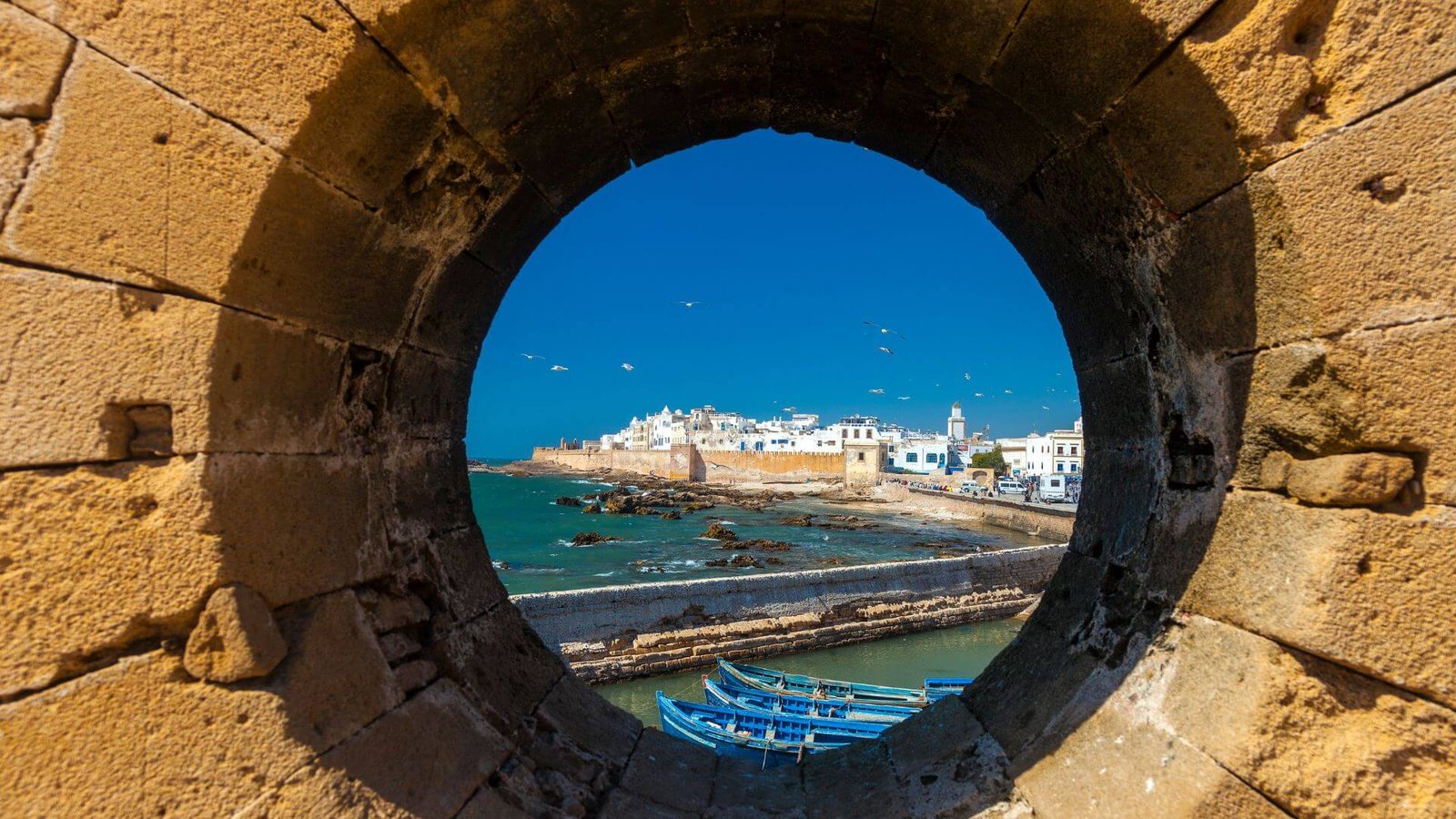
Essaouira — whitewashed walls, Atlantic wind, fresh fish grilled at the harbour: the antidote to Marrakech, two and a half hours west
Essaouira Day Trip: Quick Overview
-
Distance from Marrakech
~190 km
-
Travel Time
2.5 to 3 hours (each way)
-
What to Expect
Coastal views, relaxed medina, beach, seafood
-
Ideal Duration
Full-day trip (early departure recommended)
-
How to Get There
Guided tour, bus, private driver, or self-drive
-
Best For
Relaxation, food, photography, slow travel
Quick insight: Essaouira is less about running through a list of sites and more about walking at whatever pace suits you, eating well at the port, and spending an afternoon on the ramparts. The medina is small enough that the main areas are covered in two to three hours without hurrying.
Why Visit Essaouira?
The straightforward case: Essaouira is genuinely different from Marrakech in character, not just in location. The 18th-century medina was built by the Alaouite sultan Mohammed III as a purpose-built Atlantic trading port, and the grid-plan Portuguese-influenced architecture it inherited still determines the city’s feel — open, logical, navigable. Where Marrakech’s Medina rewards and rewards getting lost, Essaouira rewards unhurried walking in a straight line.
The food at the port is the most immediately compelling reason to make the trip. The fishing harbour on the southern edge of the medina operates a row of stalls where the day’s catch is grilled to order: sardines, sea bass, prawns, squid. The stalls are basic — plastic chairs, shared condiment bottles, paper plates — and the quality is consistently excellent. A full lunch for two costs under €15.
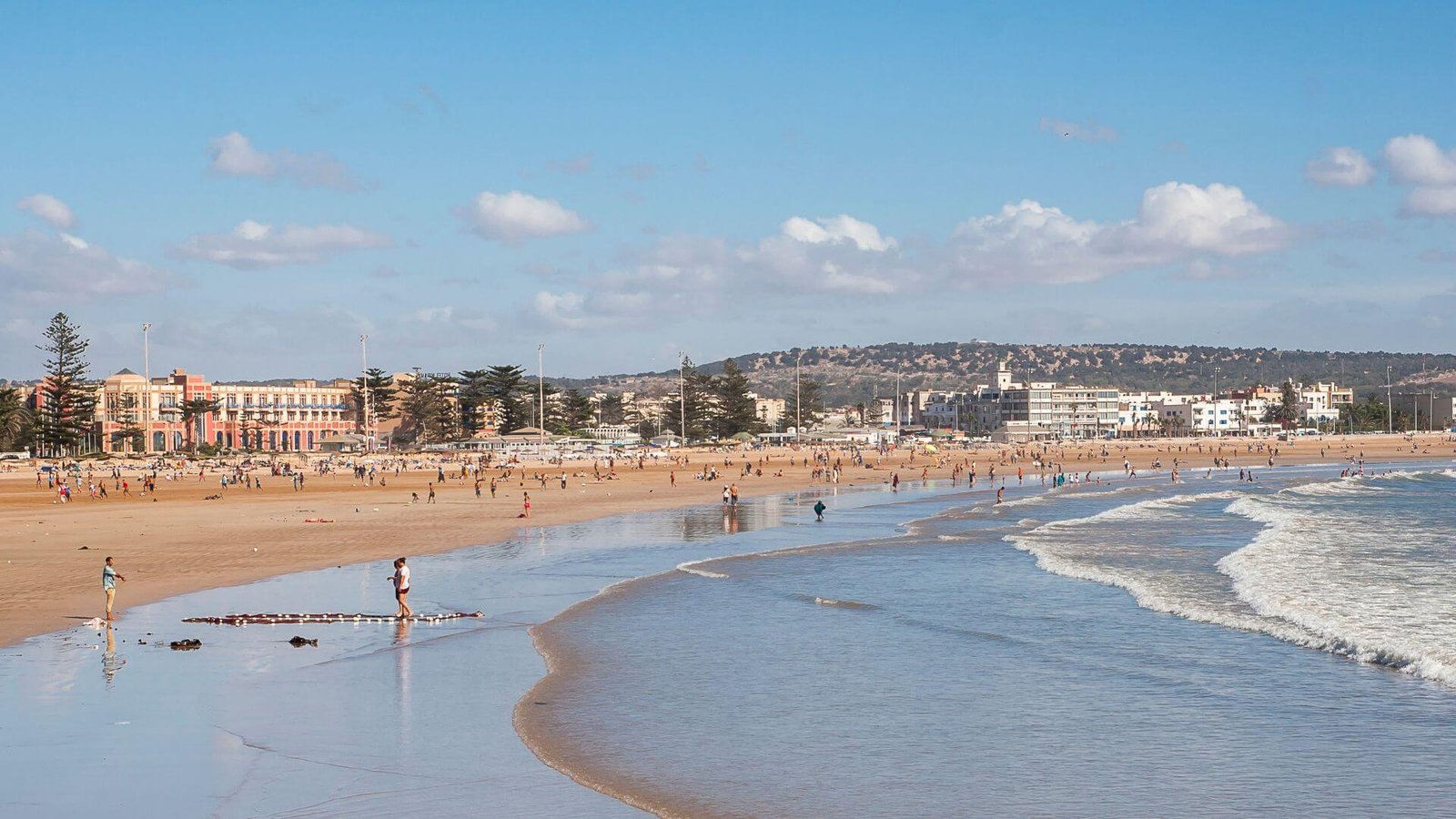
The wind is worth noting specifically: Essaouira is persistently windy, which is what keeps temperatures comfortable relative to Marrakech (typically 8–12°C cooler in summer) and what makes it a world-class kitesurfing destination. It also means the beach is better for walking than for sunbathing, and that a jacket is useful regardless of the season.
- The medina: relaxed, walkable, and architecturally distinct from anything in Marrakech — Portuguese-grid meets Moroccan craft market
- The port and seafood: fresh-grilled fish at harbour stalls is one of the best-value meals available anywhere in Morocco
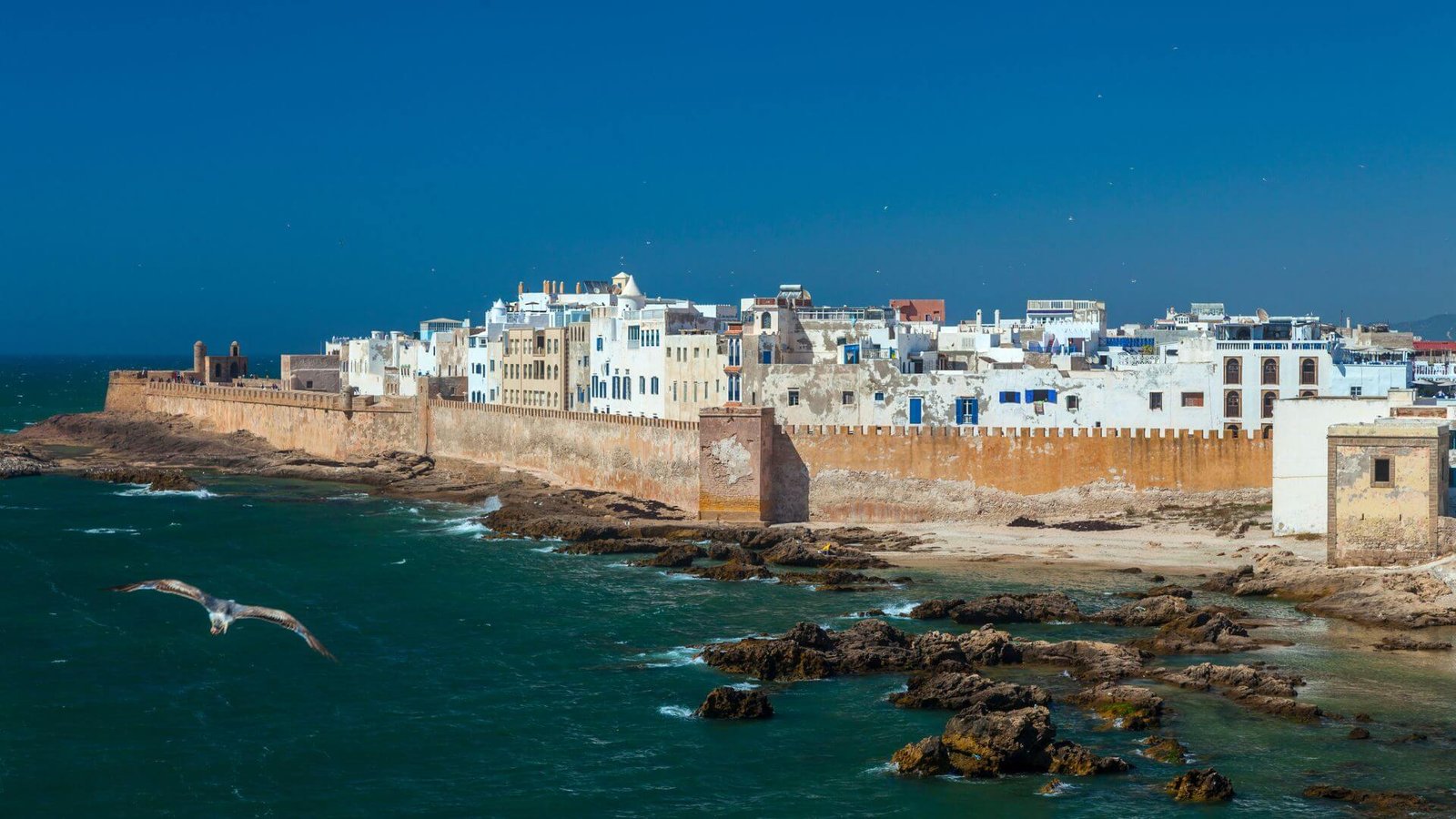
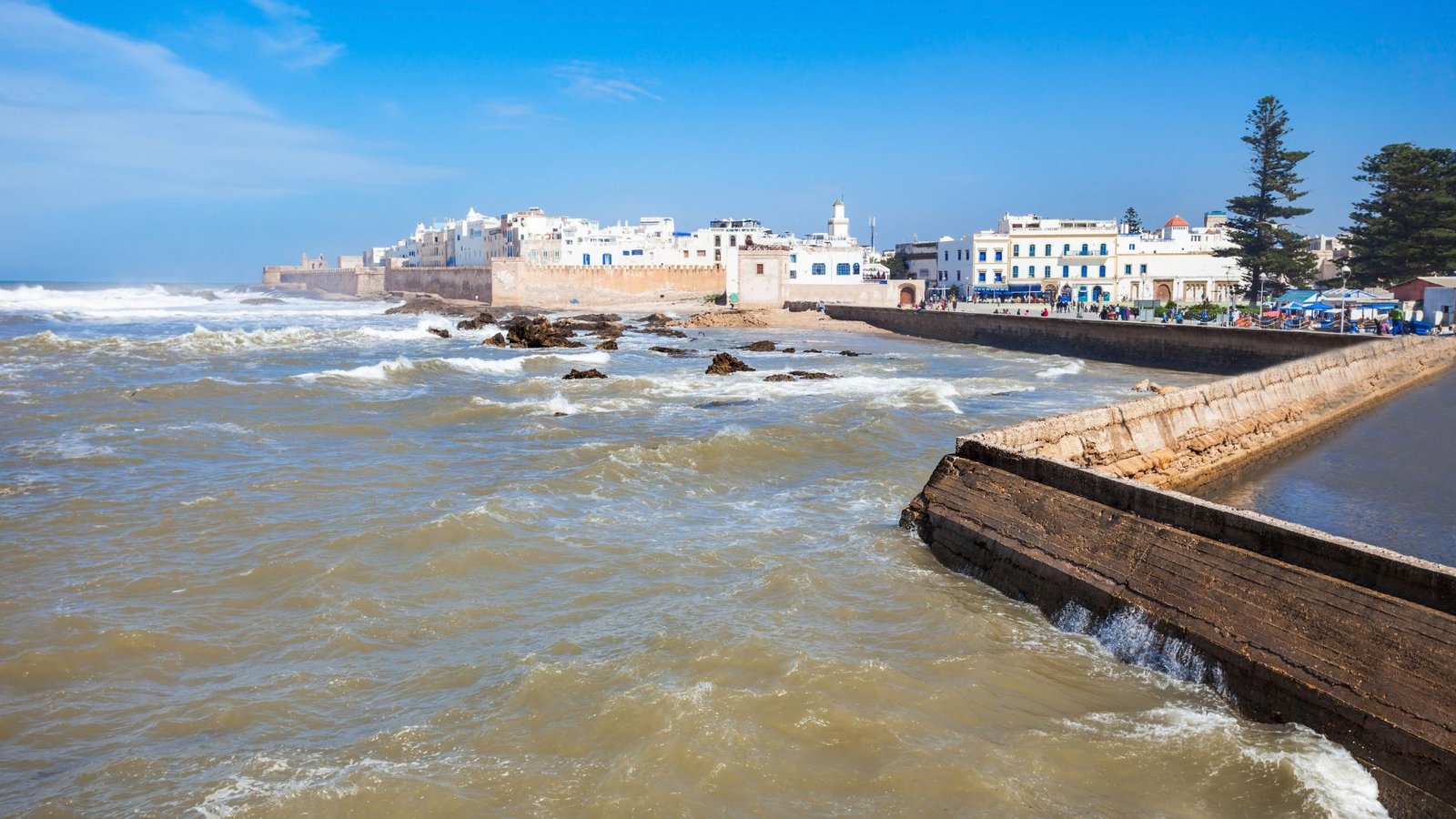
- The ramparts: 18th-century sea walls facing the Atlantic directly, with a wide promenade and consistent views
- The temperature and pace: cooler, slower, and physically different in feel from the inland city
Powered by GetYourGuide
Top Things to Do in Essaouira
Six things worth planning around. The medina is small — everything below is within thirty minutes’ walk of everything else.
Wander the Medina
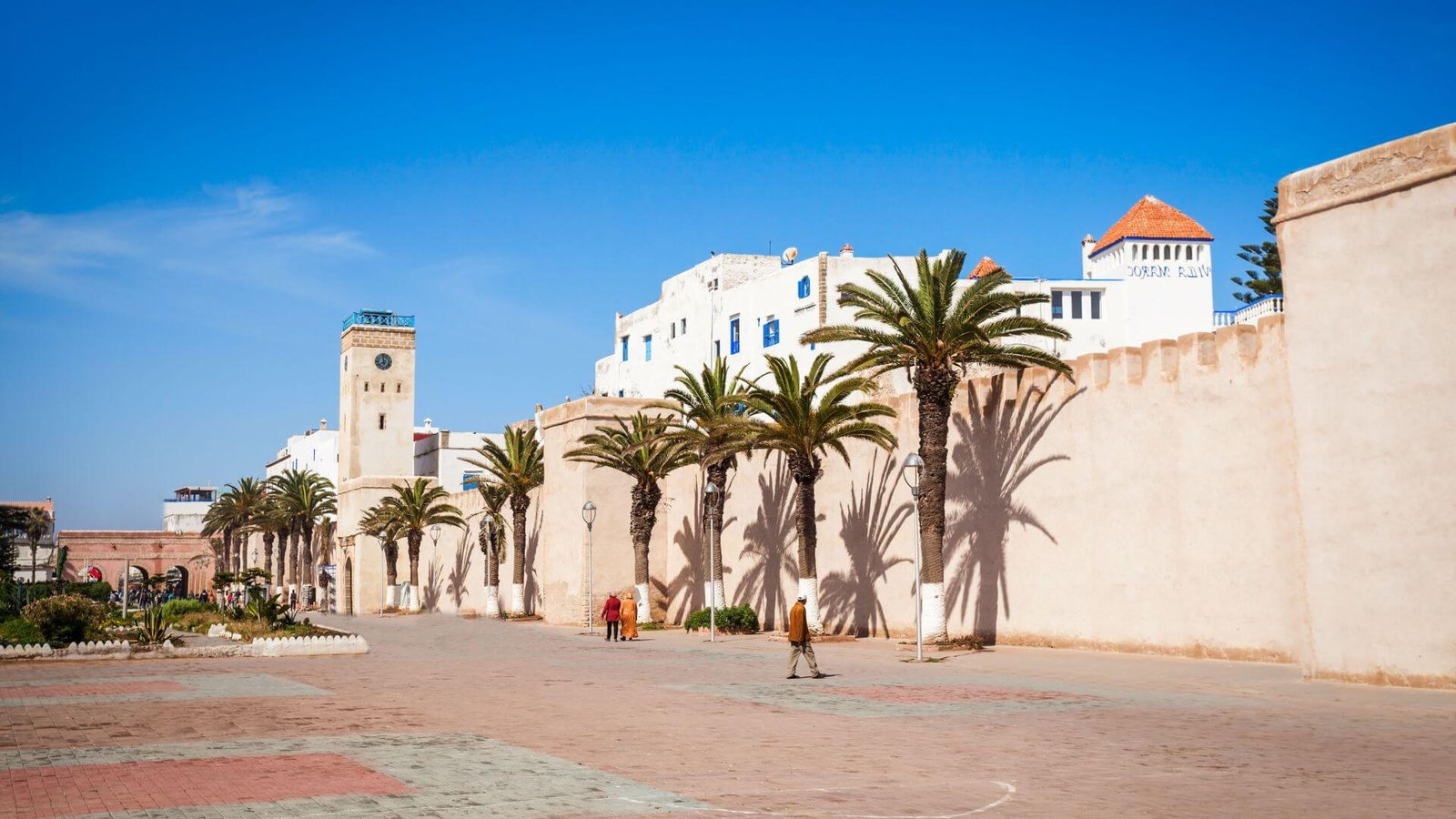
The Essaouira medina is UNESCO-listed and genuinely easy to navigate — the grid plan means orientation is straightforward after the first few streets. The main commercial artery is Avenue Mohammed Zerktouni and the streets parallel to it; the further you get from this axis toward the ramparts or the residential quarters, the quieter it gets. The blue-and-white colour scheme is consistent throughout and is the result of a deliberate aesthetic maintained across the city rather than individual buildings. The medina takes two to three hours to walk properly, including time in the artisan shops.
Walk Along the Ramparts
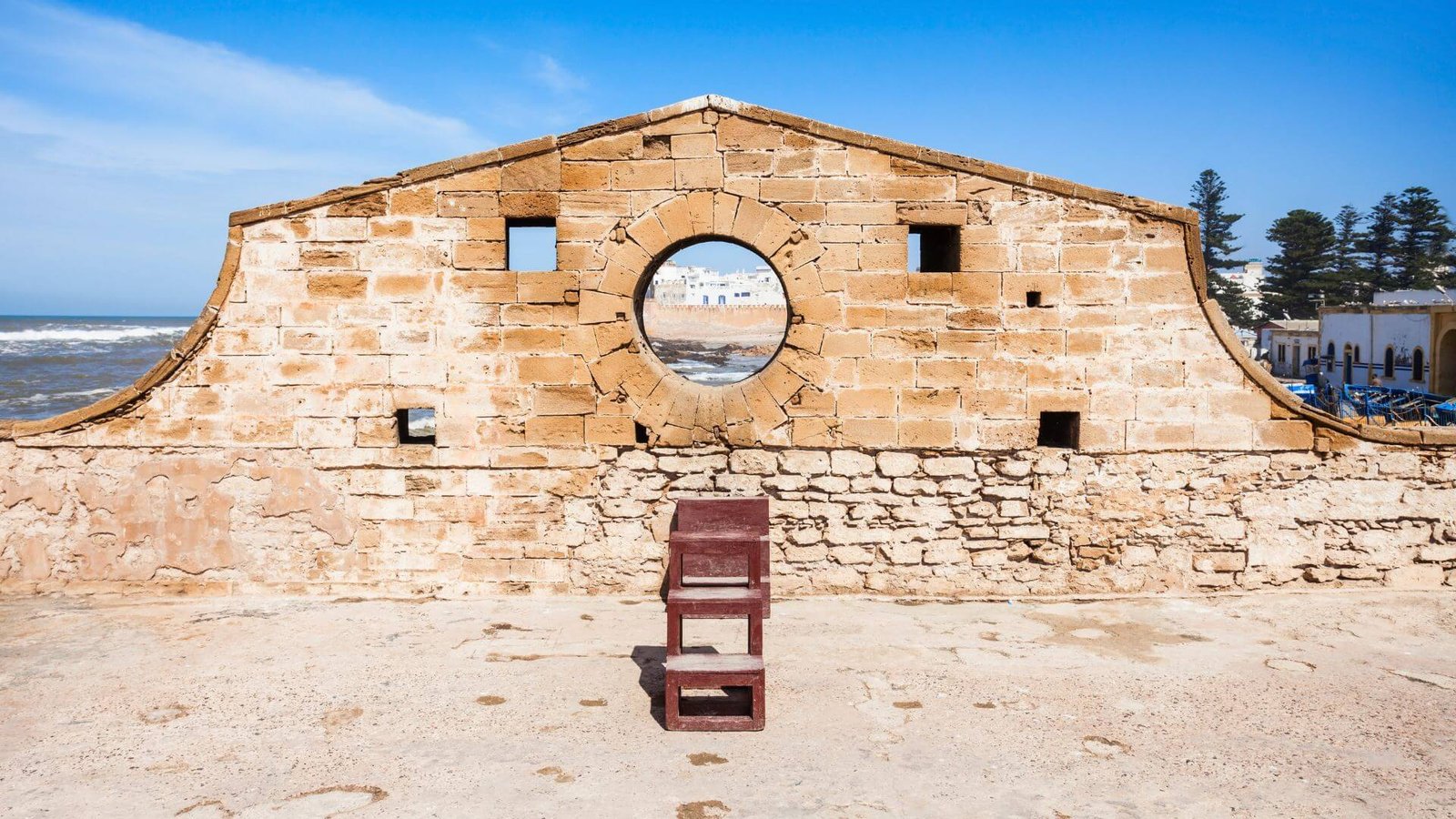
The Skala de la Ville — the sea wall running along the northern edge of the medina — is one of the most atmospheric spots in the city. Wide enough to walk along, with cannons still mounted at intervals facing the Atlantic, and ocean views in one direction and medina rooftops in the other. The light here in the late afternoon is exceptional. The southern Skala du Port, adjacent to the fishing harbour, offers a different angle on the same fortification system. Both are free to access.
Eat Fresh Seafood at the Port
The fishing harbour south of the medina has a row of grilling stalls where fish is bought by weight from the adjacent market, handed to the griller, and returned to you cooked with bread and a simple salad. The process is direct and fast. The stalls closest to the harbour entrance have the most visible grills and attract the most customers; higher turnover means fresher product. Go between noon and 2pm for the best selection. Haggling on price is normal; agree on cost per kilo before handing over the fish.
Relax on Essaouira Beach
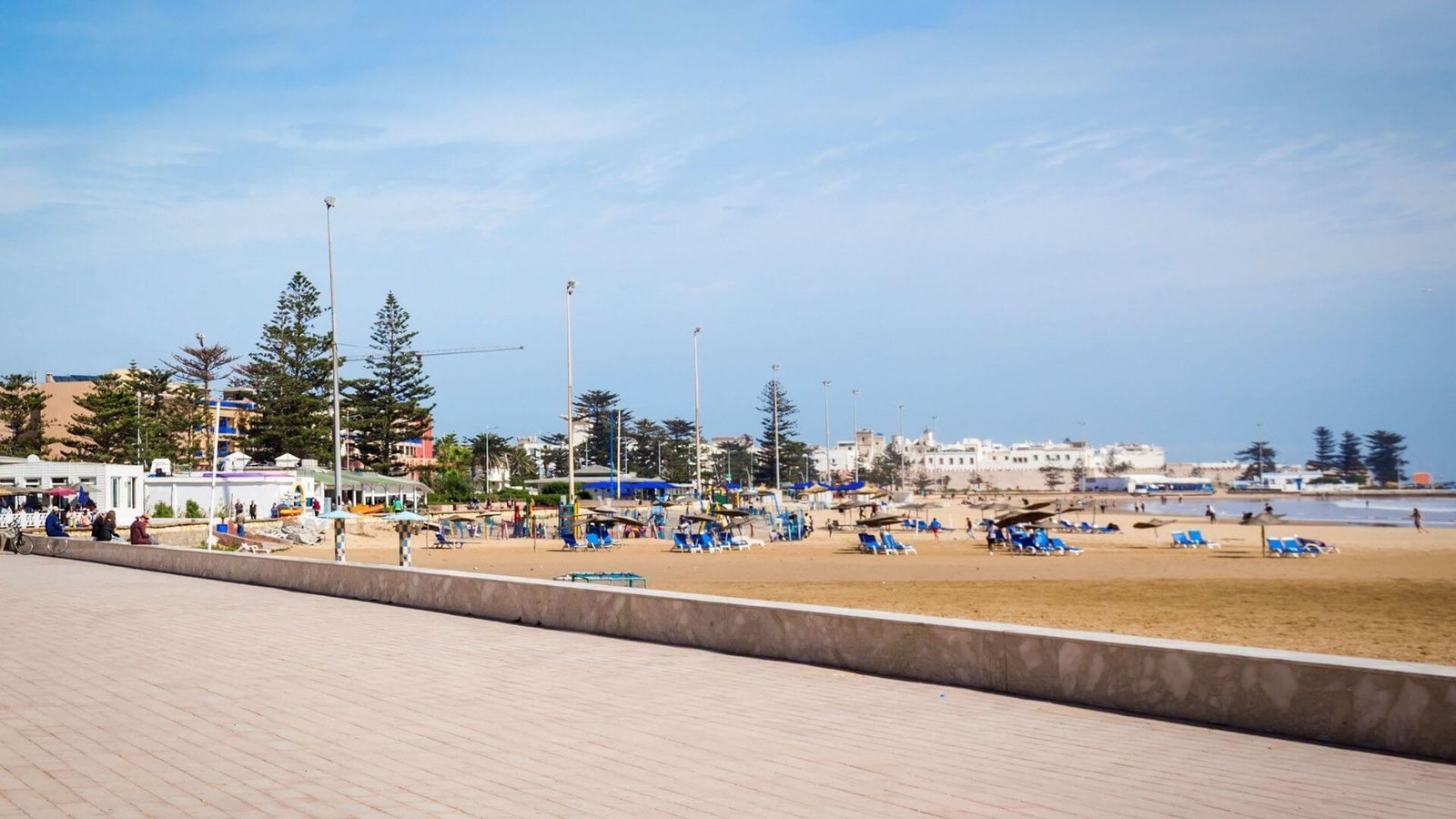
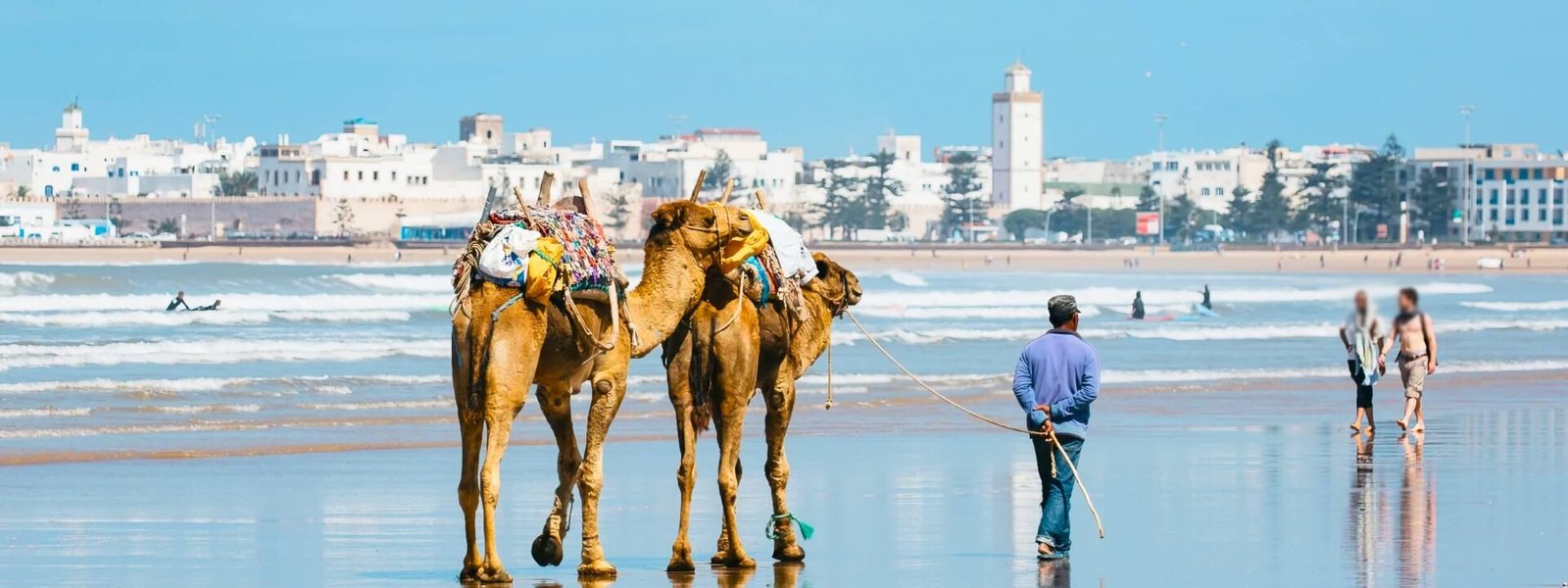
The beach south of the medina stretches for several kilometres and is consistently windy — kitesurfers use it year-round for this reason. It is a broad, flat Atlantic beach rather than a sheltered bay, which means the ocean is cold and the waves are strong. Walking the beach for an hour, particularly in the direction away from the city where it quiets significantly, is the right use of it rather than sunbathing. The best light on the beach is late afternoon.
Coffee with a View
Several cafés on the ramparts promenade and in the medina have terrace seating with ocean or medina views. The most straightforward is Café de France on the main square, which has roof access and views over the medina toward the sea. Quieter options are scattered throughout the medina residential quarter. An hour with coffee is the natural rhythm break between the morning medina walk and the afternoon at the port or ramparts.
Browse Local Crafts — Thuya Wood
Essaouira is the primary source of thuya wood objects in Morocco. Thuya (Tetraclinis articulata) is a North African cedar relative whose root burl has a distinctive amber-and-dark swirl grain. The workshops in the Essaouira medina — visible through open doors throughout the craft district — produce boxes, frames, chess sets, and decorative objects that are not available at the same quality or price anywhere else in Morocco. This is the one souvenir category where Essaouira is genuinely the right place to buy. Prices are negotiable but not aggressive — the atmosphere in the shops here is considerably more relaxed than in Marrakech’s souks.
Pro tip: The medina is compact enough that a map is optional after the first twenty minutes. Pick a direction and walk; you will circle back to the main square by early afternoon regardless of which way you go.
How to Visit Essaouira from Marrakech
Four options. Essaouira is one of the easier day trips from Marrakech logistically — the road is straightforward and the town itself is compact.
Guided Day Tour
The most common format. Pick-up from Marrakech accommodation around 8am, two and a half hours to Essaouira with a possible stop at an argan oil cooperative on the route, free time in the city (typically four to five hours), and return by 8pm. A guide is sometimes included for the medina portion; often the day is effectively transport-only with structured free time. Check what’s included before booking.
- Pros: No logistics, comfortable transport, includes return
- Cons: Fixed schedule; free time may be less than advertised
- Best for: First-time visitors, anyone who prefers not to manage transport independently
Bus (CTM or Supratours)
Reliable scheduled services from Marrakech’s bus terminal to Essaouira run daily, with CTM and Supratours both operating on this route. Journey time is approximately three hours. Buses are comfortable and air-conditioned. The main disadvantage is the return timing — the last bus back to Marrakech typically departs in late afternoon, which constrains the day. Check timetables and book in advance during summer and weekends.
- Pros: Cheapest option, air-conditioned, no need to drive
- Cons: Fixed departure times; last bus back may limit afternoon time in the city
- Best for: Independent travellers, budget-conscious visitors
Private Driver
A private vehicle with a driver allows stops at the argan oil cooperatives on the P2210 road between Marrakech and Essaouira (genuinely worth doing — the cooperatives are run by Amazigh women’s collectives and the argan processing demonstration is interesting) and a flexible return time. For a couple or small family, the cost differential from a guided group tour is relatively modest when divided per head.
- Pros: Flexible schedule, stops en route, adaptable return time
- Cons: Higher per-person cost than bus or group tour
- Best for: Couples, families, anyone wanting to stop at the argan cooperatives
Self-Drive
The P2210 from Marrakech to Essaouira via the argan forest is a straightforward road with clear signage. The drive is approximately two and a half hours with no challenging sections. Parking in Essaouira is available outside the medina walls — the medina itself is pedestrian only. Self-drive is the most practical option for anyone already renting a car for their Marrakech stay.
- Pros: Full independence, flexible all day, stops wherever you choose
- Cons: Parking management in Essaouira; driving adds fatigue to an already long day
- Best for: Confident drivers already renting a vehicle; anyone wanting maximum flexibility
Recommendation: For most visitors, the choice is between a guided group tour (simplest, covers logistics) and a private driver (more flexible, allows argan cooperative stop). The bus is the best option for independent travellers comfortable with fixed timetables.
Perfect Day Trip Itinerary to Essaouira
A realistic full-day itinerary with space in it. Departure time is the most important variable — arriving by 10:30 gives five to six hours in Essaouira before a 17:00–17:30 departure.
Morning — Journey & First Impressions
- 08:00 — Depart Marrakech (earlier if possible)
- Optional stop at an argan cooperative on the P2210 (30 min)
- 10:30 — Arrive Essaouira; park outside the medina walls or drop-off at Bab Marrakech
- 11:00 — Walk the medina from north to south, starting at the Skala de la Ville ramparts and working down through the craft district toward the main square
The medina in the morning is quieter than the afternoon. The light on the blue-and-white architecture is better before midday.
Midday — Port & Seafood
- 12:30 — Walk to the port area (five minutes south of the main square)
- 13:00 — Select fish at the harbour stalls, agree on price, wait for grilling — allow forty-five minutes for the full process
- 14:00 — Coffee at a café near the port or on the main square
The port lunch is the logistical centre of the day. Don’t rush it.
Afternoon — Ramparts, Beach & Final Wandering
- 14:30 — Skala du Port ramparts (southern sea wall, port views)
- 15:00 — Skala de la Ville (northern sea wall; walk to the end for the best Atlantic views)
- 15:45 — Walk south along the beach if the wind is manageable; alternatively return to the medina craft district for thuya wood shopping
- 16:30 — Final café stop or last look at the medina
Evening — Return to Marrakech
- 17:00–17:30 — Depart Essaouira
- 20:00–20:30 — Arrive Marrakech
A long day by departure time but never intense. Essaouira doesn’t require the same focused attention as Marrakech — the pace is built into the place.
Pro tip: The argan cooperative stop on the way out adds forty-five minutes to the journey but is worth it if you have flexibility in your departure time. The production process — roasting, grinding, pressing — is explained clearly and without pressure to buy. The argan oil sold at the cooperative is authentic and reasonably priced.
Best Time to Visit Essaouira
Essaouira’s coastal position moderates its climate significantly relative to inland Morocco. The Atlantic trades keep it cooler than Marrakech year-round and produce persistent wind that changes the character of the experience by season.
- Spring (March–May): The most comfortable season for walking and exploring. Temperatures are warm without being hot (18–24°C), the wind is present but not aggressive, and the city is not yet crowded with summer visitors. The argan forest en route flowers in spring. Recommended.
- Summer (June–August): The best reason to visit in summer is Marrakech’s heat — Essaouira is reliably 8–12°C cooler. The trade-off is wind: the summer trades are at their strongest, which is excellent for kitesurfing and makes the beach walk dramatic, but makes sustained outdoor sitting uncomfortable. Bring a windproof layer regardless of the temperature.
- Autumn (September–November): The wind drops relative to summer, temperatures are comfortable for walking, and the city is quieter than in the tourist peak. The light quality in autumn is exceptional for photography. The most underrated season for this trip.
- Winter (December–February): The quietest season. Temperatures are mild by day (15–20°C) but can drop with rain and wind in the evenings. The medina has a noticeably different character when it’s not in tourist season — the stalls are more local in clientele, the pace is slower even by Essaouira standards. Worth considering for anyone who wants to avoid crowds entirely.
Wind note: Essaouira is consistently cited as one of the windiest inhabited coastal sites in Africa. The wind is strongest in summer and late spring; calmer in autumn and winter. A lightweight windproof jacket is useful on every visit regardless of season — particularly on the ramparts and beach where there is no shelter.
Best overall: Spring and autumn for the best combination of warmth, manageable wind, and comfortable exploration conditions.
Practical Tips for Your Essaouira Day Trip
- Bring a windproof layer. Not optional. Even on a warm sunny day, the ramparts and beach are exposed to consistent Atlantic wind. A light jacket that blocks wind is more useful than a heavy one.
- Wear comfortable walking shoes. The medina cobblestones are uneven in places and the ramparts promenade is long. This is a walking-heavy day.
- Protect your camera gear near the beach. Wind-blown sand is a genuine hazard for lenses and sensor covers on the Essaouira beach and ramparts. Keep equipment in a bag when not actively shooting.
- Carry dirhams for the port stalls. The fishing stall lunch is cash only and prices are negotiated per kilo. Have small notes ready to avoid change complications.
- Time the port lunch correctly. Noon to 2pm for the best selection of fresh fish. Before noon the grills are still setting up; after 3pm the selection reduces.
- Arrive early if using public transport. The last bus back to Marrakech typically departs late afternoon. Check the return timetable before buying the outward ticket.
- The wind is a feature, not a problem. Essaouira’s climate, character, and reputation as a kitesurfing destination are all a product of the same Atlantic wind. It’s part of what makes it different from everywhere else in Morocco. Pack for it rather than against it.
Pro tip: Essaouira rewards unhurried visitors. The best moments — a good seafood lunch, an hour on the ramparts as the afternoon light changes, a conversation in a thuya workshop — happen when there’s no time pressure. Leave Marrakech by 8am and don’t plan a fixed return time earlier than 17:30.
Essaouira Day Trip FAQ
Is Essaouira worth visiting from Marrakech?
Yes, and particularly so for visitors who have been in Marrakech for more than two days and need a change of pace. The combination of a different architectural tradition, a genuinely relaxed medina, good food at the port, and Atlantic views is distinctive in Morocco — nothing else accessible as a day trip from Marrakech offers the same combination.
Can you do Essaouira as a day trip?
Yes, comfortably. Two and a half hours each way leaves five to six hours in the city, which is the right amount of time — enough to walk the medina, eat at the port, and spend an afternoon on the ramparts without rushing. Leaving Marrakech by 8am is the key variable.
Is Essaouira better than Marrakech?
Different rather than better. Marrakech is one of the great old cities of North Africa — dense, historically complex, and genuinely overwhelming in productive ways. Essaouira is a smaller, quieter, more immediately pleasant place to spend a day. Most visitors value both experiences independently.
Is it windy in Essaouira?
Consistently. Essaouira sits directly in the path of the Atlantic trade winds and is one of the windiest inhabited coastal sites in Africa. The wind is strongest in summer (June–August) and at its calmest in autumn and winter. It keeps the city cooler than Marrakech and is what drives the kitesurfing industry, but it also means outdoor café terraces and the beach can be uncomfortable without a windproof layer.
What is Essaouira famous for?
Historically: an 18th-century trading port with Portuguese-influenced grid-plan architecture, a UNESCO-listed medina, and significance as one of the main Atlantic entry points for Saharan trade routes. Currently: the fishing port and seafood stalls, the consistent Atlantic wind and kitesurfing, the thuya wood craft tradition unique to the region, and the blue-and-white aesthetic that has made it one of the most photographed cities in Morocco.
How much does a day trip cost?
Bus: approximately €8–12 return (CTM or Supratours). Guided group tour: approximately €25–45 per person including transport. Private driver: approximately €100–150 for the vehicle for the day (split across the group). Self-drive: rental car plus fuel, approximately €40–60 additional for the day.
Continue Exploring Marrakech & Beyond
Essaouira is one of four main day trips from Marrakech. These guides cover the others and the city itself.
-
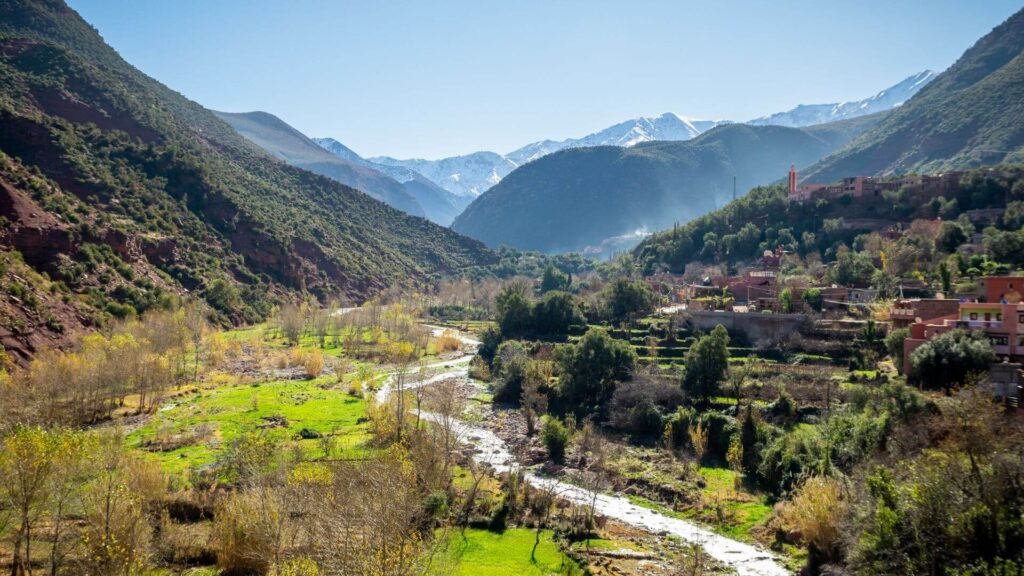
Atlas Mountains Day Trip
Mountains, waterfalls, and Berber villages within an hour of the city
-
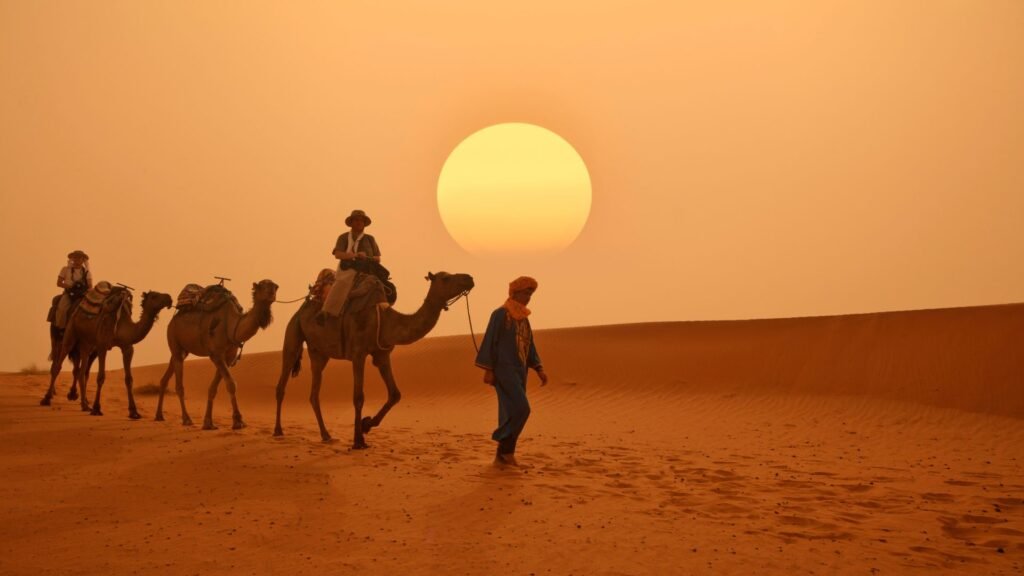
Sahara Desert Tours
Two to four days south — the definitive Morocco landscape experience
-
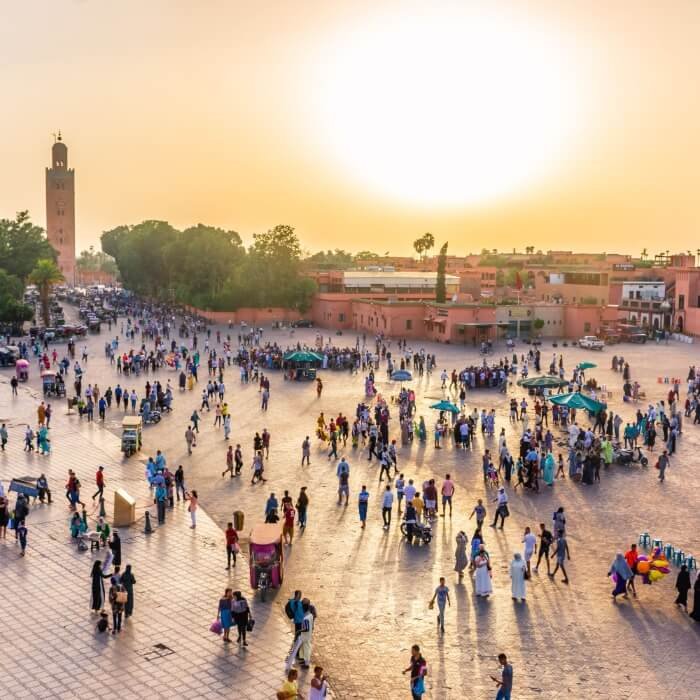
Top 20 Things to Do in Marrakech
The city's essential experiences
-
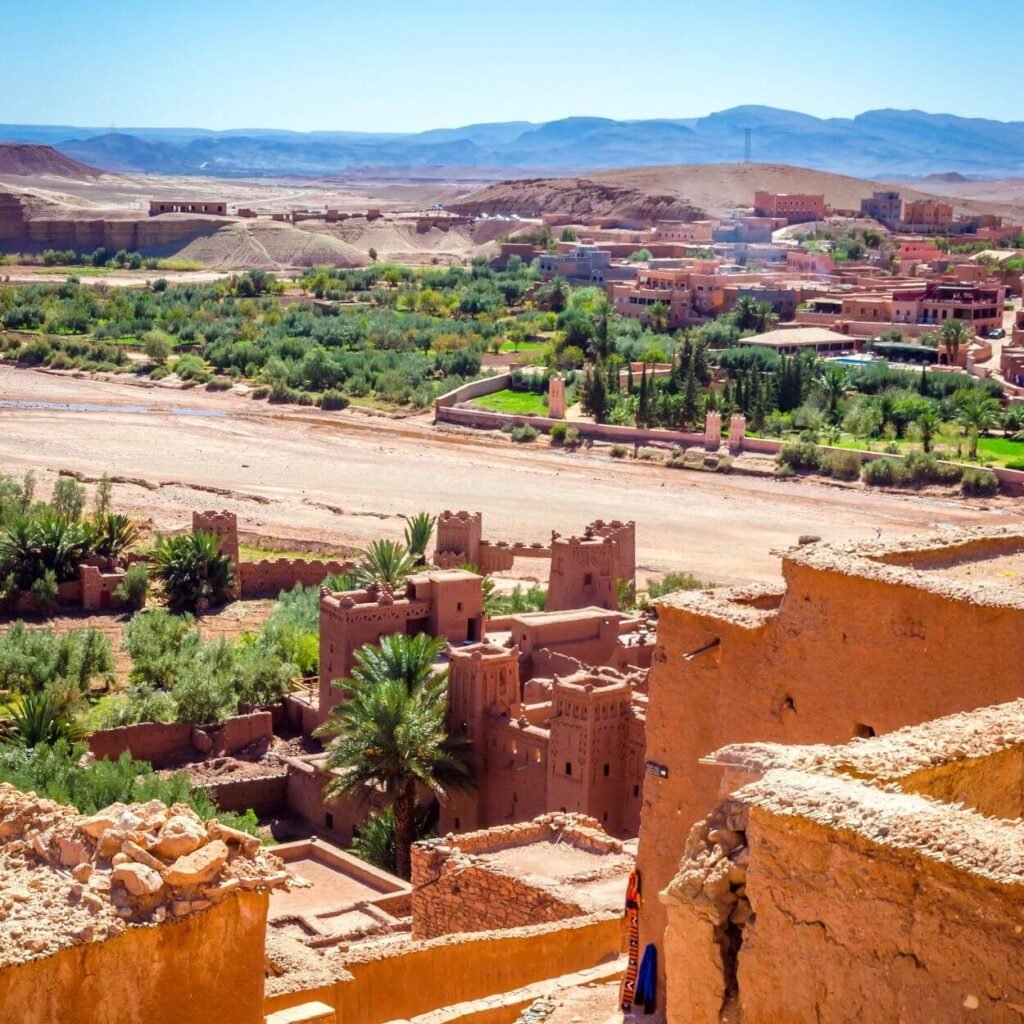
5-Day Marrakech + Desert Itinerary
How to combine city, coast, and desert in a single trip
-
3-Day Marrakech Itinerary
A structured three-day city plan
Final Thoughts on Your Essaouira Day Trip
Essaouira is the easiest day trip from Marrakech to get right. The drive is straightforward, the city is navigable, the lunch at the port is one of the better meals available in Morocco at any price point, and the afternoon on the ramparts with the Atlantic wind and late light is difficult to improve on.
The one thing to get wrong is over-scheduling. Essaouira is not a city of monuments — there is no single unmissable thing that requires advance booking or a specific arrival time. The value is in the atmosphere and the pace, both of which require time to feel rather than a list to complete.
Leave early, eat at the port, walk the ramparts, buy a thuya box if anything appeals, and return to Marrakech with a different sense of what Morocco is.
For the full Marrakech picture, the Marrakech travel guide is the right starting point before planning the day trips.
 Marrakist Concierge